
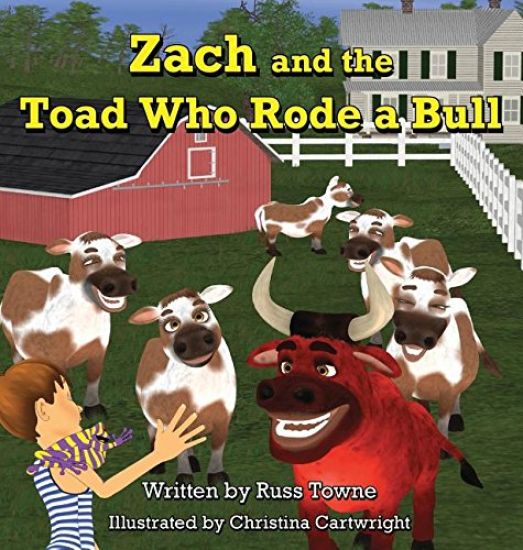
Kirjahaku
Etsi kirjoja tekijän nimen, kirjan nimen tai ISBN:n perusteella.
1000 tulosta hakusanalla Russ Towne

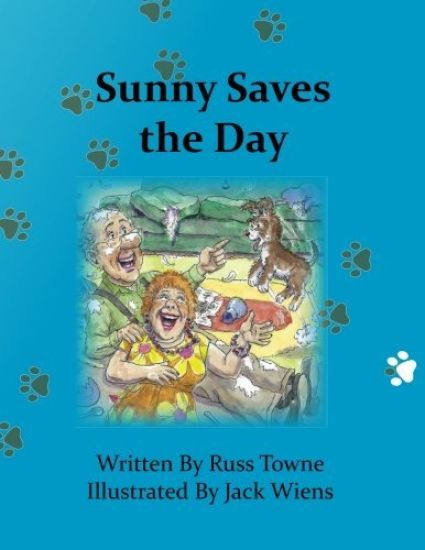
Grumbly and Gruffina Grumpadinkle are always grouchy. Their mood is always gloomy, the weather always glum-and not a single soul could make the Grumpadinkles smile, chuckle, or guffaw-not even a teehee Until, that is, little Wendy asks the cantankerous, cranky couple to watch her puppy Sunny. "We've never had a dog before," Grumbly says. "It sounds like he could be a chore." With a grumble or two, the Grumpadinkles relent, and find themselves puppy-sitting a rambunctious, playful pup that makes a mammoth mess-icky eggs, shattered plates, and spilled milk everywhere But what is happening to Gruffina and Grumbly's scowls? Find out what happens when a rascally pup turns their whole house-and grumpy lives-upside down. Russ Towne's Sunny Saves the Day delights children and adults, keeping them giggling with every fantastic, whimsical rhyme, and illustrates how a simple act of compassion (even when you're feeling sad) can turn a frown upside down and open the door to new friendship.

Wilbur Mallard is a very odd duck. He is bright orange with purple spots and a great big bright purple thing-a-ma-jig on top of his head. Every time Wilbur tries to fly, that thing-a-ma-jig spins him upside down When he tries to land, he always ends up bouncing, somersaulting, and finally crashing or splashing in a heap. Ducks aren't built to fly upside down, so Wilbur has to work much harder than the other ducks to fly. Poor Wilbur But these challenges and differences help Wilbur in many ways. Find out how as you join him on this great and exciting adventure that will make many warm memories and hearts of all ages smile.

Desperate Journeys: Five Suspenseful, Action-Packed Crime Stories
Karen M. Smith; Russ Towne
Russ Towne
2018
nidottu
Desperate Journeys by Russ Towne takes readers on a thrill ride with five gripping stories of suspense where ordinary people face impossibly long odds, conquer fear, and find the strength to survive horrifying circumstances. Desperate Journey It's everyone's worst highway nightmare. A breakdown on the road to the "happiest place on Earth" leads to a night of terror for one teenage boy. No Choice at All A road trip for an interview with the boss turns into a night of lethal danger and desperate courage when a man stops to give roadside assistance. The Blood Oath A mother's secret, a lost identity, and a father's decision bring peril to a man who learns who he is and what he's made of in trying to save a young woman. The Misunderstanding A luggage mix-up focuses a violent criminal's attention upon a mild-mannered man and his family. The Patsy A swindler with violent tendencies discovers elderly widows can be dangerous, too.

Credited with having "opened the floodgates of screen permissiveness" in 1959 with the landmark "nudie" The Immoral Mr. Teas, legendary independent softcore filmmaker Russ Meyer has continued throughout his 30-year career and 23+ films to expand the limits of screen freedom with such genre classics as Lorna (1964), Faster, Pussycat! Kill! Kill! (1966), and Vixen (1969). Long recognized as an American auteur and honored by numerous international retrospectives of his work, Meyer's story provides valuable insights into independent filmmaking, the history of the modern sexploitation genre, and cinema censorship. Researched from underground, popular and film literature, this book also incorporates much of the material contained in Meyer's own vast archive, to give an in-depth study of the director dubbed "King Leer."
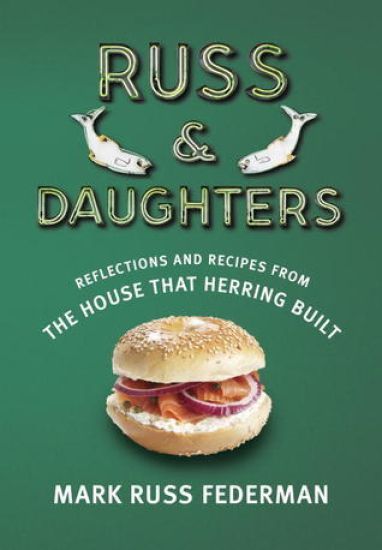
WITH 8 PAGES OF FULL-COLOR PHOTOGRAPHS AND BLACK-AND-WHITE IMAGES THROUGHOUT The former owner/proprietor of the beloved appetizing store on Manhattan's Lower East Side tells the delightful, mouthwatering story of an immigrant family's journey from a pushcart in 1907 to "New York's most hallowed shrine to the miracle of caviar, smoked salmon, ethereal herring, and silken chopped liver" (Jason Epstein, "The New York Times Magazine"). When Joel Russ started peddling herring from a barrel shortly after his arrival in America from Poland, he could not have imagined that he was witnessing the birth of a gastronomic legend. Here is the story of this "Louvre of lox" ("The Sunday Times," London) from its humble beginnings through the Great Depression, the food rationing of World War II, the passing of the torch to the next generation just as the flight from the Lower East Side to the suburbs was beginning, the heartbreaking years of neighborhood blight, and the almost miraculous renaissance of an area from which hundreds of other family-owned stores had fled. Filled with delightful anecdotes about how a ferociously hardworking family turned a passion for selling perfectly smoked and pickled fish into an institution with a devoted international clientele, Mark Russ Federman's reminiscences combine a heartwarming and triumphant immigrant saga with a panoramic history of twentieth-century New York, a meditation on the creation and selling of gourmet food by a family that has mastered this art, and an enchanting behind-the-scenes look at four generations of people who are just a little bit crazy on the subject of fish.

Each of our lives is like a collection of short stories. Some of the stories are humorous, some sad, some tragic, some exciting, some painful. Some of the stories happened in the past, some are happening now, and some might happen in the future. Regardless of the time period, these are the stories of Life as seen through one particular set of eyes. This is THE VIEW FROM HERE.

Nobody in boxing has worn more hats than Canadian Russ Anber. And few have worn any of them with greater enthusiasm or long-term success. Trainer of champions, gym owner, media personality, boxing commissioner, Olympic commentator, master hand-wrapper, legendary corner and cut man, and founder and CEO of Rival Boxing Gear, Russ remains the ultimate boxing insider. Recalling his 45-year career, Russ paints a poignant, unvarnished and often humorous picture of the boxing world based on his immense hands-on experience and personal relationships with some of the sport’s most colourful and influential characters – everyone from famed trainer Angelo Dundee (Muhammad Ali’s trainer) to legendary fighters like Vinnie Curto, Otis Grant, Roy Jones Jr., Deontay Wilder, Artur Beterbiev, Callum Smith, Liam Smith, Oleksandr Usyk and others. Unrivaled is more than a simple biography. It is a compelling and entertaining history lesson based on the candid and always entertaining musings of Russ Anber and one-on-one interviews with a who’s who of boxing insiders, media personalities, and world boxing champions (past and present).
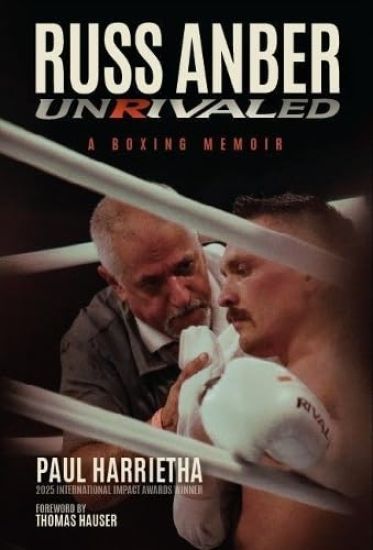
After 45 years of dedication, sacrifice, and joy, Russ Anber stands as boxing’s Unrivaled Renaissance man: trainer of champions, media personality, Olympic commentator, legendary hand-wrapper, renowned cornerman and cutman, founder and CEO of Rival Boxing Gear, and boxing’s biggest fan. More than just a simple biography, Unrivaled paints a poignant picture of the boxing world drawing upon Anber’s vast experience; his personal relationships with legendary figures like Angelo Dundee and Ray Arcel; and captivating, one-on-one interviews with some of the sport’s most respected champions—including the likes of Otis Grant, Jean Pascal, Derek Chisora, Buddy McGirt, Vasily Lomachenko, Callum and Liam Smith, Roy Jones Jr., Lennox Lewis, and Oleksandr Usyk.

Russ, V: Bohmische Landtag Von 1872 Bis 1877 (1878)
Viktor Wilhelm Russ
KESSINGER PUBLISHING, LLC
2010
nidottu






Russ & Daughters: 100 Years of Appetizing
Niki Russ Federman; Josh Russ Tupper; Joshua David Stein
FLATIRON BOOKS
2025
sidottu
From the legendary New York destination for Jewish appetizing, a beautiful and inspiring cookbook that encompasses history, tradition, and absolutely delicious food In 1907, a Jewish immigrant named Joel Russ landed in New York City, where he took a pushcart of herring and built a legacy that would pass down through fathers and daughters (and sons and husbands and wives) for more than a hundred years. Four generations later, the ancestral heart of Russ & Daughters continues to bustle on the Lower East Side, with three more locations throughout the city. Over the course of a century, Russ & Daughters has fed hundreds of thousands of customers, many considering a visit to the original shop on East Houston a family tradition, weekly ritual, or New York experience. Now, for the first time, Russ & Daughters brings its world-famous institution into readers' homes. Its rich history is told through insider anecdotes from the family and characters on both sides of the counter; illuminating guides to its most famed offerings--smoked salmon, sable, sturgeon, herring, and caviar; and more than 100 cherished recipes for favorite foods like latkes, matzo ball soup, babka, and bagels, among many others. Nothing can ever replace the experience of taking a number, kibbitzing with a slicer, waiting in line, and ordering your whitefish or belly lox. Yet this book captures some of that infectious Russ & Daughters appetizing spirit, and most importantly, brings families and friends together around the table.

Modern Parables: collected by Dcn Russ Lowe
Russ Lowe
Createspace Independent Publishing Platform
2011
nidottu

Russ Meyer
UNIVERSITY PRESS OF MISSISSIPPI
2025
pokkari
Russ Meyer: Interviews offers a detailed look into the mind, life, and successful career of the maverick filmmaker Russ Meyer. Known for his audacious visual style and boundary-pushing content, Meyer (1922–2004) carved out a unique niche in the film industry with his provocative and often controversial works, including Faster, Pussycat! Kill! Kill!; Beyond the Valley of the Dolls; and Vixen! In this volume, Meyer talks over the course of eighteen newspaper and magazine interviews—conducted between the late 1960s and early 1990s—about assignments in still- and motion-picture combat photography during World War II, learning all aspects of the filmmaking craft when he was shooting industrial films after the war, later stumbling into the business of photographing pin-up girls for magazines, and how that segued into his first forays in what would become the sexploitation movie market. Working with small budgets and small crews, Meyer became a skilled director and pitchman for his own work, hitting the road with reels of film in his car, going from town to town, getting them shown in small moviehouses, building an audience, making big profits, then using them to make his next film. The films were expertly photographed, inventively edited, and featured intriguing (and violent, carnal, and funny) storylines, and ticket sales numbers eventually caught the eyes of the Hollywood studio system, for which Meyer briefly worked, before once again striking out on his own with ever-more violent, sexual, and cartoonish features. Meyer made fortunes, he lost fortunes, then he made them again, and he was always game for getting involved in controversy, which was easy due to the content of his films. After his final theatrical feature—Beneath the Valley of the Ultra-Vixens—in 1979, Meyer reinvented himself as an entrepreneur by making his films available on the burgeoning home video market, leaving him a celebrated and very wealthy man.
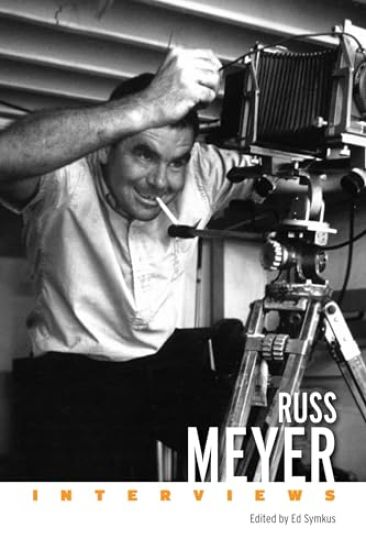
Russ Meyer
UNIVERSITY PRESS OF MISSISSIPPI
2025
sidottu
Russ Meyer: Interviews offers a detailed look into the mind, life, and successful career of the maverick filmmaker Russ Meyer. Known for his audacious visual style and boundary-pushing content, Meyer (1922–2004) carved out a unique niche in the film industry with his provocative and often controversial works, including Faster, Pussycat! Kill! Kill!; Beyond the Valley of the Dolls; and Vixen! In this volume, Meyer talks over the course of eighteen newspaper and magazine interviews—conducted between the late 1960s and early 1990s—about assignments in still- and motion-picture combat photography during World War II, learning all aspects of the filmmaking craft when he was shooting industrial films after the war, later stumbling into the business of photographing pin-up girls for magazines, and how that segued into his first forays in what would become the sexploitation movie market. Working with small budgets and small crews, Meyer became a skilled director and pitchman for his own work, hitting the road with reels of film in his car, going from town to town, getting them shown in small moviehouses, building an audience, making big profits, then using them to make his next film. The films were expertly photographed, inventively edited, and featured intriguing (and violent, carnal, and funny) storylines, and ticket sales numbers eventually caught the eyes of the Hollywood studio system, for which Meyer briefly worked, before once again striking out on his own with ever-more violent, sexual, and cartoonish features. Meyer made fortunes, he lost fortunes, then he made them again, and he was always game for getting involved in controversy, which was easy due to the content of his films. After his final theatrical feature—Beneath the Valley of the Ultra-Vixens—in 1979, Meyer reinvented himself as an entrepreneur by making his films available on the burgeoning home video market, leaving him a celebrated and very wealthy man.