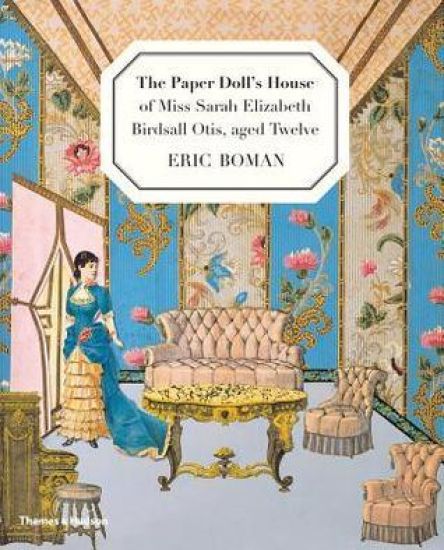
In 1884, at the age of twelve, the remarkable Miss Sarah Elizabeth Birdsall Otis – known to all as Birdie – made an extraordinary paper doll’s house in the form of a book. While these were fashionable enough at the time, they were usually drawn and painted: Birdie, however, chose the medium of collage. Her album’s exquisite rooms, accompanying paper dolls and tiny accessories are true works of art, full of period charm but also distinctly appealing to a modern taste and sensibility. Eric Boman’s full-colour photographs capture Birdie’s remarkably vivid fantasy world in all its quirky splendour. Boman also provides an entertaining text giving her life story and the background to the making of the doll’s house, accompanied by turn-of- the-century photographs found in her family albums. With an envelope at the back of the book containing press-out dolls and costumes from the original collection, this publication showcases an astonishing example of youthful creativity and is guaranteed to appeal to adults and children alike.
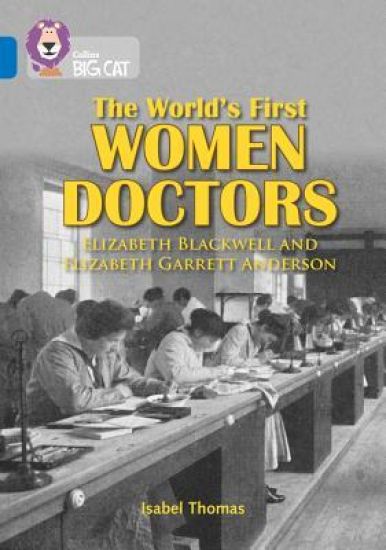
Build your child’s reading confidence at home with books at the right level Find out all about two ground breaking figures in medicine – Elizabeth Blackwell and Elizabeth Garret Anderson, two women who fought to become doctors in the early 1800s. What was life like for women in the early nineteenth century, what obstacles did both women come up against and ultimately how did they succeed? Sapphire/Band 16 books offer longer reads to develop children's sustained engagement with texts and are more complex syntactically.
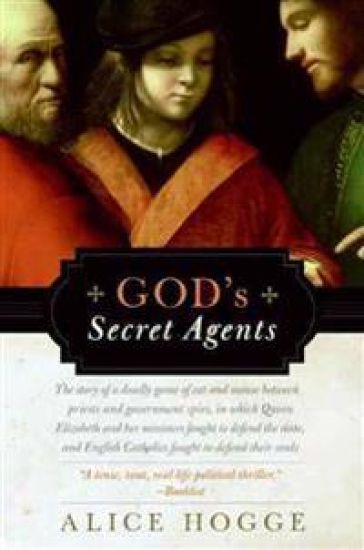
One evening in 1588, just weeks after the defeat of the Spanish Armada, two young men landed in secret on a beach in Norfolk, England. They were Jesuit priests, Englishmen, and their aim was to achieve by force of argument what the Armada had failed to do by force of arms: return England to the Catholic Church.Eighteen years later their mission would be shattered by the actions of the Gunpowder Plotters -- a small group of terrorists who famously tried to destroy the Houses of Parliament -- for the Jesuits were accused of having designed "that most horrid and hellish conspiracy."Alice Hogge follows "God's secret agents" from their schooling on the Continent, through their perilous return journeys and lonely lives in hiding, to, ultimately, the gallows. She offers a remarkable true account of faith, duty, intolerance, and martyrdom -- the unforgettable story of men who would die for a cause undone by men who would kill for it.
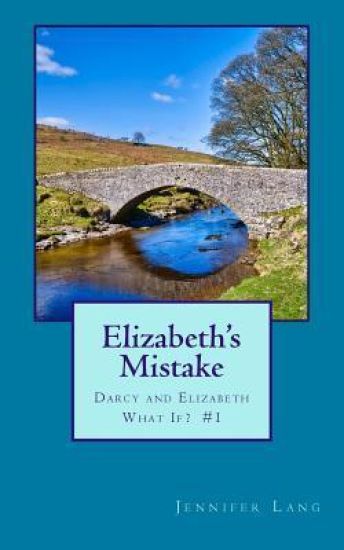
After her father died, Elizabeth found employment as a governess. But then she bashed her employer, the Earl of Lachglass, over the head with a vase while defending herself from his vile advances, She thought she had killed him. There was only one man in London to whom she could safely flee. The man whose proposal she had refused years before. When Elizabeth is reunited with Mr. Darcy, their love begins to blossom anew. But the Earl of Lachglass survived, and he wants revenge... Warning: This story has a scene of attempted sexual violence, though Elizabeth successfully defends herself.
Title: Cusack's Reign of Queen Elizabeth for scholarship candidates.Publisher: British Library, Historical Print EditionsThe British Library is the national library of the United Kingdom. It is one of the world's largest research libraries holding over 150 million items in all known languages and formats: books, journals, newspapers, sound recordings, patents, maps, stamps, prints and much more. Its collections include around 14 million books, along with substantial additional collections of manuscripts and historical items dating back as far as 300 BC.The HISTORY OF BRITAIN & IRELAND collection includes books from the British Library digitised by Microsoft. As well as historical works, this collection includes geographies, travelogues, and titles covering periods of competition and cooperation among the people of Great Britain and Ireland. Works also explore the countries' relations with France, Germany, the Low Countries, Denmark, and Scandinavia. ++++The below data was compiled from various identification fields in the bibliographic record of this title. This data is provided as an additional tool in helping to insure edition identification: ++++ British Library Ryde, Percy W.; 1895 xi, 118 p.; 8 . 9510.c.5.
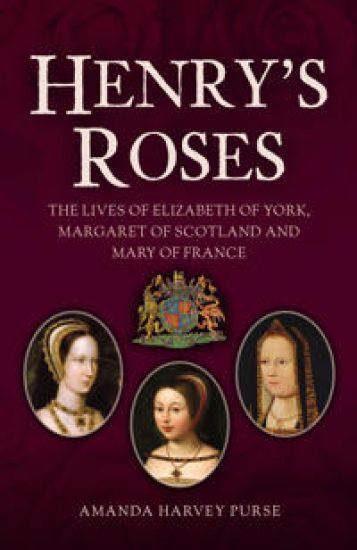
Henry VIII's relationships with women in his adult life famously did not go well. He was the Tudor king who had six wives, two of which he murdered. But what of the three powerful Tudor women that surrounded Henry VIII in his early life? The ones that saw him before the marriages, before the beheadings, before the tyranny? One was Queen of England, one was Queen of Scotland and the other was Queen of France - but for Henry VIII these women were his mother and two sisters.Henry's Roses explores the life of these three women, shining a spotlight and telling the story of how their fate was entwined with the most infamous monarch of them all.
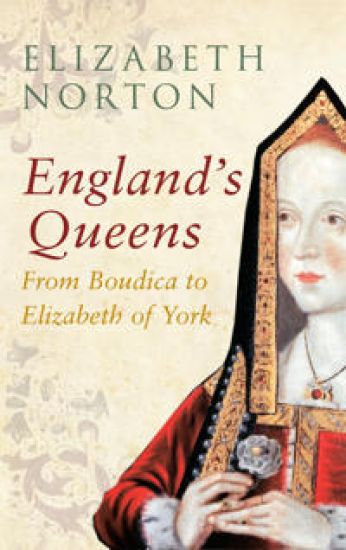
England has always been a place of queens. The earliest known lived nearly 2,000 years ago. Early queens, such as Boudica and Cartimandua, are historical figures, while others, such as Cordelia and Guinevere, are mythical. In both historical documents and romantic legends, the early queens of Britain played a prominent role, and this has never ceased to be the case. Nearly eighty women have sat on the throne of England, either as queen regnant or queen consort, and the voices of all of them survive through their writings and those of their contemporaries. For the first time, the voices of each individual queen can be heard. This volume charts the course of English queenship from our earliest named queen, the fierce Boudica, through the Anglo-Saxons, Normans, Plantagenets, to the queens of the Wars of the Roses and the woman whose marriage brought peace after years of conflict, Elizabeth of York.
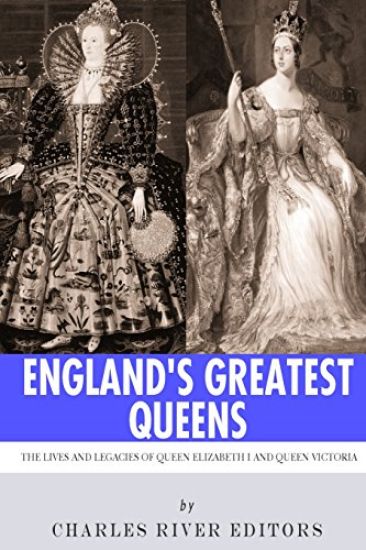
*Includes pictures of the queens and important people, places, and events in their lives. *Discusses the Elizabethan era and Victorian era in depth and looks at their legacies and depictions in pop culture. "Video et taceo." ("I see, and say nothing") - Queen Elizabeth I "Since it has pleased Providence to place me in this station, I shall do my utmost to fulfil my duty towards my country; I am very young and perhaps in many, though not in all things, inexperienced, but I am sure that very few have more real good will and more real desire to do what is fit and right than I have." - Queen Victoria, 1837 England has had no shortage of influential monarchs, but only Queen Elizabeth I and Queen Victoria had their nation's age literally named after them. Both the Elizabethan era and Victorian era have come to symbolize a golden age of peace and progress in every aspect of British life, with the long reigns of both queens also providing stability. When Queen Elizabeth II came to the throne in 1952, many commentators heralded the beginning of her reign as the second Elizabethan age. The first one, of course, concerned the reign of Henry VIII's second surviving daughter and middle surviving child, Queen Elizabeth I, one of England's most famous and influential rulers. It was an age when the arts, commerce and trade flourished. It was the epoch of gallantry and great, enduring literature. It was also an age of wars and military conflicts in which men were the primary drivers and women often were pawns. Elizabeth I changed the rules of the game and indeed she herself was changed by the game. She was a female monarch of England, a kingdom that had unceremoniously broken with the Catholic Church, and the Vatican and the rest of Christendom was baying for her blood. She had had commercial and militaristic enemies galore. In the end, she helped change the entire structure of female leadership. Elizabeth I still wielded great power in the 16th century, whereas Victoria was a constitutional monarch with limited power over the workings of the British government. But in a way, that made Victoria even more unique, as she still proved able to mold the cultural identity of a nearly 65 year long epoch. Furthermore, Victoria established some of the ceremonial customs of the British monarch and became both the forerunner and role model of subsequent queens, a legacy that continues to endure with her great-great granddaughter, Queen Elizabeth II. Though Britain's longest reigning monarch is now mostly associated with conservative values (particularly strict morality and traditional social and gender roles), Victoria and her era oversaw the cultural and technological progress of Britain and the West in general, architectural revivals, and the expansion of imperialism. While some of these developments have been perceived negatively over a century later, Britons of the 19th century and early 20th century often viewed the Victorian Era as the height of their nation's power and influence. England's Greatest Queens chronicles the lives and reigns of Elizabeth I and Victoria, as well as the eras they lived in. Along with pictures of important people, places, and events in her life, you will learn about Queen Elizabeth I and Queen Victoria like you never have before, in no time at all.
She was born on September 7, 1553 to King Henry VIII and his first wife Catherine of Aragon. Life may have started out pleasantly enough, living in the royal palace with her father the King - but things wouldn't stay so pleasant for long.You may know the name Queen Elizabeth, but perhaps you've wondered, "What's so great about her?"This book (part of the "What's So Great About...") series, gives kids insight into life, times and career of Queen Elizabeth I.
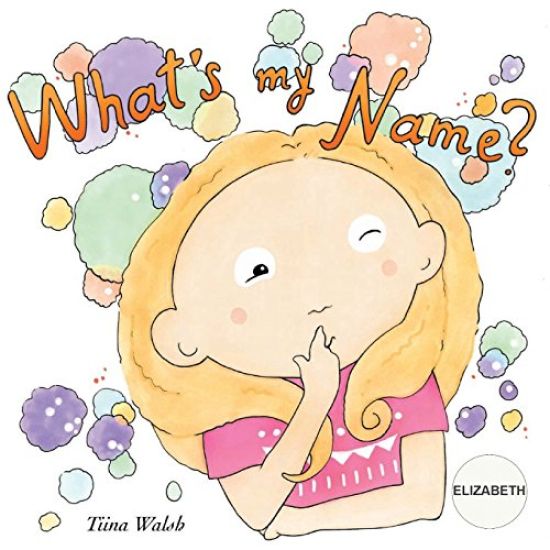
A personalised storybook for girls called ELIZABETH. The story is based on the letters of the child's own name. All books are different from one another. The girl wakes up but can't remember her name. Magic Mouse knows how to solve the problem. They go on a wonderful adventure in the Magic Bus Translated and adapted by the author from the top-selling Finnish language children's namebook series "Tytt /Poika, joka unohti nimens ". The beautiful hand-drawn pictures will delight both the young and the young-at-heart Looking for a namebook "What's my name?" but couldn't find a book for the name you are looking for? Please don't hesitate to contact me with your name request -Tiina Walsh Author fb.me/whatsmynamestorybooks for more details about the storybooks
*Includes pictures of the queens and important people, places, and events in their lives. *Discusses the Elizabethan era and Victorian era in depth and looks at their legacies and depictions in pop culture. "Video et taceo." ("I see, and say nothing") - Queen Elizabeth I "Since it has pleased Providence to place me in this station, I shall do my utmost to fulfil my duty towards my country; I am very young and perhaps in many, though not in all things, inexperienced, but I am sure that very few have more real good will and more real desire to do what is fit and right than I have." - Queen Victoria, 1837 England has had no shortage of influential monarchs, but only Queen Elizabeth I and Queen Victoria had their nation's age literally named after them. Both the Elizabethan era and Victorian era have come to symbolize a golden age of peace and progress in every aspect of British life, with the long reigns of both queens also providing stability. When Queen Elizabeth II came to the throne in 1952, many commentators heralded the beginning of her reign as the second Elizabethan age. The first one, of course, concerned the reign of Henry VIII's second surviving daughter and middle surviving child, Queen Elizabeth I, one of England's most famous and influential rulers. It was an age when the arts, commerce and trade flourished. It was the epoch of gallantry and great, enduring literature. It was also an age of wars and military conflicts in which men were the primary drivers and women often were pawns. Elizabeth I changed the rules of the game and indeed she herself was changed by the game. She was a female monarch of England, a kingdom that had unceremoniously broken with the Catholic Church, and the Vatican and the rest of Christendom was baying for her blood. She had had commercial and militaristic enemies galore. In the end, she helped change the entire structure of female leadership. Elizabeth I still wielded great power in the 16th century, whereas Victoria was a constitutional monarch with limited power over the workings of the British government. But in a way, that made Victoria even more unique, as she still proved able to mold the cultural identity of a nearly 65 year long epoch. Furthermore, Victoria established some of the ceremonial customs of the British monarch and became both the forerunner and role model of subsequent queens, a legacy that continues to endure with her great-great granddaughter, Queen Elizabeth II. Though Britain's longest reigning monarch is now mostly associated with conservative values (particularly strict morality and traditional social and gender roles), Victoria and her era oversaw the cultural and technological progress of Britain and the West in general, architectural revivals, and the expansion of imperialism. While some of these developments have been perceived negatively over a century later, Britons of the 19th century and early 20th century often viewed the Victorian Era as the height of their nation's power and influence. England's Greatest Queens chronicles the lives and reigns of Elizabeth I and Victoria, as well as the eras they lived in. Along with pictures of important people, places, and events in her life, you will learn about Queen Elizabeth I and Queen Victoria like you never have before, in no time at all.