What is the name of the first book in the Famous Five series? Who is NOT a member of the Five: Julian, Nora or Anne? What does George's father do for a living? So you've read the books, maybe more than once, but how much do you really know about the adventures of the Famous Five? Revisit their best moments and meet all your favourite characters again in this brilliant quiz book.
*Includes pictures of important people and places. *Profiles famous people and events like the Earps, Wild Bill Hickok, Calamity Jane and the Gunfight at the O.K. Corral. *Describes the sights, sounds, and history of both towns. *Includes bibliographies for each town. The Wild West has made legends out of many men, but it has forged a lasting legacy for Tombstone, Arizona and Deadwood, South Dakota, frontier boomtowns that have come to symbolize everything about the Old West. In many ways, these places fit all the stereotypes associated with that era in American history. Dusty places on the outskirts of civilization, Tombstone and Deadwood brought together miners, cowboys, lawmen, saloons, gambling, brothels, and everything in between, creating an environment that was always colorful and occasionally fatal. Those characteristics might not have distinguished Tombstone or Deadwood from other frontier outposts, but some of the most famous legends of the West called these towns home, most notably the Earp brothers and Doc Holliday in Tombstone and Wild Bill Hickok and Calamity Jane in Deadwood. Ultimately, the relationships and rivalries forged by the townspeople culminated in some of the West's most legendary events, including the murder of Hickok in 1876 and the Gunfight at the O.K. Corral on October 26, 1881. The West's most famous fight all but ensured that Tombstone would be the epicenter of Western lore, and as the city's population dwindled at the end of the 19th century, the allure of Tombstone as a tourist center took hold. Nearly half a million tourists flock to Tombstone each year, where they find a city that has cashed in on its legacy through careful preservation. Many of the historic buildings in Tombstone haven't changed much in the last 130 years, and visitors who come to the O.K. Corral or Boothill Cemetery can get an idea of what Tombstone was like in 1881. Similarly, Wild Bill's death helped ensure Deadwood would always be relevant, but in many ways the Deadwood craze was over almost before it began. During the 19th century, Deadwood's population reached its peak in the 1880s with a population of just less than 4,000, and fires, mining, and the closing of the frontier all made sure the population never grew. Today, barely 1,000 call Deadwood home, and it remains more an object of curiosity and tourism than anything else. Tombstone and Deadwood comprehensively covers the history of both towns, profiles the people who called them home, and highlights the places and events that made them famous. Along with pictures of important people, places, and events, you will learn about Tombstone and Deadwood like you never have before.
*Includes pictures. *Includes Hepburn and Tracy's quotes about their lives and careers. *Includes a bibliography for further reading. "Acting is the most minor of gifts and not a very high-class way to earn a living. After all, Shirley Temple could do it at the age of four." - Katharine Hepburn Of all the screen legends whose names remain synonymous with Hollywood, few took as long to become a star as Spencer Tracy, who is today recognized as one of the greatest actors ever but whose career did not truly take off until he was already in his mid-30s. After languishing with Fox for 5 years and over two dozen movies, one biographer had summed up his career to that point in time: "Tracy was scarcely a blip on the box office barometer in 1935, a critics' darling and little more." However, after joining MGM in 1935, Tracy catapulted to fame with one of the most impressive runs in Hollywood history, winning Oscars for Best Actor in 1938 and 1939 after already being nominated in 1937. Over the next three decades, Tracy would appear in classics like Captains Courageous and Judgment at Nuremburg, appear in 9 films with Katharine Hepburn, and receive 9 Oscar nominations over a span of 32 years, including for his final film, Guess Who's Coming to Dinner. Several contemporaries considered Tracy the greatest actor of his era, a sentiment summed up by actor Richard Widmark, who once said, "He's the greatest movie actor there ever was...I've learned more about acting from watching Tracy than in any other way." Tracy's career earned him an unbelievable number of accolades, and a place in the American Film Institute's Top 10 actors of the 20th century, but it's also an open question how much more he could have accomplished without a litany of health problems brought on by alcohol. Even as he went years at a time without drinking, the effects gradually wore him down physically, and by his early 60's, he needed full-time care, provided mostly by his most famous co-star and lover, Katharine Hepburn. Ironically, his relationship with Hepburn has actually served to overshadow his own acting career among modern viewers, even as his acting abilities remain universally recognized. Early in her career, there was no actress more controversial than Katharine Hepburn. By the end of her career, there was no actress more beloved than Katharine Hepburn. Famously labeled "box office poison" in 1938, it is clear that Hollywood was not prepared for the young Hepburn. Yet, even after being scorned by the general public, Hepburn still retained a magnetism that would endear her to the public for decades to come, and after a tumultuous first decade as an actress, Hepburn became arguably the biggest box office sensation in the industry. Moreover, in an era when most actresses were unable to secure starring roles after reaching middle age, Hepburn remained a leading lady even after turning 60. Hepburn acted in some capacity from the start of the 1930s through the early-1990s, and it is important to view how the nature of Hepburn's roles changed from her youth to old age. Aside from being one of the most recognized and acclaimed actresses in history, Hepburn's career is also of great importance because she forced Americans to reevaluate their expectations for female behavior, both in films themselves and off the movie set as well. As society began to pay greater attention to the importance of strong roles for women, Hepburn's career gained an even greater importance, and at a time in which women were expected to be passive, she was a fiercely individual figure who offered a daring alternative to the conventions of femininity that had long existed in American culture. This biography profiles the lives and careers of two of Hollywood's biggest icons. Along with pictures of important people, places, and events, you will learn about Tracy and Hepburn like you never have before.
*Includes pictures. *Explains the history of Tenochtitlan from its founding to its destruction by Cortes and the Spanish. *Includes descriptions of Tenochtitlan by Spanish conquistadors, including Cortes' 1520 letter to Holy Roman Emperor Charles V. *Describes the layout of Tenochtitlan and its important structures. *Includes footnotes and a bibliography for further reading. "When we saw so many cities and villages built in the water and other great towns on dry land... we were amazed and said that it was like the enchantments they tell of in the legend of Amadis, on account of the great towers and buildings rising from the water and all built of masonry. And some of our soldiers even asked whether the things that we saw were not a dream... I do not know how to describe it, seeing things as we did that had never been heard of or seen before, not even dreamed about." - Bernal D az del Castillo Mexico City is now easily the largest city in the Western Hemisphere, trailing only Tokyo internationally, but unlike the other great cities of the Americas, Mexico City is not a new place. Mexico City instead has much in common with cities like London, Delhi or Cairo in the East in that it is an ancient city dating back centuries before the arrival of Colombus in Hispa ola. For, while much (including the name) has changed, Mexico City is the mighty Tenochtitlan, capital of the Aztec Empire and the great American metropolis of the Spanish Empire. There has been no break in occupation, and despite much devastation in the Conquest, the city was never fully destroyed. Indeed, from the moment Spanish conquistador Hernan Cort s first found and confronted them, the Aztecs have fascinated the world, and they continue to hold a unique place both culturally and in pop culture. Nearly 500 years after the Spanish conquered their mighty empire, the Aztecs are often remembered today for their major capital, Tenochtitlan, as well as being fierce conquerors of the Valley of Mexico who often engaged in human sacrifice rituals. But thanks to the Spanish conquest, even though the Aztecs continue to interest people across the world centuries after their demise, it has fallen on archaeologists and historians to try to determine the actual history, culture, and lives of the Aztecs from the beginning to the end, relying on excavations, primary accounts, and more. Much of what is known today does come from the Conquistadores, and what those men encountered was entirely unexpected: one of the world's greatest cities, teeming with over 200,000 people, built on an island on a lake and connected to the shore by a number of long, broad stone causeways. On the water itself were remarkable floating gardens, on surrounding shorelines were sprawling suburbs, and behind them was a dramatic wall of mountain peaks. Tenochtitlan: The History of the Aztec's Most Famous City comprehensively covers the history of the city, examining what life was like in the great city, who ruled the city, and what the day-to-day existence of all sorts of Tenocha (people of the city) was like. Along with pictures and a bibliography, you will learn about Tenochtitlan like you never have before, in no time at all.
*Includes pictures. *Includes footnotes and a bibliography for further reading. Many ancient civilizations have influenced and inspired people in the 21st century. The Greeks and Romans continue to fascinate the West today. But of all the world's civilizations, none have intrigued people more than the Mayans, whose culture, astronomy, language, and mysterious disappearance all continue to captivate people. In 2012 especially, there was a renewed focus on the Mayans, whose advanced calendar has led many to speculate the world would end on the same date the Mayan calendar ends, but if anything, the focus on the "doomsday" scenario overshadowed the Mayans' true contribution to astronomy, language, sports, and art. The Maya maintained power in the Yucatan for over a thousand years, and at the height of its "Classical era" (3rd-9th centuries A.D.), the city of Tikal was one of the power centers of the empire. Archaeologists believe Tikal had been built as early as the 5th or 4th century BC, and eventually it became a political, economic and military capital that was an important part of a far-flung network across Mesoamerica, despite the fact it was seemingly conquered by Teotihuacan in the 4th century AD. It seems the foreign rulers came to assimilate Mayan culture, thus ensuring Tikal would continue to be a power base, and as a result, the city would not be abandoned until about the 10th century AD. As one of the Ancient Maya's most important sites, construction at Tikal was impressive, and even though it was apparently conquered, the city's records were unusually well preserved. This includes a list of the city's dynastic rulers, as well as the tombs and monuments dedicated to them. Thanks to this preservation, Tikal offers researchers their best look at the Ancient Maya and has gone a long way toward helping scholars understand Mayan history. Tikal: The History of the Ancient Maya's Famous Capital covers the history of the city, as well as the speculation and debate surrounding it. Along with pictures and a bibliography, you will learn about Tikal like you never have before, in no time at all.
Pineapple Sam' #2 Children's BookWilly's dream and Pineapple Sam's first solo fishing trip in Kauai's famous Waita Reservoir is far more than the normal, lazy fishing adventure. Pineapple Sam and his beloved Poi dog are an inseparable duo, a boy experiencing all the heart-pounding fun that any child would want to have with their childhood furry friend. This tale is a must-read for any young person with a best friend like Willy or just to share--as all good fishing stories are
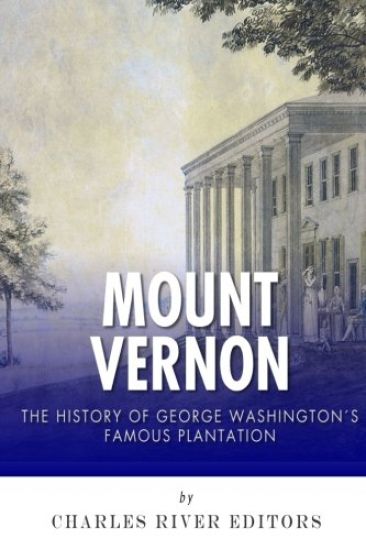
*Includes pictures *Includes accounts of Mount Vernon and its construction written by George Washington *Includes online resources and a bibliography for further reading *Includes a table of contents "I can truly say I had rather be at Mount Vernon with a friend or two about me, than to be attended at the Seat of Government by the Officers of State and the Representatives of every Power in Europe." - George Washington, letter to David Stuart, June 15, 1790 Every American is taught a pristine narrative of the life and legacy of George Washington and can easily recite the highlights of the "Father of Our Country". The remarkable Virginian led an under-resourced rag-tag army to ultimate victory in the American Revolution before becoming the nation's first president, setting it on its path toward superpower status. He may not have actually chopped down a cherry tree or tossed a silver dollar across the Potomac, but his contemporaries considered his character above reproach. When Washington voluntary resigned as commander of the armies, he stunned the world. Everyone in the colonies and the world realized that Washington, at the head of the last army standing in the colonies, could have made himself king of the new United States on the spot, and it would have been a move supported by his rank and file soldiers. Instead, Washington became the first Westerner to voluntarily demobilize his army, ensuring civilian control of the new nation. King George III called Washington "the greatest character of the age" for making that decision. As President from 1788-1796, Washington set every precedent for the executive branch of the new government, from forming a "Cabinet" to limiting himself to two terms. He even set precedents with his farewell address, which helped guide the policies of subsequent presidents. Put simply, Washington did more than any other man to ensure the success of the American Revolution and the safe passage of the new United States from fledgling nation to budding power, For about as long as Washington has been famous, so has his most famous residence, the spacious Virginian plantation known as Mount Vernon. Washington lived in a smaller structure on the land as a teen, and ironically, tradition and inheritance suggested that George would never be the one to own the land. Of course, fate would intervene, and Washington would not only come into possession of the 10,000 acres in 1761 but build and renovate the property to create one of the most famous private residences in the nation. Washington would live at Mount Vernon before the Revolution and retire there after the war and after his presidency. Indeed, he would die there and be buried there as well. By 1760, Washington was one of Virginia's wealthiest and most influential citizens, in large measure due to Mount Vernon's success as a tobacco plantation. However, to make that happen, Washington used hundreds of slaves, and though he mandated that his slaves be freed upon his death, the estate continued to employ slave labor until his widow's death years later. Thus, while Mount Vernon remains a hallowed tourist spot, it also underscores the most divisive and controversial issue of the post-Revolution era. Mount Vernon: The History of George Washington's Famous Plantation tells the story of the residence most associated with the first president, and the controversial nature of the slave labor used there. Along with pictures of important people, places, and events, you will learn about Mount Vernon like never before, in no time at all.
The Fly As An Art Form The purpose of this book is twofold: to trace the evolution of realistic fly tying and to feature the creations of the world's most-skilled practitioners of this art form. Some of these contemporary artisans concentrate on imitations of aquatic insects most likely seen by fly fishers. Their focus is on mayflies, caddisflies and stoneflies. For others, the sky is the limit and they tie replicas of anything, including praying mantis, crabs, bees, hornets, ants, spiders, and fish. Theirs is a small, but expanding, cadre of enthusiastic tyers whose work will astonish even those who have never tied a fly. The realism of their fly patterns, whether an art form destined for framed presentation, or a working fly intended for the end of a fly leader, will amaze.