Kirjojen hintavertailu. Mukana 11 244 527 kirjaa ja 12 kauppaa.

Kirjahaku

Etsi kirjoja tekijän nimen, kirjan nimen tai ISBN:n perusteella.

187 tulosta hakusanalla Samhita Arni

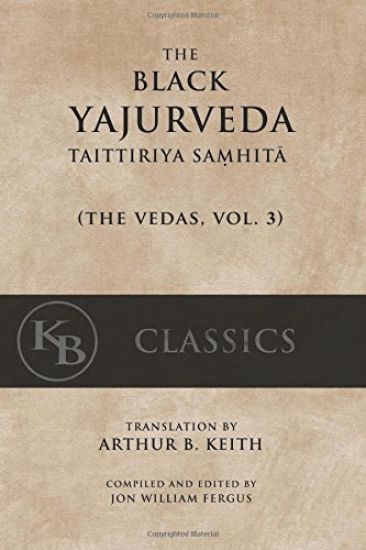
The Black Yajurveda: Taittiriya Samhita

The Black Yajurveda: Taittiriya Samhita

Anonymous

Createspace Independent Publishing Platform
2017
nidottu
The present volume is an unabridged edition of the Black Yajurveda, part of a five volume set of the complete Veda Samhitas. Each Veda has been proofed and all Sanskrit terms updated and synced between versions. An index is provided at the close of each volume for all Sanskrit terms that were left untranslated. -- Volumes available in this set: 1. Rigveda 978-1542459075; 2. White Yajurveda 978-1542459105; 3. Black Yajurveda 978-1542462525; 4. Samaveda 978-1542463379; 5. Atharvaveda 978-1542464222. -- A single volume edition of all Vedas is also available: 978-1541294714 - - From the foreword: The Vedas (from the root vid, "to know," or "divine knowledge") are the most ancient of all the Hindu scriptures. There were originally three Vedas-the Laws of Manu always speaks of the three, as do the oldest (Mukhya) Upanishads-but a later work called the Atharvaveda has been added to these, to now constitute the fourth. The name Rigveda signifies "Veda of verses," from rig, a spoken stanza; Samaveda, the "Veda of chants," from saman, a song or chant; Yajurveda, the "Veda of sacrificial formulas," from yajus, a sacrificial text. The Atharvaveda derives its name from the sage Atharvan, who is represented as a Prajapati, the edlest son of Brahma, and who is said to have been the first to institute the fire-sacrifices. The complex nature of the Vedas and the array of texts associated with them may be briefly outlined as follows: "The Rig-Veda is the original work, the Yajur-Veda and Sama-Veda in their mantric portions are different arrangements of its hymns for special purposes. The Vedas are divided into two parts, the Mantra and Brahmana. The Mantra part is composed of suktas (hymns in verse); the Brahmana part consists of liturgical, ritualistic, exegetical, and mystic treatises in prose. The Mantra or verse portion is considered more ancient than the prose works; and the books in which the hymns are collected are called samhitas (collections). More or less closely connected with the Brahmanans (and in a few exceptional cases with the Mantra part) are two classes of treatises in prose and verse called Aranyaka and Upanishad. The Vedic writings are again divided into two great divisions, exoteric and esoteric, the former called the karma-kanda (the section of works) and the latter the jnana-kanda (section of wisdom)." (Encyclopedic Theosophical Glossary) The great antiquity of the Vedas is sufficiently proven by the fact that they are written in such an ancient form of Sanskrit, so different from the Sanskrit now used, that there is no other work like them in the literature of this "eldest sister" of all the known languages, as Prof. Max Muller calls it. Only the most learned of the Brahman Pundits can read the Vedas in their original. Furthermore, the Vedas cannot be viewed as singular works by singular authors, but rather as compilations, assembled over a great and unknown period of time. "Almost every hymn or division of a Veda is ascribed to various authors. It is generally believed that these subdivisions were revealed orally to the rishis or sages whose respective names they bear; hence the body of the Veda is known as sruti (what was heard) or divine revelation. The very names of these Vedic sages, such as Vasishtha, Visvamitra, and Narada, all of which belong to men born in far distant ages, shows that millennia must have elapsed between the different dates of their composition." (Encyclopedic Theosophical Glossary) It is generally agreed that the Vedas were finally arranged and compiled around fourteen centuries before our era; but this interferes in no way with their great antiquity, as they are acknowledged to have been long taught and passed down orally, perhaps for thousands of years, perhaps for far longer, before being finally compiled and recorded (the latter is traditionally said to have occurred on the shores of Lake Manasarovara, beyond the Himalayas).
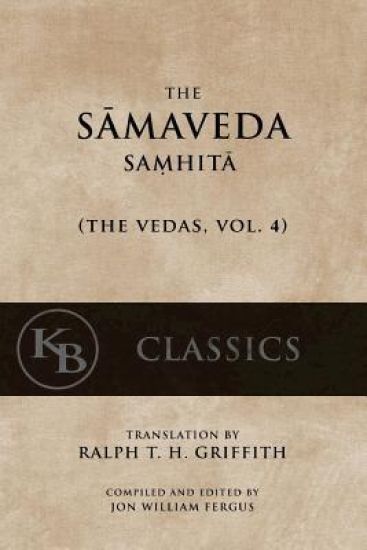
The Samaveda Samhita

The Samaveda Samhita

Anonymous

Createspace Independent Publishing Platform
2017
nidottu
The present volume is an unabridged edition of the Samaveda, part of a five volume set of the complete Veda Samhitas. Each Veda has been proofed and all Sanskrit terms updated and synced between versions. An index is provided at the close of each volume for all Sanskrit terms that were left untranslated. -- Volumes available in this set: 1. Rigveda 978-1542459075; 2. White Yajurveda 978-1542459105; 3. Black Yajurveda 978-1542462525; 4. Samaveda 978-1542463379; 5. Atharvaveda 978-1542464222. -- A single volume edition of all Vedas is also available: 978-1541294714 - - From the foreword: The Vedas (from the root vid, "to know," or "divine knowledge") are the most ancient of all the Hindu scriptures. There were originally three Vedas-the Laws of Manu always speaks of the three, as do the oldest (Mukhya) Upanishads-but a later work called the Atharvaveda has been added to these, to now constitute the fourth. The name Rigveda signifies "Veda of verses," from rig, a spoken stanza; Samaveda, the "Veda of chants," from saman, a song or chant; Yajurveda, the "Veda of sacrificial formulas," from yajus, a sacrificial text. The Atharvaveda derives its name from the sage Atharvan, who is represented as a Prajapati, the edlest son of Brahma, and who is said to have been the first to institute the fire-sacrifices. The complex nature of the Vedas and the array of texts associated with them may be briefly outlined as follows: "The Rig-Veda is the original work, the Yajur-Veda and Sama-Veda in their mantric portions are different arrangements of its hymns for special purposes. The Vedas are divided into two parts, the Mantra and Brahmana. The Mantra part is composed of suktas (hymns in verse); the Brahmana part consists of liturgical, ritualistic, exegetical, and mystic treatises in prose. The Mantra or verse portion is considered more ancient than the prose works; and the books in which the hymns are collected are called samhitas (collections). More or less closely connected with the Brahmanans (and in a few exceptional cases with the Mantra part) are two classes of treatises in prose and verse called Aranyaka and Upanishad. The Vedic writings are again divided into two great divisions, exoteric and esoteric, the former called the karma-kanda (the section of works) and the latter the jnana-kanda (section of wisdom)." (Encyclopedic Theosophical Glossary) The great antiquity of the Vedas is sufficiently proven by the fact that they are written in such an ancient form of Sanskrit, so different from the Sanskrit now used, that there is no other work like them in the literature of this "eldest sister" of all the known languages, as Prof. Max Muller calls it. Only the most learned of the Brahman Pundits can read the Vedas in their original. Furthermore, the Vedas cannot be viewed as singular works by singular authors, but rather as compilations, assembled over a great and unknown period of time. "Almost every hymn or division of a Veda is ascribed to various authors. It is generally believed that these subdivisions were revealed orally to the rishis or sages whose respective names they bear; hence the body of the Veda is known as sruti (what was heard) or divine revelation. The very names of these Vedic sages, such as Vasishtha, Visvamitra, and Narada, all of which belong to men born in far distant ages, shows that millennia must have elapsed between the different dates of their composition." (Encyclopedic Theosophical Glossary) It is generally agreed that the Vedas were finally arranged and compiled around fourteen centuries before our era; but this interferes in no way with their great antiquity, as they are acknowledged to have been long taught and passed down orally, perhaps for thousands of years, perhaps for far longer, before being finally compiled and recorded (the latter is traditionally said to have occurred on the shores of Lake Manasarovara, beyond the Himalayas).
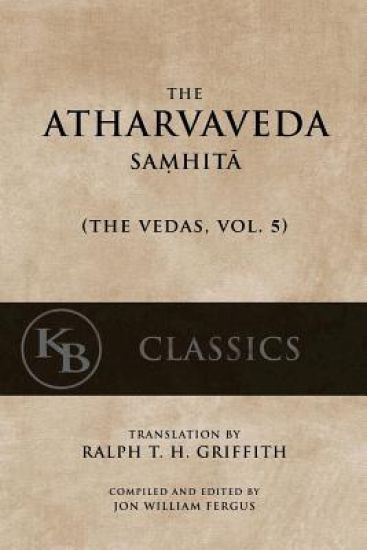
The Atharvaveda Samhita

The Atharvaveda Samhita

Anonymous

Createspace Independent Publishing Platform
2017
nidottu
The present volume is an unabridged edition of the Atharvaveda, part of a five volume set of the complete Veda Samhitas. Each Veda has been proofed and all Sanskrit terms updated and synced between versions. An index is provided at the close of each volume for all Sanskrit terms that were left untranslated. -- Volumes available in this set: 1. Rigveda 978-1542459075; 2. White Yajurveda 978-1542459105; 3. Black Yajurveda 978-1542462525; 4. Samaveda 978-1542463379; 5. Atharvaveda 978-1542464222. -- A single volume edition of all Vedas is also available: 978-1541294714 - - From the foreword: The Vedas (from the root vid, "to know," or "divine knowledge") are the most ancient of all the Hindu scriptures. There were originally three Vedas-the Laws of Manu always speaks of the three, as do the oldest (Mukhya) Upanishads-but a later work called the Atharvaveda has been added to these, to now constitute the fourth. The name Rigveda signifies "Veda of verses," from rig, a spoken stanza; Samaveda, the "Veda of chants," from saman, a song or chant; Yajurveda, the "Veda of sacrificial formulas," from yajus, a sacrificial text. The Atharvaveda derives its name from the sage Atharvan, who is represented as a Prajapati, the edlest son of Brahma, and who is said to have been the first to institute the fire-sacrifices. The complex nature of the Vedas and the array of texts associated with them may be briefly outlined as follows: "The Rig-Veda is the original work, the Yajur-Veda and Sama-Veda in their mantric portions are different arrangements of its hymns for special purposes. The Vedas are divided into two parts, the Mantra and Brahmana. The Mantra part is composed of suktas (hymns in verse); the Brahmana part consists of liturgical, ritualistic, exegetical, and mystic treatises in prose. The Mantra or verse portion is considered more ancient than the prose works; and the books in which the hymns are collected are called samhitas (collections). More or less closely connected with the Brahmanans (and in a few exceptional cases with the Mantra part) are two classes of treatises in prose and verse called Aranyaka and Upanishad. The Vedic writings are again divided into two great divisions, exoteric and esoteric, the former called the karma-kanda (the section of works) and the latter the jnana-kanda (section of wisdom)." (Encyclopedic Theosophical Glossary) The great antiquity of the Vedas is sufficiently proven by the fact that they are written in such an ancient form of Sanskrit, so different from the Sanskrit now used, that there is no other work like them in the literature of this "eldest sister" of all the known languages, as Prof. Max Muller calls it. Only the most learned of the Brahman Pundits can read the Vedas in their original. Furthermore, the Vedas cannot be viewed as singular works by singular authors, but rather as compilations, assembled over a great and unknown period of time. "Almost every hymn or division of a Veda is ascribed to various authors. It is generally believed that these subdivisions were revealed orally to the rishis or sages whose respective names they bear; hence the body of the Veda is known as sruti (what was heard) or divine revelation. The very names of these Vedic sages, such as Vasishtha, Visvamitra, and Narada, all of which belong to men born in far distant ages, shows that millennia must have elapsed between the different dates of their composition." (Encyclopedic Theosophical Glossary) It is generally agreed that the Vedas were finally arranged and compiled around fourteen centuries before our era; but this interferes in no way with their great antiquity, as they are acknowledged to have been long taught and passed down orally, perhaps for thousands of years, perhaps for far longer, before being finally compiled and recorded (the latter is traditionally said to have occurred on the shores of Lake Manasarovara, beyond the Himalayas).
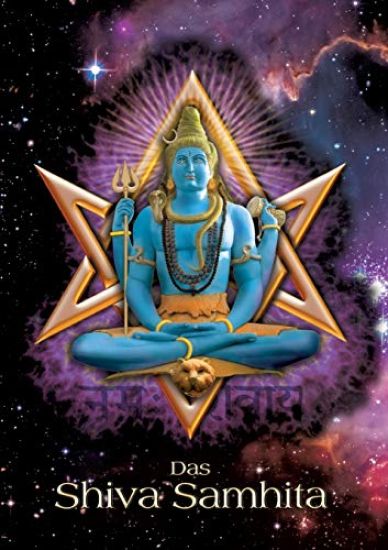
Das Shiva Samhita

Das Shiva Samhita

Johannes H Von Hohenstätten

Books on Demand
2014
pokkari
Das "Shiva Samhita" ist die wichtigste klassische Abhandlungen ber den Yoga. Dieses Werk hat seinen Ursprung rein in der stlichen Tantrik und ist somit ein hermetisch-indisches Grundlagenwerk, welches die stufenf rmige Erweckung der wahren Kundalini beschreibt. Deshalb gilt das "Shiva Samhita" als die umfassendste Abhandlung ber dieses Gebiet und s mtlich nachfolgende B cher ber Yoga st tzen sich auf dieses Werk Inhaltsangabe: I. Kapitel Die Existenz des Einen Meinungsverschiedenheiten Yoga, die einzige Methode der Befreiung Ritualismus Weisheit Der Geist Yoga und Maya Definition des Paramhamsa Emanation oder Entwicklung Absorption oder Involution Karma kleidet des Jiva mit dem K rper II. Kapitel Der Mikrokosmos Nervenzentren Nerven Beckenbereich Bauchregion Der Jivatma III. Kapitel Die Yoga-Praxis - die Vayus Der Guru. Der Adhikari Der Ort Der Pranayama Dinge, auf die man verzichten muss Die Mittel Die erste Stufe Die zweite und dritte Stufe Vayu-Siddhas Erh hung der Dauer Siddhas oder Vollkommenheiten Ghata Avasta Parichaya Nishpatti Die K rperhaltungen Siddhasana Padmasana Ugrasana Svastikasana IV. Kapitel Yoni-Mudra Das Erwachen der Kundalini Maha-Mudra Maha-Bandha Maha-Vedha Khechari Jalandhara Mula Bandha Viparit-Karana Uddhana-Bandha Vajrondi-Mudra Shakti-Chalan V. Kapitel Bhoga Dharma Jnana Vier Arten von Yoga Sadhaks Die Lauen Die Mittleren Die Gl henden Die Eifrigsten Anrufung des Schatten Wie er zu erwecken ist Raj-Yoga Anahad-Ton Ein Geheimnis Verschiedene Arten von Dharana Die sechs Chakren Muladhara-Chakra Swadhistan-Chakra Manipur-Chakra Anahat-Chakra Visuddha-Chakra Ajna-Chakra Der tausend-bl ttrige Lotus Die drei heiligen Fl sse Der geheimnisvolle Mond Der mystische Berg Kailas Der Raja-Yoga Die Rajadhiraj-Yoga Das Mantra bzw. Tantra
Prognostic importance of Charak samhita

Prognostic importance of Charak samhita

Gaurav Sharma; Vikash Bhatnagar; Sandeep Lahange

Lap Lambert Academic Publishing
2023
pokkari
Indriya sthana is one of the eight sections of Charaka samhita. It contains twelve adhyaya. In the section of Indriya sthana various arishta lakshana (fatal signs or end stage signs or symptoms) are described which leads to imminent death. It describes the prognostication of life expectancy (aayu maana) in the aatura who are in end stage of life. 'Indriya sthana' describes about 'arishta lakshana'. 'Arishtalakshana' are also known as signs of end stage of life, which are also sign of imminent death. Aatura who are suffering with arishta lakshana are not treatable. Most of time, their vyadhi are progressive, and resistive to chikitsa, so Vaidya should avoid to give chikitsa to such aatura who are with arishta lakshana. Vaidya should be able to recognize such aatura who are with arishta lakshana. They should avoid treating such aatura. With the help of concept of Indriya sthana, they can understand or recognize such aatura (patient) who is with arisha lakshana, and continuously leading to death.
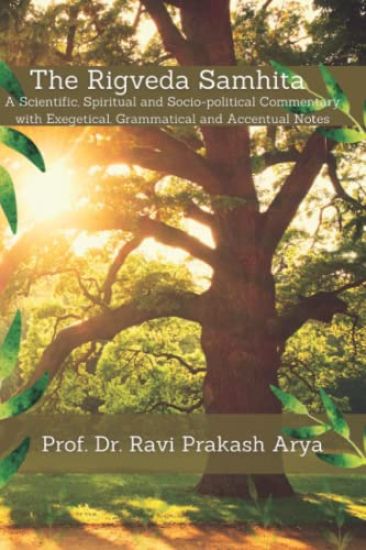
The Rigveda Samhita: A Scientific, Spiritual and Socio-Political Commentary with Exegetical, Grammatical and Accentual Notes
This commentary is going to be the first-ever systematic exhaustive and extensive attempt in the history of Vedic interpretation. The present work deals with the first four Suktas comprising of 50 mantras. The Saṁhitā pātha of the Ṛgveda, is supplied with padapātha; each vocable has been rendered with grammatical, accentuation, lexicon and exegetical notes, so as to present a full exposition of each and every vocable. In the present work a humble attempt has been made to render scientific (adhidaivika), spiritual (adhyatamika) and Socio-political (adhibhautika) translation of Vedic lores following Padapāthakāras, Brāhmanas, Nairuktas, Aitihāsikas, Naidānas, ancient commentators like Skandhswami and Sayana and modern interpreters of the Veda like Swami Dayananda Saraswati and Sri Aurobindo.
Atharva-Veda samhita (First Half)

Atharva-Veda samhita (First Half)

Charles Rockwell Lanman

Alpha Edition
2020
pokkari
This book has been considered by academicians and scholars of great significance and value to literature. This forms a part of the knowledge base for future generations. So that the book is never forgotten we have represented this book in a print format as the same form as it was originally first published. Hence any marks or annotations seen are left intentionally to preserve its true nature.
Atharva-Veda samhita (Second Half)
This book has been considered by academicians and scholars of great significance and value to literature. This forms a part of the knowledge base for future generations. So that the book is never forgotten we have represented this book in a print format as the same form as it was originally first published. Hence any marks or annotations seen are left intentionally to preserve its true nature.
Atharva-Veda samhita (Second Half)
This book has been considered by academicians and scholars of great significance and value to literature. This forms a part of the knowledge base for future generations. So that the book is never forgotten we have represented this book in a print format as the same form as it was originally first published. Hence any marks or annotations seen are left intentionally to preserve its true nature.
Recherches Sur l'Histoire de la Samhita Du Rig-Véda. Tome 1
Recherches sur l'histoire de la Samhita du Rig-Veda. 1 / par Abel Bergaigne, ...Date de l'edition originale: 1886-1887Ce livre est la reproduction fidele d'une oeuvre publiee avant 1920 et fait partie d'une collection de livres reimprimes a la demande editee par Hachette Livre, dans le cadre d'un partenariat avec la Bibliotheque nationale de France, offrant l'opportunite d'acceder a des ouvrages anciens et souvent rares issus des fonds patrimoniaux de la BnF.Les oeuvres faisant partie de cette collection ont ete numerisees par la BnF et sont presentes sur Gallica, sa bibliotheque numerique.En entreprenant de redonner vie a ces ouvrages au travers d'une collection de livres reimprimes a la demande, nous leur donnons la possibilite de rencontrer un public elargi et participons a la transmission de connaissances et de savoirs parfois difficilement accessibles.Nous avons cherche a concilier la reproduction fidele d'un livre ancien a partir de sa version numerisee avec le souci d'un confort de lecture optimal. Nous esperons que les ouvrages de cette nouvelle collection vous apporteront entiere satisfaction.Pour plus d'informations, rendez-vous sur www.hachettebnf.fr
Recherches Sur l'Histoire de la Samhita Du Rig-Véda. Tome 2-4
Recherches sur l'histoire de la Samhita du Rig-Veda. 2-4 / par Abel Bergaigne, ...Date de l'edition originale: 1886-1887Ce livre est la reproduction fidele d'une oeuvre publiee avant 1920 et fait partie d'une collection de livres reimprimes a la demande editee par Hachette Livre, dans le cadre d'un partenariat avec la Bibliotheque nationale de France, offrant l'opportunite d'acceder a des ouvrages anciens et souvent rares issus des fonds patrimoniaux de la BnF.Les oeuvres faisant partie de cette collection ont ete numerisees par la BnF et sont presentes sur Gallica, sa bibliotheque numerique.En entreprenant de redonner vie a ces ouvrages au travers d'une collection de livres reimprimes a la demande, nous leur donnons la possibilite de rencontrer un public elargi et participons a la transmission de connaissances et de savoirs parfois difficilement accessibles.Nous avons cherche a concilier la reproduction fidele d'un livre ancien a partir de sa version numerisee avec le souci d'un confort de lecture optimal. Nous esperons que les ouvrages de cette nouvelle collection vous apporteront entiere satisfaction.Pour plus d'informations, rendez-vous sur www.hachettebnf.fr
An English translation of the Sushruta samhita; With a full and Comprehensive introduction, Additional, texts, Different, Readings, Notes, Comparative Views, Index, Glossary and Plates (Volume III) Uttara-Tantra
This book has been considered by academicians and scholars of great significance and value to literature. This forms a part of the knowledge base for future generations. So that the book is never forgotten we have represented this book in a print format as the same form as it was originally first published. Hence any marks or annotations seen are left intentionally to preserve its true nature.