Kirjojen hintavertailu. Mukana 11 342 352 kirjaa ja 12 kauppaa.

Kirjahaku

Etsi kirjoja tekijän nimen, kirjan nimen tai ISBN:n perusteella.

1000 tulosta hakusanalla Samir Balbal

Philosophy of Biology

Philosophy of Biology

Samir Okasha

Oxford University Press
2019
nidottu
Over the last forty years the philosophy of biology has emerged as an important sub-discipline of the philosophy of science. Covering some of science's most divisive topics, such as philosophical issues in genetics, it also encompasses areas where modern biology has increasingly impinged on traditional philosophical questions, such as free will, essentialism, and nature vs nurture. In this Very Short Introduction Samir Okasha outlines the core issues with which contemporary philosophy of biology is engaged. Offering a whistle-stop tour of the history of biology, he explores key ideas and paradigm shifts throughout the centuries, including areas such as the theory of evolution by natural selection; the concepts of function and design; biological individuality; and the debate over adaptationism. Throughout Okasha makes clear the relevance of biology for understanding human beings, human society, and our place in the natural world, and the importance of engaging with these issues. ABOUT THE SERIES: The Very Short Introductions series from Oxford University Press contains hundreds of titles in almost every subject area. These pocket-sized books are the perfect way to get ahead in a new subject quickly. Our expert authors combine facts, analysis, perspective, new ideas, and enthusiasm to make interesting and challenging topics highly readable.

Agents and Goals in Evolution

Agents and Goals in Evolution

Samir Okasha

Oxford University Press
2018
sidottu
Samir Okasha offers a philosophical perspective on evolutionary biology in Agents and Goals in Evolution. His focus is on "agential thinking", which is a mode of thought commonly employed in evolutionary biology. The paradigm case of agential thinking involves treating an evolved organism as if it were an agent pursuing a goal, such as survival or reproduction, and treating its phenotypic traits as strategies for achieving that goal, or furthering its biological interests. Agential thinking involves deliberately transposing a set of concepts - goals, interests, strategies - from rational human agents to the biological world more generally. Okasha's enquiry begins by asking whether this is justified. Is agential thinking mere anthropomorphism, or does it play a genuine intellectual role in the science? This central question leads Okasha to a series of further questions. How do we identify the "goal" that evolved organisms will behave as if they are trying to achieve? Can agential thinking ever be applied to groups or genes, rather than to individual organisms? And how does agential thinking relate to the controversies over fitness-maximization in evolutionary biology? In the final third of the book, Okasha examines the relation between the adaptive and the rational. If organisms can validly be treated as agent-like, for the purposes of evolutionary analysis, should we expect that their evolved behaviour will correspond to the behaviour of rational agents as codified in the theory of rational choice? If so, does this mean that the fitness-maximizing paradigm of the evolutionary biologist can be mapped directly to the utility-maximizing paradigm of the rational choice theorist? Okasha explores these questions using an inter-disciplinary methodology that draws on philosophy of science, evolutionary biology and economics.
Evolution and the Levels of Selection

Evolution and the Levels of Selection

Samir Okasha

Clarendon Press
2006
sidottu
Does natural selection act primarily on individual organisms, on groups, on genes, or on whole species? Samir Okasha provides a comprehensive analysis of the debate in evolutionary biology over the levels of selection, focusing on conceptual, philosophical and foundational questions. A systematic framework is developed for thinking about natural selection acting at multiple levels of the biological hierarchy; the framework is then used to help resolve outstanding issues. Considerable attention is paid to the concept of causality as it relates to the levels of selection, in particular the idea that natural selection at one hierarchical level can have effects that 'filter' up or down to other levels. Unlike previous work in this area by philosophers of science, full account is taken of the recent biological literature on 'major evolutionary transitions' and the recent resurgence of interest in multi-level selection theory among biologists. Other biological topics discussed include Price's equation, kin and group selection, the gene's eye view, evolutionary game theory, outlaws and selfish genetic elements, species and clade selection, and the evolution of individuality. Philosophical topics discussed include reductionism and holism, causation and correlation, the nature of hierarchical organization, and realism and pluralism.
Evolution and the Levels of Selection

Evolution and the Levels of Selection

Samir Okasha

Oxford University Press
2008
nidottu
Does natural selection act primarily on individual organisms, on groups, on genes, or on whole species? Samir Okasha provides a comprehensive analysis of the debate in evolutionary biology over the levels of selection, focusing on conceptual, philosophical and foundational questions. A systematic framework is developed for thinking about natural selection acting at multiple levels of the biological hierarchy; the framework is then used to help resolve outstanding issues. Considerable attention is paid to the concept of causality as it relates to the levels of selection, in particular the idea that natural selection at one hierarchical level can have effects that 'filter' up or down to other levels. Unlike previous work in this area by philosophers of science, full account is taken of the recent biological literature on 'major evolutionary transitions' and the recent resurgence of interest in multi-level selection theory among biologists. Other biological topics discussed include Price's equation, kin and group selection, the gene's eye view, evolutionary game theory, outlaws and selfish genetic elements, species and clade selection, and the evolution of individuality. Philosophical topics discussed include reductionism and holism, causation and correlation, the nature of hierarchical organization, and realism and pluralism.
Fighting for a Hand to Hold

Fighting for a Hand to Hold

Samir Shaheen-Hussain; Cindy Blackstock; Katsi'tsakwas Ellen Gabriel

McGill-Queen's University Press
2020
sidottu
Launched by healthcare providers in January 2018, the #aHand2Hold campaign confronted the Quebec government's practice of separating children from their families during medical evacuation airlifts, which disproportionately affected remote and northern Indigenous communities. Pediatric emergency physician Samir Shaheen-Hussain's captivating narrative of this successful campaign, which garnered unprecedented public attention and media coverage, seeks to answer lingering questions about why such a cruel practice remained in place for so long. In doing so it serves as an indispensable case study of contemporary medical colonialism in Quebec. Fighting for A Hand to Hold exposes the medical establishment's role in the displacement, colonization, and genocide of Indigenous peoples in Canada. Through meticulously gathered government documentation, historical scholarship, media reports, public inquiries, and personal testimonies, Shaheen-Hussain connects the draconian medevac practice with often-disregarded crimes and medical violence inflicted specifically on Indigenous children. This devastating history and ongoing medical colonialism prevent Indigenous communities from attaining internationally recognized measures of health and social well-being because of the pervasive, systemic anti-Indigenous racism that persists in the Canadian public health care system - and in settler society at large. Shaheen-Hussain's unique perspective combines his experience as a frontline pediatrician with his long-standing involvement in anti-authoritarian social justice movements. Sparked by the indifference and callousness of those in power, this book draws on the innovative work of Indigenous scholars and activists to conclude that a broader decolonization struggle calling for reparations, land reclamation, and self-determination for Indigenous peoples is critical to achieve reconciliation in Canada.
Civil and Uncivil Violence in Lebanon

Civil and Uncivil Violence in Lebanon

Samir Khalaf

Columbia University Press
2002
sidottu
In this long-awaited work, Samir Khalaf analyzes the history of civil strife and political violence in Lebanon and reveals the inherent contradictions that have plagued that country and made it so vulnerable to both inter-Arab and superpower rivalries. How did a fairly peaceful and resourceful society, with an impressive history of viable pluralism, coexistence, and republicanism, become the site of so much barbarism and incivility? Khalaf argues that historically internal grievances have been magnified or deflected to become the source of international conflict. From the beginning, he shows, foreign interventions have consistently exacerbated internal problems. Lebanon's fragmented political culture is a byproduct of two general features. First, it reflects the traditional forces and political conflicts caused by striking differences in religious beliefs and communal and sectarian loyalties that continue to split the society and reinforce its factional character. Second, and superimposed on these, are new forms of socioeconomic and cultural stress caused by Lebanon's role in the continuing international conflicts in the region. Khalaf concludes that Lebanon is now at a crossroads in its process of political and social transformation, and proposes some strategies to re-create a vibrant civil and political culture that can accommodate profound transformations in the internal, domestic sphere as well as mediate developments taking place internationally. Throughout, Khalaf demonstrates how the internal and external currents must be considered simultaneously in order to understand the complex and tragic history of the country. This deeply considered and subtle analysis of the interplay of complex historical forces helps us to imagine a viable future not only for Lebanon but also for the Middle East as a whole.
Civil and Uncivil Violence in Lebanon

Civil and Uncivil Violence in Lebanon

Samir Khalaf

Columbia University Press
2004
pokkari
In this long-awaited work, Samir Khalaf analyzes the history of civil strife and political violence in Lebanon and reveals the inherent contradictions that have plagued that country and made it so vulnerable to both inter-Arab and superpower rivalries. How did a fairly peaceful and resourceful society, with an impressive history of viable pluralism, coexistence, and republicanism, become the site of so much barbarism and incivility? Khalaf argues that historically internal grievances have been magnified or deflected to become the source of international conflict. From the beginning, he shows, foreign interventions have consistently exacerbated internal problems. Lebanon's fragmented political culture is a byproduct of two general features. First, it reflects the traditional forces and political conflicts caused by striking differences in religious beliefs and communal and sectarian loyalties that continue to split the society and reinforce its factional character. Second, and superimposed on these, are new forms of socioeconomic and cultural stress caused by Lebanon's role in the continuing international conflicts in the region. Khalaf concludes that Lebanon is now at a crossroads in its process of political and social transformation, and proposes some strategies to re-create a vibrant civil and political culture that can accommodate profound transformations in the internal, domestic sphere as well as mediate developments taking place internationally. Throughout, Khalaf demonstrates how the internal and external currents must be considered simultaneously in order to understand the complex and tragic history of the country. This deeply considered and subtle analysis of the interplay of complex historical forces helps us to imagine a viable future not only for Lebanon but also for the Middle East as a whole.
Folktales from Syria

Folktales from Syria

Samir Tahhan

University of Texas Press
2004
pokkari
Syrian poet Samir Tahhan collected folktales from old men sitting outside their houses in Aleppo, drinking tea. Afraid these stories would disappear with the passing of this generation, Tahhan also went to halls and events to hear professional storytellers and record their performances. Anthropologist Andrea Rugh helped translate the resulting two volumes of stories from the original Arabic and wrote the informative introduction to this one-volume collection.Some of the tales appeared in rhyming verse in Arabic and some were based on events that are said to have actually taken place in Aleppo. Rugh explains the concepts of the most popular types of Syrian story structures: the gissa, the hikaya, and the hudutha. With two of the poems, the Arabic and the English are shown side by side in order to demonstrate the internal poetic structures of the original rhymes.With their emphasis on morality and social values, the tales will be familiar to Western audiences. Another value for the reader is finding the accepted social values and behaviors that Arab adults try to inculcate in their younger generation, often through complex characterizations. Teasing out these meanings gives the reader an appreciation for the act of translation and hints of the power of the Arabic language in prose and poetry.Professional illustrator Douglas Rugh has provided the book's black-and-white prints based on the stories and his experiences as a child growing up in the Middle East.
Complications of Urologic Surgery

Complications of Urologic Surgery

Samir S. Taneja; Ojas Shah

Elsevier - Health Sciences Division
2017
sidottu
From the simple to the complex, Complications of Urologic Surgery, 5th Edition, by Drs. Samir S. Taneja and Ojas Shah, offers concise, to-the-point information on prevention and management strategies that help you provide the best patient care. Covering both office-based complications as well as common and uncommon surgical complications arising from open and minimally invasive urologic surgery, this updated, full-color volume is an invaluable resource for exam study or for convenient reference in everyday practice. Contains hundreds of self-assessment questions, case studies, and minimally invasive surgery videos on Expert Consult, as well as review questions and illustrated case studies throughout the book. Contains 14 new chapters including Management of Urine Leak, Urologic Surgery in the Pregnant Female, Complications of Gender Assignment Surgery, Urologic Surgery in the Previously Radiated Field, Complications of Robotic Pelvic Floor Reconstruction, and Complications of Robotic Cystectomy. Keeps you up to date with current preoperative management concerns including complications with effusion, hydrothorax, hemothorax, diaphragm injury, pneumonia, and air embolus. Features more than 180 superb new illustrations, graphs, and tables for easier understanding of complex concepts. Reviews new anticoagulant drugs and their risks and benefits. Provides thoroughly updated content on oncology, endourology, and pediatric surgeries - all areas experiencing tremendous changes since the previous edition. Expert ConsultT eBook version included with purchase. This enhanced eBook experience allows you to search all of the text, figures, Q&As, and references from the book on a variety of devices.
Advances in Urologic Imaging, An Issue of Urologic Clinics

Advances in Urologic Imaging, An Issue of Urologic Clinics

Samir S. Taneja

Elsevier - Health Sciences Division
2018
sidottu
Dr. Samir Taneja is serving as the Guest Editor for this issue that provides updated and technical content on imaging techniques in urology. Top experts provide clinical reviews on the following topics: Dual-Energy Computed Tomography in Genitourinary Imaging; Diffusion-Weighted Genitourinary Imaging; Upper and Lower Tract Urothelial Imaging Using Computed Tomography Urography; Imaging of Solid Renal Masses; Imaging of Cystic Renal Masses; Image-Guided Renal Interventions; Practical Approach to Adrenal Imaging; Technique of Multi-parametric MRI of the prostate; Multi-parametric MRI- Interpretation Including PIRADS v2; Prostate MRI for Staging; Prostate MRI for Post-Treatment Evaluation and Recurrence; Imaging of Prostate Cancer Using 11C-Choline PET/Computed Tomography; Imaging of Prostate Cancer Using Fluciclovine; and Gallium-68 Prostate-Specific Membrane Antigen PET Imaging. Readers will come away with a clearer understanding of how the latest imaging modalities are utilized for disease diagnosis and management.
1001 Storylines

1001 Storylines

Samir Goradia

Lulu.com
2019
pokkari
Framed on the concept from the classic work 1001 Arabian Nights, Sir Samir Goradia of Bakersfield tells numerous related stories related to 2018-19 politics, war, religion, etc. The book is more of a research-type sourcebook than a polished novella. sg.
Tracing Gandhi

Tracing Gandhi

Samir Banerjee

Routledge India
2019
sidottu
This book traces the journey of Mahatma Gandhi, from being a simple and truth-seeking human being, a satyarthi, to a committed, conscious and social human being, a satyagrahi. It specifically looks at this critical transformation during the time Gandhi was in South Africa. The central argument of the book is that Gandhi evolved from being a satyarthi to a satyagrahi in South Africa. Subsequently in India, he consolidated his orientation with an emphasis on praxis, by developing his ideas as instruments for social and individual struggles. Marked by a series of events, this period was an intense quest of self-realization and understanding, and shows his journey from being Mohandas Karamchand Gandhi to being Mahatma Gandhi.The book discusses various elements of Gandhian thought and praxis – morality, wisdom, non-violence, truth, social justice, dharma, trusteeship, education, sarvodaya, Hind Swaraj, swadeshi, and social service – and interprets the relevance of Gandhi’s thought in the modern world by highlighting its unique significance for social transformation and change.Lucid and accessible, the book will be useful to scholars and researchers of Gandhi studies, Indian political thought, modern Indian history, and political studies.
Tracing Gandhi

Tracing Gandhi

Samir Banerjee

Routledge India
2019
nidottu
This book traces the journey of Mahatma Gandhi, from being a simple and truth-seeking human being, a satyarthi, to a committed, conscious and social human being, a satyagrahi. It specifically looks at this critical transformation during the time Gandhi was in South Africa. The central argument of the book is that Gandhi evolved from being a satyarthi to a satyagrahi in South Africa. Subsequently in India, he consolidated his orientation with an emphasis on praxis, by developing his ideas as instruments for social and individual struggles. Marked by a series of events, this period was an intense quest of self-realization and understanding, and shows his journey from being Mohandas Karamchand Gandhi to being Mahatma Gandhi.The book discusses various elements of Gandhian thought and praxis – morality, wisdom, non-violence, truth, social justice, dharma, trusteeship, education, sarvodaya, Hind Swaraj, swadeshi, and social service – and interprets the relevance of Gandhi’s thought in the modern world by highlighting its unique significance for social transformation and change.Lucid and accessible, the book will be useful to scholars and researchers of Gandhi studies, Indian political thought, modern Indian history, and political studies.
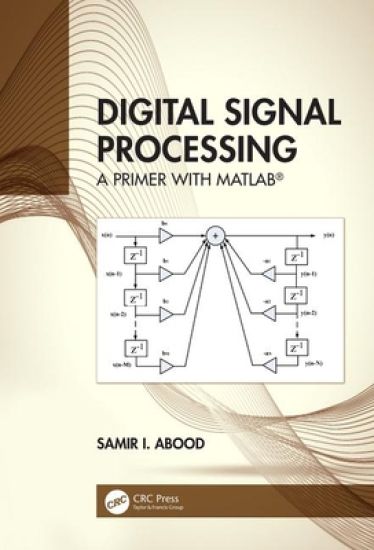
Digital Signal Processing

Digital Signal Processing

Samir I. Abood

CRC Press
2020
sidottu
Digital Signal Processing:A Primer with MATLAB® provides excellent coverage of discrete-time signals and systems. At the beginning of each chapter, an abstract states the chapter objectives. All principles are also presented in a lucid, logical, step-by-step approach. As much as possible, the authors avoid wordiness and detail overload that could hide concepts and impede understanding.In recognition of requirements by the Accreditation Board for Engineering and Technology (ABET) on integrating computer tools, the use of MATLAB® is encouraged in a student-friendly manner. MATLAB is introduced in Appendix C and applied gradually throughout the book. Each illustrative example is immediately followed by practice problems along with its answer. Students can follow the example step-by-step to solve the practice problems without flipping pages or looking at the end of the book for answers. These practice problems test students' comprehension and reinforce key concepts before moving onto the next section. Toward the end of each chapter, the authors discuss some application aspects of the concepts covered in the chapter. The material covered in the chapter is applied to at least one or two practical problems. It helps students see how the concepts are used in real-life situations.Also, thoroughly worked examples are given liberally at the end of every section. These examples give students a solid grasp of the solutions as well as the confidence to solve similar problems themselves. Some of hte problems are solved in two or three ways to facilitate a deeper understanding and comparison of different approaches.Designed for a three-hour semester course, Digital Signal Processing:A Primer with MATLAB® is intended as a textbook for a senior-level undergraduate student in electrical and computer engineering. The prerequisites for a course based on this book are knowledge of standard mathematics, including calculus and complex numbers.
Critical Currents and Superconductivity
The book comprises six chapters which deal with the critical currents and the ferromagnetism-superconductivity coexistence in high-Tc oxides. It begins by gathering key data for superconducting state and the fundamental properties of the conventional superconductors, followed by a recap of the basic theories of superconductivity. It then discusses the differences introduced by the structural anisotropy on the Ginzburg-Landau approach and the Lawrence-Doniach model before addressing the dynamics of vortices and the ferromagnetism-superconductivity coexistence in high-Tc oxides, and provides an outline of the pinning phenomena of vortices in these materials, in particular the pinning of vortices by the spins. It elucidates the methods to improve the properties of superconducting materials for industrial applications. This optimization aims at obtaining critical temperatures and densities of critical currents at the maximum level possible. Whereas the primary objective is the basic mechanisms pushing the superconductivity towards high temperatures, the secondary objective is to achieve a better understanding of the vortices pinning. This book is targeted at researchers and graduate students of fundamental and engineering sciences.
Migrations, Identities and Democratic Practices in India
This book explores contesting identities, international politics, migration and democratic practices in the context of globalizing India. Drawing on extensive ethnographic research, it looks at one of the oldest migratory routes across a volatile region in eastern India which is fraught with violent claims of separate statehood.The book offers an account of how the ‘North Bengal’ region has acted as a gateway to migrant populations over time and points to why it must be understood as a shifting and liminal space through a study of Bodoland, Gorkhaland, Kamatapuri, Siliguri and the Greater Cooch Behar movements. It shows the region’s politics of identity or quest for homeland not as a means of compensating for the lack or absence of identity, but as an everyday practice of living that very absence, across borders and boundaries, without arriving at any definitive and stable identity, along with impacts and manifestations in democratic political processes. A major intervention in modern political theory – shedding new light on concepts such as home and homeland, space and self, sovereignty, nation-state, freedom and democracy – this book will be of interest to scholars and researchers of political science, modern South Asian history, sociology and social anthropology, and migration and diaspora studies.
Protestant Missionaries in the Levant
Through focusing on the unintended by-products of New England Puritanism as a cultural transplant in the Levant, this book explores the socio-historical forces which account for the failure of early envoys’ attempts to convert the ‘native,’ population. Early failure in conversion led to later success in reinventing themselves as agents of secular and liberal education, welfare, and popular culture. Through making special efforts not to debase local culture, the missionaries’ work resulted in large sections of society becoming protestantized without being evangelized.An invaluable resource for postgraduates and those undertaking postdoctoral research, this book explores a seminal but overlooked interlude in the encounters between American Protestantism and the Levant. Using data from previously unexplored personal narrative accounts, Khalaf dates the emergence of the puritanical imagination, sparked by sentiments of American exceptionalism, voluntarism and "soft power" to at least a century before commonly assumed.