

Kirjahaku
Etsi kirjoja tekijän nimen, kirjan nimen tai ISBN:n perusteella.
1000 tulosta hakusanalla Samir Master

Samir Kassir
VDM Publishing House
2010
nidottu
Observera att förlaget som ger ut denna produkt baserar innehållet i sina produkter på fria källor som Wikipedia. Boken är med stor sannolikhet endast ett utdrag ur dessa informationskällor, alltså inte en vanlig bok i den bemärkelsen.

Poster Samir & Viktor
Bookmark Förlag
2018
muu

This story is part of Reading Champion, a series carefully linked to book bands to encourage independent reading skills, developed with Dr Sue Bodman and Glen Franklin of UCL Institute of Education (IOE).Samir longs to win a race in Sports Day, but it doesn't go to plan. Mr Simms helps him learn that having fun is just as important as winning.Reading Champion offers independent reading books for children to practise and reinforce their developing reading skills.Fantastic, original stories are accompanied by engaging artwork and a reading activity. Each book has been carefully graded so that it can be matched to a child's reading ability, encouraging reading for pleasure.
The Many Assassinations of Samir, the Seller of Dreams: Newbery Honor Award Winner
Daniel Nayeri
Levine Querido
2023
sidottu
NEWBERY HONOR AWARD WINNER BEST OF THE YEAR: NPR - Booklist - School Library Journal - Chicago Public Library - Evanston Public Library - Kirkus - Wall Street Journal The Silk Road comes to life in this picaresque epic adventure with twists and turns and a wonderful surprise ending from Printz Medalist Daniel Nayeri This is the tale of an exciting journey along the Silk Road with a young Monk and his newfound guardian, Samir, a larger than life character and the so-called "Seller of Dreams". The man is a scammer; his biggest skill being the ability to talk his way into getting what he wants. While that talking did save Monkey's life, it has left a lot of people furious with Samir-- furious enough to hire assassins. Monkey decides to try and save Samir from the attempts on his life--as a way to pay off his debt If he can save Samir six times, he'll be a free man...but will they all survive that long? Fans of Salman Rushdie's Haroun and The Sea of Stories and The Little Prince will fall in love with the bond between Monkey and Samir--in this swashbuckling all-ages page-turner from national bestseller Daniel Nayeri and featuring full-color illustrations from Daniel Miyares. P R A I S E "Adventurous, funny and nimble. Daniel Nayeri understands this relationship between storytelling and magic, and finds every opportunity to celebrate it. " --TheNew York Times "Daniel Nayeri and artist Daniel Miyares conjure a richly colored 11th-century realm of merchants and swindlers, camels and donkeys, caravanserai and spice bazaars, and the gaudiest array of mercenaries ever assembled in a book for young readers." --The Wall Street Journal 4 STARRED REVIEWS ★"An epic adventure with an enduring message about love and family." -- School Library Journal (starred) ★ "Filled with the multicultural hustle and bustle of the Silk Road, enlivened by the unpredictable nature of unreliable storytellers, and adorned with whimsical, colorful illustrations, this is a strange, wondrous, and creative tale. Can family be found along the Silk Road, or will everyone ultimately betray you? An enticing taste of a rich historical world." --Kirkus (starred) ★ "Readers will find more than expected, including tender philosophies, complex characterizations, heaps of humor, a masterful twist, and most importantly, just a great story, beautifully told." --Booklist (starred) ★ "Blends playful humor, solid pacing, and fully realized characters into a witty, assassin-studded traveler's yarn that also serves as a memorable, lively portrait of the 11th-century Silk Road." --Publishers Weekly (starred) "Nayeri's immersive writing style brings a you-are-there energy to the depiction of the harsh but gorgeous environment of the Silk Road, and an informative author's note further details the geography of the trail, its economic and social value, and the many people who traversed it. The book ends with a simple but profound reminder that love comes in many forms, it is almost always messy and unpredictable, and it is almost always worth every effort toward it." --BCCB "Daniel Nayeri has a gift. The child that reads this will not forget it, and how many books that come out for this age range can say the same? Is there anything else out there like it? I will simply say this: If you hand this book to someone, they will definitely have an opinion of it. You may, in fact, end up loving it in the end, or cursing it to the heavens. A tome with a soul tied inextricably to that of its titular character. Better read it." --Betsy Bird, SLJ's Fuse 8 Blog
The Many Assassinations of Samir, the Seller of Dreams
Daniel Nayeri Nayeri
Levine Querido
2025
nidottu
NEWBERY HONOR AWARD WINNERBEST OF THE YEAR:NPR - Booklist - School Library Journal - Chicago Public Library - Evanston Public Library - Kirkus - Wall Street JournalThe Silk Road comes to life in this picaresque epic adventure with twists and turns and a wonderful surprise ending from Printz Medalist Daniel NayeriThis is the tale of an exciting journey along the Silk Road with a young Monk and his newfound guardian, Samir, a larger than life character and the so-called Seller of Dreams. The man is a scammer, his biggest skill being the ability to talk his way into getting what he wants. While that talking did save Monkey’s life, it has left a lot of people furious with Samir— furious enough to hire assassins. Monkey decides to try and save Samir from the attempts on his life—as a way to pay off his debt! If he can save Samir six times, he’ll be a free man ... but will they all survive that long?Fans of Salman Rushdie's Haroun and the Sea of Stories and The Little Prince will fall in love with the bond between Monkey and Samir—in this swashbuckling all-ages page-turner from national best seller Daniel Nayeri.P R A I S E“Adventurous, funny and nimble. Daniel Nayeri understands this relationship between storytelling and magic, and finds every opportunity to celebrate it. ” —The New York Times “Daniel Nayeri conjures a richly colored 11th-century realm of merchants and swindlers, camels and donkeys, caravanserai and spice bazaars, and the gaudiest array of mercenaries ever assembled in a book for young readers.” —The Wall Street Journal4 STARRED REVIEWS ? “An epic adventure with an enduring message about love and family.” —School Library Journal (starred) ? “Filled with the multicultural hustle and bustle of the Silk Road, enlivened by the unpredictable nature of unreliable storytellers, this is a strange, wondrous, and creative tale. Can family be found along the Silk Road, or will everyone ultimately betray you? An enticing taste of a rich historical world." —Kirkus (starred) ? “Readers will find more than expected, including tender philosophies, complex characterizations, heaps of humor, a masterful twist, and most importantly, just a great story, beautifully told.” —Booklist (starred) ? “Blends playful humor, solid pacing, and fully realized characters into a witty, assassin-studded traveler’s yarn that also serves as a memorable, lively portrait of the 11th-century Silk Road.” —Publishers Weekly (starred) “Nayeri’s immersive writing style brings a you-are-there energy to the depiction of the harsh but gorgeous environment of the Silk Road, and an informative author’s note further details the geography of the trail, its economic and social value, and the many people who traversed it. The book ends with a simple but profound reminder that love comes in many forms, it is almost always messy and unpredictable, and it is almost always worth every effort toward it.” —Bulletin of the Center for Children's Books “Daniel Nayeri has a gift. The child that reads this will not forget it, and how many books that come out for this age range can say the same? Is there anything else out there like it? I will simply say this: If you hand this book to someone, they will definitely have an opinion of it. You may, in fact, end up loving it in the end, or cursing it to the heavens. A tome with a soul tied inextricably to that of its titular character. Better read it.” —Betsy Bird, SLJ's Fuse 8 Blog


Liber Amicorum Samir Saleh
Kluwer Law International
2019
sidottu

I 1986 blir 15 år gamle Samir dømt for å ha drept stemoren sin hjemme i leiligheten i Tensta i Stockholm, og blir deretter sperret inne på mentalsykehus. Alle instanser – politi, påtalemyndighet, domstol og rettspsykiatri – er overbevist om at gutten er skyldig. Men de overser at det egentlig handler om en falsk tilståelse, gjort for å beskytte den virkelige gjerningsmannen. Når Samir noen år senere forteller sannheten, er det ingen som tror ham. Ingen avhør blir tatt med den gjerningsmannen Samir peker på, og det blir heller ikke gjort noen analyse av de tekniske bevisene – blant annet Samirs blodige klær. For noen år siden begynte Anders Johansson, kriminalreporter i Aftonbladet, å grave i saken i podkasten «Fallet» og lyktes i å finne fram nye beviser. Nå, tretti år etter drapet, har dommen blitt opphevet. Saken mot Samir er fortellingen om hva som egentlig skjedde. Det er en historie om hvordan en feilaktig dom fører til at unge Samir havner i en negativ spiral med kriminalitet og rus som voksen blir en av Sveriges mest fryktede verditransportranere, en slags norsk David Toska. Men det handler også om veien ut – om å snu livet sitt fullstendig og finne en ny vei.

Reimagining the Christian Faith: Exploring the Emergent Theology of Doug Pagitt, Peter Rollins, Samir Selmanovic, and Brian McLaren
Jeremy Bouma
Createspace Independent Publishing Platform
2012
nidottu
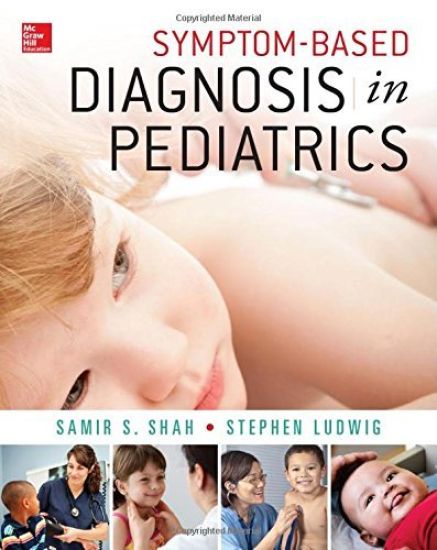
Symptom-Based Diagnosis in Pediatrics (CHOP Morning Report)
Samir Shah; Stephen Ludwig
McGraw-Hill Medical
2014
nidottu
Publisher's Note: Products purchased from Third Party sellers are not guaranteed by the publisher for quality, authenticity, or access to any online entitlements included with the product.A CASE-BASED GUIDE TO PEDIATRIC DIAGNOSIS, CONVENIENTLY ORGANIZED BY PRESENTING SYMPTOMSSymptom-Based Diagnosis in Pediatrics features 19 chapters, each devoted to a common pediatric complaint. Within each chapter, five to eight case presentations teach the diagnostic approach to the symptom. The case presentations follow a consistent outline of History, Physical Examination, and Course of Illness, and are followed by discussion of the Differential Diagnosis, Diagnosis Incidence and Epidemiology, Clinical Manifestations, Diagnostic Approach, and Treatment. Cases are illustrated with vibrant full-color photographs and include numerous tables comparing potential diagnoses.Organized by symptoms--the way patients actually presentMore than 100 cases teach the diagnostic approach to a symptomCases illustrate how the same complaint can have a variety of causesFull-color clinical photos and illustrations sharpen your visual diagnosis skillsValuable tables detail the most frequent causes of common symptomsCASE-BASED COVERAGE OF THE SYMPTOMS YOU'RE MOST LIKELY TO ENCOUNTER IN PEDIATRIC PRACTICEWheezing * Decreased Activity Level * Vomiting * Coughing * Back, Joint, and Extremity Pain * Poor Weight Gain * Abdominal Pain * Altered Mental Status * Rash * Pallor * Fever * Constipation * Neck Swelling * Chest Pain * Jaundice * Abnormal Gait * Diarrhea * Syncope * Seizures

The Philadelphia Guide: Inpatient Pediatrics
Samir Shah; Marina Catallozzi; Lisa Zaoutis
McGraw-Hill Professional
2016
nidottu
Publisher's Note: Products purchased from Third Party sellers are not guaranteed by the publisher for quality, authenticity, or access to any online entitlements included with the product.The ONLY handbook on pediatric hospitalist medicine you need!Focusing specifically on caring for pediatric patients in the hospital setting, this unique handbook addresses more than 350 of the most commonly encountered inpatient pediatric medical conditions. Unlike similar handbooks on the subject, The Philadelphia Guide goes beyond diagnostic strategies to include complete treatment and management guidelines.The emphasis on the treatment of so many inpatient conditions makes the book valuable for practitioners of all levels – from attending physicians to physician assistants, advanced practice nurses, pediatric nurses, and health practitioners from all disciplines involved in the care of pediatric patients in the hospital setting. Designed for immediate access, the handbook features alphabetized clinical sections and consistent chapter subheadings to make the book especially useful at the point of care. FeaturesPractical diagnostic strategiesExtensive differential diagnosis suggestionsUp-to-date treatment and management guidelinesContent designed both for easy browsing and pinpointing specific informationAlphabetical organization within chapters for rapid accessStructured format with consistent headings throughoutBulleted content for efficient and effective access to relevant informationTables listing pediatric dosages for emergency, airway, and rapid sequence intubation medications, as well as defibrillation and cardioversion protocolsPractical appendices covering normal vital signs, neonatal codes, and PALS algorithmsNEW 2-color designSamir S. Shah, MD, MSCE is Director, Division of Hospital Medicine, James M. Ewell Endowed Chair, and Attending Physician in Hospital Medicine & Infectious Diseases at Cincinnati Children’s Hospital Medical Center; and Professor in the Department of Pediatrics at the University of Cincinnati College of Medicine.Lisa B. Zaoutis, MD is Director of the Pediatrics Residency Program at The Children’s Hospital of Philadelphia; and Associate Professor of Clinical Pediatrics in the Department of Pediatrics at the Perelman School of Medicine of the University of Pennsylvania.Marina Catallozzi, MD, MSCE is Assistant Professor of Population and Family Health and Assistant Professor of Clinical Pediatrics at the Columbia University Medical Center, College of Physicians and Surgeons.Gary Frank, MD is Chief Quality and Patient Safety Officer at Children's Healthcare of Atlanta; and Adjunct Associate Professor of Pediatrics in the Department of Pediatrics at Emory University School of Medicine.
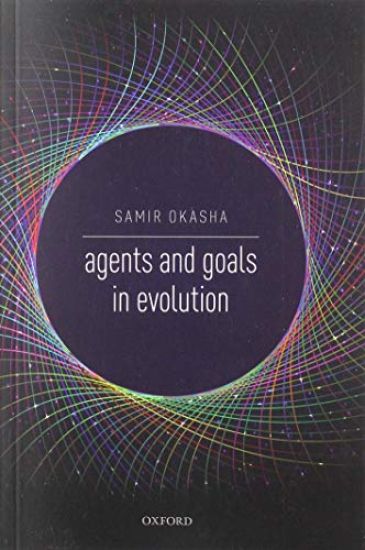
Samir Okasha approaches evolutionary biology from a philosophical perspective in Agents and Goals in Evolution, analysing a mode of thinking in biology called agential thinking. He considers how the paradigm case involves treating an evolved organism as if it were an agent pursuing a goal, such as survival or reproduction, and seeing its phenotypic traits as strategies for achieving that goal or furthering its biological interests. As agential thinking deliberately transposes a set of concepts--goals, interests, strategies--from rational human agents and to the biological world more generally, Okasha's enquiry firstly looks at the justification for this: is it mere anthropomorphism, or does it play a genuine intellectual role in the science? From this central question, key points are considered such as: how do we identify the 'goal' that evolved organisms will behave as if they are trying to achieve? Can agential thinking ever be applied to groups rather than to individual organisms? And how does agential thinking relate to the controversies over fitness-maximization in evolutionary biology? In addition, Okasha examines the relation between the adaptive and the rational by considering whether organisms can validly be treated as agent-like. Should we expect their evolved behaviour to correspond with that of rational agents as codified in the theory of rational choice? If so, does this mean that the fitness-maximizing paradigm of the evolutionary biologist can be mapped directly to the utility-maximizing paradigm of the rational choice theorist? All of these important questions are engagingly raised and discussed at length.

The Oxford Chemistry Masters Series is designed to provide clear and concise accounts of important topics - both established and emergent - that may be encountered by chemistry students as they progress from the senior undergraduate stage through post-graduate study to leadership in research. These Masters assume little prior knowledge, other than the foundations provided by an undergraduate degree in chemistry, and lead the reader through to an appreciation of the state of the art in the topic whilst providing an entree to the primary literature in the field. Radical reactions exhibit many of the characteristics desired by synthetic organic chemists: mild, generally neutral experimental conditions; diminished susceptibility to eliminations and rearrangements; relative insensitivity to the nature of the solvent and to steric effects; a compatibility with functional groups that is often complementary to that of ionic and organometallic reactions, obviating in many situations the need for laborious and costly protection-deprotection steps. Yet elementary radical reactions are ultra-fast processes and their taming requires some knowledge of their kinetics and rate constants, which have only relatively recently become available. Not surprisingly, transformations involving radical intermediates have long harboured the reputation of beeing difficult to control, suitable only for the synthesis of polymers and tars. This book provides a description of radical reactions and their applications in organic synthesis. It attempts to show that armed with an elementary knowledge of kinetics and some common sense, it is possible to harness radicals into a tremendously powerful tool for solving synthetic problems. The book starts with a brief historical account and presentation of the basics. It then blends the discussion of the properties of radical processes with the now familiar chemistry of stannanes. Radicals being the same entities, whichever method is used to generate them, a study of the various processes for the creation and capture of radicals constitutes the remainder of the book. Silicon and mercury based techniques as well as the Barton and related decarboxylation procedures are discussed in detail, followed by the Kharasch type atom and group transfer reactions. The increasingly important persistent radical effect, also known as the Fischer-Ingold effect, is examined in the context of non-chain reactions. Both the Kharasch based methods and the persistent radical effect have recently been applied in the emerging field of controlled radical polymerisations. Finally, the vast domain of redox processes is presented in a unified manner with the aim of providing a simple rationale for the multitude of possible transformation. The book concludes with a brief overview and some general practical hints for conducting radical reactions. More than 700 references provide access to the primary literature.
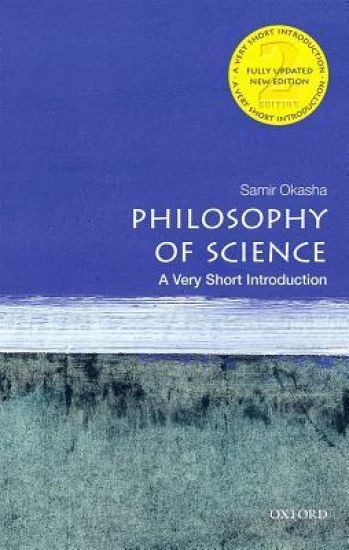
How much faith should we place in what scientists tell us? Is it possible for scientific knowledge to be fully 'objective'? What, really, can be defined as science? In the second edition of this Very Short Introduction, Samir Okasha explores the main themes and theories of contemporary philosophy of science, and investigates fascinating, challenging questions such as these. Starting at the very beginning, with a concise overview of the history of science, Okasha examines the nature of fundamental practices such as reasoning, causation, and explanation. Looking at scientific revolutions and the issue of scientific change, he asks whether there is a discernible pattern to the way scientific ideas change over time, and discusses realist versus anti-realist attitudes towards science. He finishes by considering science today, and the social and ethical philosophical questions surrounding modern science. ABOUT THE SERIES: The Very Short Introductions series from Oxford University Press contains hundreds of titles in almost every subject area. These pocket-sized books are the perfect way to get ahead in a new subject quickly. Our expert authors combine facts, analysis, perspective, new ideas, and enthusiasm to make interesting and challenging topics highly readable.
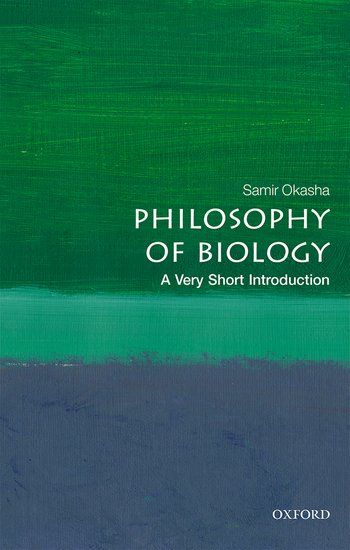
Over the last forty years the philosophy of biology has emerged as an important sub-discipline of the philosophy of science. Covering some of science's most divisive topics, such as philosophical issues in genetics, it also encompasses areas where modern biology has increasingly impinged on traditional philosophical questions, such as free will, essentialism, and nature vs nurture. In this Very Short Introduction Samir Okasha outlines the core issues with which contemporary philosophy of biology is engaged. Offering a whistle-stop tour of the history of biology, he explores key ideas and paradigm shifts throughout the centuries, including areas such as the theory of evolution by natural selection; the concepts of function and design; biological individuality; and the debate over adaptationism. Throughout Okasha makes clear the relevance of biology for understanding human beings, human society, and our place in the natural world, and the importance of engaging with these issues. ABOUT THE SERIES: The Very Short Introductions series from Oxford University Press contains hundreds of titles in almost every subject area. These pocket-sized books are the perfect way to get ahead in a new subject quickly. Our expert authors combine facts, analysis, perspective, new ideas, and enthusiasm to make interesting and challenging topics highly readable.
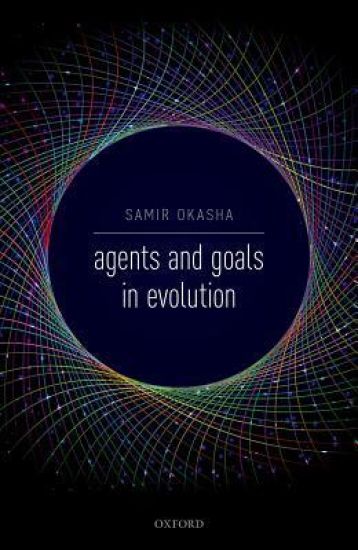
Samir Okasha offers a philosophical perspective on evolutionary biology in Agents and Goals in Evolution. His focus is on "agential thinking", which is a mode of thought commonly employed in evolutionary biology. The paradigm case of agential thinking involves treating an evolved organism as if it were an agent pursuing a goal, such as survival or reproduction, and treating its phenotypic traits as strategies for achieving that goal, or furthering its biological interests. Agential thinking involves deliberately transposing a set of concepts - goals, interests, strategies - from rational human agents to the biological world more generally. Okasha's enquiry begins by asking whether this is justified. Is agential thinking mere anthropomorphism, or does it play a genuine intellectual role in the science? This central question leads Okasha to a series of further questions. How do we identify the "goal" that evolved organisms will behave as if they are trying to achieve? Can agential thinking ever be applied to groups or genes, rather than to individual organisms? And how does agential thinking relate to the controversies over fitness-maximization in evolutionary biology? In the final third of the book, Okasha examines the relation between the adaptive and the rational. If organisms can validly be treated as agent-like, for the purposes of evolutionary analysis, should we expect that their evolved behaviour will correspond to the behaviour of rational agents as codified in the theory of rational choice? If so, does this mean that the fitness-maximizing paradigm of the evolutionary biologist can be mapped directly to the utility-maximizing paradigm of the rational choice theorist? Okasha explores these questions using an inter-disciplinary methodology that draws on philosophy of science, evolutionary biology and economics.