Kirjojen hintavertailu. Mukana 11 244 527 kirjaa ja 12 kauppaa.

Kirjahaku

Etsi kirjoja tekijän nimen, kirjan nimen tai ISBN:n perusteella.

1000 tulosta hakusanalla Samuel Partridge

The Diary of Samuel Pepys

The Diary of Samuel Pepys

Samuel Pepys

HarperCollins Publishers Ltd
1995
nidottu
The fifth volume of the complete Diary of Samuel Pepys in its most authoritative and acclaimed edition. This complete edition of the Diary of Samuel Pepys comprises eleven volumes – nine volumes of text and footnotes (with an introduction of 120 pages in Volume I), a tenth volume of commentary (The Companion) and an eleventh volume of Index. Each of the first eight volumes contains one whole calendar year of the diary, from January to December. The ninth volume runs from January 1668 to May 1669. The Diary was first published in abbreviated form in 1825. A succession of new editions, re-issues and selections, published in the Victorian ear, made the diary one of the best-known books, and Pepys one of the best-known figures, of English history. But in none of these versions – not even in the Wheatley, which for long stood as the standard edition – was there a reliable, still less a full text, and in none of them was there a commentary with any claim to completeness. This edition was in preparation for many years, and remains the first in which the entire diary is printed and in which an attempt has been made at systematic comment on it. The primary aim of the principal editors was to see that the diary was presented in a manner suitable to the historical and literary importance of its contents. At the same time they had in mind the interests of the wide public of English-speaking people to whom the diarist himself, rather than the importance of what he wrote, is what matters.
The Diary of Samuel Pepys

The Diary of Samuel Pepys

Samuel Pepys

HarperCollins Publishers Ltd
1995
nidottu
The sixth volume of the complete Diary of Samuel Pepys in its most authoritative and acclaimed edition. This complete edition of the Diary of Samuel Pepys comprises eleven volumes – nine volumes of text and footnotes (with an introduction of 120 pages in Volume I), a tenth volume of commentary (The Companion) and an eleventh volume of Index. Each of the first eight volumes contains one whole calendar year of the diary, from January to December. The ninth volume runs from January 1668 to May 1669. The Diary was first published in abbreviated form in 1825. A succession of new editions, re-issues and selections, published in the Victorian ear, made the diary one of the best-known books, and Pepys one of the best-known figures, of English history. But in none of these versions – not even in the Wheatley, which for long stood as the standard edition – was there a reliable, still less a full text, and in none of them was there a commentary with any claim to completeness. This edition was in preparation for many years, and remains the first in which the entire diary is printed and in which an attempt has been made at systematic comment on it. The primary aim of the principal editors was to see that the diary was presented in a manner suitable to the historical and literary importance of its contents. At the same time they had in mind the interests of the wide public of English-speaking people to whom the diarist himself, rather than the importance of what he wrote, is what matters.
The Diary of Samuel Pepys

The Diary of Samuel Pepys

Samuel Pepys

HarperCollins Publishers Ltd
1995
nidottu
The seventh volume of the complete Diary of Samuel Pepys in its most authoritative and acclaimed edition. This complete edition of the Diary of Samuel Pepys comprises eleven volumes – nine volumes of text and footnotes (with an introduction of 120 pages in Volume I), a tenth volume of commentary (The Companion) and an eleventh volume of Index. Each of the first eight volumes contains one whole calendar year of the diary, from January to December. The ninth volume runs from January 1668 to May 1669. The Diary was first published in abbreviated form in 1825. A succession of new editions, re-issues and selections, published in the Victorian ear, made the diary one of the best-known books, and Pepys one of the best-known figures, of English history. But in none of these versions – not even in the Wheatley, which for long stood as the standard edition – was there a reliable, still less a full text, and in none of them was there a commentary with any claim to completeness. This edition was in preparation for many years, and remains the first in which the entire diary is printed and in which an attempt has been made at systematic comment on it. The primary aim of the principal editors was to see that the diary was presented in a manner suitable to the historical and literary importance of its contents. At the same time they had in mind the interests of the wide public of English-speaking people to whom the diarist himself, rather than the importance of what he wrote, is what matters.
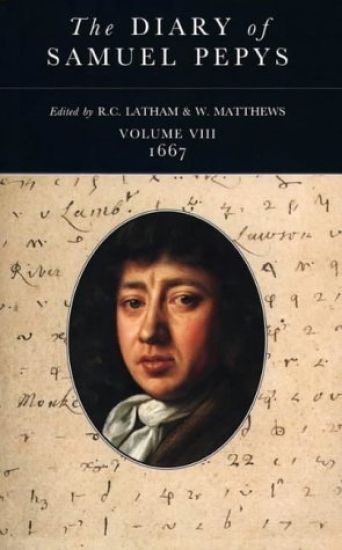
The Diary of Samuel Pepys

The Diary of Samuel Pepys

Samuel Pepys

HarperCollins Publishers Ltd
1995
nidottu
The eighth volume of the complete Diary of Samuel Pepys in its most authoritative and acclaimed edition. This complete edition of the Diary of Samuel Pepys comprises eleven volumes -- nine volumes of text and footnotes (with an introduction of 120 pages in Volume I), a tenth volume of commentary (The Companion) and an eleventh volume of Index. Each of the first eight volumes contains one whole calendar year of the diary, from January to December. The ninth volume runs from January 1668 to May 1669. The Diary was first published in abbreviated form in 1825. A succession of new editions, re-issues and selections, published in the Victorian ear, made the diary one of the best-known books, and Pepys one of the best-known figures, of English history. But in none of these versions -- not even in the Wheatley, which for long stood as the standard edition -- was there a reliable, still less a full text, and in none of them was there a commentary with any claim to completeness. This edition was in preparation for many years, and remains the first in which the entire diary is printed and in which an attempt has been made at systematic comment on it. The primary aim of the principal editors was to see that the diary was presented in a manner suitable to the historical and literary importance of its contents. At the same time they had in mind the interests of the wide public of English-speaking people to whom the diarist himself, rather than the importance of what he wrote, is what matters.
The Diary of Samuel Pepys

The Diary of Samuel Pepys

Samuel Pepys

HarperCollins Publishers Ltd
1995
nidottu
The final volume of the complete Diary of Samuel Pepys in its most authoritative and acclaimed edition. This complete edition of the Diary of Samuel Pepys comprises eleven volumes -- nine volumes of text and footnotes (with an introduction of 120 pages in Volume I), a tenth volume of commentary (The Companion) and an eleventh volume of Index. Each of the first eight volumes contains one whole calendar year of the diary, from January to December. The ninth volume runs from January 1668 to May 1669. The Diary was first published in abbreviated form in 1825. A succession of new editions, re-issues and selections, published in the Victorian ear, made the diary one of the best-known books, and Pepys one of the best-known figures, of English history. But in none of these versions -- not even in the Wheatley, which for long stood as the standard edition -- was there a reliable, still less a full text, and in none of them was there a commentary with any claim to completeness. This edition was in preparation for many years, and remains the first in which the entire diary is printed and in which an attempt has been made at systematic comment on it. The primary aim of the principal editors was to see that the diary was presented in a manner suitable to the historical and literary importance of its contents. At the same time they had in mind the interests of the wide public of English-speaking people to whom the diarist himself, rather than the importance of what he wrote, is what matters.
The Diary of Samuel Pepys

The Diary of Samuel Pepys

Samuel Pepys

HarperCollins Publishers Ltd
1995
nidottu
The Index to the complete Diary of Samuel Pepys in its most authoritative and acclaimed edition. This renowned edition of The Diary of Samuel Pepys, edited by Robert Latham and William Matthews, is the first to present a newly transcribed text of the famous Diary and to equip it with a systematic commentary. Published in eleven volumes (nine of the Diary itself, followed by a Companion volume and this Index), it has justly become regarded as the definitive edition. The Index, compiled by Robert Latham, gives the essential key to the nine volumes of the Diary text, including the introduction and the footnotes. It makes it possible to retrieve a massive variety of information, whether the user wishes to trace successive references to individual people, places and events, or to follow through a general topic, or even to locate specific references and phrases from amongst the wealth of subject matter covered by the Diary. The entries are made readily accessible by the use of sub-headings, and are also valuably detailed – often reflecting the style of the Diary itself by borrowing from Pepys’s own phraseology. As a result the Index becomes more than merely functional, and offers opportunities for much enjoyable exploration. In many instances references are gathered together under important group headings that can be used to build up a composite picture of different aspects of seventeenth-century England. General topics such as books, dress, food, ships and taverns are afforded detailed entries which include, where necessary, editorial information to identify or elaborate on Pepys’s own references. The Index volume completes the set, and maintains the exemplary standards of this great work of scholarship, which was hailed by The Times as ‘one of the glories of contemporary English publishing’.
The Diary of Samuel Pepys

The Diary of Samuel Pepys

Samuel Pepys

HarperCollins Publishers Ltd
2000
nidottu
The perfect introduction to the Diary of Samuel Pepys, with Diary extracts arranged by subject. In this short anthology, selected from Samuel Pepys’s famous Diary, passages are collected together by subject, providing a fresh look at some of the themes that run through the massive complete work. Robert and Linnet Latham’s lively and skilful presentation allows the reader to become absorbed in a single topic without interruption, often providing new insight into Pepys’s private and public life. We see Pepys the man of fashion, the booklover, the musician, the theatre-goer, Pepys the husband and Pepys the public servant, at work and at leisure. From festivals such as Christmas and Twelfth Night, enjoyed with family and friends, to the great events such as the Fire and the Plague described so vividly in the Diary, Pepys’s life and times are revealed in all their richness and variety. And for the first time, we can read as continuous narrative some of the stories interwoven with daily events – the long entangled saga of his affair with Deb Willet and the tale of the Dancing Master. For anyone unfamiliar with Pepys, this anthology will serve as a delightful introduction, while lovers of the Diary will take pleasure in rediscovering favourite passages.
The Complete Poems of Samuel Taylor Coleridge

The Complete Poems of Samuel Taylor Coleridge

Samuel Coleridge

Penguin Classics
1997
pokkari
One of the major figures of English Romanticism, Samuel Taylor Coleridge (1772-1834) created works of remarkable diversity and imaginative genius. The period of his creative friendship with William Wordsworth inspired some of Coleridge's best-known poems, from the nightmarish vision of the 'Rime of the Ancient Mariner' and the opium-inspired 'Kubla Khan' to the sombre passion of 'Dejection: An Ode' and the medieval ballad 'Christabel'. His meditative 'conversation' poems, such as 'Frost at Midnight' and 'This Lime-Tree Bower Mr Prison', reflect on remembrance and solitude, while late works, such as 'Youth and Age' and 'Constancy to an Ideal Object', are haunting meditations on mortality and lost love.
The Diary of Samuel Pepys: A Selection

The Diary of Samuel Pepys: A Selection

Samuel Pepys

Penguin Classics
2003
pokkari
Previously published as The Shorter Pepys, Samuel Pepys' The Diary of Samuel Pepys: A Selection is a collection of scintillating first-hand accounts of Restoration England, from the most tumultuous events to the simplest domestic pleasures, selected and edited by Robert Latham.The 1660s represent a turning point in English history, and for the main events - the Restoration, the Dutch War, the Great Plague, the Fire of London - Pepys provides a definitive eyewitness account. As well as recording public and historical events, Pepys paints a vivid picture of his personal life, from his socializing and amorous entanglements, to his theatre-going and his work at the Navy Board. Unequalled for its frankness, high spirits and sharp observations, the diary is both a literary masterpiece and a marvellous portrait of seventeenth-century life.Samuel Pepys (1633-1703) achieved fame as a naval administrator and a friend and colleague of the powerful and learned. For nearly ten years he kept a private diary in which he recorded life in Restoration London, commenting on politics, public events, and private matters.If you enjoyed The Diary of Samuel Pepys, you might like Alexander Pope's The Rape of the Lock and Other Major Writings, also available in Penguin Classics.''For anyone who wants to get to grips with Pepys but quails at more than a million words, here is the solution: Robert Latham's beautifully judged abridgment of the Diary. Pure pleasure'Clare Tomalin, author of Samuel Pepys: The Unequalled Self'This prince of Diarists, this most amiable and admirable of men, has at last been worthily served'Paul Johnson, Spectator
Samuel Barber

Samuel Barber

Heyman Barbara B.

Oxford University Press Inc
2020
sidottu
Samuel Barber (1910-1981) is one of the most admired and honored American composers of the twentieth century. An unabashed Romantic, largely independent of worldwide trends and the avant-garde, he infused his works with poetic lyricism and gave tonal language and forms new vitality. His rich legacy includes every genre, including the famous Adagio for Strings, Knoxville: Summer of 1915, three concertos, a plethora of songs, and two operas, the Pulitzer prize-winning Vanessa, and Antony and Cleopatra, the commissioned work that opened the new Metropolitan Opera House at Lincoln Center in 1966. Generously documented by letter, sketches, autograph manuscripts, and interviews with friends, colleagues, and performers with whom he worked, this ASCAP-Award winning book is still unquestionably the most authoritative biography on Barber, covering his entire career and interweaving the events of his life with his compositional process. This second edition benefits from many new discoveries, including a Violin Sonata recovered from an artist's estate, a diary Barber kept his seventeenth year, a trove of letters and manuscripts that were recovered from a suitcase found in a dumpster, documentation that dispels earlier myths about the composition of Barber's Violin Concerto, and research of scholars that was stimulated by Heyman's work. Barber's intimate relations are discussed when they bear on his creativity. A testament to the lasting significance of Romanticism, Samuel Barber stands as a model biography of an important musical figure.
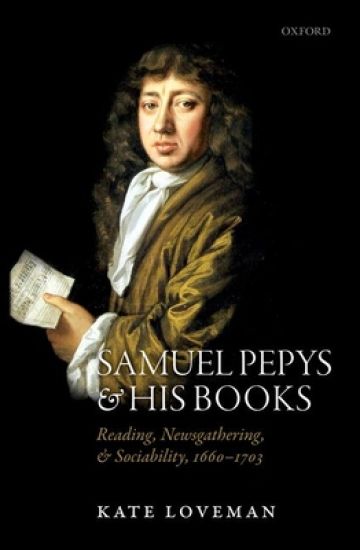
Samuel Pepys and his Books

Samuel Pepys and his Books

Kate Loveman

Oxford University Press
2022
nidottu
Samuel Pepys was a great collector of books, news, and gossip. This study uses his surviving papers to examine reading practices, collecting, and the exchange of information in the late seventeenth century. Offering the first extensive history of reading during the Restoration, it traces developments in the book trade and news transmission at a time when England was the scene of dramatic political and religious upheavals. The investigation goes beyond Pepys's famous diary of the 1660s, employing a variety of sources to explore the role that reading played in Pepys's life and in the lives of his contemporaries. It begins by examining what it meant to be a reader in Restoration London: the skills, the people, and the places involved. Pepys's wide-ranging interests serve as starting points for considering news exchange and the reception of major literary genres in the Restoration. Particular attention is given to conduct books, histories, religious works, and recreational reading (romances, drama, and novels). The appeal that these works held for readers was not always what we might expect -or, indeed, what the authors and publishers had expected. Additional chapters explore the social interactions surrounding information gathering: the ways people acquired oral and written news in London; the experience of book-buying; and the acquisition of manuscript and print through social networks. Analysed alongside other records, Pepys's papers provide unrivalled insights into literary and cultural developments in the second half of the seventeenth century.
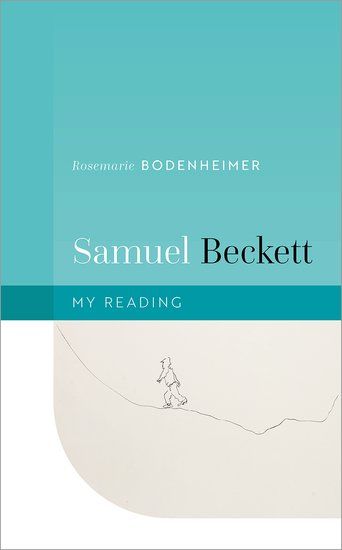
Samuel Beckett

Samuel Beckett

Rosemarie Bodenheimer

Oxford University Press
2022
sidottu
A book on the experience of reading the works of Samuel Beckett. After a life of writing about Victorian novelists, Rosemarie Bodenheimer found herself entranced by the work of Samuel Beckett. In this book she shares her journey of discovery with readers who may or may not be familiar with Beckett's novels and stories. She follows his trajectory from the first unpublished novel, Dream of Fair to Middling Women, through the great post-war trilogy of Molloy, Malone Dies, and The Unnamable, and on to the ever more experimental inventions in the shorter, later fictions, and monologues. Through readings of his work alongside extracts from his published correspondence, Beckett emerges as a sympathetic human figure, a poet of productive doubt, and a brilliant stylist of mood changes and second thoughts. Bodenheimer considers Beckett's treatments of memory, nostalgia, and grief, and the forms he finds to convey those essential human experiences while avoiding melodrama or sentimentality. His dramatized relationship with his own writing is a crucial part of that emotional landscape. His playful jousts with the conventions of novel-writing show how, from the start, Beckett challenged the notion of character and other inherited novel conventions. The book also emphasizes his dismantling of the autobiographical "I" his moving narratives of attachment and loss, and the inimitable mixture of comedy and pathos he creates by inventing outlandish situations to which his characters respond in very recognizable human ways.
Samuel Beckett and the Theatre of the Witness

Samuel Beckett and the Theatre of the Witness

Hannah Simpson

Oxford University Press
2022
sidottu
Samuel Beckett and the Theatre of the Witness explores Beckett's representation of physical pain in his theatre plays in the long aftermath of World War II, emphasising how the issues raised by this staging of pain speak directly to matters lying at the heart of his work: the affective power of the human body; the doubtful capacity of language as a means of communication; the aesthetic and ethical functioning of the theatre medium; and the vexed question of intersubjective empathy. Alongside the wartime and post-war plays of fellow Francophone writers Albert Camus, Eugène Ionesco, Pablo Picasso, and Marguerite Duras, this study resituates Beckett's early plays in a new conceptualising of le théâtre du témoin or a 'theatre of the witness'. These are plays concerned with the epistemological and ethical uncertainties of witnessing another's pain, rather than with the sufferer's own direct experience. They raise troubling questions about our capacity to comprehend and respond to another being's pain. Drawing on an interdisciplinary framework of extant criticism, recorded historical audience response, theatre and affect theory, and medical understandings of bodily pain, Hannah Simpson argues that these plays do not offer any easily negotiable encounter with physical suffering, pushing us to recognise the very 'otherness' of another being's pain, even as it invades our own affective sphere. In place of any comforting transcendence or redemption of endured pain, they offer a starkly sceptical, even pessimistic probing of what it is to witness another's suffering.
The Political Writings of Samuel Pufendorf

The Political Writings of Samuel Pufendorf

Samuel Pufendorf

Oxford University Press Inc
1994
sidottu
The seventeenth-century philosopher Samuel Pufendorf was one of the most widely read natural lawyers of the pre-Kantian era. This volume presents the basic arguments and fundamental themes of his political and moral thought. Selections from the texts of Pufendorf's two major works, Elements of Universal Jurisprudence and The Law of Nature and Nations, have been brought together to make Pufendorf's moral and political thought more accessible. The selections appear here in a new English translation which far exceeds what is currently available. The translator has constructed a rendering of the Latin that is sophisticated but clear, and the volume has been prepared with an emphasis on continuity and readability. The editor has included a substantive introduction intended to acquaint readers with Pufendorf and his political thought and to indicate why his work has relevance for contemporary political discourse.
Samuel Barber

Samuel Barber

Heyman Barbara B.

Oxford University Press Inc
1994
nidottu
Samuel Barber (1910-1981) was one of the most important and honoured American composers of the twentieth century. Writing in a great variety of musical forms — symphonies, concertos, operas, vocal music, chamber music — he infused his works with poetic lyricism and gave tonal language and forms new vitality. His rich legacy includes such famous compositions as the Adagio for Strings, the orchestral song Knoxville: Summer of 1915, three concertos, and his two operas, the Pulitzer Prize-winning Vanessa and Antony and Cleopatra, a commissioned work that opened the new Metropolitan Opera House at Lincoln Center. Generously documented by letters, sketchbooks, original musical manuscripts, and interviews with friends, colleagues and performers with whom he worked, this is the first book to cover Barber's entire career and all of his compositions. The biographical material on Barber is closely interspersed with a discussion of his music, displaying Barber's creative processes at work from his early student compositions to his mature masterpieces. Heyman also provides the social context in which this major composer grew: his education, how he built his career, the evolving musical tastes of American audiences, his relationship to musical giants like Serge Koussevitzky, and the role of radio in the promotion of his music. A testament to the significance of the new Romanticism, Samuel Barber stands as a model biography of an important American musical figure.
Samuel Coleridge-Taylor's Hiawatha

Samuel Coleridge-Taylor's Hiawatha

Benedict Taylor

OXFORD UNIVERSITY PRESS INC
2025
sidottu
The Hiawatha trilogy of cantatas (1898--1900), based on Henry Wadsworth Longfellow's poem The Song of Hiawatha, were some of the most popular and widely performed pieces of music in the opening decade of the twentieth century. As a result, their young African British composer, Samuel Coleridge-Taylor (1875--1912), became widely celebrated in the UK and North America. In this volume, Benedict Taylor examines the musical and political significance of Coleridge-Taylor through the reception history of his Hiawatha trilogy. Coleridge-Taylor's music and efforts on behalf of the African diaspora were made largely from within the white frame in which he grew up and highlight the difficulties of transcultural or interracial mediation at this point in history. Longfellow's source text already constitutes a contested narrative of ethnic identity and appropriation through its epic framing of Native American history from a white, settler perspective. And further complicating the story, the success of Hiawatha made Coleridge-Taylor a focal point for African American attempts at cultural recognition. Not only does Hiawatha afford the chance to explore the music of one of the most important composers of colour in the Western classical music tradition, but the work and its reception forms a prism with which to analyse questions of canonicity, marginalization, race, and identity from the composer's own day to the present.
Samuel Coleridge-Taylor's Hiawatha

Samuel Coleridge-Taylor's Hiawatha

Benedict Taylor

OXFORD UNIVERSITY PRESS INC
2025
nidottu
The Hiawatha trilogy of cantatas (1898--1900), based on Henry Wadsworth Longfellow's poem The Song of Hiawatha, were some of the most popular and widely performed pieces of music in the opening decade of the twentieth century. As a result, their young African British composer, Samuel Coleridge-Taylor (1875--1912), became widely celebrated in the UK and North America. In this volume, Benedict Taylor examines the musical and political significance of Coleridge-Taylor through the reception history of his Hiawatha trilogy. Coleridge-Taylor's music and efforts on behalf of the African diaspora were made largely from within the white frame in which he grew up and highlight the difficulties of transcultural or interracial mediation at this point in history. Longfellow's source text already constitutes a contested narrative of ethnic identity and appropriation through its epic framing of Native American history from a white, settler perspective. And further complicating the story, the success of Hiawatha made Coleridge-Taylor a focal point for African American attempts at cultural recognition. Not only does Hiawatha afford the chance to explore the music of one of the most important composers of colour in the Western classical music tradition, but the work and its reception forms a prism with which to analyse questions of canonicity, marginalization, race, and identity from the composer's own day to the present.