The River of London, a classical and rare book that has been considered essential throughout human history, so that this work is never forgotten, we at Alpha Editions have made efforts in its preservation by republishing this book in a modern format for present and future generations. This whole book has been reformatted, retyped and designed. These books are not made of scanned copies of their original work and hence the text is clear and readable.
This book presents the first modern in-depth study of the theology of one of the most influential figures in post-Reformation Scotland, Samuel Rutherford (c. 1600-1661). Although much has been written over the years about Rutherford's political thought or about his nearly mystical piety, very little actually has appeared in print about his theology. Among those hwo have written Rutherford's theology in the past, none have done so in a comprehensive, systematic manner, and none have devoted any attention at all to examining Rutherford's Latin treatises. The current work seeks to fill both lacunae, by presenting Rutherford's theology, beginning with the doctrine of assurance, and by drawing chiefly upon what is arguably his magnum opus theologiae, the Examen Arminianismi. The Examen, which consists of lectures Rutherford delivered to his divinity students at St. Andrews University, is the closest thing he has to a proper systematic theology text. But because it is also a polemical treatise, aimed primarily against the Arminians, the Examen provides a context for us to engage not only with the seventeenth-century dispute over Arminianism, but also with the more contemporary debate of Calvin vs. the Calvinists.
The Church of Scotland divine Samuel Rutherford (1600–1661) was among the first theologians to say that Christ's saving work took place to fulfill an agreement between God and Christ that had been made in eternity. By placing Rutherford's major statements of this new doctrine in their various social, political, polemical, and pastoral contexts, this book provides a fresh explanation for the dramatic rise of the eternal covenant of redemption to become the cornerstone of Reformed federal theology and offers a case-study in the development of doctrine.
Samuel Rutherford Crockett (24 September 1859 - 16 April 1914), who published under the name "S. R. Crockett", was a Scottish novelist.He was born at Duchrae, Balmaghie, Kirkcudbrightshire, on 24 September 1859, the illegitimate son of dairymaid Annie Crocket. He was raised on his grandfather's Galloway farm, won a bursary to Edinburgh University in 1876, and graduated from there during 1879. After some years of travel, he became in 1886 minister of Penicuik. During that year he produced his first publication, Dulce Cor (Latin: Sweet Heart), a collection of verse under the pseudonym Ford Brereton. He eventually abandoned the Free Church ministry for full-time novel-writing in 1895.The success of J. M. Barrie and the Kailyard school of sentimental, homey writing had already created a demand for stories in Lowland Scots, when Crockett published his successful story of The Stickit Minister in 1893.It was followed by a rapidly produced series of popular novels frequently featuring the history of Scotland or his native Galloway. Crockett made considerable sums of money from his writing and was a friend and correspondent of R. L. Stevenson, but his later work has been criticised as being over-prolific and feebly sentimental.Crockett's connection with Kailyard is now beginning to be acknowledged as nebulous at best, as evidenced by a re-appraisal of the whole Kailyard concept by writers such as Andrew Nash.In 1900, Crockett wrote a booklet published by the London camera manufacturer, Newman & Guardia, comparing cameras favourably to pen and pencil and explaining how he encountered the N and G advertisement. Crockett was well travelled in Europe and beyond, spending time in most European countries and he wrote several novels of European history including The Red Axe (1898), A Tatter of Scarlet (1913), and the non fiction The Adventurer in Spain (1903) which holds its own against Robert Louis Stevenson's travel writing. He died in France on 16 April 1914. The subsequent outbreak of the First World War meant a delay in his remains being buried in his home kirkyard at Balmaghie. A memorial to him was erected in Laurieston by public subscription in 1932.
The 18th century was a wealth of knowledge, exploration and rapidly growing technology and expanding record-keeping made possible by advances in the printing press. In its determination to preserve the century of revolution, Gale initiated a revolution of its own: digitization of epic proportions to preserve these invaluable works in the largest archive of its kind. Now for the first time these high-quality digital copies of original 18th century manuscripts are available in print, making them highly accessible to libraries, undergraduate students, and independent scholars.The Age of Enlightenment profoundly enriched religious and philosophical understanding and continues to influence present-day thinking. Works collected here include masterpieces by David Hume, Immanuel Kant, and Jean-Jacques Rousseau, as well as religious sermons and moral debates on the issues of the day, such as the slave trade. The Age of Reason saw conflict between Protestantism and Catholicism transformed into one between faith and logic -- a debate that continues in the twenty-first century.++++The below data was compiled from various identification fields in the bibliographic record of this title. This data is provided as an additional tool in helping to insure edition identification: ++++British LibraryT076458Variant: p.14 is reset to include three ornamental rules.Edinburgh: printed by Alexander Alison, for David Duncan, 1739. 24p.; 8
This story of Scottish street child of over 100 years ago---the adventures of a true Scottish hero---Cleg Kelly was dedicated to J. M Barrie: "With the Hand of a Comrade and the Heart of a Friend" when it was originally published in 1896......... Samuel Rutherford Crockett (24 September 1859 - 16 April 1914), who published under the name "S. R. Crockett", was a Scottish novelist.He was born at Duchrae, Balmaghie, Kirkcudbrightshire, on 24 September 1859, the illegitimate son of dairymaid Annie Crocket. He was raised on his grandfather's Galloway farm, won a bursary to Edinburgh University in 1876, and graduated from there during 1879.After some years of travel, he became in 1886 minister of Penicuik. During that year he produced his first publication, Dulce Cor (Latin: Sweet Heart), a collection of verse under the pseudonym Ford Brereton. He eventually abandoned the Free Church ministry for full-time novel-writing in 1895.The success of J. M. Barrie and the Kailyard school of sentimental, homey writing had already created a demand for stories in Lowland Scots, when Crockett published his successful story of The Stickit Minister in 1893.It was followed by a rapidly produced series of popular novels frequently featuring the history of Scotland or his native Galloway. Crockett made considerable sums of money from his writing and was a friend and correspondent of R. L. Stevenson, but his later work has been criticised as being over-prolific and feebly sentimental.Crockett's connection with Kailyard is now beginning to be acknowledged as nebulous at best, as evidenced by a re-appraisal of the whole Kailyard concept by writers such as Andrew Nash.In 1900, Crockett wrote a booklet published by the London camera manufacturer, Newman & Guardia, comparing cameras favourably to pen and pencil and explaining how he encountered the N and G advertisement.Crockett was well travelled in Europe and beyond, spending time in most European countries and he wrote several novels of European history including The Red Axe (1898), A Tatter of Scarlet (1913), and the non fiction The Adventurer in Spain (1903) which holds its own against Robert Louis Stevenson's travel writing.He died in France on 16 April 1914. The subsequent outbreak of the First World War meant a delay in his remains being buried in his home kirkyard at Balmaghie. A memorial to him was erected in Laurieston by public subscription in 1932.........
Samuel Rutherford Crockett (24 September 1859 - 16 April 1914), who published under the name "S. R. Crockett", was a Scottish novelist.He was born at Duchrae, Balmaghie, Kirkcudbrightshire, on 24 September 1859, the illegitimate son of dairymaid Annie Crocket. He was raised on his grandfather's Galloway farm, won a bursary to Edinburgh University in 1876, and graduated from there during 1879. After some years of travel, he became in 1886 minister of Penicuik. During that year he produced his first publication, Dulce Cor (Latin: Sweet Heart), a collection of verse under the pseudonym Ford Brereton. He eventually abandoned the Free Church ministry for full-time novel-writing in 1895.The success of J. M. Barrie and the Kailyard school of sentimental, homey writing had already created a demand for stories in Lowland Scots, when Crockett published his successful story of The Stickit Minister in 1893.It was followed by a rapidly produced series of popular novels frequently featuring the history of Scotland or his native Galloway. Crockett made considerable sums of money from his writing and was a friend and correspondent of R. L. Stevenson, but his later work has been criticised as being over-prolific and feebly sentimental.Crockett's connection with Kailyard is now beginning to be acknowledged as nebulous at best, as evidenced by a re-appraisal of the whole Kailyard concept by writers such as Andrew Nash.In 1900, Crockett wrote a booklet published by the London camera manufacturer, Newman & Guardia, comparing cameras favourably to pen and pencil and explaining how he encountered the N and G advertisement. Crockett was well travelled in Europe and beyond, spending time in most European countries and he wrote several novels of European history including The Red Axe (1898), A Tatter of Scarlet (1913), and the non fiction The Adventurer in Spain (1903) which holds its own against Robert Louis Stevenson's travel writing. He died in France on 16 April 1914. The subsequent outbreak of the First World War meant a delay in his remains being buried in his home kirkyard at Balmaghie. A memorial to him was erected in Laurieston by public subscription in 1932....... Gordon Frederick Browne (15 April 1858 - 27 May 1932) was an English artist and children's book illustrator in the late 19th century and early 20th century. He was born in Banstead, the younger son of notable book illustrator Hablot Knight Browne (who as "Phiz" illustrated books by Charles Dickens). He studied art at the Heatherley School of Fine Art and South Kensington Schools and started to receive professional commissions while still at college. From the 1880s, Browne was one of Britain's most prolific illustrators, his work appearing in newspapers, magazines and many books by children's authors including Frederic William Farrar, G.A. Henty, Juliana Horatia Ewing, Andrew Lang, Talbot Baines Reed, L. T. Meade, Catherine Christian and E. Nesbit. Browne worked in watercolour and pen and ink. He was a member of the Royal Institute of Painters in Water Colours (RI) and the Royal Society of British Artists (RBA).He died in Richmond, London in 1932.............
The 18th century was a wealth of knowledge, exploration and rapidly growing technology and expanding record-keeping made possible by advances in the printing press. In its determination to preserve the century of revolution, Gale initiated a revolution of its own: digitization of epic proportions to preserve these invaluable works in the largest archive of its kind. Now for the first time these high-quality digital copies of original 18th century manuscripts are available in print, making them highly accessible to libraries, undergraduate students, and independent scholars.The Age of Enlightenment profoundly enriched religious and philosophical understanding and continues to influence present-day thinking. Works collected here include masterpieces by David Hume, Immanuel Kant, and Jean-Jacques Rousseau, as well as religious sermons and moral debates on the issues of the day, such as the slave trade. The Age of Reason saw conflict between Protestantism and Catholicism transformed into one between faith and logic -- a debate that continues in the twenty-first century.++++The below data was compiled from various identification fields in the bibliographic record of this title. This data is provided as an additional tool in helping to insure edition identification: ++++National Library of ScotlandN044146Includes 'A sermon preached by the Reverend Mr. Samuel Rutherford on Cant. 5. 2,3,4,5,6' (40p. at end).Edinburgh: printed by T. Lumisden and J. Robertson, for James Weir, in Cesford, 1727. xxx,730,40p.; 8
Light for the Journey From Rutherford's Lamp is an unchanged, high-quality reprint of the original edition of 1886. Hansebooks is editor of the literature on different topic areas such as research and science, travel and expeditions, cooking and nutrition, medicine, and other genres. As a publisher we focus on the preservation of historical literature. Many works of historical writers and scientists are available today as antiques only. Hansebooks newly publishes these books and contributes to the preservation of literature which has become rare and historical knowledge for the future.
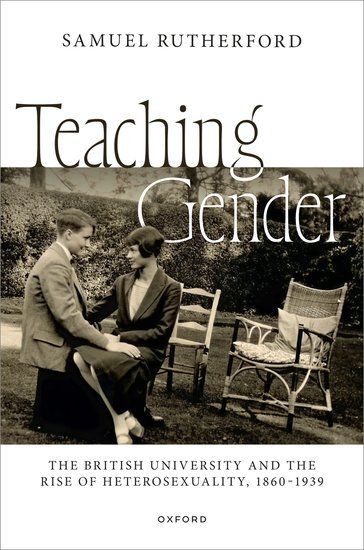
In Britain in the late nineteenth and early twentieth centuries, universities were one of many institutional state structures wherein gender difference, the male breadwinner ideal, and heterosexuality were central to a conception of citizenship. But while the state could enforce these norms through the parameters it set on the extension franchise or the distribution of welfare benefits, individual women and men also played active roles in creating and renegotiating them through the messy interactions of everyday life. Teaching Gender immerses the reader in lecture theatres, University Senate meetings, student unions, nightclubs, and halls of residence to show how individuals' efforts to find workable paradigms for relating to one another across gender lines took shape within specific institutional, political, and financial constraints, and in the context of a historical moment when anxiety accrued around non-normative genders and sexualities as symptomatic of wider social and political instability. Drawing on extensive research in the archives of ten colleges and universities across England and Scotland, Samuel Rutherford shows that the nationalization and centralization of higher education at the turn of the twentieth century resulted incidentally in coeducation, over the protest of feminist activists who supported gender segregation; that students' negotiation of cross-gender interaction in coeducational universities ultimately led them to identify heterosexuality as a seemingly less fraught paradigm than more gender-neutral conceptions of 'corporate life'; and that single-sex men's and women's colleges, though increasingly marginal, became important sites for the theorization of life paths and identities outside the heterosexual norm. Through detailed recovery both of political and financial decision-making and of the experiences and emotions of faculty, students, administrators, donors, and national politicians, Rutherford paints a vivid and resonant picture of the university campus as a key site for the transmission of norms around gender and sexuality.
Reverend Samuel Rutherford wrote Lex, Rex to defend and advance the Presbytarian ideals in government and political life, and oppose the notion of a monarch's Divine Right to rule. Writing in the 1640s, Rutherford lived in a time of political tumult and upheaval. The notion of Divine Right - whether a monarch ruled with the authority of God - was under increasing question. The steadily waning power of the king, increasing rates of literacy and education, and enfranchisement of classes that followed the Renaissance bore fruit in demands for governmental reform. No greater were these trends felt than in England, whose Parliament had over centuries gained power. Shaken to its foundations by the aftermath of religious Reformation in the 1500s, the monarchy was under great scrutiny. The follies of absolute power, whereby one ruler had capacity to take decisions affecting the lives of millions, were now an active source of agitation and discontentment in both the halls of power and amid the wider populace.