

Kirjahaku
Etsi kirjoja tekijän nimen, kirjan nimen tai ISBN:n perusteella.
1000 tulosta hakusanalla Sandra L. Shadinger



In the spring of 1994, a bronze sculpture of a little girl standing in scenic Bonaventure Cemetery in Savannah, Georgia, became famous when it was featured on the cover of the popular book, Midnight in the Garden of Good and Evil. That demure little girl holding up twin bowls became a national sensation, an object so often sought by tourists, the sculpture had to be removed, first to a private home, then to a museum. This is the story of that sculpture, the “Bird Girl”, and the talented Chicago-based artist, Sylvia Shaw Judson, who created it. Additional sculptures by Judson illustrated and discussed here include “Gardener” -- currently residing in the Jacqueline Kennedy Garden at the White House -- and "Monument to the Quaker Martyr Mary Dyer" on the lawn of the Massachusetts State House in Boston. The text includes Judson’s history and her works, illustrated with twenty-seven images. This book is essential to all with an appreciation of the arts.

Over 100 beautiful color photos and an engaging, detailed text direct an unusual and eye-opening art tour of Savannah, Georgia. Well known for its unique city plan of public squares and gorgeous historic homes, Savannah is also home to a fabulous collection of art: sculptures, paintings, drawings, prints, and photographs. Home to the South's first art museum, the Telfair Academy of Arts and Sciences, and the Savannah College of Art and Design, the country's largest art school, Savannah is well-established in the arts. This essential guide includes images and descriptions of important monuments, museums, galleries, art in unexpected places, and profiles of five Savannah artists. Art lovers everywhere will enjoy this book, and visitors and longtime residents will fine it an indespensible guidebook.

Unsaturated Soil Engineering Practice
Sandra L. (EDT) Houston; D.G. Fredlund; American Society of Civil Engineers Geo-Institute Subcommittee on unsa (CO
Amer Society of Civil Engineers
1997
pokkari

Bearing Witness
Sandra L Bloom; Michael Reichert
Routledge Member of the Taylor and Francis Group
1998
sidottu
Bearing Witness: Violence and Collective Responsibility offers a unique layperson’s introduction to the scope and causes of violence and trauma theory and suggests ways we can all work to attack these causes. Upon completing this work, you will have a better understanding of the social causes of the violence epidemic and concrete suggestions for its long-term control.Bearing Witness addresses the cycle of violence by discussing some of the biological, psychological, social, and moral issues that go into determining whether a person will end up as a victim, perpetrator, or bystander to violent events and what happens to us when we are in one or all three of these roles. The authors look at a number of intersecting factors that play interdependent roles in creating a culture that promotes, supports, and even encourages violence. Specifically, you’ll gain invaluable insight into:trauma theory and traumatogenic forces--backdrops against which the chances of exposure to violence and the use of violence as a problemsolver are increased normal human development in the context of attachment theory and what occurs as a result of disrupted attachment bonds how rapid changes in modern society and the breakdown of the traditional family structure contribute to a level of social stress that promotes violence violence in the family, in the workplace, and in the schools--all places to which people turn for security social responses to violence--the ways in which certain responses decrease or increase the likelihood of violence the unhealthy balance of power between the genders and how violence or the threat of violence maintains this imbalance how our cultural standard of disavowing our normal emotional experience sets the stage for repeated and regular empathic failure, which leads to violenceA framework for understanding the various aspects of the problem of violence, Bearing Witness delves into the various aspects of trauma--what trauma does to the body, the mind, the emotions, and relationships--before beginning to formulate proposals for initiating processes that lead to problemsolving. Once this knowledge base has been established, the authors give you the beginnings of an outline for reorganizing society with the aim of establishing a community that is responsive to the basic human need for safety and peace.

Bearing Witness
Sandra L Bloom; Michael Reichert
Routledge Member of the Taylor and Francis Group
1998
nidottu
Bearing Witness: Violence and Collective Responsibility offers a unique layperson’s introduction to the scope and causes of violence and trauma theory and suggests ways we can all work to attack these causes. Upon completing this work, you will have a better understanding of the social causes of the violence epidemic and concrete suggestions for its long-term control.Bearing Witness addresses the cycle of violence by discussing some of the biological, psychological, social, and moral issues that go into determining whether a person will end up as a victim, perpetrator, or bystander to violent events and what happens to us when we are in one or all three of these roles. The authors look at a number of intersecting factors that play interdependent roles in creating a culture that promotes, supports, and even encourages violence. Specifically, you’ll gain invaluable insight into:trauma theory and traumatogenic forces--backdrops against which the chances of exposure to violence and the use of violence as a problemsolver are increased normal human development in the context of attachment theory and what occurs as a result of disrupted attachment bonds how rapid changes in modern society and the breakdown of the traditional family structure contribute to a level of social stress that promotes violence violence in the family, in the workplace, and in the schools--all places to which people turn for security social responses to violence--the ways in which certain responses decrease or increase the likelihood of violence the unhealthy balance of power between the genders and how violence or the threat of violence maintains this imbalance how our cultural standard of disavowing our normal emotional experience sets the stage for repeated and regular empathic failure, which leads to violenceA framework for understanding the various aspects of the problem of violence, Bearing Witness delves into the various aspects of trauma--what trauma does to the body, the mind, the emotions, and relationships--before beginning to formulate proposals for initiating processes that lead to problemsolving. Once this knowledge base has been established, the authors give you the beginnings of an outline for reorganizing society with the aim of establishing a community that is responsive to the basic human need for safety and peace.

When the Personal Responsibility and Work Opportunity Reconciliation Act became law in 1996, the architects of welfare reform celebrated what they called the new "consensus" on welfare: that cash assistance should be temporary and contingent on recipients' seeking and finding employment. However, assessments about the assumptions and consequences of this radical change to the nation's social safety net were actually far more varied and disputed than the label "consensus" suggests. By examining the varied realities and accountings of welfare restructuring, Stretched Thin looks back at a critical moment of policy change and suggests how welfare policy in the United States can be changed to better address the needs of poor families and the nation. Using ethnographic observations, in-depth interviews with poor families and welfare workers, survey data tracking more than 750 families over two years, and documentary evidence, Sandra Morgen, Joan Acker, and Jill Weigt question the validity of claims that welfare reform has been a success. They show how poor families, welfare workers, and welfare administrators experienced and assessed welfare reform differently based on gender, race, class, and their varying positions of power and control within the welfare state. The authors document the ways that, despite the dramatic drop in welfare rolls, low-wage jobs and inadequate social supports left many families struggling in poverty. Revealing how the neoliberal principles of a drastically downsized welfare state and individual responsibility for economic survival were implemented through policies and practices of welfare provision and nonprovision, the authors conclude with new recommendations for reforming welfare policy to reduce poverty, promote economic security, and foster shared prosperity.
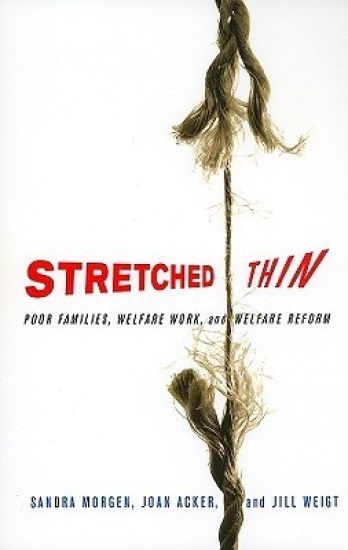
When the Personal Responsibility and Work Opportunity Reconciliation Act became law in 1996, the architects of welfare reform celebrated what they called the new "consensus" on welfare: that cash assistance should be temporary and contingent on recipients' seeking and finding employment. However, assessments about the assumptions and consequences of this radical change to the nation's social safety net were actually far more varied and disputed than the label "consensus" suggests. By examining the varied realities and accountings of welfare restructuring, Stretched Thin looks back at a critical moment of policy change and suggests how welfare policy in the United States can be changed to better address the needs of poor families and the nation. Using ethnographic observations, in-depth interviews with poor families and welfare workers, survey data tracking more than 750 families over two years, and documentary evidence, Sandra Morgen, Joan Acker, and Jill Weigt question the validity of claims that welfare reform has been a success. They show how poor families, welfare workers, and welfare administrators experienced and assessed welfare reform differently based on gender, race, class, and their varying positions of power and control within the welfare state. The authors document the ways that, despite the dramatic drop in welfare rolls, low-wage jobs and inadequate social supports left many families struggling in poverty. Revealing how the neoliberal principles of a drastically downsized welfare state and individual responsibility for economic survival were implemented through policies and practices of welfare provision and nonprovision, the authors conclude with new recommendations for reforming welfare policy to reduce poverty, promote economic security, and foster shared prosperity.
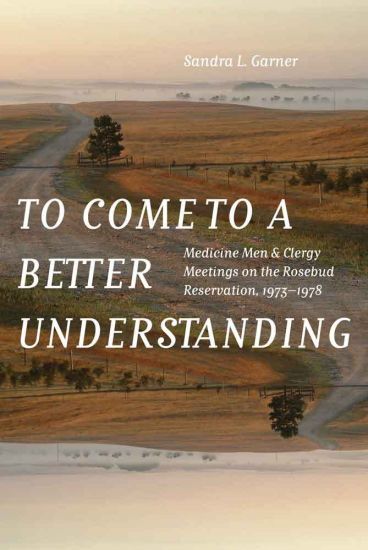
To Come to a Better Understanding analyzes the cultural encounters of the medicine men and clergy meetings held on Rosebud Reservation in St. Francis, South Dakota, from 1973 through 1978. Organized by Father Stolzman, a Catholic priest studying Lakota religious practice, the meetings fit the goal of the recently formed Medicine Men’s Association to share its members’ knowledge about Lakota thought and ritual. Both groups stated that the purpose of the historic theological discussions was “to come to a better understanding.” Though the groups ended their formal discussions after eighty-four meetings, Sandra L. Garner shows how this cultural exchange reflects a rich Native intellectual tradition and articulates the multiple meanings of “understanding” that necessarily characterize intercultural encounters. Garner examines the exchanges of these two very different cultures, which share a history of inequitable power relationships, to explore questions of cultural ownership and activism. These meetings were another form of activism, a “quiet side” without the militancy of the American Indian Movement. Based on ethnographic fieldwork and archival analysis, this volume focuses on the medicine men participants-who served as translators, interpreters, and cultural mediators-to explore how modern political, social, and religious issues were negotiated from an indigenous perspective that valued experience as critical to understanding.

Highly Successful Women Administrators
Sandra L. Gupton; Slick Gloria Appelt
Corwin Press Inc
1996
sidottu
The under-representation of women in educational administration is addressed in this book. The experiences of 15 female educational leaders in their quest for, ascent to and acquisition of leadership positions are described. Through their experiences, the administrators also offer advice to other women and men in the profession. Important themes emerging from the book include: women's lack of aspiration to administrative positions; cultural stereotypes regarding gender roles and leadership; and insufficient support systems for and among women in educational leadership.

Highly Successful Women Administrators
Sandra L. Gupton; Slick Gloria Appelt
Corwin Press Inc
1997
nidottu
The under-representation of women in educational administration is addressed in this book. The experiences of 15 female educational leaders in their quest for, ascent to and acquisition of leadership positions are described. Through their experiences, the administrators also offer advice to other women and men in the profession. Important themes emerging from the book include: women's lack of aspiration to administrative positions; cultural stereotypes regarding gender roles and leadership; and insufficient support systems for and among women in educational leadership.
Communication as Comfort
Sandra L. Ragan; Elaine M. Wittenberg-Lyles; Joy Goldsmith; Sandra Sanchez Reilly
Routledge Member of the Taylor and Francis Group
2008
sidottu
This exceptional work explores the complexities of communication at one of the most critical stages of the life experience--during advanced, serious illness and at the end of life. Challenging the predominantly biomedical model that informs much communication between seriously ill and/or dying patients and their physicians, caregivers, and families, Sandra L. Ragan, Elaine M. Wittenberg-Lyles, Joy Goldsmith, and Sandra Sanchez-Reilly pose palliative care--medical care designed to comfort rather than to cure patients--as an antidote to the experience of most Americans at the most vulnerable juncture of their lives. With an author team comprised of three health communication scholars and one physician certified in geriatrics and palliative medicine, this volume integrates the medical literature on palliative care with that of health communication researchers who advocate a biopsychosocial approach to health care. Applying communication theories and insights to illuminate problems and to explain their complexities, the authors advocate a patient-centered approach to care that recognizes and seeks to lessen patients’ suffering and the many types of pain they may experience (physical, psychological, social, and spiritual) during life-threatening illness.

Communication as Comfort
Sandra L. Ragan; Elaine M. Wittenberg-Lyles; Joy Goldsmith; Sandra Sanchez Reilly
Routledge Member of the Taylor and Francis Group
2008
nidottu
This exceptional work explores the complexities of communication at one of the most critical stages of the life experience--during advanced, serious illness and at the end of life. Challenging the predominantly biomedical model that informs much communication between seriously ill and/or dying patients and their physicians, caregivers, and families, Sandra L. Ragan, Elaine M. Wittenberg-Lyles, Joy Goldsmith, and Sandra Sanchez-Reilly pose palliative care--medical care designed to comfort rather than to cure patients--as an antidote to the experience of most Americans at the most vulnerable juncture of their lives. With an author team comprised of three health communication scholars and one physician certified in geriatrics and palliative medicine, this volume integrates the medical literature on palliative care with that of health communication researchers who advocate a biopsychosocial approach to health care. Applying communication theories and insights to illuminate problems and to explain their complexities, the authors advocate a patient-centered approach to care that recognizes and seeks to lessen patients’ suffering and the many types of pain they may experience (physical, psychological, social, and spiritual) during life-threatening illness.



Revisioning Red Riding Hood Around the World
Sandra L. Beckett
Wayne State University Press
2013
nidottu
Across various time periods, audiences, aesthetics, and cultural landscapes, Little Red Riding Hood is a universal icon, and her story is one of the world's most retold tales. In Revisioning Red Riding Hood Around the World: An Anthology of International Retellings, Sandra L. Beckett presents over fifty notable modern retellings, only two of which have appeared previously in English. The tales include works published in twenty-four countries and sixteen languages, in texts that span more than a century, but with the majority written in the last fifty years. They include retellings for children, adolescents, and adults, as well as crossover works intended for an audience of all ages. The tales in this volume progress from works that recast the story of Little Red Riding Hood from traditional perspectives through more playful versions to more unconventional approaches. Seven sections are arranged thematically: Cautionary Tales for Modern Riding Hoods, Contemporary Riding Hoods Come of Age, Playing with the Story of Red Riding Hood and the Wolf, Rehabilitating the Wolf, The Wolf's Story, The Wolf Within, and Running with the Wolves. Beckett provides an interpretative introduction to each text and insightful information on its author and/or illustrator. A variety of genres are represented, including fairy tale, short story, novella, novel, poetry, illustrated books, and picture books. More than 90 illustrations, both colour plates and black-and-white images, reveal further narrative layers of meaning. The number and diversity of retellings in Revisioning Red Riding Hood demonstrate the tale's remarkable versatility and its exceptional status in the collective unconscious and in literary culture, even beyond the confines of the Western world. This unique anthology contributes to cross-cultural exchange and facilitates comparative study of the tale for readers interested in fairy-tale studies, cultural studies, and literary history.

This pioneering new study of the Black megachurch phenomenon brings nuance and depth to the question, Are Black megachurches more focused on prosperity than on people? Black megachurches and their pastors are often accused of failing to use their considerable resources to help the poor; focusing on prosperity theology rather than on social justice; requiring excessive monetary and time commitments of members; and pilfering church coffers for the their personal use. The debate rages on about whether these congregations are doing all they can to address specific challenges facing African American communities. Live Long and Prosper is a refreshing, innovative study that reaches beyond superficial understandings of the Black megachurch phenomenon in a piercing interrogation of how powerful megachurches address (or fail to address) two social crises in the Black community: HIV/AIDS and poverty. Live Long and Prosper offers an intriguing examination of sixteen representative Black megachurches and explores some of their motivations and subsequent programmatic efforts in light of prosperity or "health and wealth" theology. Professor Barnes makes the case that the Black megachurch is a complex, contemporary model of the historic Black church in response to globalism, consumerism, secularism, religious syncretism, and the realities of race. She contends that many of these megachurches hold unique characteristics of adaptability and innovation that position them well to tackle difficult social issues. Prosperity theology emphasizes two characteristics—physical health and economic wealth—as examples of godly living and faith. This book considers whether and how efforts to address HIV/AIDS (a "health" issue) and poverty (a "wealth" issue) are influenced by church and clergy profiles; theology, in general; and prosperity theology, in particular. Frame analysis informs this mixed-methodological study to compare and contrast experiences, theological beliefs, pastoral profiles, and programs. Live Long and Prosper is a must-read for general readers, academics, and students alike—indeed, anyone interested in the contemporary Black megachurch's response to social problems and the link between theology and social action. It is at once a fascinating, readable narrative and a rich piece of scholarship complete with extensively documented endnotes, statistics, informative charts and tables, and an exhaustive bibliography.

This pioneering new study of the Black megachurch phenomenon brings nuance and depth to the question, Are Black megachurches more focused on prosperity than on people? Black megachurches and their pastors are often accused of failing to use their considerable resources to help the poor; focusing on prosperity theology rather than on social justice; requiring excessive monetary and time commitments of members; and pilfering church coffers for the their personal use. The debate rages on about whether these congregations are doing all they can to address specific challenges facing African American communities. Live Long and Prosper is a refreshing, innovative study that reaches beyond superficial understandings of the Black megachurch phenomenon in a piercing interrogation of how powerful megachurches address (or fail to address) two social crises in the Black community: HIV/AIDS and poverty. Live Long and Prosper offers an intriguing examination of sixteen representative Black megachurches and explores some of their motivations and subsequent programmatic efforts in light of prosperity or "health and wealth" theology. Professor Barnes makes the case that the Black megachurch is a complex, contemporary model of the historic Black church in response to globalism, consumerism, secularism, religious syncretism, and the realities of race. She contends that many of these megachurches hold unique characteristics of adaptability and innovation that position them well to tackle difficult social issues. Prosperity theology emphasizes two characteristics—physical health and economic wealth—as examples of godly living and faith. This book considers whether and how efforts to address HIV/AIDS (a "health" issue) and poverty (a "wealth" issue) are influenced by church and clergy profiles; theology, in general; and prosperity theology, in particular. Frame analysis informs this mixed-methodological study to compare and contrast experiences, theological beliefs, pastoral profiles, and programs. Live Long and Prosper is a must-read for general readers, academics, and students alike—indeed, anyone interested in the contemporary Black megachurch's response to social problems and the link between theology and social action. It is at once a fascinating, readable narrative and a rich piece of scholarship complete with extensively documented endnotes, statistics, informative charts and tables, and an exhaustive bibliography.