Kirjojen hintavertailu. Mukana 11 717 486 kirjaa ja 12 kauppaa.

Kirjahaku

Etsi kirjoja tekijän nimen, kirjan nimen tai ISBN:n perusteella.

1000 tulosta hakusanalla Schelling Hans

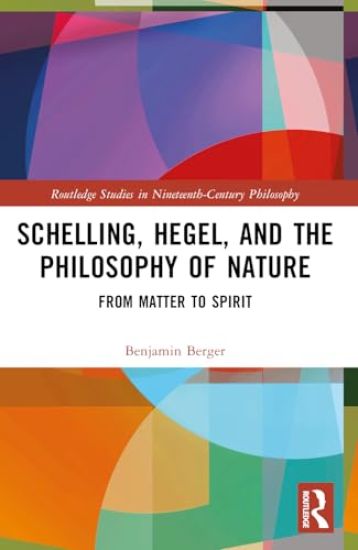
Schelling, Hegel, and the Philosophy of Nature

Schelling, Hegel, and the Philosophy of Nature

Benjamin Berger

TAYLOR FRANCIS LTD
2025
nidottu
This book develops an original interpretation of the relationship between F.W.J. Schelling and G.W.F. Hegel. It argues that the difference between these philosophers should be understood in light of their shared commitment to the philosophy of nature and the idea that spirit, or humanity, emerges from the natural world.The author makes a case for the contemporary relevance of German idealist philosophy of nature by walking the reader through its major themes, motivations, and arguments. Along the way, Schelling and Hegel are shown to develop key insights about the structure of reality and the dependence of living things and human beings upon inorganic natural processes. In elucidating the details of Schelling’s and Hegel’s respective philosophies of nature, the book challenges some of our most basic assumptions about the scope of philosophical inquiry and the relationship between matter, life, and human existence.Schelling, Hegel, and the Philosophy of Nature will appeal to scholars and advanced students working on German idealism, as well as those interested in contemporary philosophies of nature and the topic of emergence.
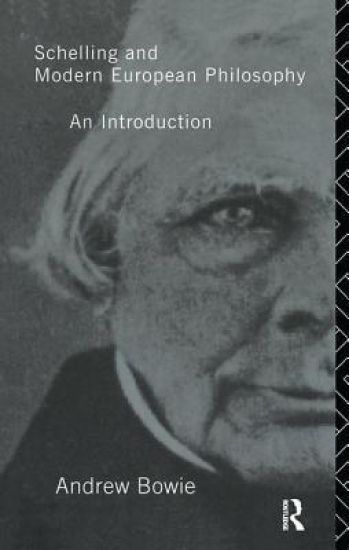
Schelling and Modern European Philosophy:
Andrew Bowie's book is the first introduction in English to present F W J Schelling as a major European philospher in his own right. Schelling and Modern European Philosophy, surveys the whole of Schelling's philosophical career, lucidly reconstructing his key arguments, particularly those against Hegel, and relating them to contemporary philosophical discussion. Dr Bowie traces how central ideas and conceptual strategies in the work of philosophers as diverse as Nietzsche, Heidegger, Derrida and Davidson relate closely to Schelling's often misunderstood philosophy and focuses on Schelling's work as an alternative to, and critique of aspects of Hegel's thinking.
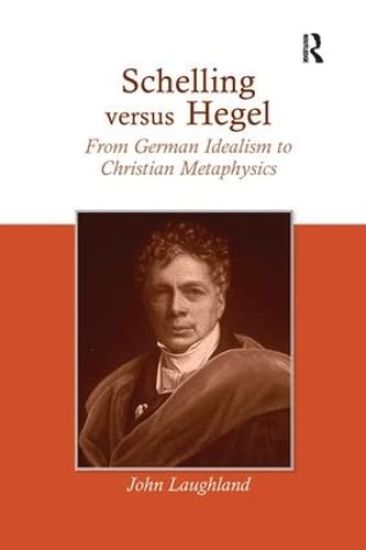
Schelling versus Hegel

Schelling versus Hegel

John Laughland

Routledge
2016
nidottu
In tracing Friedrich von Schelling's long philosophical development, John Laughland examines in particular his disentanglement from German idealism and his reaction, later in life, against Hegel. He argues that this story has relevance beyond the facts themselves and that it explains much about the direction philosophy took in the century between the French Revolution and the rise of Communism. Schelling's development turned principally on the related questions of human liberty and the creation. Following a sharp disagreement with his old friend Hegel over the Phenomenology in 1807, Schelling wrote a short but brilliant essay on human freedom in 1809, after which he never published another word. In the remaining decades of his life (d. 1854) Schelling developed in an increasingly conservative and Christian direction, preoccupied with the relationship between Christianity and metaphysics. In numerous lectures and unpublished works, he attacked what he saw as the hubris and artificiality of Hegelian rationalism. However the path against which Schelling warned was the one which philosophy finally took. Schelling was determined to show how philosophy (especially ontology) explained and was explained by Christianity, and that both had been damaged by modern rationalism. But Hegel’s Marxist epigones who attended his later lectures scoffed and Hegelianism triumphed. This is an elegantly written and engaging study in the history of ideas of a philosopher on the losing side.
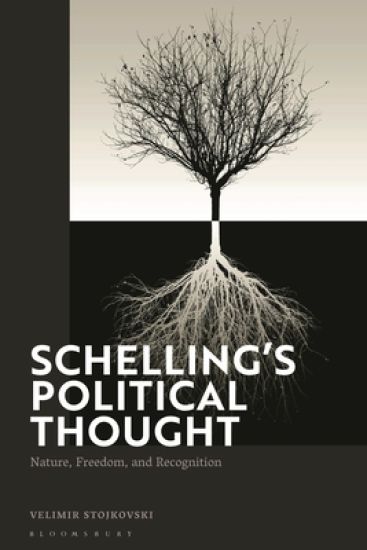
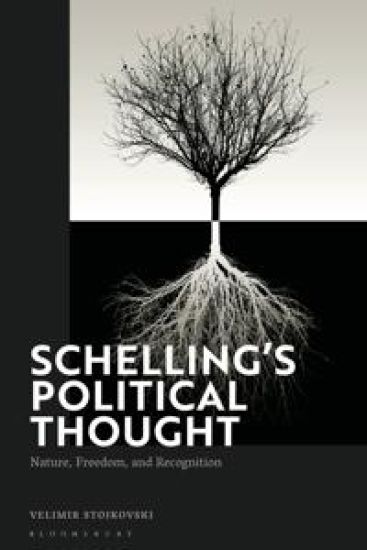
Schelling’s Political Thought

Schelling’s Political Thought

Velimir Stojkovski

BLOOMSBURY PUBLISHING PLC
2022
sidottu
In the first study to examine F. W. J. Schelling’s political thought, Velimir Stojkovski not only unearths a neglected dimension of the influential thinker's philosophy but further shows what it can teach us about our ethical and political responsibilities today. Unlike Hegel or Fichte, Schelling never wrote a political treatise. Yet by reconstructing the portions of such works as The New Deductions of Natural Right that deal explicitly with the political and by thematically rethinking parts of his writings that have a clear repercussion on politics – in particular those on nature, freedom and religion – this book reveals the centrality of politics to his oeuvre. Revisiting his corpus in this way, Stojkovski uncovers a number of ways we can learn from Schelling and his reception. He examines how Schelling’s views on nature can clarify our moral and political obligations to the non-human world and further demonstrates how the separation of ontology as first philosophy from the ethico-political has resulted in a fragmented view of the status of the political subject and thus the body politic. Forcefully renouncing this fragmentation, Stojkovski explores how the same divide has contributed to the ongoing political turmoil in Europe and America.Combining an exploration of German Idealism with contemporary concerns, this is an essential study that will introduce readers to a new Schelling: a political thinker for the 21st century.
Schelling’s Political Thought

Schelling’s Political Thought

Velimir Stojkovski

BLOOMSBURY PUBLISHING PLC
2024
nidottu
In the first study to examine F. W. J. Schelling’s political thought, Velimir Stojkovski not only unearths a neglected dimension of the influential thinker's philosophy but further shows what it can teach us about our ethical and political responsibilities today. Unlike Hegel or Fichte, Schelling never wrote a political treatise. Yet by reconstructing the portions of such works as The New Deductions of Natural Right that deal explicitly with the political and by thematically rethinking parts of his writings that have a clear repercussion on politics – in particular those on nature, freedom and religion – this book reveals the centrality of politics to his oeuvre. Revisiting his corpus in this way, Stojkovski uncovers a number of ways we can learn from Schelling and his reception. He examines how Schelling’s views on nature can clarify our moral and political obligations to the non-human world and further demonstrates how the separation of ontology as first philosophy from the ethico-political has resulted in a fragmented view of the status of the political subject and thus the body politic. Forcefully renouncing this fragmentation, Stojkovski explores how the same divide has contributed to the ongoing political turmoil in Europe and America.Combining an exploration of German Idealism with contemporary concerns, this is an essential study that will introduce readers to a new Schelling: a political thinker for the 21st century.
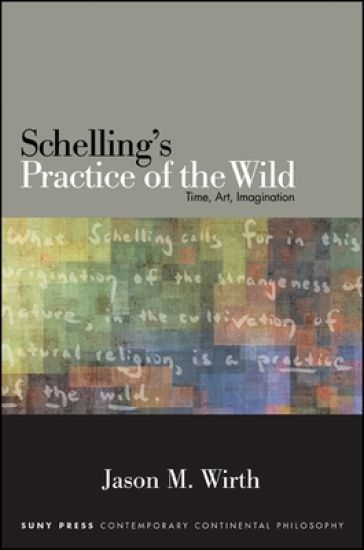
Schelling's Practice of the Wild

Schelling's Practice of the Wild

Jason M. Wirth

State University of New York Press
2016
pokkari
Reconsiders the contemporary relevance of Schelling's radical philosophical and religious ecology.The last two decades have seen a renaissance and reappraisal of Schelling's remarkable body of philosophical work, moving beyond explications and historical study to begin thinking with and through Schelling, exploring and developing the fundamental issues at stake in his thought and their contemporary relevance. In this book, Jason M. Wirth seeks to engage Schelling's work concerning the philosophical problem of the relationship of time and the imagination, calling this relationship Schelling's practice of the wild. Focusing on the questions of nature, art, philosophical religion (mythology and revelation), and history, Wirth argues that at the heart of Schelling's work is a radical philosophical and religious ecology. He develops this theme not only through close readings of Schelling's texts, but also by bringing them into dialogue with thinkers as diverse as Deleuze, Nietzsche, Melville, Musil, and many others. The book also features the first appearance in English translation of Schelling's famous letter to Eschenmayer regarding the Freedom essay.
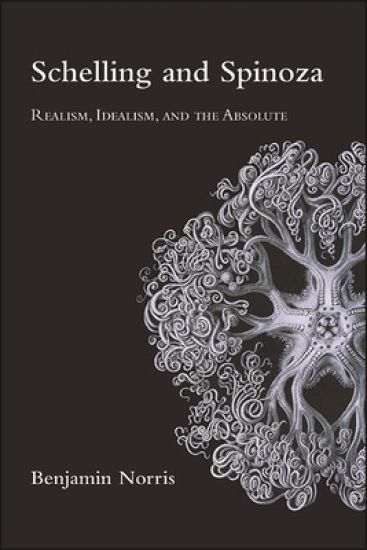
Schelling and Spinoza

Schelling and Spinoza

Benjamin Norris

STATE UNIVERSITY OF NEW YORK PRESS
2023
pokkari
Presents a novel interpretation of Schelling's philosophy by way of his reading and critique of Spinoza.Schelling and Spinoza reconstructs Schelling's reading of Spinoza's metaphysics to better understand the roles realism and idealism play in Schelling's work. Schelling initially praises Spinoza's monism but comes to criticize the lifelessness produced by Spinoza's dualistic account of the relation between thought and existence. By turning to Schelling's notion of the Absolute, author Benjamin Norris presents a novel reading of Schelling's early and middle philosophical endeavors as a kind of ideal-realism dependent on the hyphen that marks both the identity and the non-identity of realism and idealism. Through close analysis of Schelling's work, he convincingly argues that any contemporary return to Schelling must grapple with his critique of Spinoza. This critique calls into question the categories of immanence and transcendence that orient the current debate surrounding realism, antirealism, and idealism. Schelling and Spinoza is an important contribution to our understanding of both Schelling and Spinoza, as well as the viability of the frightening claim that only one thing truly exists.
Schelling and Spinoza

Schelling and Spinoza

Benjamin Norris

STATE UNIVERSITY OF NEW YORK PRESS
2022
sidottu
Presents a novel interpretation of Schelling's philosophy by way of his reading and critique of Spinoza.Schelling and Spinoza reconstructs Schelling's reading of Spinoza's metaphysics to better understand the roles realism and idealism play in Schelling's work. Schelling initially praises Spinoza's monism but comes to criticize the lifelessness produced by Spinoza's dualistic account of the relation between thought and existence. By turning to Schelling's notion of the Absolute, author Benjamin Norris presents a novel reading of Schelling's early and middle philosophical endeavors as a kind of ideal-realism dependent on the hyphen that marks both the identity and the non-identity of realism and idealism. Through close analysis of Schelling's work, he convincingly argues that any contemporary return to Schelling must grapple with his critique of Spinoza. This critique calls into question the categories of immanence and transcendence that orient the current debate surrounding realism, antirealism, and idealism. Schelling and Spinoza is an important contribution to our understanding of both Schelling and Spinoza, as well as the viability of the frightening claim that only one thing truly exists.
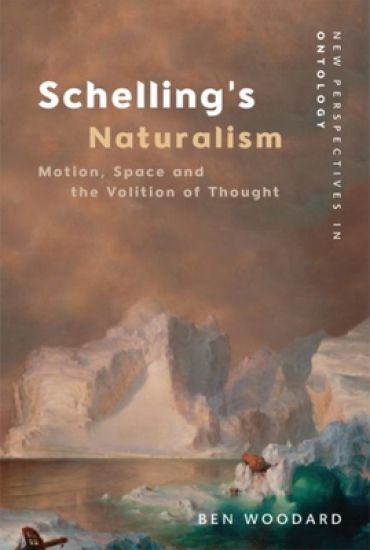
Schelling's Naturalism

Schelling's Naturalism

Ben Woodard

Edinburgh University Press
2019
sidottu
Using Schelling's philosophy, Ben Woodard examines how an expanded form of naturalism changes how we conceive of the division between thought and world, mathematics and motion, sense and dynamics, experiment and materiality, as well as speculation and pragmatism. Nature, in Schelling's eyes, is not the great outdoors or some authentic pastoral realm, but the various powers, processes and tendencies which run through biology, chemistry, physics and the very possibility of thought itself.