Kirjojen hintavertailu. Mukana 11 699 587 kirjaa ja 12 kauppaa.

Kirjahaku

Etsi kirjoja tekijän nimen, kirjan nimen tai ISBN:n perusteella.

1000 tulosta hakusanalla Shakespeare-N

Shakespeare with Noodles: Romeo and Juliet script

Shakespeare with Noodles: Romeo and Juliet script

Margaret R. Marsh

Createspace Independent Publishing Platform
2016
nidottu
Shakespeare with Noodles is a program designed to be young people's first introduction to Shakespeare. Costumes and prop pieces are constructed from swimming noodles. Utilizing melodrama and slap stick comedy, our Romeo and Juliet is fast paced with a running time of 60 minutes. It features 22 speaking parts. The scripts in this series have been edited with performance continuity in mind. Lines sometimes are distributed to characters who do not say them in the original. As much as possible we have utilized capitalization and punctuation to reflect line breaks from the full script although the text has been condensed into paragraphs to save space. Our scripts are also tailored to incorporate girls into traditionally male roles. The genders used reflect the actors who played them in our production. Featuring a surprise ending, your audience will love our unique presentation of one of Shakespeare's best loved plays
Shakespeare with Noodles: Julius Caesar

Shakespeare with Noodles: Julius Caesar

Margaret Marsh

Independently Published
2018
nidottu
Shakespeare with Noodles is a program designed to be young people's first introduction to Shakespeare. Costumes and prop pieces are constructed from swimming noodles. All titles in the series have a playing time of under an hour. The script has been edited with performance continuity in mind. Lines sometimes are distributed to characters who do not say them in the original. As much as possible, I have utilized capitalization and punctuation to reflect line breaks from the full script. The SWN series is tailored to incorporate girls into traditionally male roles. The genders used reflect the actors who played them in our production. Should you prefer to present a more traditional approach, this series easily accommodates this. In the Tragedy of Julius Caesar, jealousy and betrayal boil over and its "Pasta la Vista" for our hero, noodle style
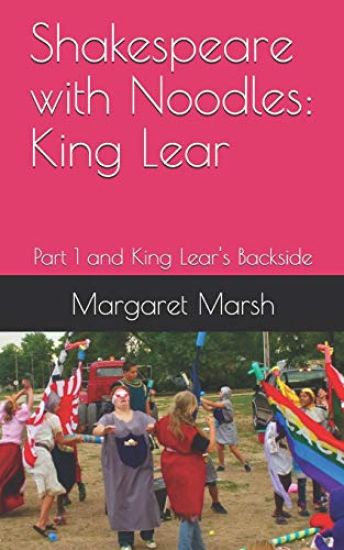
Shakespeare with Noodles: King Lear: Part 1 and King Lear's Backside
Shakespeare with Noodles is a program designed to be young people's first introduction to Shakespeare. Costumes and prop pieces are constructed from swimming noodles. Utilizing melodrama and slap stick comedy, our shows are fast paced. All titles in the series have a playing time of under an hour. The Tragedy of King Lear has been broken into two parts. King Lear: Part 1 and King Lear's Backside. Part 1 has a playing time of one hour, King Lear's Backside is 50 minutes. It is after all, Shakespeare's longest play. We devoted two seasons to it. With its beautifully interwoven plots of familial discord, it's worth devoting two seasons to. The Fool's epilogue in Part 1 and Prologue for Lear's Backside, create a transition between the two plays. Obviously it's not part of Shakespeare's Lear. Should you choose to perform the two plays together as one full production, omit these. The script has been edited with performance continuity in mind. Lines sometimes are distributed to characters who do not say them in the original. Our scripts are also tailored to incorporate girls into traditionally male roles. The genders used reflect the actors who played them in our production. Likewise in battle scenes we kill off any characters not required in the final scene.Should you prefer to present a more traditional approach, this series easily accommodates this.Shakespeare with Noodles is a program designed to be young people's first introduction to Shakespeare. Costumes and prop pieces are constructed from swimming noodles. Utilizing melodrama and slap stick comedy, our shows are fast paced. All titles in the series have a playing time of under an hour. The Tragedy of King Lear has been broken into two parts. King Lear: Part 1 and King Lear's Backside. Part 1 has a playing time of one hour, King Lear's Backside is 50 minutes. It is after all, Shakespeare's longest play. We devoted two seasons to it. With its beautifully interwoven plots of familial discord, it's worth devoting two seasons to. The Fool's epilogue in Part 1 and Prologue for Lear's Backside, create a transition between the two plays. Obviously it's not part of Shakespeare's Lear. Should you choose to perform the two plays together as one full production, omit these. The script has been edited with performance continuity in mind. Lines sometimes are distributed to characters who do not say them in the original. Our scripts are also tailored to incorporate girls into traditionally male roles. The genders used reflect the actors who played them in our production. Likewise in battle scenes we kill off any characters not required in the final scene.Should you prefer to present a more traditional approach, this series easily accommodates this.Either way, Performance rights are generally waived for educational institutions, please contact the series' creator: Margaret Marsh1515 W. 7th St.Hastings, NE [email protected](402) 463-0159Visit us on facebook: https: //www.facebook.com/shakewithnoodle/Pinterest: https: //pin.it/7dhqod33qqxwrzYoutube: https: //www.youtube.com/user/magm
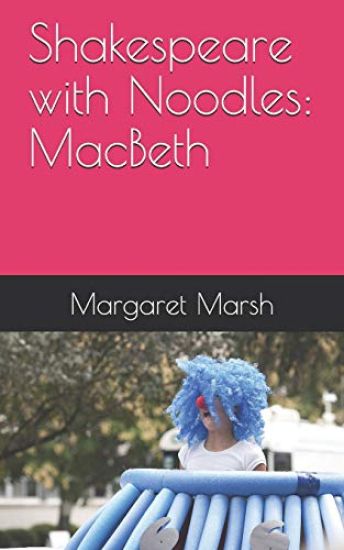
Shakespeare with Noodles: Macbeth

Shakespeare with Noodles: Macbeth

Margaret Marsh

Independently Published
2019
nidottu
Shakespeare with Noodles is a program designed to be young people's first introduction to Shakespeare. Costumes and prop pieces are constructed from swimming noodles. All titles in the series have a playing time of under an hour. The script has been edited with performance continuity in mind. Lines sometimes are distributed to characters who do not say them in the original. Our scripts are also tailored to incorporate girls into traditionally male roles. The genders used reflect the actors who played them in our production. Should you prefer to present a more traditional approach, this series easily accommodates this. In our version of MacBeth greed, ambition and three weird sisters (along with their farting caldron) lead to murder, madness, whipped cream frenzy and culminates in a battle that leaves virtually no one living. Kids love it
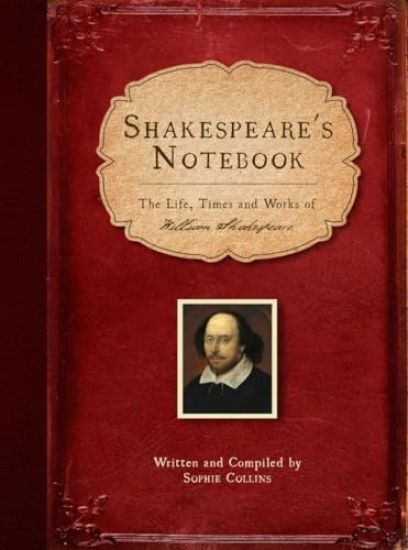
Shakespeare's Notebook

Shakespeare's Notebook

Sophie Collins

THE HISTORY PRESS LTD
2026
sidottu
The plays and poetry of William Shakespeare have entertained and enlightened us for more than 400 years. By exploring his life in Elizabethan England, Shakespeare’s Notebook provides a fascinating and detailed picture of the man behind the plays, and the theatrical world he inhabited. Through his works, contemporary sources and a wide selection of illustrations, this book reveals how Shakespeare’s plays relate to his own roles of husband, father, actor and playwright. It celebrates the enduring legacy of rich language and memorable characters that resonate in many forms today.
Macbeth (No Fear Shakespeare Graphic Novels)
"No Fear Shakespeare Illustrated - Graphic Novels" is a series based on the translated texts of the plays found in "No Fear Shakespeare". The original "No Fear" series made Shakespeare's plays much easier to read, but these dynamic visual adaptations are impossible to put down. Each of the titles is illustrated in its own unique style, but all are distinctively offbeat, slightly funky, and appealing. Each book features an illustrated cast of characters, helpful plot summary, line-by-line translations of the play and illustrations that will enhance your understanding of the story and characters.
The Oxford Shakespeare: Twelfth Night, or What You Will
Twelfth Night is one of the most popular of Shakespeare's plays in the modern theatre, and this edition places particular emphasis on its theatrical qualities throughout. The introduction analyses the many views of love in the play, and the juxtaposition of happiness and melancholy used to dramatize them. The presentation of the text has been re-thought in theatrical terms, and the exceptionally full an detailed commentary pays close attention to the often difficult language. The play's contrastig moods are emphasized by the use of music, which plays an important role in Twelfth Night; James Walker has re-edited the existing music from the original sources, and where none exist has composed settings compatible in style with the surviving originals, so that this edition offers material for all the music required in a performance, the only modern edition to do so. The edition will be invaluable to actors, directors, and students at all levels.
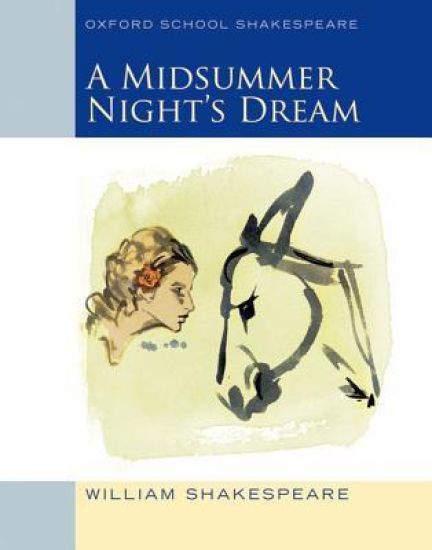
Oxford School Shakespeare: Midsummer Night's Dream

Oxford School Shakespeare: Midsummer Night's Dream

William Shakespeare

Oxford University Press
2009
nidottu
Oxford School Shakespeare is an acclaimed edition especially designed for students, with accessible on-page notes and explanatory illustrations, clear background information, and rigorous but accessible scholarly credentials. Midsummer Night's Dream is a popular text for study by secondary students the world over. Key features: 1. Accessible notes and commentataries 2. Two-column format for easy reference checking and immediate explanations 3. Wide margins to provide plenty of space for annotations and note taking 4. Additional information and reading lists (including websites) 5. Illustrations dotted throughout, both contextual and explanatory Suitable for: This title is suitable for all exam boards and for the most recent AS/A level specifications. The Oxford School Shakespeare range includes over 20 of Shakespeare's plays, plus revision resources for Macbeth and Romeo and Juliet.
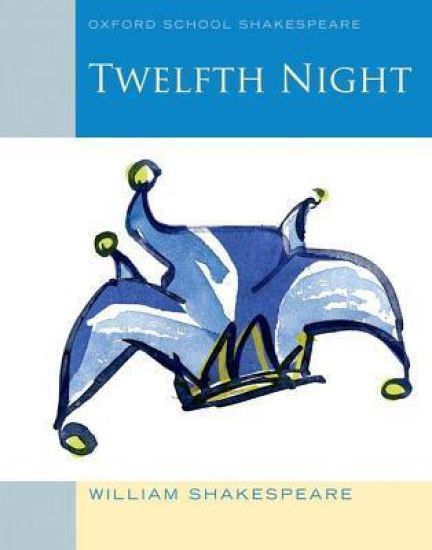
Oxford School Shakespeare: Twelfth Night

Oxford School Shakespeare: Twelfth Night

William Shakespeare

Oxford University Press
2010
nidottu
Oxford School Shakespeare is an acclaimed edition especially designed for students, with accessible on-page notes and explanatory illustrations, clear background information, and rigorous but accessible scholarly credentials.Twelfth Night is a popular text for study by secondary students the world over. Key features: 1. Accessible notes and commentataries 2. Two-column format for easy reference checking and immediate explanations 3. Wide margins to provide plenty of space for annotations and note taking 4. Additional information and reading lists (including websites) 5. Illustrations dotted throughout, both contextual and explanatory Suitable for: This title is suitable for all exam boards and for the most recent GCSE and AS/A level specifications. The Oxford School Shakespeare range includes over 20 of Shakespeare's plays, plus revision resources for Macbeth and Romeo and Juliet.
A Portrait Of Shakespeare By Nicholas Parr

A Portrait Of Shakespeare By Nicholas Parr

Nicholas Parr; Vincent Brooks

Palala Press
2018
pokkari
This work has been selected by scholars as being culturally important, and is part of the knowledge base of civilization as we know it. This work was reproduced from the original artifact, and remains as true to the original work as possible. Therefore, you will see the original copyright references, library stamps (as most of these works have been housed in our most important libraries around the world), and other notations in the work.This work is in the public domain in the United States of America, and possibly other nations. Within the United States, you may freely copy and distribute this work, as no entity (individual or corporate) has a copyright on the body of the work.As a reproduction of a historical artifact, this work may contain missing or blurred pages, poor pictures, errant marks, etc. Scholars believe, and we concur, that this work is important enough to be preserved, reproduced, and made generally available to the public. We appreciate your support of the preservation process, and thank you for being an important part of keeping this knowledge alive and relevant.
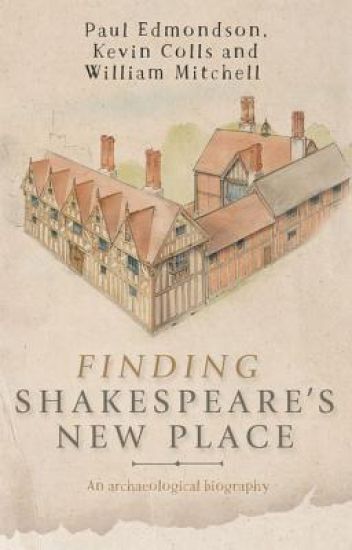
Finding Shakespeare's New Place

Finding Shakespeare's New Place

Paul Edmondson; Kevin Colls; William Mitchell

Manchester University Press
2016
nidottu
This ground-breaking book provides an abundance of fresh insights into Shakespeare's life in relation to his lost family home, New Place. The findings of a major archaeological excavation encourage us to think again about what New Place meant to Shakespeare and, in so doing, challenge some of the long-held assumptions of Shakespearian biography. New Place was the largest house in the borough and the only one with a courtyard. Shakespeare was only ever an intermittent lodger in London. His impressive home gave Shakespeare significant social status and was crucial to his relationship with Stratford-upon-Avon.Archaeology helps to inform biography in this innovative and refreshing study which presents an overview of the site from prehistoric times through to a richly nuanced reconstruction of New Place when Shakespeare and his family lived there, and beyond. This attractively illustrated book is for anyone with a passion for archaeology or Shakespeare.
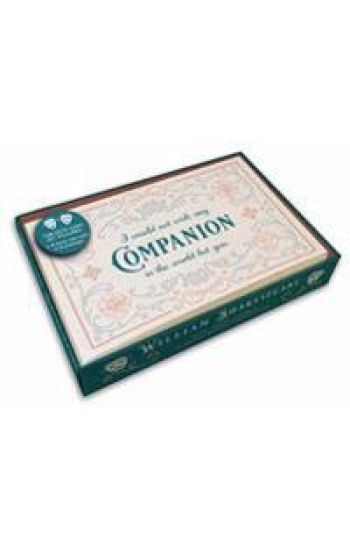
William Shakespeare Foil Note Cards
One of the most famous poets and playwrights of all time, William Shakespeare is known for his romantic poetry, powerful prose, and insightful musings on life, death, love, fate, and everything in between. Now, fans of the Bard can share his wisdom with their friends and loved ones with this set of ten foil note cards and envelopes. Featuring quotes from Shakespeare on love, friendship, gratitude, and celebration, this set includes a note card for every occasion!
What's in Shakespeare's Names

What's in Shakespeare's Names

Murray J. Levith

Routledge
2021
sidottu
‘What’s in a name? That which we call a rose/By any other name would smell as sweet.’ So says Juliet in the balcony scene from Romeo and Juliet but, originally published in 1978, Murray Levith shows just how wrong Juliet was.Shakespeare was extremely careful in his selection of names. Not only the obvious Hotspur or the descriptive Bottom or Snout, but most names in Shakespeare’s thirty-seven plays had a more than superficial significance. Beginning with what has been written previously, Levith illustrates how Shakespeare used names – not only those he invented in the later comedies, but those names bequeathed to him by history, myth, classical literature, or the Bible.Levith moves from the histories through the tragedies to the comedies, listing each significant name play by play, giving the allusions, references, and suggestions that show how each name enriches interpretations of action, character, and tone. Dr. Levith examines Shakespeare’s own name, and speculates upon the playwright’s identification with his characters and the often whimsical naming games he played or that were played upon him.A separate alphabetical index is provided to facilitate the location of individual names and, in addition, cross references to plays are given so that each name can be considered in the context of all the plays in which it appears.
What's in Shakespeare's Names

What's in Shakespeare's Names

Murray J. Levith

TAYLOR FRANCIS LTD
2023
nidottu
‘What’s in a name? That which we call a rose/By any other name would smell as sweet.’ So says Juliet in the balcony scene from Romeo and Juliet but, originally published in 1978, Murray Levith shows just how wrong Juliet was.Shakespeare was extremely careful in his selection of names. Not only the obvious Hotspur or the descriptive Bottom or Snout, but most names in Shakespeare’s thirty-seven plays had a more than superficial significance. Beginning with what has been written previously, Levith illustrates how Shakespeare used names – not only those he invented in the later comedies, but those names bequeathed to him by history, myth, classical literature, or the Bible.Levith moves from the histories through the tragedies to the comedies, listing each significant name play by play, giving the allusions, references, and suggestions that show how each name enriches interpretations of action, character, and tone. Dr. Levith examines Shakespeare’s own name, and speculates upon the playwright’s identification with his characters and the often whimsical naming games he played or that were played upon him.A separate alphabetical index is provided to facilitate the location of individual names and, in addition, cross references to plays are given so that each name can be considered in the context of all the plays in which it appears.
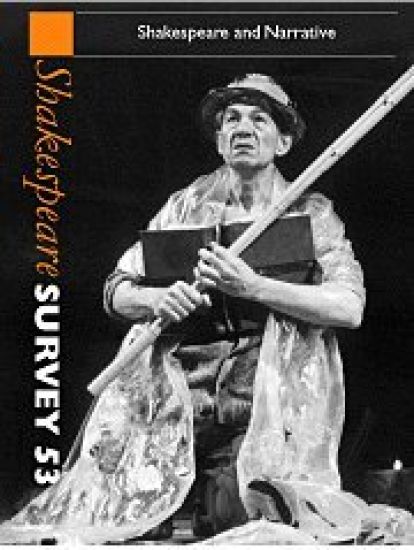
Shakespeare Survey: Volume 53, Shakespeare and Narrative
Shakespeare Survey is a yearbook of Shakespeare studies and production. Since 1948 Survey has published the best international scholarship in English and many of its essays have become classics of Shakespeare criticism. Each volume is devoted to a theme, or play, or group of plays; each also contains a section of reviews of the previous year's textual and critical studies and of major British performances. The books are illustrated with a variety of Shakespearean images and production photographs. The current editor of Survey is Peter Holland. The first eighteen volumes were edited by Allardyce Nicoll, numbers 19-33 by Kenneth Muir and numbers 34-52 by Stanley Wells. The virtues of accessible scholarship and a keen interest in performance, from Shakespeare's time to our own, have characterised the journal from the start. For the first time, numbers 1-50 are being reissued in paperback, available separately and as a set.
Shakespeare Survey: Volume 53, Shakespeare and Narrative
Shakespeare Survey is a yearbook of Shakespeare studies and production. Since 1948 Survey has published the best international scholarship in English and many of its essays have become classics of Shakespeare criticism. Each volume is devoted to a theme, or play, or group of plays; each also contains a section of reviews of the previous year’s textual and critical studies and of major British performances. The books are illustrated with a variety of Shakespearean images and production photographs. The current editor of Survey is Peter Holland. The first eighteen volumes were edited by Allardyce Nicoll, numbers 19-33 by Kenneth Muir and numbers 34-52 by Stanley Wells. The virtues of accessible scholarship and a keen interest in performance, from Shakespeare’s time to our own, have characterised the journal from the start. For the first time, numbers 1-50 are being reissued in paperback, available separately and as a set