
Kirjahaku
Etsi kirjoja tekijän nimen, kirjan nimen tai ISBN:n perusteella.
1000 tulosta hakusanalla Sharma Ramesh
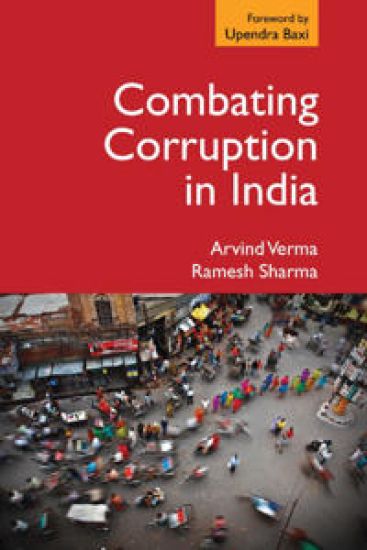
As corruption continues to be a persistent problem in India, concerned citizens believe empowered police agencies independent of political control are effective ways to deal with corrupt officials and politicians. What is corruption and how is it facilitated? What are the appropriate agencies to combat corruption professionally in India? Why are these not effective in deterring corrupt practices? Are the alternative solutions to tackle corruption successful? This book seeks to engage with these questions, discuss and analyze them, and conduct a thorough analysis of law, bureaucratic organizations, official data, case studies and comparative international institutions. It analyzes vast data to argue that a corrupt state only maintains the façade of rule of law but will not permit any inquiry beyond that of individual deviance. Using criminological perspectives, it presents a novel mechanism, the 'Doctrine of Good Housekeeping', for public officials to combat and prevent corruption within their own institutions.
Symmetries of Spacetimes and Riemannian Manifolds
Krishan L. Duggal; Ramesh Sharma
Springer
1999
sidottu
This book provides an upto date information on metric, connection and curva ture symmetries used in geometry and physics. More specifically, we present the characterizations and classifications of Riemannian and Lorentzian manifolds (in particular, the spacetimes of general relativity) admitting metric (i.e., Killing, ho mothetic and conformal), connection (i.e., affine conformal and projective) and curvature symmetries. Our approach, in this book, has the following outstanding features: (a) It is the first-ever attempt of a comprehensive collection of the works of a very large number of researchers on all the above mentioned symmetries. (b) We have aimed at bringing together the researchers interested in differential geometry and the mathematical physics of general relativity by giving an invariant as well as the index form of the main formulas and results. (c) Attempt has been made to support several main mathematical results by citing physical example(s) as applied to general relativity. (d) Overall the presentation is self contained, fairly accessible and in some special cases supported by an extensive list of cited references. (e) The material covered should stimulate future research on symmetries. Chapters 1 and 2 contain most of the prerequisites for reading the rest of the book. We present the language of semi-Euclidean spaces, manifolds, their tensor calculus; geometry of null curves, non-degenerate and degenerate (light like) hypersurfaces. All this is described in invariant as well as the index form.
Symmetries of Spacetimes and Riemannian Manifolds
Krishan L. Duggal; Ramesh Sharma
Springer-Verlag New York Inc.
2013
nidottu
This book provides an upto date information on metric, connection and curva ture symmetries used in geometry and physics. More specifically, we present the characterizations and classifications of Riemannian and Lorentzian manifolds (in particular, the spacetimes of general relativity) admitting metric (i.e., Killing, ho mothetic and conformal), connection (i.e., affine conformal and projective) and curvature symmetries. Our approach, in this book, has the following outstanding features: (a) It is the first-ever attempt of a comprehensive collection of the works of a very large number of researchers on all the above mentioned symmetries. (b) We have aimed at bringing together the researchers interested in differential geometry and the mathematical physics of general relativity by giving an invariant as well as the index form of the main formulas and results. (c) Attempt has been made to support several main mathematical results by citing physical example(s) as applied to general relativity. (d) Overall the presentation is self contained, fairly accessible and in some special cases supported by an extensive list of cited references. (e) The material covered should stimulate future research on symmetries. Chapters 1 and 2 contain most of the prerequisites for reading the rest of the book. We present the language of semi-Euclidean spaces, manifolds, their tensor calculus; geometry of null curves, non-degenerate and degenerate (light like) hypersurfaces. All this is described in invariant as well as the index form.
Process Safety Management
Chitram Lutchman; Douglas Evans; Rohanie Maharaj; Ramesh Sharma
CRC Press Inc
2013
sidottu
The continued prevalence of major incidents (most recently the 2010 BP Gulf of Mexico Oil Spill) and preponderance of workplace fatalities and injuries as well as Process Safety Management (PSM) Incidents, globally, begs the question: why do incidents continue to occur in today’s technologically advanced era? More importantly, with 80-85 percent of incidents being repeated, the more obvious questions are: Why do organizations fail to learn from prior incidents internal to the business?Why do organizations fail to learn from their peers and other same industry players?Why do organizations fail to learn from the incidents and experiences of other industries?Process Safety Management: Leveraging Networks and Communities of Practice for Continuous Improvement provides a road map organizations can use to identify and setup critical networks for preventing catastrophic incidents and for sharing knowledge in an organized manner within the organization to enhance business performance. The book helps organizations establish centers of excellence by activating networks for generating best practices and practical solutions to workplace business, and safety challenges.The book covers the full range of activation of networks including identifying members, defining goals and objectives, and prioritizing work through leadership and stewardship of networks. It addresses all elements of effective safety management and includes simple, easy-to-follow processes that bring about lasting changes to workplace safety. It also highlights the health and safety needs of both Generation X and Generation Y who currently inherit the workplace but are very different in learning behaviors and experience levels.In a thin margins business environment characterized by scarce resources, operational discipline and excellence drives stakeholder confidence and corporate performance. Detailing the practical application of tested principles and practices, this book provides a simple path forward for organizations to recognize the benefits of networks and to proactively establish and support them within organizations to generate continuous and sustained improvement in work practices, procedures, and business performance.

Process Safety Management
Chitram Lutchman; Douglas Evans; Rohanie Maharaj; Ramesh Sharma
TAYLOR FRANCIS LTD
2026
nidottu
The continued prevalence of major incidents (most recently the 2010 BP Gulf of Mexico Oil Spill) and preponderance of workplace fatalities and injuries as well as Process Safety Management (PSM) Incidents, globally, begs the question: why do incidents continue to occur in today’s technologically advanced era? More importantly, with 80-85 percent of incidents being repeated, the more obvious questions are: Why do organizations fail to learn from prior incidents internal to the business? Why do organizations fail to learn from their peers and other same industry players? Why do organizations fail to learn from the incidents and experiences of other industries? Process Safety Management: Leveraging Networks and Communities of Practice for Continuous Improvement provides a road map organizations can use to identify and setup critical networks for preventing catastrophic incidents and for sharing knowledge in an organized manner within the organization to enhance business performance. The book helps organizations establish centers of excellence by activating networks for generating best practices and practical solutions to workplace business, and safety challenges. The book covers the full range of activation of networks including identifying members, defining goals and objectives, and prioritizing work through leadership and stewardship of networks. It addresses all elements of effective safety management and includes simple, easy-to-follow processes that bring about lasting changes to workplace safety. It also highlights the health and safety needs of both Generation X and Generation Y who currently inherit the workplace but are very different in learning behaviors and experience levels. In a thin margins business environment characterized by scarce resources, operational discipline and excellence drives stakeholder confidence and corporate performance. Detailing the practical application of tested principles and practices, this book provides a simple path forward for organizations to recognize the benefits of networks and to proactively establish and support them within organizations to generate continuous and sustained improvement in work practices, procedures, and business performance.

Indian Herbal Medicines
Ramesh Kumar Sharma; Maria Micali; Bhupendra Kumar Rana; Alessandra Pellerito; Rajeev K. Singla
Springer Nature Switzerland AG
2021
nidottu
This book discusses the scope and limitations of the antimicrobial and antioxidant properties of foods as medicines or medicinal coadjuvants in traditional Indian herbal therapies. The first chapter introduces readers to the relevance of the Ayurveda system, its holistic classification approach, applications of selected herbs and the demonstrable efficacy of herbal extracts in terms of antimicrobial susceptibility. In turn, the second chapter discusses the antimicrobial properties and kinetic mechanisms of inhibition ascribed to selected vegetable extracts. The third chapter addresses the antioxidant power of phenolic compounds from vegetable products and herbal extracts. The book closes with a review of natural antioxidant agents’ role in the treatment of metabolic disorders. Written from an Indian perspective, this book unravels the chemistry of the traditional Indian diet and its impact on health. Further, it can serve as a reference for other traditional productswith similar health claims.

Natural Inflammatory Molecules in Fruits and Vegetables
Ramesh Kumar Sharma; Maria Anna Coniglio; Pasqualina Laganà
Springer Nature Switzerland AG
2021
nidottu
This book explores the role that some natural molecules found in fruits and vegetables, and their derivatives, play in excessive oxidation reactions that lead to inflammation in the human body. Particular attention is given to oxidation during food processing, especially when it comes to high-energy foods (derived from cereals) with notable amounts of oxidation-sensible lipids and protein chains. This book critically assesses the increased consumption of high-energy foods from a public health perspective. In addition, it provides an overview of the research into the unsaturated fatty acids and polypeptides responsible for nitric oxide production and elucidates the analytical identification of natural inflammatory molecules in fruits and vegetables. The book appeals not only to academic researchers and professors interested in public hygiene and food safety; medicine; food production; HACCP studies, but also to public health practitioners, and regulatory specialists and consultants.
Toxins and Contaminants in Indian Food Products
Ramesh Kumar Sharma; Salvatore Parisi
Springer International Publishing AG
2017
sidottu
This book discusses different aspects of contamination in Indian food products. Particular attention is given to the presence and analytical detection of detrimental substances such as pesticides, mycotoxins and other biologically-produced toxins, food chemicals and additives with natural or industrial origin. Furthermore, the book addresses the production and the commercial exploitation of native botanical ingredients, and the question if such ingredients should be regarded as foods or drugs. It also sheds light on chemical aspects of organic farming practices in India. Readers will also find information on pesticides and other detrimental chemicals detection in Indian farming. The authors present a useful opinion on how and why food contaminants can lead to border rejections during export, in particular to the European Union.
Toxins and Contaminants in Indian Food Products
Ramesh Kumar Sharma; Salvatore Parisi
Springer International Publishing AG
2018
nidottu
This book discusses different aspects of contamination in Indian food products. Particular attention is given to the presence and analytical detection of detrimental substances such as pesticides, mycotoxins and other biologically-produced toxins, food chemicals and additives with natural or industrial origin. Furthermore, the book addresses the production and the commercial exploitation of native botanical ingredients, and the question if such ingredients should be regarded as foods or drugs. It also sheds light on chemical aspects of organic farming practices in India. Readers will also find information on pesticides and other detrimental chemicals detection in Indian farming. The authors present a useful opinion on how and why food contaminants can lead to border rejections during export, in particular to the European Union.

Integral Humanism in context of Regenerative Natural Cycles
Ramesh Kumar Sharma
SCHOLARS' PRESS
2018
nidottu
Humanismo Integral no contexto dos Ciclos Naturais Regenerativos
Ramesh Kumar Sharma
Edicoes Nosso Conhecimento
2024
pokkari
Muito paralelamente ao movimento anti-inseticida liderado pela Dra. Rachel Carson na d cada de 1960 no Ocidente, o princ pio do Humanismo Integral foi proposto por Pandit Deen Dayal Upadhyay na ndia. Ele costumava dizer que a integridade humana na biosfera o requisito para a exist ncia da biodiversidade e da sociedade humana no planeta Terra, porque os seres humanos s o parte integrante da biosfera e n o de uma rede rob tica ou mec nica. Seria pertinente estudar agora o conceito de humanismo integral no contexto do sistema regenerativo natural evidenciado pelos ciclos de nutrientes como o ciclo do carbono, o ciclo do azoto, etc. Por outro lado, o sistema de sustentabilidade, que n o cria de novo o material de partida, estabelecido pelos tecnocratas, constituiu uma amea a para o ambiente. Os 3Rs, que significam Redu o, Reutiliza o e Reciclagem, indicam hoje em dia as tentativas humanas de criar de novo. Mas, sobretudo, a reciclagem de materiais residuais utiliza a propriedade de coexist ncia das bioesp cies. Parece que os micr bios podem estabelecer um sistema regenerativo perfeito. Neste ponto, vale a pena estudar as preocupa es ambientais humanas enquanto parte integrante da biosfera. - Ramesh Kumar Sharma.
Umanesimo integrale nel contesto dei cicli naturali rigenerativi
Ramesh Kumar Sharma
Edizioni Sapienza
2024
pokkari
Parallelamente al movimento contro gli insetticidi guidato da Rachel Carson negli anni Sessanta in Occidente, il principio dell'Umanesimo integrale stato proposto da Pandit Deen Dayal Upadhyay in India. Egli affermava che l'integrit umana nella biosfera il requisito per l'esistenza della biodiversit e della societ umana sul pianeta Terra, perch gli esseri umani sono parte integrante della biosfera, non di una rete robotica o meccanica. Sarebbe ora opportuno studiare il concetto di umanesimo integrale nel contesto del sistema rigenerativo naturale evidenziato dai cicli dei nutrienti come il ciclo del carbonio, il ciclo dell'azoto, ecc. D'altra parte, il sistema della sostenibilit , che non crea nuovamente il materiale di partenza, stabilito dai tecnocrati, ha rappresentato una minaccia per l'ambiente. Le 3R, ovvero Riduzione, Riutilizzo e Riciclaggio, indicano ovviamente i tentativi dell'uomo di creare di nuovo. Ma soprattutto il riciclo dei materiali di scarto sfrutta la propriet di coesistenza delle bio-specie. Sembra che i microbi possano stabilire un sistema rigenerativo perfetto. A questo punto vale la pena studiare le preoccupazioni ambientali dell'uomo come parte integrante della biosfera. - Ramesh Kumar Sharma.
L'humanisme intégral dans le contexte des cycles naturels régénérateurs
Ramesh Kumar Sharma
Editions Notre Savoir
2024
pokkari
Parall lement au mouvement anti-insecticide men par le Dr Rachel Carson dans les ann es 1960 en Occident, le principe de l'humanisme int gral a t propos par le Pandit Deen Dayal Upadhyay en Inde. Il avait l'habitude de dire que l'int grit humaine de la biosph re est la condition de l'existence de la biodiversit et de la soci t humaine sur la plan te Terre, parce que les humains font partie int grante de la biosph re, et non d'un r seau robotique ou m canique. Il serait maintenant pertinent d' tudier le concept d'humanisme int gral dans le contexte du syst me naturel de r g n ration mis en vidence par les cycles de nutriments comme le cycle du carbone, le cycle de l'azote, etc. D'autre part, le syst me de durabilit , qui ne cr e pas nouveau le mat riau de d part, tabli par les technocrates, a constitu une menace pour l'environnement. Les 3R, c'est- -dire la r duction, la r utilisation et le recyclage, indiquent bien s r aujourd'hui les tentatives de l'homme pour cr er nouveau. Mais le plus souvent, le recyclage des d chets fait appel la propri t de coexistence des esp ces biologiques. Il semble que les microbes puissent tablir un syst me de r g n ration parfait. ce stade, les pr occupations environnementales de l'homme en tant que partie int grante de la biosph re m ritent d' tre tudi es. - Ramesh Kumar Sharma.
Integraler Humanismus im Kontext regenerativer natürlicher Kreisläufe
Ramesh Kumar Sharma
Verlag Unser Wissen
2024
pokkari
Parallel zur Anti-Insektizid-Bewegung, die in den 1960er Jahren im Westen von Dr. Rachel Carson angef hrt wurde, wurde das Prinzip des integralen Humanismus von Pandit Deen Dayal Upadhyay in Indien propagiert. Er sagte, dass die menschliche Integrit t gegen ber der Biosph re die Voraussetzung f r die Existenz der biologischen Vielfalt sowie der menschlichen Gesellschaft auf dem Planeten Erde ist, da der Mensch ein integraler Bestandteil der Biosph re ist und nicht eines robotischen oder mechanischen Netzwerks. Es w re jetzt wichtig, das Konzept des integralen Humanismus im Kontext des nat rlichen Regenerationssystems zu untersuchen, das sich in N hrstoffkreisl ufen wie dem Kohlenstoffkreislauf, dem Stickstoffkreislauf usw. zeigt. Andererseits stellt das von Technokraten etablierte Nachhaltigkeitssystem, das das Ausgangsmaterial nicht wiederherstellt, eine Gefahr f r die Umwelt dar. 3R, also Reduzierung, Wiederverwendung und Recycling, steht heutzutage nat rlich f r die menschlichen Versuche, etwas wiederherzustellen. Aber vor allem das Recycling von Abfallstoffen nutzt die Koexistenz-Eigenschaft von Bio-Arten. Es scheint, dass Mikroben ein perfektes regeneratives System aufbauen k nnen. An diesem Punkt lohnt es sich, die Umweltbelange des Menschen als integralen Bestandteil der Biosph re zu untersuchen. - Ramesh Kumar Sharma.


Recent Advances in Riemannian and Lorentzian Geometries
Krishan L. (EDT) Duggal; Ramesh (EDT) Sharma
Amer Mathematical Society
2004
pokkari
This volume covers material presented by invited speakers at the AMS special session on Riemannian and Lorentzian geometries held at the annual Joint Mathematics Meetings in Baltimore. Topics covered include classification of curvature-related operators, curvature-homogeneous Einstein 4-manifolds, linear stability/instability singularity and hyperbolic operators of spacetimes, spectral geometry of holomorphic manifolds, cut loci of nilpotent Lie groups, conformal geometry of almost Hermitian manifolds, and also submanifolds of complex and contact spaces. This volume can serve as a good reference source and provide indications for further research. It is suitable for graduate students and research mathematicians interested in differential geometry.
Chemistry and Food Safety in the EU
Salvatore Parisi; Caterina Barone; Ramesh Kumar Sharma
Springer International Publishing AG
2016
nidottu
This Brief provides a general description of the European Rapid Alert System for Food and Feed (RASFF). It describes the RASFF approach on the legal level and with reference to notification procedures, including also new tools, which were launched in 2014: iRASFF and the RASFF Consumer Portal. In an introduction, the present status of the RASFF, which had originally been introduced in 1979, is briefly reviewed. It is described as the main basis of modern food policy in Europe, enabling member countries to take rapid corrective actions on the one hand, and to perform statistically reliable analyses of food-related hazards on the other hand. One chapter contains a statistical evaluation of RASFF notifications in general, and specifically with regard to chemical contaminants, including also allergens. In another chapter, reasons for rejections of food and feed at the European borders are analyzed in selected case studies. The Brief provides an easy description for the chemical dangersand contaminants it is referring to, outlining the names, properties, uses and importance in the food and feed industry, toxicological effects, and contamination sources. The last chapter offers an outlook on the future of the RASFF and possible expectations.