
Kirjahaku
Etsi kirjoja tekijän nimen, kirjan nimen tai ISBN:n perusteella.
1000 tulosta hakusanalla Simone Perugini

Simone De Beauvoir's Political Thinking
University of Illinois Press
2006
nidottu
By exploring the life and work of the influential feminist thinker Simone de Beauvoir, this book shows how each of us lives within political and social structures that we can--and must--play a part in transforming. It argues that Beauvoir’s careful examination of her own existence can also be understood as a dynamic method for political thinking. As the contributors illustrate, Beauvoir's political thinking proceeds from the bottom up, using examples from individual lives as the basis for understanding and transforming our collective existence. For example, she embraced her responsibility as a French citizen as making her complicit in the French war against Algeria. Here, she sees her role as an oppressor. In other contexts, she looks to the lives of individual women, including herself, to understand the dimensions of gender inequality. This volume’s six tightly connected essays home in on the individual’s relationship to community, and how one’s freedom interacts with the freedom of other people. Here, Beauvoir is read as neither a liberal nor a communitarian. The authors focus on her call for individuals to realize their freedom while remaining consistent with ethical obligations to the community. Beauvoir's account of her own life and the lives of others is interpreted as a method to understand individuals in relations to others, and as within structures of personal, material, and political oppression. Beauvoir's political thinking makes it clear that we cannot avoid political action. To do nothing in the face of oppression denies freedom to everyone, including oneself.
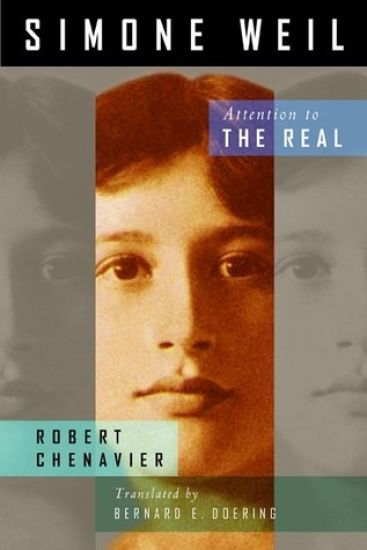
How can we articulate the intimate demand of the spiritual life and the struggle for solidarity? These two issues have often been treated separately; in Simone Weil: Attention to the Real, however, Robert Chenavier explores the work of Simone Weil (1909–1943) and demonstrates how she brought them together in a single movement of thought. "Our time has a unique mission, calling for the creation of a civilization based on the spirituality of work," she wrote near the end of her short life. Her experience as a militant and the call of the divine nurtured in her writing an intense and unwavering defense of this new civilization, backed by her personal sense of intellectual, moral, and political responsibility. Originally published in French in 2009, Simone Weil: Attention to the Real leads the reader through her earliest writing as a perceptive social critic to her work on spirituality and materialism, and finally to her extraordinary concept of decreation, produced before her death at the age of thirty-four. "To an exceptional degree," Chenavier says, "the life of Simone Weil, her personality, her commitment, and her reflection form one single whole." Chenavier argues that Weil's vocation took on a very original form in the history of philosophical thought. He is especially concerned with Weil's philosophical writings on the concept of work, which remain relevant today, and which provide an important key to her thinking throughout her life. Bernard Doering's superb translation brings to English readers Chenavier's succinct account of Simone Weil's life and an illuminating introduction to her philosophical thought.
Simone Weil and the Specter of Self-Perpetuating Force
E. Jane Doering
University of Notre Dame Press
2010
nidottu
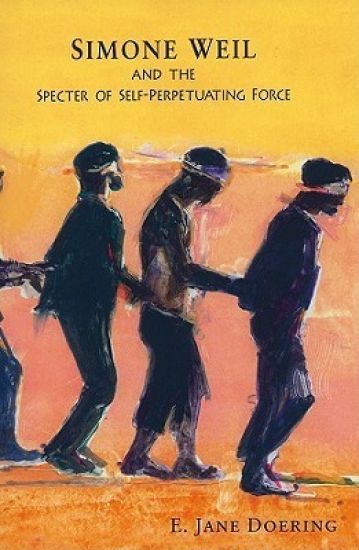
Simone Weil's philosophical and social thought during her short life (1909-1943) was intimately engaged with the nature of power and force, both human and natural, and the problems inherent in the use of force. Weil argued vehemently for pacifism, then moved toward a guarded acceptance of the use of force under very specific circumstances, in the context of the rise of Nazism. Ultimately she came to a nuanced and unique perspective on force and on the preservation of human dignity, in the aftermath of several profound mystical experiences during the last years of her life. E. Jane Doering carefully examines and analyzes the material in Weil's notebooks and lesser-known essays to illuminate her evolving thought on violence, war, and injustice. In addition, Doering addresses Weil's engagement with the Bhagavad Gita during her final years, a text that reoriented and enlightened Weil's activist and intellectual search for moral value in a violent world. Apart from small excerpts, none of the four volumes of Weil's notebooks, only recently published in French, have been translated into English. Simone Weil and the Specter of Self-Perpetuating Force contains Doering's expert translations of numerous notebook entries. The book will interest Weil scholars, those in French studies, and those who explore interdisciplinary topics in philosophy, religious studies, history, and political science.
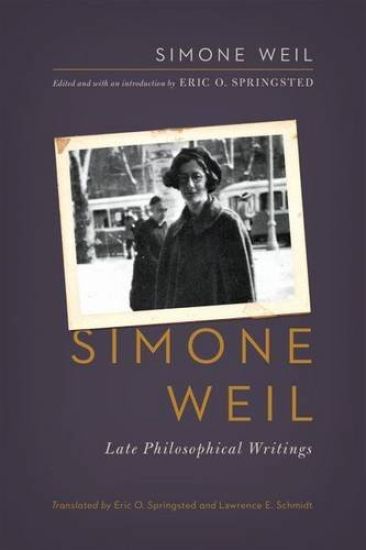
Although trained as a philosopher, Simone Weil (1909–43) contributed to a wide range of subjects, resulting in a rich field of interdisciplinary Weil studies. Yet those coming to her work from such disciplines as sociology, history, political science, religious studies, French studies, and women's studies are often ignorant of or baffled by her philosophical investigations. In Simone Weil: Late Philosophical Writings, Eric O. Springsted presents a unique collection of Weil's writings, one concentrating on her explicitly philosophical thinking. The essays are drawn chiefly from the time Weil spent in Marseille in 1940-42, as well as one written from London; most have been out of print for some time; three appear for the first time; all are newly translated. Beyond making important texts available, this selection provides the context for understanding Weil's thought as a whole. This volume is important not only for those with a general interest in Weil; it also specifically presents Weil as a philosopher, chiefly one interested in questions of the nature of value, moral thought, and the relation of faith and reason. What also appears through this judicious selection is an important confirmation that on many issues respecting the nature of philosophy, Weil, Wittgenstein, and Kierkegaard shared a great deal.

Simone Weil for the Twenty-First Century
Eric O. Springsted
University of Notre Dame Press
2021
sidottu
This in-depth study examines the social, religious, and philosophical thought of Simone Weil. Simone Weil for the Twenty-First Century presents a comprehensive analysis of Weil's interdisciplinary thought, focusing especially on the depth of its challenge to contemporary philosophical and religious studies. In a world where little is seen to have real meaning, Eric O. Springsted presents a critique of the unfocused nature of postmodern philosophy and argues that Weil's thought is more significant than ever in showing how the world in which we live is, in fact, a world of mysteries. Springsted brings into focus the challenges of Weil's original (and sometimes surprising) starting points, such as an Augustinian priority of goodness and love over being and intellect, and the importance of the Crucifixion. Springsted demonstrates how the mystical and spiritual aspects of Weil's writings influence her social thought. For Weil, social and political questions cannot be separated from the supernatural. For her, rather, the world has a sacramental quality, such that life in the world is always a matter of life in God—and life in God, necessarily a way of life in the world. Simone Weil for the Twenty-First Century is not simply a guide or introduction to Simone Weil. Rather, it is above all an argument for the importance of Weil's thought in the contemporary world, showing how she helps us to understand the nature of our belonging to God (sometimes in very strange and unexpected ways), the importance of attention and love as the root of both the love of God and neighbor, the importance of being rooted in culture (and culture's service to the soul in rooting it in the universe), and the need for human beings to understand themselves as communal beings, not as isolated thinkers or willers. It will be essential reading for scholars of Weil, and will also be of interest to philosophers and theologians.
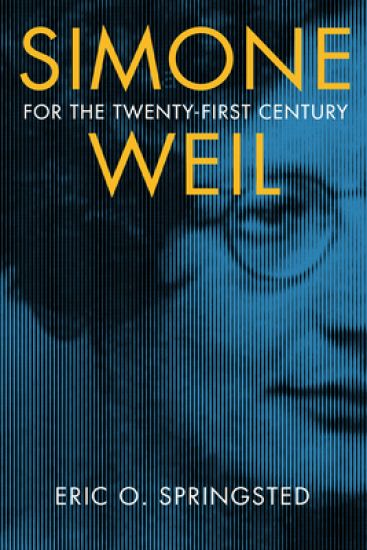
Simone Weil for the Twenty-First Century
Eric O. Springsted
University of Notre Dame Press
2021
nidottu
This in-depth study examines the social, religious, and philosophical thought of Simone Weil. Simone Weil for the Twenty-First Century presents a comprehensive analysis of Weil's interdisciplinary thought, focusing especially on the depth of its challenge to contemporary philosophical and religious studies. In a world where little is seen to have real meaning, Eric O. Springsted presents a critique of the unfocused nature of postmodern philosophy and argues that Weil's thought is more significant than ever in showing how the world in which we live is, in fact, a world of mysteries. Springsted brings into focus the challenges of Weil's original (and sometimes surprising) starting points, such as an Augustinian priority of goodness and love over being and intellect, and the importance of the Crucifixion. Springsted demonstrates how the mystical and spiritual aspects of Weil's writings influence her social thought. For Weil, social and political questions cannot be separated from the supernatural. For her, rather, the world has a sacramental quality, such that life in the world is always a matter of life in God—and life in God, necessarily a way of life in the world. Simone Weil for the Twenty-First Century is not simply a guide or introduction to Simone Weil. Rather, it is above all an argument for the importance of Weil's thought in the contemporary world, showing how she helps us to understand the nature of our belonging to God (sometimes in very strange and unexpected ways), the importance of attention and love as the root of both the love of God and neighbor, the importance of being rooted in culture (and culture's service to the soul in rooting it in the universe), and the need for human beings to understand themselves as communal beings, not as isolated thinkers or willers. It will be essential reading for scholars of Weil, and will also be of interest to philosophers and theologians.
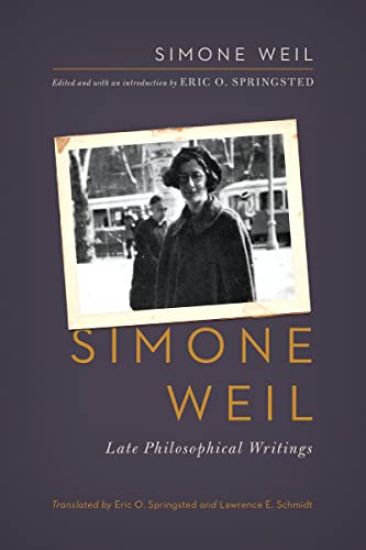
Although trained as a philosopher, Simone Weil (1909–43) contributed to a wide range of subjects, resulting in a rich field of interdisciplinary Weil studies. Yet those coming to her work from such disciplines as sociology, history, political science, religious studies, French studies, and women's studies are often ignorant of or baffled by her philosophical investigations. In Simone Weil: Late Philosophical Writings, Eric O. Springsted presents a unique collection of Weil's writings, one concentrating on her explicitly philosophical thinking. The essays are drawn chiefly from the time Weil spent in Marseille in 1940-42, as well as one written from London; most have been out of print for some time; three appear for the first time; all are newly translated. Beyond making important texts available, this selection provides the context for understanding Weil's thought as a whole. This volume is important not only for those with a general interest in Weil; it also specifically presents Weil as a philosopher, chiefly one interested in questions of the nature of value, moral thought, and the relation of faith and reason. What also appears through this judicious selection is an important confirmation that on many issues respecting the nature of philosophy, Weil, Wittgenstein, and Kierkegaard shared a great deal.
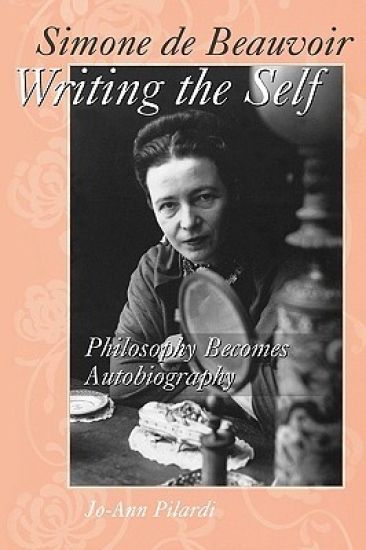
The development of Simone de Beauvoir's notion of self in both her philosophical and autobiographical writings is analyzed in this volume. Two ideas of the self are isolated: the existential notion of the self and the gendered self, which she developed in The Second Sex, and which represents a major departure from existential philosophy. Beginning with a study of her early essays, the author proceeds to discuss Beauvoir's major philosophical works and her autobiographical writings where three personae emerge—the child, the woman in love, and the writer. This analysis highlights the innovative quality of Beauvoir's thought. It also shows that writing an autobiography can be a philosophically inventive enterprise and one in which Beauvoir created her most profound analysis of the self.

Readers first meet Simone Lerrante, a Belgian war orphan, as a child refugee in Sussex, England, her memory damaged by trauma. The novel offers a kaleidoscopic vision of Simone's fractured life and piecemeal understanding of self across multiple points of view. Following her from Cambridge to New York City and across the United States - through a disastrous marriage, thwarted desire, and the purgatory of academic backwaters - the novel charts Simone's unexpected reconnection with her past, which provides both autonomy and inspiration for her future. In the vein of Elizabeth Strout's Olive Kitteridge, Janet Burroway slowly reveals a multifaceted, fascinating protagonist, who observes her own life without always allowing herself to be immersed in it. Spanning seven decades, this story is both epic and contained, rewarding readers at every turn.
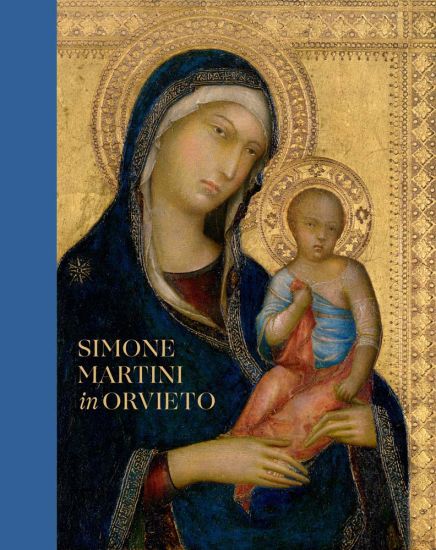
Simone Martini in Orvieto
Nathaniel (EDT) Silver; Machtelt Bruggen (CON) Israels; Joanna (CON) Cannon
Isabella Stewart Gardner
2022
sidottu

The development of Simone de Beauvoir's notion of self in both her philosophical and autobiographical writings is analyzed in this volume. Two ideas of the self are isolated: the existential notion of the self and the gendered self, which she developed in The Second Sex, and which represents a major departure from existential philosophy. Beginning with a study of her early essays, the author proceeds to discuss Beauvoir's major philosophical works and her autobiographical writings where three personae emerge—the child, the woman in love, and the writer. This analysis highlights the innovative quality of Beauvoir's thought. It also shows that writing an autobiography can be a philosophically inventive enterprise and one in which Beauvoir created her most profound analysis of the self.
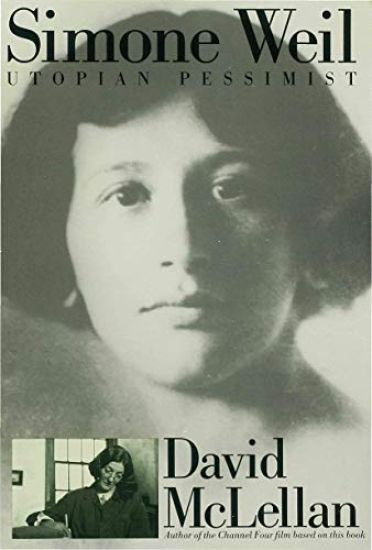
Simone Weil's short life was as extraordinary as her writings. Born in 1909, she was a brilliant philosophy student in the Paris of the 1920s and colleague of Jean-Paul Sartre and Simone de Beauvoir. She fought on the anarchist side in the Spanish Civil War and died, at the age of only thirty-four, while serving with de Gaulle and the Free French in London. This life of intense activity was united with a profoundly religious outlook on life. Many consider her the best spiritual writer of our century and a true saint for modern times. Simone Weil published almost nothing during her lifetime. The publication of her complete works is only now beginning in France. They reveal a mind of amazing lucidity and depth. This biography draws on hitherto unpublished material to explain her thought in the context of her life. Its comprehensive coverage at last makes available to the public the most intriguing personality of our age.


Simone de Beauvoir: A Critical Reader
Routledge
1998
sidottu
This is the first volume to gather together all the classic critical texts on Simone de Beauvoir's work as a feminist, novelist and philosopher. The essays are divided into three sections examining her fiction, her life and her famous work The Second Sex. In a compelling introduction Elizabeth Fallaize, examines how de Beauvoir's work has been read over time, contextualizes those readings within the evolution of feminism, and looks at her changing role within contemporary culture and thought. The acclaimed contributors to this collection are: Judith Okely, Judith Butler, Sonia Kruks Beauvoir, Toril Moi, Eva Lundgren-Gothlin, Francis Jeanson, Alex Hughes, Elaine Marks, Hazel Barnes, Jane Heath, Anne Ophir and Elizabeth Fallaize

Simone de Beauvoir: A Critical Reader
Routledge
1998
nidottu
This is the first volume to gather together all the classic critical texts on Simone de Beauvoir's work as a feminist, novelist and philosopher. The essays are divided into three sections examining her fiction, her life and her famous work The Second Sex. In a compelling introduction Elizabeth Fallaize, examines how de Beauvoir's work has been read over time, contextualizes those readings within the evolution of feminism, and looks at her changing role within contemporary culture and thought. The acclaimed contributors to this collection are: Judith Okely, Judith Butler, Sonia Kruks Beauvoir, Toril Moi, Eva Lundgren-Gothlin, Francis Jeanson, Alex Hughes, Elaine Marks, Hazel Barnes, Jane Heath, Anne Ophir and Elizabeth Fallaize

Simone de Beauvoir's groundbreaking work has transformed the way we think about gender and identity. Without her 1949 text The Second Sex, gender theory as we know it today would be unthinkable. A leading figure in French existentialism, Beauvoir's concepts of 'becoming woman' and of woman as 'Other' are among the most influential ideas in feminist enquiry and debate.This book guides the reader through the main areas of Simone de Beauvoir's thought, including:*existentialism and ethics*gender studies and feminism*literature and autobiography*sexuality, the body and ageingDrawing upon Beauvoir's literary and theoretical texts, this is the ideal introduction to her thought for students on a range of courses including literature, cultural studies, gender, philosophy and modern languages.

Simone de Beauvoir's groundbreaking work has transformed the way we think about gender and identity. Without her 1949 text The Second Sex, gender theory as we know it today would be unthinkable. A leading figure in French existentialism, Beauvoir's concepts of 'becoming woman' and of woman as 'Other' are among the most influential ideas in feminist enquiry and debate.This book guides the reader through the main areas of Simone de Beauvoir's thought, including:*existentialism and ethics*gender studies and feminism*literature and autobiography*sexuality, the body and ageingDrawing upon Beauvoir's literary and theoretical texts, this is the ideal introduction to her thought for students on a range of courses including literature, cultural studies, gender, philosophy and modern languages.

Simone Weil (1909-1943) was a defining figure of the twentieth century; a philosopher, Christian (although never baptised), resistance fighter, Labour activist and teacher, described by Albert Camus as 'the only great spirit of our time'. In 1941 Weil was introduced to Father Joseph-Marie Perrin, a Dominican priest whose friendship became a key influence on her life. When Weil asked Perrin for work as a farm hand he sent her to Gustave Thibon, a farmer and Christian philosopher. Weil stayed with the Thibon family, working in the fields and writing the notebooks which became Gravity and Grace and other posthumous works.Perrin and Thibon met Weil at a time when her spiritual life and creative genius were at their height. During the short but deep period of their acquaintance with her, they came to know her as she actually was. First published in English in 1953, and now introduced by J.P. Little, this unique portrait depicts Weil through the eyes of her friends, not as a strange and unaccountable genius but as an ardent and human person in search of truth and knowledge.

Simone Weil (1909-1943) was a defining figure of the twentieth century; a philosopher, Christian, resistance fighter, anarchist, feminist, Labour activist and teacher. She was described by T. S. Eliot as 'a woman of genius, of a kind of genius akin to that of the saints', and by Albert Camus as 'the only great spirit of our time'. Originally published posthumously in two volumes, these newly reissued notebooks, are among the very few unedited personal writings of Weil's that still survive today. Containing her thoughts on art, love, science, God and the meaning of life, they give context and meaning to Weil's famous works, revealing an unique philosophy in development and offering a rare private glimpse of her singular personality.