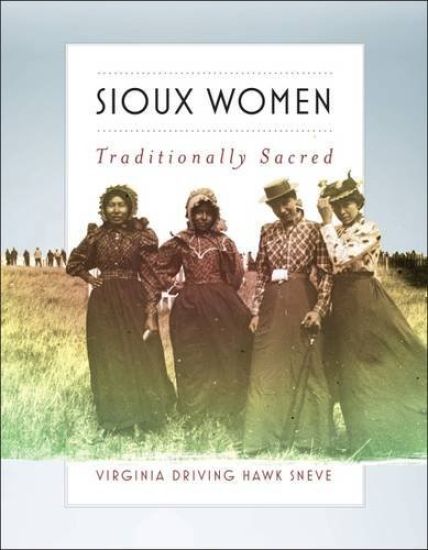
Sioux women are the center of tribal life and the core of the tiospaye, the extended family. They maintain the values and traditions of Sioux culture, but their own stories and experiences often remain untold.Virginia Driving Hawk Sneve combed through the winter counts and oral records of her ancestors to discover their past. The result, Sioux Women: Traditionally Sacred, illuminates the struggles and joys of her grandmothers and other women who maintained tribal life as circumstances changed and outside cultures pushed for dominance.Sneve’s storytelling powers enliven her personal exploration of the roles of Sioux girls and women, making the book an accessible journey into modern American Indian society.
Decode the story of the Sioux who helped win the war. In World War II, code making and code breaking reached a feverish peak. The fabled Enigma cipher had been broken, and all sides were looking for a secure, reliable means of communication. Many have heard of the role of the Navajo Code Talkers, but less well-known are the Sioux Code Talkers, who used the Lakota, Dakota, and Nakota dialects. Told by the great-niece of John Bear King, who served in the First Cavalry as a Sioux Code Talker, this informative title explores not only the importance of the indigenous peoples to the war but also their culture and values. Follow the seven Sioux who put aside a long history of prejudice against their people and joined the fight against Japan.
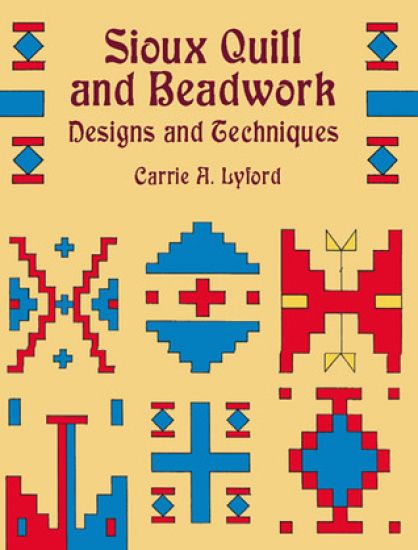
In-depth guide to ancient Native American crafts focuses on the techniques of the western Sioux. Explanations of techniques involved in quillwork, including dyeing and sewing, beadwork methods. More than 80 photographs and drawings depict handsome motifs on articles of clothing including vests, shirts, robes, dresses, leggings, moccasins, blankets, saddlebags, and shields.
This volume focuses on the Native American cultures that have existed across the Dakotas in relative isolation from external influences. A chapter entitled Prehistory contains citations for items comprising information about Sioux and other Indian communities derived from archaeological and anthropological analysis. Another, entitled Profile of Traditional Cultures in the Sioux Federation, includes sighting reports and other narratives regarding the habits and beliefs of Sioux people that have been little affected by outsiders. A third chapter directs users to sources about Sioux spirituality. The following chapter contains a report on sources of information about Sioux people published outside the United States. The final chapter includes materials on Sioux language and winter counts. This volume will be especially valuable to teachers and researchers with specific interests in tribal cultures. The indexes are cross-referenced to their companion volume South Dakota History, which provides an indepth bibliographical review of the literature on the state and white-Indian relations.
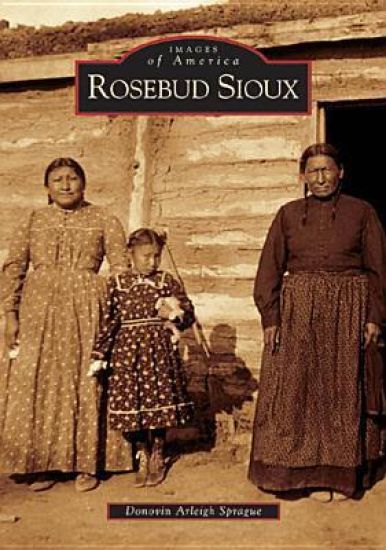
The Sicangu (burnt thighs) received their name when some of the Lakota peoples' legs were burned in a great prairie fire. The French later named them Brule, and two large groups of the band would be settled on two reservations, Rosebud and Lower Brule in South Dakota. Author Donovin Sprague examines the history of the Rosebud Sioux through a collection of photographs and personal family interviews.
In the late 1880s, John A. Anderson, a young Swedish-born settler near Fort Niobrara, Nebraska, bought a camera with earnings from carpentry work. He soon became a full-fledged photographer, and in 1889 General George Crook asked him to serve as official photographer to the Crook Treaty Commission on its visit to the Brulé Sioux Indians on the Rosebud Reservation in South Dakota. Anderson agreed - and thereby moved into a poignant and oftentimes tragic era in the history of the Sioux. From 1891 until his death in 1948, Anderson lived on the Rosebud, recording the painful adjustment of the proud Brulés to life on the reservation.This was a particularly hard time for the Brulés. Nomadic warriors by nature, they had been subjugated following their greatest triumph at the Battle of the Little Big Horn in 1876 and were living like captives on what had once been their buffalo hunting grounds. The buffaloes were dead, and the Indians had been forced to accept white men's ways and white men's provender. To help feed themselves, they were compelled to farm - to ""scratch the ground,"" as they scornfully expressed it - a way of life they regarded as shameful.Anderson became a sincere friend of the Indian, who learned to trust him and allowed him to record their daily lives and their ceremonies. Anderson photographed Sioux camps, villages, and day schools; recorded councils between whites and Indians; and portrayed the Indians as they received their beef rations and annuity payments. When Buffalo Bill Cody and Charles P. Jordan organized their wild-west shows, he photographed the Sioux who joined the shows. Anderson was afforded the rare privilege of attending and photographing the White Buffalo, Sun dance, and Omaha Dance ceremonies. Anderson gave many of the photographs to his Sioux friends, who proudly displayed them in their cabins on the Rosebud.Over the years many other photographs found their way into museums and state historical societies. Henry W. Hamilton and his wife, Jean Tyree Hamilton, first became aware of Anderson and his work through the papers of Remington Schuyler, the well-known artist and writer, who also lived on the Rosebud. The Hamiltons searched out prints and glass-plate negatives and, with the help of Indian consultants on the reservation, painstakingly dated the photographs and identified the subjects.The wealth of photographs Anderson took is represented here by more than 200 reproductions - the largest number ever published in a single collection. They are presented not as works of art (though many of them are indeed triumphs of the photographic art) but as important historical documents in the ongoing story of the American Indian.
For many people the Sioux, as warriors and as buffalo hunters, have become the symbol of all that is Indian colorful figures endowed with great fortitude and powerful vision. They were the heroes of the Great Plains, and they were the villains, too.Royal B. Hassrick here attempts to describe the ways of the people, the patterns of their behavior, and the concepts of their imagination. Uniquely, he has approached the subject from the Sioux's own point of view, giving their own interpretation of their world in the era of its greatest vigor and renown -the brief span of years from about 1830 to 1870.In addition to printed sources, the author has drawn from the observation and records of a number of Sioux who were still living when this book was projected, and were anxious to serve as links to the vanished world of their forebears.Because it is true that men become in great measure what they think and want themselves to be, it is important to gain this insight into Sioux thought of a century ago. Apparently, the most significant theme in their universe was that man was a minute but integral part of that universe. The dual themes of self-expression and self-denial reached through their lives, helping to explain their utter defeat soon after the Battle of the Little Big Horn. When the opportunity to resolve the conflict with the white man in their own way was lost, their very reason for living was lost, too.There are chapters on the family and the sexes, fun, the scheme of war, production, the structure of the nation, the way to status, and other aspects of Sioux life.