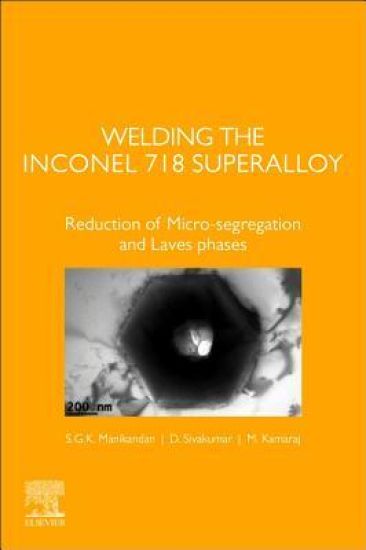
Welding the Inconel 718 Superalloy: Reduction of Micro-segregation and Laves Phases explores the day-to-day welding business in Alloy 718 and presents solutions to avoid or minimize micro-segregation. It considers the limitations of changing from lab scale models to actual production models and presents new technologies with proven experimental background. Various case studies are presented within the text, as well as proposed solutions backed by experimental evidence. Items previewed in this edition include enhanced cooling rates in the GTA welding process with cryogenic cooling and enhanced dendrite refinement using modified pulse waveform. This work will be useful to researchers from the aerospace, space, power generation, nuclear, and chemical industries, as well as students interested in superalloys and welding.
This book is a comprehensive guide to reducing noise and improving the quality of ultrasound images. It covers the latest techniques and provides a step-by-step implementation using MATLAB and DSP. The book includes a thorough explanation of the reduction process and relevant algorithms, making it a valuable resource for engineers, researchers, and medical professionals looking to enhance their understanding and practical application of ultrasound image reduction techniques.
With the advent of a host of new materials ranging from shape memory alloys to biomaterials to multiphase alloys, acquiring the capacity to model inelastic behavior and to choose the right model in a commercial analysis software has become a pressing need for practicing engineers. Even with the traditional materials, there is a continued emphasis on optimizing and extending their full range of capability in the applications. This textbook builds upon the existing knowledge of elasticity and thermodynamics, and allows the reader to gain confidence in extending one's skills in understanding and analyzing problems in inelasticity. By reading this textbook and working through the assigned exercises, the reader will gain a level of comfort and competence in developing and using inelasticity models. Thus, the book serves as a valuable book for practicing engineers and senior-level undergraduate/graduate-level students in the mechanical, civil, aeronautical, metallurgical and other disciplines.The book is written in three parts. Part 1 is primarily focused on lumped parameter models and simple structural elements such as trusses and beams. This is suitable for an advanced undergraduate class with just a strength of materials background. Part II is focused on small deformation multi-dimensional inelasticity and is suitable for a beginning graduate class. Sufficient material is included on how to numerically implement an inelastic model and solve either using a simple stress function type of approach or using commercial software. Case studies are included as examples. There is also an extensive discussion of thermodynamics in the context of small deformations. Part III focuses on more advanced situations such as finite deformation inelasticity, thermodynamical ideas and crystal plasticity. More advanced case studies are included in this part.• This textbook takes a new, task- or scenario-based approach to teaching and learning inelasticity. The book is written in an active learning style that appeals to engineers and students who wish to design or analyze structures and components that are subject to inelasticity.• The book incorporates thermodynamical considerations into the modeling right from an early stage. Extensive discussions are provided throughout the book on the thermodynamical underpinnings of the models.• This textbook is the first to make extensive use of MATLAB to implement many inelasticity models. It includes the use of concepts such as Airy stress functions to solve plane problems for inelastic materials. The MATLAB codes are listed in the appendix for one to modify with their own models and requirements.• Step-by-step procedures for formulations and calculations are provided for the reader to readily adapt to the inelastic problems that he or she attempts to solve.• A large number of problems, exercises and projects for one to teach or learn from are included. These can be assigned as homework, in-class exercises or projects.• The book is written in a modular fashion, which provides adequate flexibility for adaptation in classes that cater to different audiences such as senior-level students, graduate students, research scholars, and practicing engineers.
Plant breeding is a cornerstone of human innovation, evolving from the domestication of wild plants to todays designed genotype by integration of genetic engineering, bioinformatics, and artificial intelligence. Next Generation Plant Breeding offers a comprehensive exploration of this journey, presenting both foundational techniques and cutting-edge advancements that drive modern crop improvement.
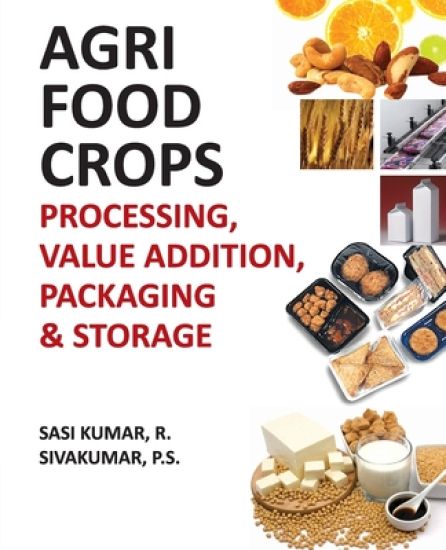
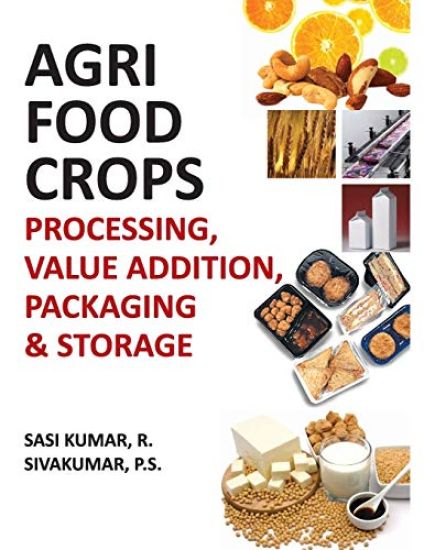
The book provides an extensive analysis of the value addition and processing of agro-food crops. It examines the production, processing, value addition, packaging, and storage of each agro-food crop in detail. The main food crops of significant importance in the food processing sector, such as cereals, millets, pulses, minor forest products, fruits and vegetables, and milk and milk-based products, are given special attention.The books primary objective is to encourage the setting up of small food processing industries in local areas using locally-based agro-food crops. It also discusses indigenous food preparations based on fermented cereals and pulses, milk, and other crop-based products. The text further highlights various food laws and regulations enforced by the government to maintain food quality and standards. Additionally, it provides a detailed discussion of agro-food-based food processing industries operating on a small or cottage scale level in local regions using available resources.This book is an excellent resource for students, researchers, and entrepreneurs in food processing who have little or no prior knowledge of food science and technology. It is also a valuable reference for professionals in the food processing industry, as well as for those working in fields that intersect with, regulate, or serve the food processing industry.
This book delves into the processes of agro-food crop production, processing, value addition, packaging, and storage. It provides comprehensive information on the main food crops such as cereals, millets, pulses, minor forest products, fruits, vegetables, and milk and milk-based products, which are of significant importance in the food processing sector. The text encourages the setting up of small food processing industries in local areas using local agro-food crops. It presents indigenous food preparations based on fermented cereals and pulses, milk, and other crops-based products. Furthermore, the book highlights various food laws and regulations implemented by the government to ensure food quality and standards. The text also discusses small-scale or cottage-level food processing industries in local regions with available resources. This publication is an excellent resource for students, researchers, and entrepreneurs in food processing, as well as professionals in related fields, who have little or no prior knowledge of food science and technology.