Kirjojen hintavertailu. Mukana 11 699 587 kirjaa ja 12 kauppaa.

Kirjahaku

Etsi kirjoja tekijän nimen, kirjan nimen tai ISBN:n perusteella.

1000 tulosta hakusanalla Sod

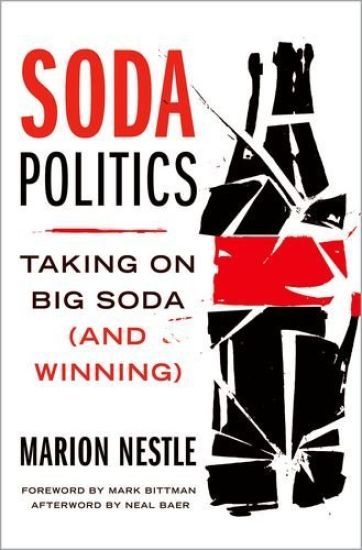
Soda Politics

Soda Politics

Marion Nestle; Mark Bittman; Neal Baer

Oxford University Press Inc
2015
sidottu
Sodas are astonishing products. Little more than flavored sugar-water, these drinks cost practically nothing to produce or buy, yet have turned their makers - principally Coca-Cola and PepsiCo - into multibillion dollar industries with global recognition, distribution, and political power. So how did something so cheap come to mean so much and to have such devastating health and food policy consequences? Soda Politics is a story of the American food system at work, written by the incomparable NYU scholar and public health champion Marion Nestle. It is the first book to focus on the history, politics, nutrition, and health impact of soda, asking how we created this system, what its problems are, and what we can do to change things. Coke and Pepsi spend billions of dollars a year on advertising and lobbying to prevent any measures to limit soda, a product billed as "refreshing," "tasty," "crisp," and "the real thing" that also happens to be a major cause of health problems, from obesity to Type II diabetes. They target minorities, poor people, and children, and are involved in land and water grabs in underdeveloped countries, where they also have redoubled their efforts at building their market share. In fact, the marketing practices of soda companies are eerily similar to that of cigarette companies - both try to sell as much as possible, regardless of the health consequences, in any way that they can. And the public is starting to scrutinize sugary sodas in the same way that they do cigarettes. Soda consumption is falling, and Americans are only partially replacing soda with other sugary drinks. This did not happen accidentally: the fall in soda sales is a result of successful food advocacy. Soda Politics provides the overwhelming evidence to keep up pressure on all those involved in the production, marketing, sales, and subsidization of soda.
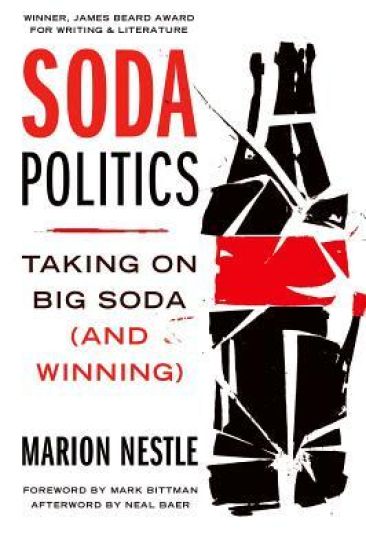
Soda Politics

Soda Politics

Marion Nestle

Oxford University Press Inc
2017
nidottu
Sodas are astonishing products. Little more than flavored sugar-water, these drinks cost practically nothing to produce or buy, yet have turned their makers--principally Coca-Cola and PepsiCo--into a multibillion-dollar industry with global recognition, distribution, and political power. Billed as "refreshing," "tasty," "crisp," and "the real thing," sodas also happen to be so well established to contribute to poor dental hygiene, higher calorie intake, obesity, and type-2 diabetes that the first line of defense against any of these conditions is to simply stop drinking them. Habitually drinking large volumes of soda not only harms individual health, but also burdens societies with runaway healthcare costs. So how did products containing absurdly inexpensive ingredients become multibillion dollar industries and international brand icons, while also having a devastating impact on public health? In Soda Politics, the 2016 James Beard Award for Writing & Literature Winner, Dr. Marion Nestle answers this question by detailing all of the ways that the soft drink industry works overtime to make drinking soda as common and accepted as drinking water, for adults and children. Dr. Nestle, a renowned food and nutrition policy expert and public health advocate, shows how sodas are principally miracles of advertising; Coca-Cola and PepsiCo spend billions of dollars each year to promote their sale to children, minorities, and low-income populations, in developing as well as industrialized nations. And once they have stimulated that demand, they leave no stone unturned to protect profits. That includes lobbying to prevent any measures that would discourage soda sales, strategically donating money to health organizations and researchers who can make the science about sodas appear confusing, and engaging in Corporate Social Responsibility (CSR) activities to create goodwill and silence critics. Soda Politics follows the money trail wherever it leads, revealing how hard Big Soda works to sell as much of their products as possible to an increasingly obese world. But Soda Politics does more than just diagnose a problem--it encourages readers to help find solutions. From Berkeley to Mexico City and beyond, advocates are successfully countering the relentless marketing, promotion, and political protection of sugary drinks. And their actions are having an impact--for all of the hardball and softball tactics the soft drink industry employs to maintain the status quo, soda consumption has been flat or falling for years. Health advocacy campaigns are now the single greatest threat to soda companies' profits. Soda Politics provides readers with the tools they need to keep up pressure on Big Soda in order to build healthier and more sustainable food systems.
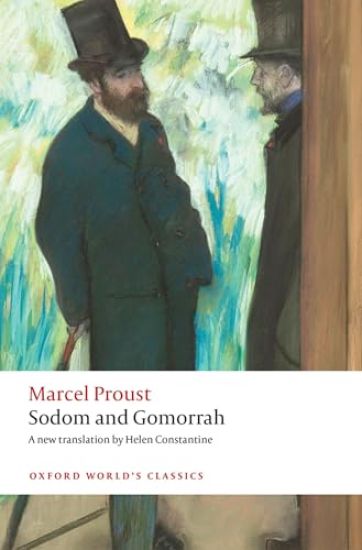
Sodom and Gomorrah

Sodom and Gomorrah

Marcel Proust; Adam Watt

Oxford University Press
2026
nidottu
'the metamorphosis of Monsieur de Charlus into a new person was so complete that... everything which had appeared incoherent to me until then, was becoming intelligible, and self-evident' The fourth volume of Proust's In Search of Lost Time extends the protagonist's journey of discovery into the social world of fin-de-siècle France. As the biblically inflected title, Sodom and Gomorrah, suggests, however, this world has taken on a new colouring. Through a succession of observations--both voyeuristic and overt--Proust's protagonist encounters and begins to appreciate the great diversity of sexual identities and proclivities that underpin human relations. At the heart of this volume that buzzes with chatter, gossip, and position-taking, is the Baron de Charlus, whose relationship with the working-class Charlie Morel is a central preoccupation of the narrative. This volume lays bare the ways in which ambitions and desires are nurtured, projected, masked, and exposed. Suffering, in love, is rarely far away. Sodom and Gomorrah explores frictions between the social classes via the Verdurins' upward climb and the ways in which the impulses of desire can cut across society's arbitrary boundaries. The narrator recounts his retrospective devastation at the death of his grandmother, and while his connection to Albertine deepens, it is his uncertainty about the true nature of her sexual identity that binds him closer to her, leading to a fraught denouement that paves the way for the next, fateful phase of their relationship. ABOUT THE SERIES: For over 100 years Oxford World's Classics has made available the widest range of literature from around the globe. Each affordable volume reflects Oxford's commitment to scholarship, providing the most accurate text plus a wealth of other valuable features, including expert introductions by leading authorities, helpful notes to clarify the text, up-to-date bibliographies for further study, and much more.
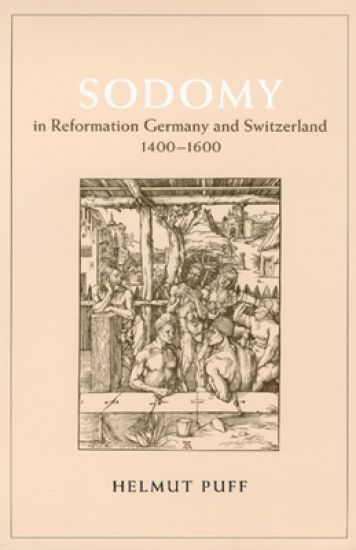
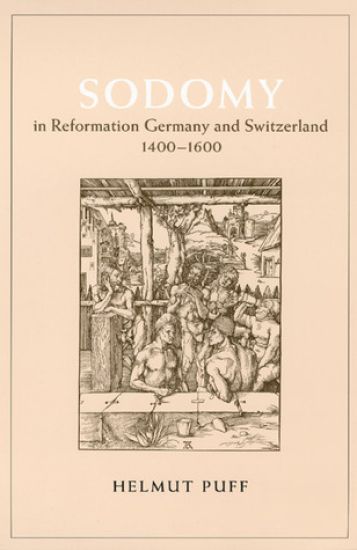
Sodomy in Reformation Germany and Switzerland, 1400-1600

Sodomy in Reformation Germany and Switzerland, 1400-1600

Helmut Puff

University of Chicago Press
2003
sidottu
In the 14th century, a considerable number of men in Germany and Switzerland were executed for committing sodomy. In the 17th century, simply speaking of the act was cause for censorship. Here, in the first ever history of sodomy in these countries, Helmut Puff argues that accusations of sodomy in this era were actually crucial to the success of the Protestant Reformation. Drawing on both literary and historical evidence, Puff shows that speakers of German associated sodomy with Italy and, increasingly, the Catholic Church. As the Reformation gained momentum, the formerly unspeakable crime of sodomy gained a voice, as Martin Luther and others deployed accusations of sodomy to discredit the upper ranks of the Church and to create a sense of community among Protestant believers. During the 16th century, official reactions to this defamatory rhetoric, and fear that mere mention of sodomy would incite sinful acts, resulted in the suppression of court cases from public scrutiny. This eye-opening study should interest historians of gender, sexuality and religion, as well as scholars of mediaeval and early modern history and culture.
Sodomy in Reformation Germany and Switzerland, 1400-1600

Sodomy in Reformation Germany and Switzerland, 1400-1600

Helmut Puff

University of Chicago Press
2003
nidottu
In the 14th century, a considerable number of men in Germany and Switzerland were executed for committing sodomy. In the 17th century, simply speaking of the act was cause for censorship. Here, in the first ever history of sodomy in these countries, Helmut Puff argues that accusations of sodomy in this era were actually crucial to the success of the Protestant Reformation. Drawing on both literary and historical evidence, Puff shows that speakers of German associated sodomy with Italy and, increasingly, the Catholic Church. As the Reformation gained momentum, the formerly unspeakable crime of sodomy gained a voice, as Martin Luther and others deployed accusations of sodomy to discredit the upper ranks of the Church and to create a sense of community among Protestant believers. During the 16th century, official reactions to this defamatory rhetoric, and fear that mere mention of sodomy would incite sinful acts, resulted in the suppression of court cases from public scrutiny. This eye-opening study should interest historians of gender, sexuality and religion, as well as scholars of mediaeval and early modern history and culture.
Soda Science

Soda Science

Susan Greenhalgh

THE UNIVERSITY OF CHICAGO PRESS
2024
sidottu
Takes readers deep inside the secret world of corporate science, where powerful companies and allied academic scientists mold research to meet industry needs. The 1990s were tough times for the soda industry. In the United States, obesity rates were exploding. Public health critics pointed to sugary soda as a main culprit and advocated for soda taxes that might decrease the consumption of sweetened beverages—and threaten the revenues of the giant soda companies. Soda Science tells the story of how industry leader Coca-Cola mobilized allies in academia to create a soda-defense science that would protect profits by advocating exercise, not dietary restraint, as the priority solution to obesity, a view few experts accept. Anthropologist and science studies specialist Susan Greenhalgh discovers a hidden world of science-making—with distinctive organizations, social networks, knowledge-making practices, and ethical claims—dedicated to creating industry-friendly science and keeping it under wraps. By tracing the birth, maturation, death, and afterlife of the science they made, Greenhalgh shows how corporate science has managed to gain such a hold over our lives. Spanning twenty years, her investigation takes her from the US, where the science was made, to China, a key market for sugary soda. In the US, soda science was a critical force in the making of today’s society of step-counting, fitness-tracking, weight-obsessed citizens. In China, this distorted science has left its mark not just on national obesity policies but on the apparatus for managing chronic disease generally. By following the scientists and their ambitious schemes to make the world safe for Coke, Greenhalgh offers an account that is more global—and yet more human—than the story that dominates public understanding today. Coke’s research isn’t fake science, Greenhalgh argues; it was real science, conducted by real and eminent scientists, but distorted by its aim. Her gripping book raises crucial questions about conflicts of interest in scientific research, the funding behind familiar messages about health, and the cunning ways giant corporations come to shape our diets, lifestyles, and health to their own needs.
Soda Science

Soda Science

Susan Greenhalgh

THE UNIVERSITY OF CHICAGO PRESS
2024
nidottu
Takes readers deep inside the secret world of corporate science, where powerful companies and allied academic scientists mold research to meet industry needs. The 1990s were tough times for the soda industry. In the United States, obesity rates were exploding. Public health critics pointed to sugary soda as a main culprit and advocated for soda taxes that might decrease the consumption of sweetened beverages—and threaten the revenues of the giant soda companies. Soda Science tells the story of how industry leader Coca-Cola mobilized allies in academia to create a soda-defense science that would protect profits by advocating exercise, not dietary restraint, as the priority solution to obesity, a view few experts accept. Anthropologist and science studies specialist Susan Greenhalgh discovers a hidden world of science-making—with distinctive organizations, social networks, knowledge-making practices, and ethical claims—dedicated to creating industry-friendly science and keeping it under wraps. By tracing the birth, maturation, death, and afterlife of the science they made, Greenhalgh shows how corporate science has managed to gain such a hold over our lives. Spanning twenty years, her investigation takes her from the US, where the science was made, to China, a key market for sugary soda. In the US, soda science was a critical force in the making of today’s society of step-counting, fitness-tracking, weight-obsessed citizens. In China, this distorted science has left its mark not just on national obesity policies but on the apparatus for managing chronic disease generally. By following the scientists and their ambitious schemes to make the world safe for Coke, Greenhalgh offers an account that is more global—and yet more human—than the story that dominates public understanding today. Coke’s research isn’t fake science, Greenhalgh argues; it was real science, conducted by real and eminent scientists, but distorted by its aim. Her gripping book raises crucial questions about conflicts of interest in scientific research, the funding behind familiar messages about health, and the cunning ways giant corporations come to shape our diets, lifestyles, and health to their own needs.
Sodomites, Pederasts, and Tribades in Eighteenth-Century France
In this book, Jeffrey Merrick brings together a rich array of primary-source documents—many of which are published or translated here for the first time—that depict in detail the policing of same-sex populations in eighteenth-century France and the ways in which Parisians regarded what they called sodomy or pederasty and tribadism. Taken together, these documents suggest that male and female same-sex relations played a more visible public role in Enlightenment-era society than was previously believed.The translated and annotated sources included here show how robust the same-sex subculture was in eighteenth-century Paris, as well as how widespread the policing of sodomy was at the time. Part 1 includes archival police records from the 1720s to the 1780s that show how the police attempted to manage sodomitical activity through surveillance and repression; part 2 includes excerpts from treatises and encyclopedias, published nouvelles (collections of news) and libelles (libelous writings), fictive portrayals, and Enlightenment treatments of the topic that include calls for legal reform. Together these sources show how contemporaries understood same-sex relations in multiple contexts and cultures, including their own. The resulting volume is an unprecedented look at the role of same-sex relations in the culture and society of the era.The product of years of archival research curated, translated, and annotated by a premier expert in the field, Sodomites, Pederasts, and Tribades in Eighteenth-Century France provides a foundational primary text for the study and teaching of the history of sexuality.
Sodomites, Pederasts, and Tribades in Eighteenth-Century France
In this book, Jeffrey Merrick brings together a rich array of primary-source documents—many of which are published or translated here for the first time—that depict in detail the policing of same-sex populations in eighteenth-century France and the ways in which Parisians regarded what they called sodomy or pederasty and tribadism. Taken together, these documents suggest that male and female same-sex relations played a more visible public role in Enlightenment-era society than was previously believed.The translated and annotated sources included here show how robust the same-sex subculture was in eighteenth-century Paris, as well as how widespread the policing of sodomy was at the time. Part 1 includes archival police records from the 1720s to the 1780s that show how the police attempted to manage sodomitical activity through surveillance and repression; part 2 includes excerpts from treatises and encyclopedias, published nouvelles (collections of news) and libelles (libelous writings), fictive portrayals, and Enlightenment treatments of the topic that include calls for legal reform. Together these sources show how contemporaries understood same-sex relations in multiple contexts and cultures, including their own. The resulting volume is an unprecedented look at the role of same-sex relations in the culture and society of the era.The product of years of archival research curated, translated, and annotated by a premier expert in the field, Sodomites, Pederasts, and Tribades in Eighteenth-Century France provides a foundational primary text for the study and teaching of the history of sexuality.
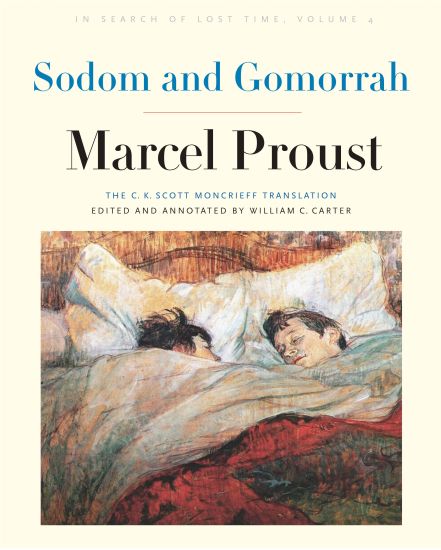
Sodom and Gomorrah

Sodom and Gomorrah

Marcel Proust

Yale University Press
2021
sidottu
An authoritative new edition of the fourth volume in Marcel Proust’s epic masterwork, In Search of Lost Time series Marcel Proust’s monumental seven-part novel In Search of Lost Time is considered by many to be the greatest novel of the twentieth century. The fourth volume, Sodom and Gomorrah, is notable for its pioneering discussion of homosexuality. After its publication, Colette wrote to Proust, “No one has written pages such as these on homosexuals, no one!” This edition is edited and annotated by noted Proust scholar William C. Carter, who endeavors to bring the classic C. K. Scott Moncrieff translation closer to the spirit and style of the original.
Sodium in Health and Disease
report on the latest developments in the field with new information in basic as well as in clinical sciences, Sodium in Health Diseases, covers both the physiology of sodium balance and how it relates to disease. Expertly written, its concise text examines ATPase, transport and receptor systems, and sodium balance as it relates to sex hormones, genes, and body fluid. This text will also examine disease based on animal models, genetic disorders, and the influence of sodium on pulse pressure, isolated systolic hypertension, and its blood pressure sensitivity.
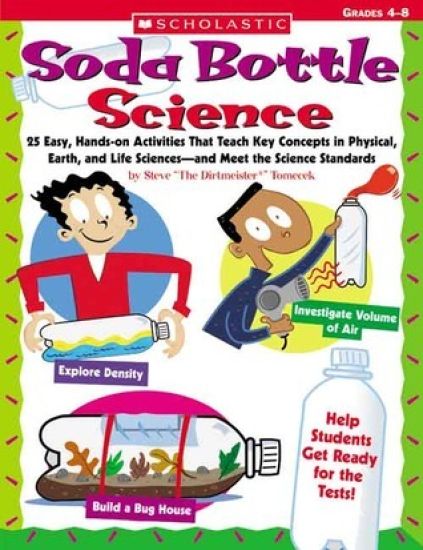
Soda Bottle Science: 25 Hands-On Activities for Physical, Earth, and Life Sciences
A thermometer, a water-cycle model, a wave machine, a greenhouse--these are just a few things students can make out of a simple soda bottle. This book features learning-rich, hands-on activities that teach about the weather, motion, changes in matter, ecosystems, and more. A fun and easy way to meet the National Science Education Standards For use with Grades 4-8.
Sodium Channels and Neuronal Hyperexcitability
Over the past few years there has been very important progress in the sodium channel field. We now have a good understanding of the molecular structure of these channels, of how they work, how many of them there are, and the mechanisms that restrict their expression to particular cell types. Importantly, we are beginning to understand how the expression of, and properties of these channels are modulated in various pathological states, particularly those involving neuronal hyperexcitability (such as chronic pain), and are in a position to develop therapeutic strategies based on the restoration of normal sodium channel properties. This book brings together leading researchers working on these topics to discuss recent advances in this field. Particular attention is given to the clinical applications of our knowledge of sodium channel function, especially in the fields of chronic pain and epilepsy. With broad and up-to-date coverage of this important subject, this book represents compulsory reading for basic and medical scientists with an interest in the function of sodium channels.
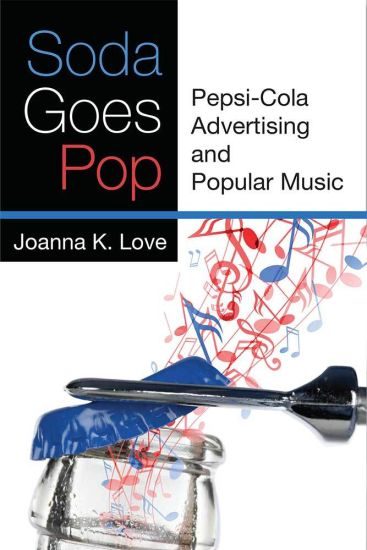
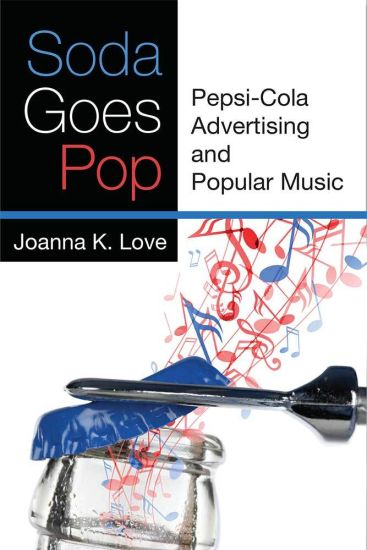
Soda Goes Pop

Soda Goes Pop

Joanna K. Love

The University of Michigan Press
2019
nidottu
From its 1939 “Nickel, Nickel” jingle to pathbreaking collaborations with Michael Jackson and Madonna to its pair of X Factor commercials in 2011 and 2012, Pepsi-Cola has played a leading role in drawing the American pop music industry into a synergetic relationship with advertising. This idea has been copied successfully by countless other brands over the years, and such commercial collaboration is commonplace today—but how did we get here? How and why have pop music aesthetics been co-opted to benefit corporate branding? What effect have Pepsi’s music marketing practices in particular had on other brands, the advertising industry, and popular music itself?Soda Goes Pop investigates these and other vital questions around the evolving relationships between popular music and corporate advertising. Joanna K. Love joins musical analysis, historical research, and cultural theory to trace parallel shifts in these industries over eight decades. In addition to scholarly and industry resources, she draws on first-hand accounts, pop culture magazines, trade press journals, and other archival materials. Pepsi’s longevity as an influential American brand, its legendary commercials, and its pioneering, relentless pursuit of alliances with American musical stars makes the brand a particularly instructive point of focus. Several of the company’s most famous ad campaigns are prime examples of the practice of redaction, whereby marketers select, censor, and restructure musical texts to fit commercial contexts in ways that revise their aesthetic meanings and serve corporate aims. Ultimately, Love demonstrates how Pepsi’s marketing has historically appropriated and altered images of pop icons and the meanings of hit songs, and how these commercials shaped relationships between the American music business, the advertising industry, and corporate brands.Soda Goes Pop is a rich resource for scholars and students of American studies, popular culture, advertising, broadcast media, and musicology. It is also an accessible and informative book for the general reader, as Love’s musical and theoretical analyses are clearly presented for non-specialist audiences and readers with varying degrees of musical knowledge.
Soda Goes Pop

Soda Goes Pop

Joanna K. Love

The University of Michigan Press
2019
sidottu
From its 1939 “Nickel, Nickel” jingle to pathbreaking collaborations with Michael Jackson and Madonna to its pair of X Factor commercials in 2011 and 2012, Pepsi-Cola has played a leading role in drawing the American pop music industry into a synergetic relationship with advertising. This idea has been copied successfully by countless other brands over the years, and such commercial collaboration is commonplace today—but how did we get here? How and why have pop music aesthetics been co-opted to benefit corporate branding? What effect have Pepsi’s music marketing practices in particular had on other brands, the advertising industry, and popular music itself?Soda Goes Pop investigates these and other vital questions around the evolving relationships between popular music and corporate advertising. Joanna K. Love joins musical analysis, historical research, and cultural theory to trace parallel shifts in these industries over eight decades. In addition to scholarly and industry resources, she draws on first-hand accounts, pop culture magazines, trade press journals, and other archival materials. Pepsi’s longevity as an influential American brand, its legendary commercials, and its pioneering, relentless pursuit of alliances with American musical stars makes the brand a particularly instructive point of focus. Several of the company’s most famous ad campaigns are prime examples of the practice of redaction, whereby marketers select, censor, and restructure musical texts to fit commercial contexts in ways that revise their aesthetic meanings and serve corporate aims. Ultimately, Love demonstrates how Pepsi’s marketing has historically appropriated and altered images of pop icons and the meanings of hit songs, and how these commercials shaped relationships between the American music business, the advertising industry, and corporate brands.Soda Goes Pop is a rich resource for scholars and students of American studies, popular culture, advertising, broadcast media, and musicology. It is also an accessible and informative book for the general reader, as Love’s musical and theoretical analyses are clearly presented for non-specialist audiences and readers with varying degrees of musical knowledge.
Sodium Hunger

Sodium Hunger

Jay Schulkin

Cambridge University Press
2005
pokkari
The hunger for sodium has been used as a model system in which to study how the brain produces motivated behaviour. In this account of the field Jay Schulkin draws together information across a range of disciplines and topics, ranging from the ecology of salt ingestion to the sodium molecule and the action of various hormones. The phenomenon of sodium hunger was discovered by Curt Richter, the great American psychobiologist, over 50 years ago. Its study has been of interest for some time: to naturalists, psychologists, endocrinologists, physiologists and neuroscientists. This book offers a systematic account of the behaviour of the sodium hungry animal, the endocrine and physiological mechanisms that act to maintain sodium balance and then act on the brain to promote the search for and the ingestion of salt. Finally, the book provides a description of a neural network that orchestrates the behaviour of salt seeking and salt ingestion. Graduate students and research workers in psychology, physiology and neuroscience will find valuable information in this review.
Sodomy, Masculinity and Law in Medieval Literature

Sodomy, Masculinity and Law in Medieval Literature

William E. Burgwinkle

Cambridge University Press
2009
pokkari
William Burgwinkle surveys poetry and letters, histories and literary fiction - including Grail romances - to offer a historical survey of attitudes towards same-sex love during the centuries that gave us the Plantagenet court of Henry II and Eleanor of Aquitaine, courtly love, and Arthurian lore. Burgwinkle illustrates how 'sodomy' becomes a problematic feature of narratives of romance and knighthood. Most texts of the period denounce sodomy and use accusations of sodomitical practice as a way of maintaining a sacrificial climate in which masculine identity is set in opposition to the stigmatised other, for example the foreign, the feminine, and the heretical. What emerges from these readings, however, is that even the most homophobic, masculinist and normative texts of the period demonstrate an inability or unwillingness to separate the sodomitical from the orthodox. These blurred boundaries allow readers to glimpse alternative, even homoerotic, readings.