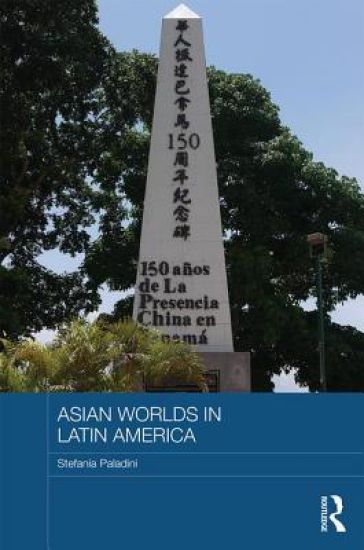
There has been increasing Asian interest in Latin America in recent years, beginning with Japanese investment in the 1980s, and continuing into the present decade when there is growing investment by China. This book examines the nature and extent of Asian business and related activity in Latin America. It shows how investment is not just from Japan and China, with Korea and India also involved, and with Taiwan directly competing with China. It explores activity in the minerals and energy sector, and also in trade and other areas. It demonstrates how Asian activity has a wide impact on the countries of both South America and the Caribbean, making them less exclusively "the United States’ backyard"; how different countries are affected differently by Asian activity; and how the growing links with Asia increasingly open up the possibility of greater Latin American activity in Asia.
"Where this book is exceptional is that the reader will not just learn how LTE works but why it works" Adrian Scrase, ETSI Vice-President, International Partnership Projects Following on the success of the first edition, this book is fully updated, covering the latest additions to LTE and the key features of LTE-Advanced. This book builds on the success of its predecessor, offering the same comprehensive system-level understanding built on explanations of the underlying theory, now expanded to include complete coverage of Release 9 and the developing specifications for LTE-Advanced. The book is a collaborative effort of more than 40 key experts representing over 20 companies actively participating in the development of LTE, as well as academia. The book highlights practical implications, illustrates the expected performance, and draws comparisons with the well-known WCDMA/HSPA standards. The authors not only pay special attention to the physical layer, giving an insight into the fundamental concepts of OFDMA-FDMA and MIMO, but also cover the higher protocol layers and system architecture to enable the reader to gain an overall understanding of the system. Key New Features: Comprehensively updated with the latest changes of the LTE Release 8 specifications, including improved coverage of Radio Resource Management RF aspects and performance requirementsProvides detailed coverage of the new LTE Release 9 features, including: eMBMS, dual-layer beamforming, user equipment positioning, home eNodeBs / femtocells and pico cells and self-optimizing networksEvaluates the LTE system performanceIntroduces LTE-Advanced, explaining its context and motivation, as well as the key new features including: carrier aggregation, relaying, high-order MIMO, and Cooperative Multi-Point transmission (CoMP).Includes an accompanying website containing a complete list of acronyms related to LTE and LTE-Advanced, with a brief description of each (http://www.wiley.com/go/sesia_theumts) This book is an invaluable reference for all research and development engineers involved in implementation of LTE or LTE-Advanced, as well as graduate and PhD students in wireless communications. Network operators, service providers and R&D managers will also find this book insightful.
Today, formal methods are widely recognized as an essential step in the design process of industrial safety-critical systems. In its more general definition, the term formal methods encompasses all notations having a precise mathematical semantics, together with their associated analysis methods, that allow description and reasoning about the behavior of a system in a formal manner. Growing out of more than a decade of award-winning collaborative work within the European Research Consortium for Informatics and Mathematics, Formal Methods for Industrial Critical Systems: A Survey of Applications presents a number of mainstream formal methods currently used for designing industrial critical systems, with a focus on model checking. The purpose of the book is threefold: to reduce the effort required to learn formal methods, which has been a major drawback for their industrial dissemination; to help designers to adopt the formal methods which are most appropriate for their systems; and to offer a panel of state-of-the-art techniques and tools for analyzing critical systems.
The Euro-Mediterranean Partnership was formed in 1995 in Barcelona. In this volume, concepts of democracy, civil society, human rights and dialogue among civilizations in the Mediterranean region are addressed in the context of the new Euro-Mediterranean Partnership.
The Euro-Mediterranean Partnership was formed in 1995 in Barcelona. In this volume, concepts of democracy, civil society, human rights and dialogue among civilizations in the Mediterranean region are addressed in the context of the new Euro-Mediterranean Partnership.
A journey to the Italian cinema that overturns established views and opens up new perspectives and interpretations. Its itinerary is organized in four stages. The first is an analysis of the theories of Cesare Zavattini on neorealism which overturns widely accepted positions both on Zavattini and on neorealism. The second confronts a key film of the post-war Italian cinema, Roberto Rossellini’s Paisà, by examining the nature of its realism. The third is dedicated to Luchino Visconti: to questions of the use of language exemplified in his La terra trema, the use of settings, costume and light as agents of meaning in his Il Gattopardo and Vaghe stelle dell’Orsa. The final voyage of the film is to the physical and symbolic construction of heaven and earth in the work of Pasolini. Particular attention is given to the representation of the body in his last four films: the grotesque and mythical bodies in popular tradition in his Trilogia di vita and the tortured bodies destroyed by the mass media in Salò.
Capitalism is destroying our planet, but like most social progress in the last two centuries, ecological justice can only be achieved through working-class struggle. In Workers of the Earth, Stefania Barca uncovers the environmental history and political ecology of labour to shed new light on the potentiality of workers as ecological subjects. Taking an ecofeminist approach, this ground-breaking book makes a unique contribution to the emerging field of environmental labour studies, expanding the category of labour to include waged and unwaged, industrial and meta-industrial workers. Going beyond conventional categories of ‘production’ and ‘reproduction’ as separate spheres of human experience, Barca offers a fresh perspective on the place of labour in today’s global climate struggle, reminding us that the fight against climate change is a fight against capitalism.
*Winner of the European Award for Investigative And Judicial Journalism 2021* *Winner of the Premio Alessandro Leogrande Award for Investigative Journalism 2022* *Winner of the Premio Angelo Vassallo Award 2022* 'I want to live in a society where secret power is accountable to the law and to public opinion for its atrocities, where it is the war criminals who go to jail, not those who have the conscience and courage to expose them.' It is 2008, and Stefania Maurizi, an investigative journalist with a growing interest in cryptography, starts looking into the little-known organisation WikiLeaks. Through hushed meetings, encrypted files and explosive documents, what she discovers sets her on a life-long journey that takes her deep into the realm of secret power. Working closely with WikiLeaks' founder Julian Assange and his organisation for her newspaper, Maurizi has spent over a decade investigating state criminality protected by thick layers of secrecy, while also embarking on a solitary trench warfare to unearth the facts underpinning the cruel persecution of Assange and WikiLeaks. With complex and disturbing insights, Maurizi’s tireless journalism exposes atrocities, the shameful treatment of Chelsea Manning and Edward Snowden, on up to the present persecution of WikiLeaks: a terrifying web of impunity and cover-ups. At the heart of the book is the brutality of secret power and the unbearable price paid by Julian Assange, WikiLeaks and truthtellers.
*Winner of the European Award for Investigative And Judicial Journalism 2021* *Winner of the Premio Alessandro Leogrande Award for Investigative Journalism 2022* *Winner of the Premio Angelo Vassallo Award 2022* 'I want to live in a society where secret power is accountable to the law and to public opinion for its atrocities, where it is the war criminals who go to jail, not those who have the conscience and courage to expose them.' It is 2008, and Stefania Maurizi, an investigative journalist with a growing interest in cryptography, starts looking into the little-known organisation WikiLeaks. Through hushed meetings, encrypted files and explosive documents, what she discovers sets her on a life-long journey that takes her deep into the realm of secret power. Working closely with WikiLeaks' founder Julian Assange and his organisation for her newspaper, Maurizi has spent over a decade investigating state criminality protected by thick layers of secrecy, while also embarking on a solitary trench warfare to unearth the facts underpinning the cruel persecution of Assange and WikiLeaks. With complex and disturbing insights, Maurizi’s tireless journalism exposes atrocities, the shameful treatment of Chelsea Manning and Edward Snowden, on up to the present persecution of WikiLeaks: a terrifying web of impunity and cover-ups. At the heart of the book is the brutality of secret power and the unbearable price paid by Julian Assange, WikiLeaks and truthtellers.
This is the first extended treatment of the English translations, stagings, and reception of the political plays of Dario Fo and Franca Rame. Focusing on the United Kingdom and the United States, Stefania Taviano offers a critique of the cultural stereotyping and political conservatism that have pursued these playwrights in translation and argues for the possibility of remaining true to Fo and Rame's political commitment while preserving the comic nature of their plays. Taviano shows how the choices made by the translators and stagers of Fo and Rame's political theatre reveal attitudes toward foreign cultures and theatre generally and Italy in particular. Among the questions she poses are 'What characterizes the process of acculturation that takes place when political theatre is transposed from one culture to another?' 'To what extent are images of foreign literary production affected by dominant translation practices and theatre traditions?' Perhaps most important, 'What constitutes political theatre in a given society, and how are such definitions used to categorize and contain theatre texts that are disturbing, challenging, and difficult to stage?' Her book concludes with an investigation of the meaning of Fo and Rame's political theatre today that points the way for future critical studies of the politics behind the translation and stage production of political theatre outside its culture of origin.
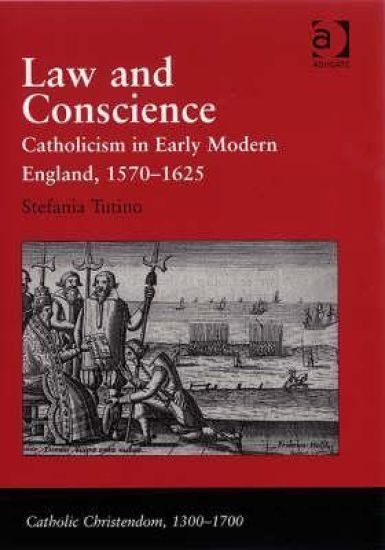
This book examines the Catholic elaboration on the relationship between state and Church in late Elizabethan and Jacobean England. Among the several factors which have contributed to the complex process of state-formation in early modern Europe, religious affiliation has certainly been one of the most important, if not the most important. Within the European context of the consolidation of both the nation-state entities and the state-Churches, Catholicism in England in the 16th and 17th centuries presents peculiar elements which are crucial to understanding the problems at stake, from both a political and a religious point of view. Catholics in early modern England were certainly a minority, but a minority of an interestingly doubled kind. On the one hand, they were a "sect" among many others. On the other hand, Catholicism was a "universal", catholic religion, in a country in which the sovereign was the head - or governor - of both political and ecclesiastical establishments. In this context, this monograph casts light on the mechanisms through which a distinctive religious minority was able to adapt itself within a singular political context. In the most general terms, this book contributes to the significant question of how different religious affiliations could (or might) be integrated within one national reality, and how political allegiance and religious belief began to be perceived as two different identities within one context. Current scholarship on the religious history of early modern England has considerably changed the way in which historians think about English Protestantism. Recent works have offered a more nuanced and accurate picture of the English Protestant Church, which is now seen not as a monolithic institution, but rather as complex and fluid. This book seeks to offer certain elements of a complementary view of the English Catholic Church as an organism within which the debate over how to combine the catholic feature of the Church of Ro
This is the first book-length study of the political and theological views of Thomas White (alias Blacklo) and his followers the Blackloists. It both complements and opens up new lines of inquiry in the context of the current scholarship in two main areas. On the one hand, historians of early modern England are paying a tremendous amount of attention to the English Catholic Church, stressing the importance of the Catholic perspective in order to get a more accurate picture of England's religious and political history. This study responds to these suggestions by analyzing a group of English Catholics greatly influential in a complex period of the history of England. On the other hand and more generally, the volume explores the question of the intersection between politics and religion during the 1640s and 1650s in a historiographical context in which the manifold and complex link between the language of natural law and the language of theology in the history of English Republicanism is currently being taken into a greater account by a number of scholars. In this context, White's political theory can be used as an extremely interesting case-study to show how natural law bridged the complexity of the relationship between theological and secular arguments put forward in the debate around issues such as the nature and limit of government and the relationship between subjects and governors. As well as providing a detailed study of White and his views, this book also provides a modern edition of the full text of his most important political treatise The Grounds of Obedience and Government, a distinctly Catholic version of contractualism, that appeared to offer succour to a militantly Protestant republican regime.
This study analyses the work of D.H. Lawrence in light of theories about space and location, or place and community. Lawrence's major novels and stories provide the main focus, but attention is also paid to lesser-known texts, both fiction and non-fiction.
Thom Gunn served as a mouthpiece for his time, illustrating the social, cultural, and historical transformations that have characterized western civilization from World War II until today. Starting with theoretical premises drawn from philosophy, anthropology, and sociology, this work examines Thom Gunn's entire poetic career. In Gunn's early poetry, the author argues, the predominant theme is the desire for freedom from the painful prison of the intellect and from the masks that the individual feels compelled to wear even in his sexual relationships. In Gunn's later poetry, the author notes a gradual opening to human relationships and to Nature, which is also Gunn's vindication and reevaluation of his own nature and the liberation of his long repressed and hidden homosexuality.
A Multitude of Women looks at the ways in which both Italian literary tradition and external influences have assisted Italian women writers in rethinking the theoretical and aesthetic ties between author, text, and readership in the construction of the novel. Stefania Lucamante discusses the valuable contributions that Italian women writers have made to the contemporary novel and illustrates the relevance of the novelistic examples set by their predecessors. She addresses various discursive communities, reading works by Di Lascia, Ferrante, Vinci, and others with reference to intertextuality and the theories of Elsa Morante and Simone de Beauvoir. This study identifies a positive deviation from literary and ideological orthodoxy, a deviation that helps give meaning to the Italian novel and to transform the traditional notion of the canon in Italian literature. Lucamante argues that this is partly due to the merits of women writers and their ability to eschew obsolete patterns in narrative while favouring forms that are more attuned to the ever-changing needs of society. She shows that contemporary novels by women authors mirror a shift from previous trends in which the need for female emancipation interfered with the actual literary and aesthetic significance of the novel. A Multitude of Women offers a new epistemology of the novel and will appeal to those interested in women's writing, readership, Italian studies, and literary studies in general.
Searching for Africa in Brazil is a learned exploration of tradition and change in Afro-Brazilian religions. Focusing on the convergence of anthropologists’ and religious leaders’ exegeses, Stefania Capone argues that twentieth-century anthropological research contributed to the construction of an ideal Afro-Brazilian religious orthodoxy identified with the NagÔ (Yoruba) cult in the northeastern state of Bahia. In contrast to other researchers, Capone foregrounds the agency of CandomblÉ leaders. She demonstrates that they successfully imposed their vision of CandomblÉ on anthropologists, reshaping in their own interest narratives of Afro-Brazilian religious practice. The anthropological narratives were then taken as official accounts of religious orthodoxy by many practitioners of Afro-Brazilian religions in Brazil. Capone draws on ten years of ethnographic fieldwork in Salvador de Bahia and Rio de Janeiro as she demonstrates that there is no pure or orthodox Afro-Brazilian religion.Challenging the usual interpretations of Afro-Brazilian religions as fixed entities, completely independent of one another, Capone reveals these practices as parts of a unique religious continuum. She does so through an analysis of ritual variations as well as discursive practices. To illuminate the continuum of Afro-Brazilian religious practice and the tensions between exegetic discourses and ritual practices, Capone focuses on the figure of Exu, the sacred African trickster who allows communication between gods and men. Following Exu and his avatars, she discloses the centrality of notions of prestige and power-mystical and religious-in Afro-Brazilian religions. To explain how religious identity is constantly negotiated among social actors, Capone emphasizes the agency of practitioners and their political agendas in the “return to roots,” or re-Africanization, movement, an attempt to recover the original purity of a mythical and legitimizing Africa.
Searching for Africa in Brazil is a learned exploration of tradition and change in Afro-Brazilian religions. Focusing on the convergence of anthropologists’ and religious leaders’ exegeses, Stefania Capone argues that twentieth-century anthropological research contributed to the construction of an ideal Afro-Brazilian religious orthodoxy identified with the NagÔ (Yoruba) cult in the northeastern state of Bahia. In contrast to other researchers, Capone foregrounds the agency of CandomblÉ leaders. She demonstrates that they successfully imposed their vision of CandomblÉ on anthropologists, reshaping in their own interest narratives of Afro-Brazilian religious practice. The anthropological narratives were then taken as official accounts of religious orthodoxy by many practitioners of Afro-Brazilian religions in Brazil. Capone draws on ten years of ethnographic fieldwork in Salvador de Bahia and Rio de Janeiro as she demonstrates that there is no pure or orthodox Afro-Brazilian religion.Challenging the usual interpretations of Afro-Brazilian religions as fixed entities, completely independent of one another, Capone reveals these practices as parts of a unique religious continuum. She does so through an analysis of ritual variations as well as discursive practices. To illuminate the continuum of Afro-Brazilian religious practice and the tensions between exegetic discourses and ritual practices, Capone focuses on the figure of Exu, the sacred African trickster who allows communication between gods and men. Following Exu and his avatars, she discloses the centrality of notions of prestige and power-mystical and religious-in Afro-Brazilian religions. To explain how religious identity is constantly negotiated among social actors, Capone emphasizes the agency of practitioners and their political agendas in the “return to roots,” or re-Africanization, movement, an attempt to recover the original purity of a mythical and legitimizing Africa.
Since 1996, a group of young, innovative writers dubbed the 'Giovani Cannibali' has generated popular and critical attention in Italy. This book introduces the works of the 'Cannibali' writers Aldo Nove, Isabella Santacroce, amd Niccolo Ammaniti- among others- to Anglophone readers. It also initiates an in-depth discussion of te dynamics that allowed for this particular group of the mid-1990s to stimulate a profound evolution in the form and very ethics of modern Italian literature.
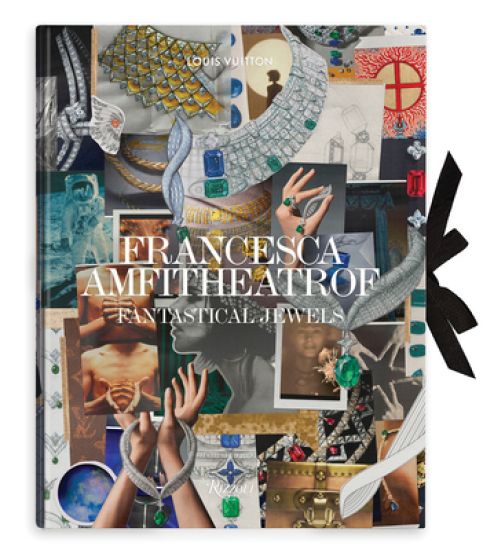
A privileged look at visionary jewelry designer Francesca Amfitheatrof s unique approach to creating collections of high jewelry for Louis Vuitton. Working in the heart of Paris, Francesca Amfitheatrof brings a new perspective to the ancient art of jewelry design, translating her love of fashion into the jewelry collections she creates for Louis Vuitton. She approaches each collection following a theme, as a storyteller would approach a novel, but written in the oldest materials on our planet diamonds and gold. This book is a fascinating look at four extraordinary jewelry collections, exploring the designer s alchemical process from raw materials and inspiration to polished jewel. Journal-like in style, and featuring unique sketches, gouaches, collages, and personal photographs the book highlights how Amfitheatrof and Louis Vuitton have given the ancient craft of jewelry-making a modern approach. The book also reveals how Amfitheatrof s personal journey, and her creativity, are perfectly matched with the pioneering and visionary spirit of Louis Vuitton, a house with its roots in luggage and travel. Amfitheatrof, working together with renowned art director Fabien Baron, has created a stunning and highly personal volume that beautifully reflects her singular artistry.
Winners of the World Pizza Award 2018 and Best Pizza at the National Pizza Awards 2018. Purezza, founded in Brighton in 2015, was the first vegan pizzeria in the UK. Passionate about plant-based food, their aim was simple: to make their menu superior to the traditional alternatives, revolutionising Italian food by using cruelty-free ingredients.This book makes it possible to enjoy their authentic tasting pizza with at home. Discover your perfect crust (wholemeal, sourdough or gluten-free), choose yourfavourite sauce, from a classic San Marzano Tomato to a vibrant green Asparagus Sauce, create exciting nut cheeses, from deliciously melty Cashew Mozzarella to a punchy Almond Gorgonzola, and finish it all off with a range of tempting toppings, such as Beetroot Carpaccio, Smoked Carrot Pancetta and Funghi Trifolati. There are also Dips and Dressings to enjoy alongside your pizzas,and a selection of vegan-ised classic Italian dishes and desserts.This book helps any home cook recreate the best vegan pizza that promises to be enjoyed by vegans and meat-eaters alike.