Robin Alexander; Michael Armstrong; Julia Flutter; Linda Hargreaves; David Harrison; Wynne Harlen; Elizabeth Hartley-Brewer; Ruth Kershner; John MacBeath; Berry Mayall; Stephanie Northen; Gillian Pugh; Colin Richards; David Utting
Children, their World, their Education is the definitive text for students, teachers, researchers, educational leaders and all who are interested in primary education. As the culmination of the Cambridge Primary Review, the most comprehensive enquiry into English primary education for half a century, its publication provoked instant and dramatic headlines. Widespread support from teachers and eminent public figures demonstrated that the book had identified the issues that really mattered. Ministerial unease showed that here were findings that politicians could not ignore.But Children, their World, their Education is much more than a report. It is an unrivalled educational compendium that systematically covers the issues that are central to the daily work of students, teachers and heads. For trainee teachers on undergraduate and postgraduate courses it effectively maps the territory of primary education and provides the context, information and insight which are essential to the development of classroom skill. Its vast range of carefully evaluated evidence makes it a core resource for those undertaking research and advanced study. Its direct engagement with the policy process during a period of unprecedented change makes it an indispensable tool for policy analysis. It places England’s education system in the global context, and combines evidence on recent developments with a vision of how primary education should be.Part 1 sets the scene and tracks primary education policy since the 1960s.Part 2 examines children’s development and learning, their needs and aspirations, and their lives in a diverse society and fragile world.Part 3 explores what goes on in schools, from the vital early years to educational aims and values, the curriculum, pedagogy and classroom practice, assessment, standards and school organisation.Part 4 deals with the system as a whole: educational ages and stages, the work and training of primary teachers, school leadership, local authorities, funding, governance and policy.Part 5 pulls everything together with 78 conclusions and 75 recommendations for policy and practice.Companion volume: The Cambridge Primary Review Research Surveys, edited by Robin Alexander with Christine Doddington, John Gray, Linda Hargreaves and Ruth Kershner. The Cambridge Primary Review is supported by Esmée Fairbairn Foundation: www.primaryreview.org.uk.

An extract: My high school career counselor was this florid-faced, overweight man who told me my problem was I was too linear in my thinking. Life, he said, doesn't always go straight from A to B. I needed to loosen up, he said; I should try some different avenues of expression. To someone who's sixteen, that didn't mean a helluva lot, except that maybe I should try a different road when driving home. It was years before I figured out he was making a pass at me.By contrast, my now-very-much ex-husband Steve was the tan, trim, quintessential gay man who once told me that sex between us felt like an agreeable mixture of Candyland and Monopoly. That didn't mean too much either, but it sure felt like a step in the right direction. And I always knew when he was making a pass.Oh, Steven...I really needed you last night.I mean, I'm writing today for the first time since... well, you know - and it was always easier facing these mini-marathons after waking up next to you.Well, not much to be done about that now, is there? I can't exactly call you up and ask you to come home. Be a bit difficult, eh? And the long-distance charges would be murder.I know, I know: bad joke.
In der jüngeren Fachdebatte zur Kinder- und Jugendhilfe wird immer wieder die Kooperation von Jugendhilfe und Schule thematisiert und die Bedeutung dieses Arbeitsbereichs betont. Vor diesem Hintergrund nimmt dieses Buch eine Standortbestimmung zur theoretischen und empirischen Betrachtung der Kooperation von Jugendhilfe und Schule vor. Dabei werden aktuelle Anforderungen des Kooperationsfeldes und dessen Veränderungen aufgezeigt und die empirische Ausprägung von Kooperationsstrukturen und -erfahrungen bewertet. Im Zentrum steht vor allem die Frage: Entstehen neuartige Vernetzungen der Kinder- und Jugendhilfe mit Schule, die Veränderungen in den Arbeitsweisen und Strukturen der Kinder- und Jugendhilfe zur Folge haben?
In diesem Buch untersucht die Autorin die Debatte um die sogenannten "Benes-Dekrete", die im Vorfeld des EU-Beitritts der Tschechischen Republik aufflammte, aus diskursanalytischer Perspektive. Zentrale Argumentationslinien und unterschiedliche Ebenen der Auseinandersetzung werden detailliert aufgearbeitet. So wird das AKW Temelin ebenso zum Thema wie Fragen der Menschenrechte. Am Beispiel der Tageszeitung Der Standard werden diskursive Konjunkturen und die - oft unkritische - UEbernahme von Argumentationsfiguren der Vertriebenenverbande analysiert, aber auch das Verhaltnis von nationalem und EU-Diskurs. Aktuelle historische Forschungen und UEberlegungen zur Geschichtspolitik in OEsterreich bilden den Rahmen der Interpretation.
Bei vielen Sonderkulturen, haupts chlich aber im intensiven Gem sebau, kann sich bereits ein geringer Mangel an Stickstoff stark qualit ts- und ertragsmindernd auswirken. Daher wird besonders dort h ufig im berschuss ged ngt. Dies bedeutet, im Vergleich zu dem tats chlichen N-Bedarf einer Kultur, oft einen erh hten Aufwand an D nger, was zu starken N-Verlusten durch Auswaschung f hren kann. Stark nitratbelastete Grund- und Oberfl chengew sser sind vielerorts die Folge. Eine in-situ Methode zur fortlaufenden Bestimmung des aktuellen, f r die Pflanzen verf gbaren Nitratgehalts in der Bodenl sung, welche die Grundlage f r eine angepasste, kulturgerechte D ngung sein kann, fehlt bisher f r die Praxis. Mit einer solchen Methode k nnten Nitrat bersch sse minimiert, D nger eingespart und durch das Wegfallen von Nmin-Probennahmen auch der Arbeitsaufwand verringert werden. Aus Tr pfchenbew sserungssystemen k nnten so verbesserte Fertigationssysteme entstehen.
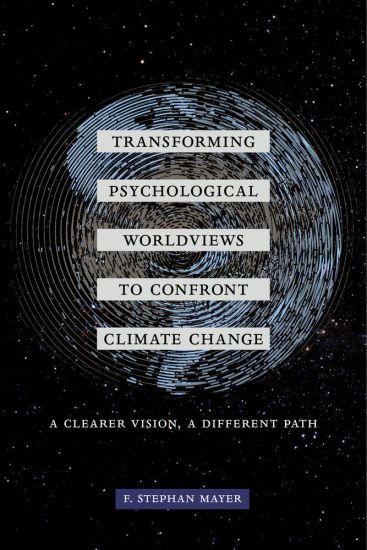
In the continuing debate of how to confront the challenges of climate change, individuals, advocacy groups, and political parties in the United States offer arguments and solutions based on economic and political viewpoints. But what if we are beginning from a distorted view? In this book, F. Stephan Mayer argues that our psychological representation of the world is at the heart of the underlying causes of climate change. Mayer posits that we need to change the way we see the world if we are to effectively take a new course of action to address this threat. Through an alternative worldview based on Aldo Leopold’s concept of land ethic, Mayer furthers the conversation by promoting a clearer vision of our relationship to nature and how it leads to a different path directed toward environmental sustainability. Based on over 20 years of psychological research examining the impact of the land ethic on pro-environmental behavior and personal well being, Mayer’s accessible tone invites readers to place their worldview within a broader framework, draw connections to their lives, and spark ideas of next steps that individuals and groups can take to transition to this alternative worldview and rectify this situation.