Kirjojen hintavertailu. Mukana 11 244 527 kirjaa ja 12 kauppaa.

Kirjahaku

Etsi kirjoja tekijän nimen, kirjan nimen tai ISBN:n perusteella.

1000 tulosta hakusanalla Stephen Cheeke

Stephen Spender: A Literary Life

Stephen Spender: A Literary Life

John Sutherland

Oxford University Press
2005
sidottu
The literary, political, and artistic interests of poet and cultural icon Stephen Spender are illuminated in this narrative based on his private papers, tracing his rise to success as a poet in the 1930s through his later years as cultural statesman of the twentieth century, and examining his relationships with such luminaries as Dylan Thomas, Sylvia Plath, T. S. Eliot, and Virgina Woolf.
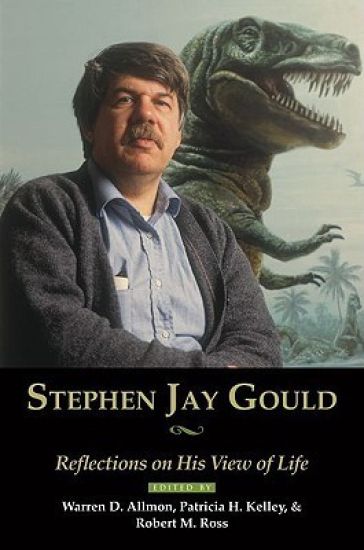
Stephen Jay Gould

Stephen Jay Gould

Oxford University Press Inc
2008
sidottu
Considered by many during his lifetime as the most well-known scientist in the world, Stephen Jay Gould left an enormous and influential body of work. A Harvard professor of paleontology, evolutionary biology, and the history of science, Gould provided major insights into our understanding of the history of life. He helped to reinvigorate paleontology, launch macroevolution on a new course, and provide a context in which the biological developmental stages of an organism's embryonic growth could be integrated into an understanding of evolution. This book is a set of reflections on the many areas of Gould's intellectual life by the people who knew and understood him best: former students and prominent close collaborators. Mostly a critical assessment of his legacy, the chapters are not technical contributions but rather offer a combination of intellectual bibliography, personal memoir, and reflection on Gould's diverse scientific achievements. The work includes the most complete bibliography of his writings to date and offers a multi-dimensional view of Gould's life-work not to be found in any other volume.
Stephen Langton, Quaestiones Theologiae
Before Stephen Langton († 1228) was consecrated Archbishop of Canterbury, he was a prominent master of theology, belonging to the first generation of masters working in the Theology Faculty of the University of Paris. The Quaestiones Theologie constitute his chief theological work. The manuscript tradition of the Quaestiones originates in written reports (reportationes) of oral disputations held by Langton in Paris between c. 1180 and 1206. They reflect the development of Parisian educational practices and bring the contemporary reader very close to the first university lessons. The volume offers the first critical edition of Stephen Langton's Quaestiones Theologiae, Book I, containing 23 Quaestiones on theological language, Trinity and God's attributes. Each question is accompanied by a critical apparatus, extensive source notes and a separate philological introduction which explains the history of transmission and the main editorial problems of each text. The volume also contains a general introduction to the whole corpus of Langton's Quaestiones, a presentation of philosophical and theological contents of Book I (including a chapter by E. Jennifer Ashworth) and an appendix, offering the first critical edition of a short fragment of Langton's Summa. The edition offered in this book, and the philological analysis which precedes it, represent a significant contribution to the history of the early scholasticism, offering a ground-breaking study of an extremely complex work, which originates in oral teaching.
Stephen Langton, Quaestiones Theologiae
Stephen Langton († 1228), later Archbishop of Canterbury, was a prominent master of theology, belonging to the first generation of scholars working at the faculty of theology of the nascent University of Paris. The Quaestiones Theologiae constitute his chief speculative work. Book III, Volume 2, offers a critical edition of 26 disputed questions on virtues. Each question is accompanied by a critical apparatus and source notes. This edition is preceded by an extensive analysis of Langton's theories of love and fear. Most of the questions in this volume revolve around Langton's concept of charity or love (caritas), understood as a gratuitous virtue, which is the foundation of moral perfection, merit, and salvation.
Stephen Langton, Quaestiones Theologiae
Stephen Langton (c.1228), later Archbishop of Canterbury, was a prominent master of theology, belonging to the first generation of scholars working at the faculty of theology of the nascent University of Paris. The Quaestiones Theologiae constitute his chief speculative work. Book III, volume 1, offers a critical edition of 24 disputed questions on Christology and faith. Each question is accompanied by a critical apparatus and source notes. The edition is preceded by an extensive analysis of Langton's views. The volume also contains an important supplement to the study of the whole manuscript tradition of Langton's QQuaestiones Theologiae and offers the first general stemma codicum of the Quaestiones.
Stephen Langton's Prologues to the Bible
Stephen Langton, following in the footsteps of Peter Lombard, remade not only medieval theology but also the medieval schools by redoing Jerome's famous prologues to the Latin Bible. An Englishman who went as a lad from near Lincoln to Paris and then returned to England as Archbishop of Canterbury after nearly half a century of learning and teaching, Langton connected Paris, its schools and university, to English schools and universities in ways never before suspected by scholars. It turns out that Langton was not only a great Church leader and diplomat but was arguably the leading English intellectual of his generation, the man at the centre of the greatest developments of his age, from the securing the of Magna Carta to the founding of the University of Paris.
Stephen Langton, Quaestiones Theologiae
Stephen Langton, later Archbishop of Canterbury and the famous signatory of Magna Carta, was a prominent intellectual, belonging to the first generation of scholars working at the faculty of theology of the nascent University of Paris. The I^Quaestiones Theologiae constitute his chief speculative work. Book III, volume 3, offers a critical edition of 42 disputed questions about ethics. A critical apparatus and rich source notes accompany each text. The edition is preceded by an extensive analysis of Langton's selected ethical theories, concerning, among other issues, mendacity (lying, perjury, hypocrisy, fraud), moral dilemmas (double bind), obedience, and avoiding suffering. In addition, the introduction analyses Langton's discussion of some logical issues, such as I^propositio implicita and ampliatio.
Stephen I, the First Christian King of Hungary

Stephen I, the First Christian King of Hungary

Nora Berend

Oxford University Press
2024
sidottu
Stephen I, Hungary's first Christian king (reigned 997-1038) has been celebrated as the founder of the Hungarian state and church. Despite the scarcity of medieval sources, and consequent limitations on historical knowledge, he has had a central importance in narratives of Hungarian history and national identity. This book argues that instead of conceptualizing modern political medievalism separately as an 'abuse' of history, we must investigate history's very fabric, because cultural memory is woven into the production of the medieval sources. Medieval myth-making served as a firm basis for centuries of further elaboration and reinterpretation, both in historiography and in political legitimizing strategies. In many ways we cannot reach the 'real' Stephen, but we can do much more to understand the shaping of his myths. The author traces the origin of crucial stories around Stephen, contextualizing both the invention of early narratives and their later use. A challenger to Stephen's rule who may be a medieval literary invention became the protagonist of a rock opera in 1983, also standing in for Imre Nagy, a key figure of the 1956 revolution; moreover, he was reinvented as the embodiment of true Hungarian identity. The alleged right hand relic was 'discovered' to provide added legitimacy for Hungary's kings and then became a protagonist of the entanglement of Church and state. A medieval crown was invested with supernatural status, before turning into a national symbol. This book analyses the often seamless flow that has turned medieval myth into modern history, showing that politicisation was not a modern addition, but a determinant factor from the start.
Stephen Biesty's Incredible Cross-Sections
This children's book explores the innermost workings of some extraordinary buildings and machines. From helicopters to submarines, skyscrapers to coal mines, open up a fascinating world packed with unique and detailed cutaway drawings.Whether it's a Spanish galleon or a medieval castle, each cross-section slice or exploded view reveals what's going on inside. See the people swarming inside the Empire State Building, the workers busy backstage at an opera house, and where the crew sleep on a jumbo jet. Included also are two impressive fold-outs showing an ocean liner and a steam train.There are lots of fun facts to be discovered, and curious details are highlighted and explained. Did you know one of the funnels of the Queen Mary liner was fake, and used for storing deckchairs? And in almost every scene there's the challenge... to find a man sitting on a toilet! With more than a million copies sold, Stephen Biesty's award-winning illustrated book is as fascinating today as it was when first published, in 1992. Incredible Cross-sections is the ultimate way to see how things work.
Stephen Biesty's Incredible Body Cross-Sections
How does the body protect itself from infections? What makes your tummy rumble? Are you taller at the beginning or end of the day?This extraordinary book actually takes you inside - and around - the human body to see how it works, with the help of some truly unique illustrations and some very small people! Explore your brain, your bones, and everything in between in incredible cross-section drawings of all the body systems. Inside each one are teams of tiny characters busy at work, and explaining what's going on.Every page is packed with jaw-dropping facts. Did you know that the skin is your largest organ - in an adult it's 2 sq m (22 sq ft). Have you ever thought about how heavy the brain is? Well, it's about 1.4 kg (3 lb) and is crammed with 100 billion nerve cells that help you think and move. And by the time you turn 75, your heart will have pumped blood around your body 4,000 million times! With the challenge of finding two tiny explorers making their way through the body, learning about anatomy has never been so much fun!
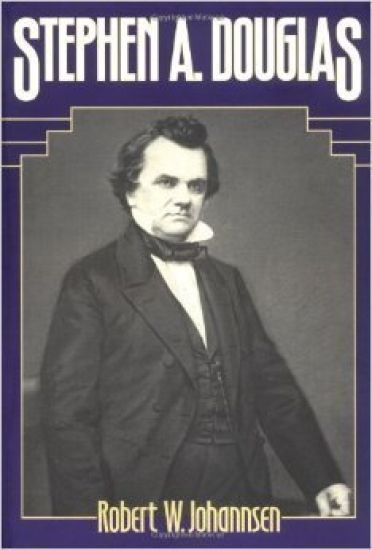
Stephen A. Douglas

Stephen A. Douglas

Robert W. Johannsen

University of Illinois Press
1997
nidottu
Winner of the Francis Parkman Prize of the Society of American Historians For the quarter-century before 1860 Stephen A. Douglas was a dominant figure on the American political scene, far outshadowing Abraham Lincoln. This first paperback printing of Robert Johannsen's authoritative biography features a new preface. "At once a work of enormous scholarship and of deep insight. Here, for the first time, is the full story of a great career, told with such skill that we can now understand why Abraham Lincoln found the 'Little Giant' the most formidable political rival he ever faced." -- David H. Donald, author of Lincoln and two-time winner of the Pulitzer Prize "Well-organized and marvelously detailed. . . . The book demonstrates the virtues of large-scale, straightforward narrative biography at its best. Its completeness and objectivity will make it the standard authority for many years to come." -- Richard N. Current, The New York Times Book Review "Superb. . . . Will doubtless stand as the definitive biography of Stephen A. Douglas for this generation." -- Hans L. Trefousse, The Journal of American History "An impressive work--impressive in scope, in research, and in maturity of understanding. . . . Johannsen has constructed a biography that is rich in detail and full of conviction." -- James Z. Rabun, The Journal of Southern History "Should take its place in the tradition of magisterial biographies . . . in which so much of the best writing on American history is to be found." -- Harry V. Jaffa, National Review "The research is amazingly exhaustive and the writing is unusually readable. . . . Outstanding biography of a quality not often matched." -- LeRoy H. Fischer, Manuscripta Supported by the Dickerson Fund of the University of Illinois at Urbana-Champaign
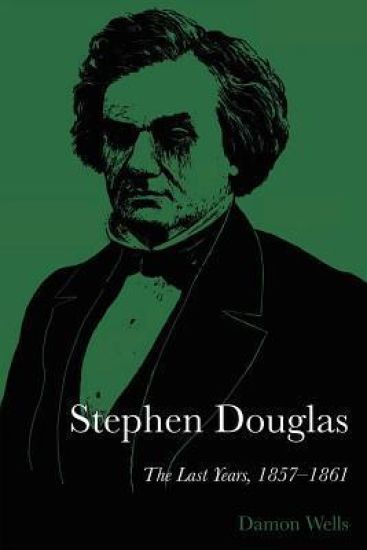
Stephen Douglas

Stephen Douglas

Damon Wells

University of Texas Press
1971
pokkari
Stephen Douglas and the old Union lived out their last years together. It was the most critical time in the life of both the Illinois senator and his country. During most of the period 1857–1861 the American nation could still choose between adjustment of its sectional differences and civil war, and the man they called the Little Giant seemed the one statesman most likely to lead the country onto a course of compromise and reconciliation. But Douglas’ intense involvement with the American political scene-his great accomplishments in enacting the Compromises of 1850 and 1854, and his victory in the senatorial campaign of 1858-tended at times to disguise a growing alienation from the mainstream of American political life. By 1857 that alienation had reached acute proportions. In part, Douglas fell victim to his own virtues. He sought to be a nationalist in an age of sectionalism; he preached the value of compromise when most Americans questioned its worth. In other respects, Douglas’ political failures are less excusable. His attempt to convert an apparently amoral attitude toward slavery into a principle-popular sovereignty-found him dismissed by antislavery citizens as immoral and by proslavery citizens as unreliable. For too long, Douglas, professing to “care not” about the future of slavery, overlooked how much Americans could care once their consciences had been aroused or their way of life supposedly threatened. Douglas failed to win the presidential campaign of 1860 largely because he could satisfy neither the proponents nor the enemies of slavery. Yet if the last years of Douglas’ life were marred by failure, he was not ultimately the tragic figure some historians have suggested. During the campaign of 1860 a profound change began to take place in Stephen Douglas. The outmoded nationalism he had preached for so long began to give way to Unionism. In his eventual support of Lincoln and his defense of the Union, Douglas at last found a policy worthy of his great talents. Damon Wells first became interested in Stephen Douglas in 1959 after seeing a Broadway dramatization of the Lincoln-Douglas Debates. Later, his studies convinced him that playwright and historian alike were often unfair to Douglas. If Lincoln was to be a hero, then Douglas had to be cast as a villain. This study fills the need for a fresh and dispassionate look at Douglas and provides a fairer assessment than can be reached by simply endorsing contradictory views of apologists and critics. It places particular emphasis on the Little Giant’s struggle with President James Buchanan, the debates with Lincoln, the presidential campaign of 1860, Douglas’ complex relationship with the South, and a careful analysis of the elusive and at times exasperating principle of popular sovereignty.
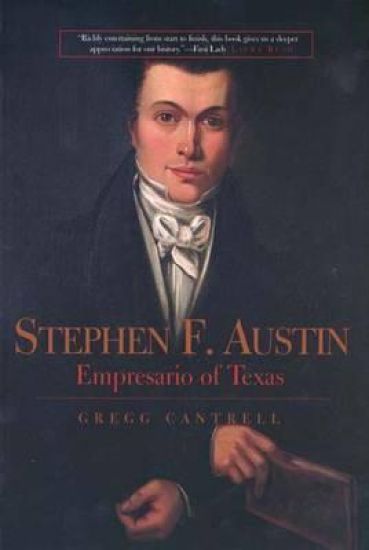
Stephen F. Austin

Stephen F. Austin

Gregg Cantrell

Yale University Press
2001
pokkari
Stephen F. Austin, the "Father of Texas," has long been enshrined in the public imagination as an authentic American hero, but one who was colorless and rather remote. This book, the first major biography in more than seventy years, brings Austin's private life, motives, personality, and character into sharp focus, revealing a driven man who successfully mixed effort and cunning, idealism and pragmatism to build an illustrious career. Gregg Cantrell traces Austin's early life from his privileged boyhood as the son of the Missouri mining baron Moses Austin to his family's humiliating financial downfall after the War of 1812. He tells how in 1821 Stephen Austin inherited his father's daring plan to colonize Spanish Texas. Over the next fifteen years Austin carried out this plan with dazzling success, becoming a consummate manager, exhorter, politician, and diplomat, and playing a central role in the events that led to the Texas Revolution and the establishment of the Lone Star Republic. Within a generation, as a result largely of forces that he helped set in motion, the United States completed its drive for mastery over the North American continent.
Stephen Burks

Stephen Burks

Monica Obniski

YALE UNIVERSITY PRESS
2022
sidottu
A multifaceted look at the work of award-winning American industrial designer Stephen Burks Through essays, photo-essays, and a conversation between Black designer Stephen Burks (b. 1969) and the late cultural critic bell hooks, this book contextualizes Burks’s wide-ranging work while exploring design’s influence on politics, society, and culture. Burks’s work is underpinned by his belief in a pluralistic vision of design that is inclusive of all cultural perspectives; the award-winning designer has been commissioned by many of the world’s leading design-driven brands to develop collections that engage hand production as a strategy for innovation. The book centers the industrial design and craft collaborations within Burks’s workshop-based design practice and offers an opportunity to reflect on the potential of design at a time when racial, social, and environmental justice remain in jeopardy. Topics explored in the book include an overview of the designer’s practice, from the foundational architecture culture of Chicago (Burks’s birthplace) to his latest speculative project; the workshop-based collaborative ethos of his studio, Stephen Burks Man Made; and the politics of design. In the conversation between bell hooks and Burks, hooks brings her critical eye to design as it relates to the broader field of African American cultural production. Distributed for the High Museum of Art Exhibition Schedule:High Museum of Art, Atlanta (September 16, 2022–March 5, 2023)Philadelphia Museum of Art (November 19, 2023–April 14, 2024)
Stephen Sondheim: Stephen Sondheim: A Life
The first and only full-scale and definitive biography of one of the the most important composer-lyricists in musical theater. A remarkable portrait of the man, the music, and the genius of Stephen Sondheim: star of his own fascinating life. Drawing on personal conversations with Sondheim himself, as well as interviews with his friends, family, collaborators, and lovers, Secrest offers new insight into the enigmatic and very private Stephen Sondheim. Here, we learn about his childhood on New York's Upper West Side, his parents' devastating divorce, and his ascent to the peaks of the Broadway musical. Secrest vividly recreates the energy, passion, and despair that went into each beloved show, from Sondheim's fabled collaboration with Hal Prince on Sweeney Todd and A Little Night Music, to his disagreements with co-lyricist Leonard Bernstein on West Side Story.
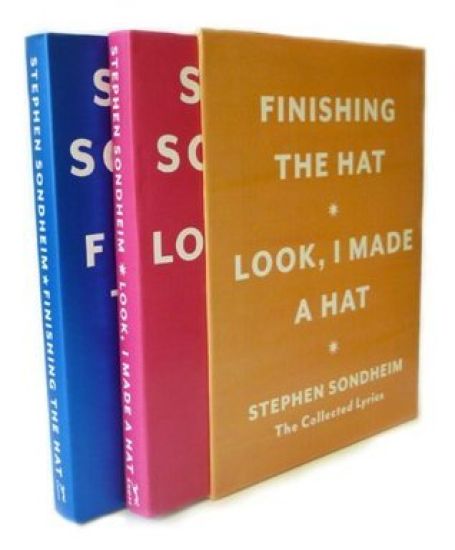
Hat Box: The Collected Lyrics of Stephen Sondheim: A Box Set
The complete collected lyrics from the acclaimed Finishing the Hat and Look, I Made a Hat; this box set is essential reading for theater fans or devotees of this living legend's work. Hat Box is a handsomely designed package that includes lyrics from Stephen Sondheim's most popular shows like West Side Story, Sweeney Todd, Sunday in the Park with George, and Into the Woods, richly annotated with anecdotes, pointed observations, and invaluable advice from one of the greatest songwriters of our time.
Stephen King

Stephen King

Sharon A. Russell

Greenwood Press
1996
sidottu
Looks at nine works by King, examining narrative structure, character development, recurrent stylistic and thematic concerns, and the relation of these works to the horror and science fiction genres
Stephen Hawking

Stephen Hawking

Kristine M. Larsen

Greenwood Press
2005
sidottu
Presents the life and accomplishments of the English scientist, who, despite suffering from Lou Gehrig's disease, has become a renowned cosmologist whose theory of black holes has had a profound influence on the modern study of the universe.