Kirjojen hintavertailu. Mukana 11 699 587 kirjaa ja 12 kauppaa.

Kirjahaku

Etsi kirjoja tekijän nimen, kirjan nimen tai ISBN:n perusteella.

1000 tulosta hakusanalla Stephen R. Lawhead

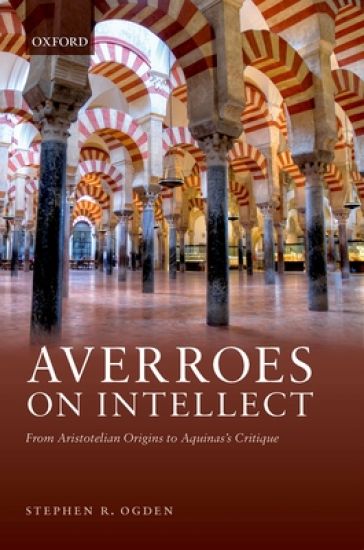
Averroes on Intellect

Averroes on Intellect

Stephen R. Ogden

Oxford University Press
2022
sidottu
Averroes on Intellect provides a detailed analysis of the Muslim philosopher Averroes (Ibn Rushd)'s notorious unicity thesis -- the view that there is only one separate and eternal intellect for all human beings. It focuses directly on Averroes' arguments, both from the text of Aristotle's De Anima and, more importantly, his own philosophical arguments in the Long Commentary on the De Anima. Stephen Ogden defends Averroes' interpretation of De Anima using a combination of Greek, Arabic, Latin, and contemporary sources. Yet, Ogden also insists that Averroes is not merely a 'commentator' but an incisive philosopher in his own right. The author thus reconstructs and analyzes Averroes' two most significant independent philosophical arguments, the Determinate Particular Argument and the Unity Argument. Alternative ancient and medieval views are also considered throughout, especially from two important foils before and after Averroes, namely, Avicenna (Ibn Sina) and Thomas Aquinas. Aquinas' most famous and penetrating arguments against the unicity thesis are also addressed. Finally, Ogden considers Averroes' own objections to broader metaphysical views of the soul like Avicenna's and Aquinas', which agree with him on several key points including the immateriality of the intellect and the individuation of human souls by matter, while still diverging on the number and substantial nature of the intellect. The central goal of this book is to provide readers with a single study of Averroes' most pivotal arguments on intellect, consolidating and building on recent scholarship and offering a comprehensive case for his unicity thesis in the wider context of Aristotelian epistemology and metaphysics.
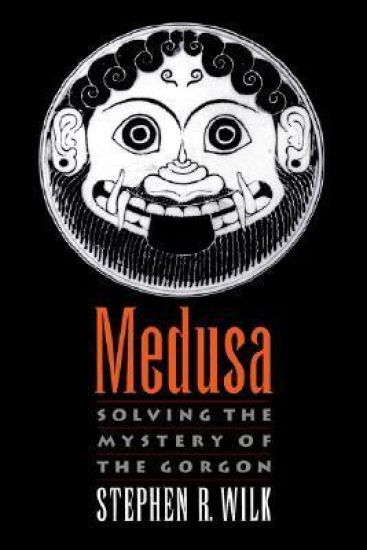
Medusa

Medusa

Stephen R. Wilk

Oxford University Press Inc
2000
sidottu
Medusa, the Gorgon who turns those who gaze upon her to stone, is one of the most popular and enduring figures of Greek mythology. Long after many other figures from Greek myth have been forgotten, she continues to live in popular culture. In this fascinating study of the legend of Medusa, Stephen R. Wilk begins by refamiliarizing readers with the story through ancient authors and classical artwork, then looks at the interpretations that have been given of the meaning of the myth through the years. A new and original interpretation of the myth is offered, based upon astronomical phenomena. The use of the gorgoneion, the Face of the Gorgon, on shields and on roofing tiles is examined in light of parallels from around the world, and a unique interpretation of the reality behind the gorgoneion is suggested. Finally, the history of the Gorgon since Classical times is explored, culminating in the modern use of Medusa as a symbol of Female Rage and Female Creativity.
Noah's Curse

Noah's Curse

Stephen R. Haynes

Oxford University Press Inc
2002
sidottu
"A servant of servants shall he be unto his brethren". So reads Noah's curse on his son Ham, and all his descendants, in Genesis 9:25. Over centuries of interpretation, Ham came to be identified as the ancestor of black Africans, and Noah's curse to be seen as the biblical justification for American slavery and segregation. In this book Stephen Haynes examines the history of the American interpretation of Noah's curse. He begins with an overview of the prior history of the reception of this scripture and then turns to the distinctive and creative ways in which the curse was appropriated by American pro-slavery and pro-segregation interpreters. He argues that the story of Noah's curse was compelling for antebellum white Southerners because it resonated with the themes of antiquity, domesticity, race, and sin.
Noah's Curse

Noah's Curse

Stephen R. Haynes

Oxford University Press Inc
2007
nidottu
"A servant of servants shall he be unto his brethren." So reads Noah's curse on his son Ham, and all his descendants, in Genesis 9:25. Over centuries of interpretation, Ham came to be identified as the ancestor of black Africans, and Noah's curse to be seen as biblical justification for American slavery and segregation. Examining the history of the American interpretation of Noah's curse, this book begins with an overview of the prior history of the reception of this scripture and then turns to the distinctive and creative ways in which the curse was appropriated by American pro-slavery and pro-segregation interpreters.
Medusa

Medusa

Stephen R. Wilk

Oxford University Press Inc
2008
nidottu
Medusa, the Gorgon, who turns those who gaze upon her to stone, is one of the most popular and enduring figures of Greek mythology. Long after many other figures from Greek myth have been forgotten, she continues to live in popular culture. In this fascinating study of the legend of Medusa, Stephen R. Wilk begins by refamiliarizing readers with the story through ancient authors and classical artwork, then looks at the interpretations that have been given of the meaning of the myth through the years. A new and original interpretation of the myth is offered, based upon astronomical phenomena. The use of the gorgoneion, the Face of the Gorgon, on shields and on roofing tiles is examined in light of parallels from around the world, and a unique interpretation of the reality behind the gorgoneion is suggested. Finally, the history of the Gorgon since classical times is explored, culminating in the modern use of Medusa as a symbol of Female Rage and Female Creativity.
Sandbows and Black Lights

Sandbows and Black Lights

Stephen R. Wilk

Oxford University Press Inc
2021
sidottu
Why are candle flames yellow? Why does ultraviolet light supposedly kill vampires? What about the monocle? Why was the monocle--a corrective lens that only corrects vision in a single eye--so popular among businessmen and politicians for so many years? Stephen R. Wilk answers all this and so much more in Sandbows and Black Lights. This book is a collection of original essays on weird and unusual topics surrounding optics. Wilk uses the BBC's formula of "Education by Stealth" to explain unusual facets of science and technology through the matrix of interesting and cultural paths, all the while weaving in math equations in an accessible way. The first part of the book focuses on the history, the second moves to odd scientific approaches to visual phenomena, and the third part explains the unique use of optics in fiction, movies, and comic books over time. Chapters cover everything from endless corridors to the beam of light over treasure chests in movies. Whether he is explaining a rare discovery or answering a seemingly unapproachable question, Wilk is able to lure readers in on every page. He has a unique ability to turn complex science into an engaging story, and this book is full of narratives on esoteric topics anyone will find intriguing. Sandbows and Black Lights provides an enticing and entertaining look at physical illusions in a whole new way.
Hacking Hybrid Media

Hacking Hybrid Media

Stephen R. Barnard

OXFORD UNIVERSITY PRESS INC
2024
sidottu
The contemporary public sphere is rife with problematic information, but on what terms are manipulators able to garner attention in the hybrid media system? In Hacking Hybrid Media, Stephen R. Barnard examines how networked media capital is changing the fields of politics and journalism. With a focus on the messaging strategies employed by Donald Trump and his most vocal online supporters, Barnard provides a theoretically oriented and empirically grounded analysis of the ways today's media afford deceptive political communication. Analyzing data from prominent political events, Barnard shows how members of Trump's "digital army" use Facebook groups, Reddit forums, Twitter hashtags, YouTube channels, mass media, and more to shape the flow of disinformation in American media. From the structures of social media platforms to the practices of political actors, Barnard offers a critical appraisal of media power and the capital required to wield it. He reflects not only on the tools and techniques of manipulative media campaigns, but also on the implications they hold for the future of journalism, politics, and democracy in the US and beyond. In striking a balance between social theory and empirical research, Hacking Hybrid Media shows how the emergent structures and practices of the contemporary media system shape how information flows, how meaning is made, and ultimately, how networked social influence works.
Hacking Hybrid Media

Hacking Hybrid Media

Stephen R. Barnard

OXFORD UNIVERSITY PRESS INC
2024
nidottu
The contemporary public sphere is rife with problematic information, but on what terms are manipulators able to garner attention in the hybrid media system? In Hacking Hybrid Media, Stephen R. Barnard examines how networked media capital is changing the fields of politics and journalism. With a focus on the messaging strategies employed by Donald Trump and his most vocal online supporters, Barnard provides a theoretically oriented and empirically grounded analysis of the ways today's media afford deceptive political communication. Analyzing data from prominent political events, Barnard shows how members of Trump's "digital army" use Facebook groups, Reddit forums, Twitter hashtags, YouTube channels, mass media, and more to shape the flow of disinformation in American media. From the structures of social media platforms to the practices of political actors, Barnard offers a critical appraisal of media power and the capital required to wield it. He reflects not only on the tools and techniques of manipulative media campaigns, but also on the implications they hold for the future of journalism, politics, and democracy in the US and beyond. In striking a balance between social theory and empirical research, Hacking Hybrid Media shows how the emergent structures and practices of the contemporary media system shape how information flows, how meaning is made, and ultimately, how networked social influence works.
Metaphors of Eucharistic Presence

Metaphors of Eucharistic Presence

Stephen R. Shaver

Oxford University Press Inc
2022
sidottu
In Metaphors of Eucharistic Presence: Language, Cognition, and the Body and Blood of Christ, Stephen R. Shaver brings together the fields of cognitive linguistics and liturgical theology to propose a new approach to the ecumenically controversial issue of eucharistic presence. Drawing from the work of cognitive linguists such as George Lakoff, Gilles Fauconnier, and Mark Turner, and theologians such as Robert Masson and John Sanders, Shaver argues that there is no clear division between literal and figurative language: rather, human cognition is grounded in sensorimotor experience, and phenomena such as metaphor and conceptual blending are basic building blocks of thought. Complex realities are ordinarily understood by means of more than one metaphor. Inherited models of eucharistic presence, then, are not necessarily mutually exclusive but can serve as complementary members of a shared ecumenical repertoire. The central element of this repertoire is the motif of identity--the eucharistic bread and wine are the body and blood of Christ--grounded in the Synoptic and Pauline institution narratives. From a cognitive standpoint, this metaphor can be understood both as figurative and as true in the proper sense, resolving a dichotomy that has divided the churches since the Reformation. The identity motif is complemented by four major non-scriptural motifs: representation, change, containment, and conduit. Inaugurating a new interdisciplinary conversation, this book contributes to ongoing ecumenical reconciliation not only by addressing eucharistic presence but also by demonstrating an approach which may hold promise in other historically controverted areas. Meanwhile for cognitive linguists it offers an intriguing case study in the application of that discipline to theological questions.
A Philosophy of the Humanities

A Philosophy of the Humanities

Stephen R. Grimm; Rik Peels; René van Woudenberg

OXFORD UNIVERSITY PRESS INC
2025
sidottu
Co-authored by three philosophers, this ground-breaking book explores a range of new and classic questions concerning the humanities. For example, do the humanities (like the sciences) really make progress? Is there anything that unifies scholarship in the humanities, across fields as diverse as history, literary studies, philosophy, and musicology? And what should we make of the political aims of the humanities--for example, the desire by many scholars in the humanities to uncover systems of oppression and domination? Does this interfere with "objective" scholarship or not? In many ways this book is the first of its kind, considering new topics such as the value of replication studies in the humanities, and deference to other humanities scholars. A Philosophy of the Humanities offers new ways of thinking about the nature of the humanities and the distinctive contributions they make to human understanding.
A Philosophy of the Humanities

A Philosophy of the Humanities

Stephen R. Grimm; Rik Peels; René van Woudenberg

OXFORD UNIVERSITY PRESS INC
2025
nidottu
Co-authored by three philosophers, this ground-breaking book explores a range of new and classic questions concerning the humanities. For example, do the humanities (like the sciences) really make progress? Is there anything that unifies scholarship in the humanities, across fields as diverse as history, literary studies, philosophy, and musicology? And what should we make of the political aims of the humanities--for example, the desire by many scholars in the humanities to uncover systems of oppression and domination? Does this interfere with "objective" scholarship or not? In many ways this book is the first of its kind, considering new topics such as the value of replication studies in the humanities, and deference to other humanities scholars. A Philosophy of the Humanities offers new ways of thinking about the nature of the humanities and the distinctive contributions they make to human understanding.
A Parliament of Souls

A Parliament of Souls

Stephen R. L. Clark

Clarendon Press
1990
sidottu
Limits and Renewals is a trilogy based on the Stanton Lectures in the Philosophy of Religion delivered at the University of Cambridge in 1986-8. In this, the second volume, Professor Clark attempts to restate a traditional philosophy of mind, drawing upon philosophical and poetic resources that are often neglected in modern and post-modern thought, and emphasizing the moral and political implications of differing `philosophies of mind and value'. He presents a study of the soul as it has traditionally been conceived and as it can be understood through imaginative attention to our changing moods, beliefs, and fears. He argues that without that traditional concept we have little reason to believe that liberal values (rational thought and individual autonomy) are either possible or desirable. Particular topics discussed include the political context of identity claims, the uses of introspection, free will, `the beast within' as alien monster or necessary angel, the possibility of knowledge and the dangers of curiosity, the fear of death, the philoprogenitive gene, the political roots of the distinction between facts and values, and the body-mind problem. Notable features of the book are the author's citation of writers other than the conventionally philosophical (Augustine, Hopkins, Stapledon, and Weil), and the emphasis that he gives to traditions other than the self-consciously secular.
God's World and the Great Awakening

God's World and the Great Awakening

Stephen R. L. Clark

Clarendon Press
1991
sidottu
In God's World and the Great Awakening, Professor Clark's main concern is with the way we can `turn aside' to the Truth from the normal delusions of self-concern. He restates a traditional, Neoplatonic metaphysics as the proper context for scientific and religious practice, and defends a serious Platonic realism against both scientism and anti-realism. Neither scientism, which identifies Truth with what can be revealed to the objectifying gaze, nor fashionable anti-realism, which equates Truth simply with what `we' choose to take seriously, offer an adequate ground for our scientific or religious faith. The primary faith of humankind is that there is a real world which is more than an obsequious shadow of our desires and fancies, and this real world can be discovered through right reason. The defence of this faith requires a properly worked, Platonic metaphysic of just the kind discernible in Christian orthodoxy. The other two volumes are: Civil Peace and Sacred Order (1989) and A Parliament of Souls (1990).
Aristotle's Man

Aristotle's Man

Stephen R.L. Clark

Oxford University Press
1975
sidottu
Words have determinable sense only within a complex of unstated assumptions, and all interpretation must therefore go beyond the given material. This book addresses what is man's place in the Aristotelian world. It also describes man's abilities and prospects in managing his life, and considers how far Aristotle's treatment of time and history licenses the sort of dynamic interpretation of his doctrines that have been given. The ontological model that explains much of Aristotle's conclusions and methods is one of life-worlds, in which the material universe of scientific myth is no more than an abstraction from lived reality, not its transcendent ground.
Organic Electronics

Organic Electronics

Stephen R. Forrest

Oxford University Press
2020
sidottu
This textbook provides a basic understanding of the principles of the field of organic electronics, through to their applications in organic devices. Useful for both students and practitioners, it is a teaching text as well as an invaluable resource that serves as a jumping-off point for those interested in learning, working and innovating in this rapidly growing field. Organics serve as a platform for very low cost and high performance optoelectronic and electronic devices that cover large areas, are lightweight, and can be both flexible and conformable to fit onto irregularly shaped surfaces such as foldable smart phones. Organic electronics is at the core of the global organic light emitting device (OLED) display industry. OLEDs also have potential uses as lighting sources. Other emerging organic electronic applications include organic solar cells, and organic thin film transistors useful in medical and a range of other sensing, memory and logic applications. This book is a product of both one and two semester courses that have been taught over a period of more than two decades. It is divided into two sections. Part I, Foundations, lays down the fundamental principles of the field of organic electronics. It is assumed that the reader has an elementary knowledge of quantum mechanics, and electricity and magnetism. A background knowledge of organic chemistry is not required. Part II, Applications, focuses on organic electronic devices. It begins with a discussion of organic thin film deposition and patterning, followed by chapters on organic light emitters, detectors, and thin film transistors. The last chapter describes several devices and phenomena that are not covered in the previous chapters, since they lie somewhat outside of the current mainstream of the field, but are nevertheless important.
Work and Technological Change

Work and Technological Change

Stephen R. Barley

Oxford University Press
2020
sidottu
In recent years a growing number of commentators have declared that we are at the beginning of a technical revolution that will see profound changes in the way we live and work. Yet what constitutes a technological revolution, and what logic supports how successive technological revolutions have unfolded in Western societies? How do technologies change organizations and what are the implications of intelligent technologies for work and employment? Here, Stephen R. Barley reflects on over three decades of research to explore both the history of technological change and the approaches used to investigate how technologies are shaping our work and organizations. He begins by placing current developments in artificial intelligence into the historical context of previous technological revolutions, drawing on William Faunce's argument that the history of technology is one of progressive automation of the four components of any production system: energy, transformation, transfer, and control technologies. He then considers how technologies change work, and when those changes will and will not result in organizational change. In doing so he lays out a role-based theory of how technologies produce changes in organizations. He then tackles the issue, alongside Matt Beane, of how to conceptualize a more thorough approach to assessing how intelligent technologies, such as artificial intelligence, can shape work and employment. They identify the main reasons why the current state of research on intelligent technologies in the workplace is inadequate, and provide pointers on how empirical studies in this area may, and must, be improved. He concludes with a discussion with his long-time colleague Diane Bailey about the fears that arise when one sets out to study technical work and technical workers, and the methods that they, and future ethnographers, can use for controlling those fears.
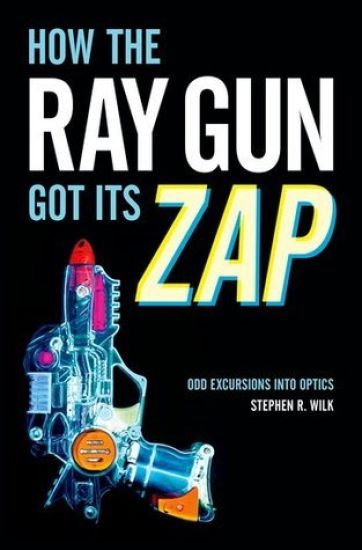
How the Ray Gun Got Its Zap

How the Ray Gun Got Its Zap

Stephen R. Wilk

Oxford University Press Inc
2013
sidottu
How the Ray Gun Got Its Zap is a collection of essays that discusses odd and unusual topics in optics. Though optics is a fairly specialized branch of physics, this book extracts from the discipline topics that are particularly interesting, mysterious, culturally relevant, or accessible. The essays all first appeared, in abbreviated form, in Optics and Photonics News and in The Spectrograph; the author has updated and expanded upon each of them for this book. The book is divided into three thematic sections: History, Weird Science, and Pop Culture. Chapters will discuss surprising uses of optics in classics and early astronomy; explain why we think of the sun as yellow when it is actually white; present how the laser is used in popular film; and profile the eccentric scientists who contributed to optics. The essays are short and entertaining, and can be read in any order. The book should appeal to general audiences interested in optics or physics more generally, as well as members of the scientific community who are curious about optics phenomena.
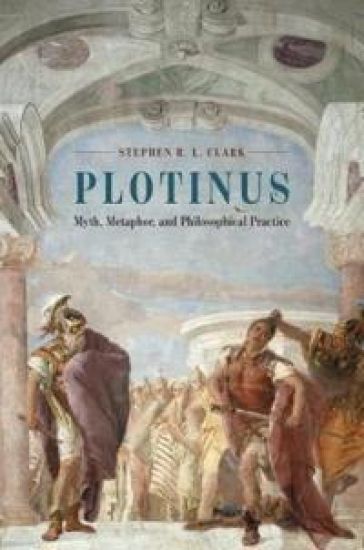
Plotinus

Plotinus

Stephen R. L. Clark

University of Chicago Press
2018
pokkari
Plotinus, the Roman philosopher (c. 204-270 CE) who is widely regarded as the founder of Neoplatonism, was also the creator of numerous myths, images, and metaphors. They have influenced both secular philosophers and Christian and Muslim theologians, but have frequently been dismissed by modern scholars as merely ornamental. In this book, distinguished philosopher Stephen R. L. Clark shows that they form a vital set of spiritual exercises by which individuals can achieve one of Plotinus's most important goals: self-transformation through contemplation. Clark examines a variety of Plotinus's myths and metaphors within the cultural and philosophical context of his time, asking probing questions about their contemplative effects. What is it, for example, to "think away the spatiality" of material things? What state of mind is Plotinus recommending when he speaks of love, or drunkenness, or nakedness? What starlike consciousness is intended when he declares that we were once stars or are stars eternally? What does it mean to say that the soul goes around God? And how are we supposed to "bring the god in us back to the god in all"? Through these rich images and structures, Clark casts Plotinus as a philosopher deeply concerned with philosophy as a way of life.
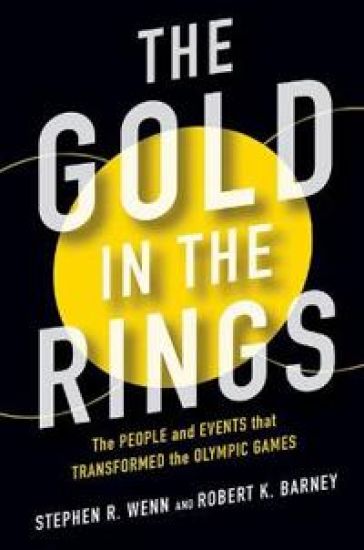
The Gold in the Rings

The Gold in the Rings

Stephen R Wenn; Robert Barney

University of Illinois Press
2020
sidottu
Once a showcase for amateur athletics, the Olympic Games have become a global entertainment colossus powered by corporate sponsorship and professional participation. Stephen R. Wenn and Robert K. Barney offer the inside story of this transformation by examining the far-sighted leadership and decision-making acumen of four International Olympic Committee (IOC) presidents: Avery Brundage, Lord Killanin, Juan Antonio Samaranch, and Jacques Rogge. Blending biography with historical storytelling, the authors explore the evolution of Olympic commercialism from Brundage's uneasy acceptance of television rights fees through the revenue generation strategies that followed the Salt Lake City bid scandal to the present day. Throughout, Wenn and Barney draw on their decades of studying Olympic history to dissect the personalities, conflicts, and controversies behind the Games' embrace of the business of spectacle. Entertaining and expert, The Gold in the Rings maps the Olympics' course from paragon of purity to billion-dollar profits.