Kirjojen hintavertailu. Mukana 12 415 869 kirjaa ja 12 kauppaa.

Kirjahaku

Etsi kirjoja tekijän nimen, kirjan nimen tai ISBN:n perusteella.

1000 tulosta hakusanalla Steve Lewis

Computer Aided Decision Making in Organizations
This work has been selected by scholars as being culturally important, and is part of the knowledge base of civilization as we know it. This work was reproduced from the original artifact, and remains as true to the original work as possible. Therefore, you will see the original copyright references, library stamps (as most of these works have been housed in our most important libraries around the world), and other notations in the work.This work is in the public domain in the United States of America, and possibly other nations. Within the United States, you may freely copy and distribute this work, as no entity (individual or corporate) has a copyright on the body of the work.As a reproduction of a historical artifact, this work may contain missing or blurred pages, poor pictures, errant marks, etc. Scholars believe, and we concur, that this work is important enough to be preserved, reproduced, and made generally available to the public. We appreciate your support of the preservation process, and thank you for being an important part of keeping this knowledge alive and relevant.
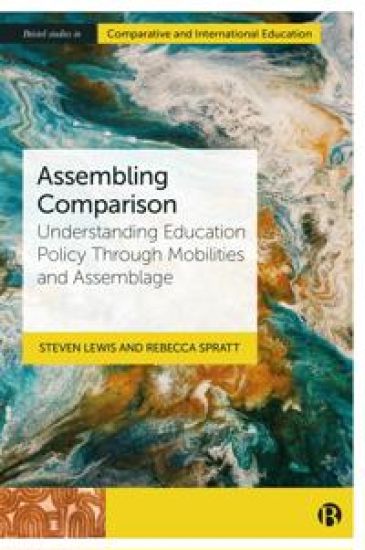
Assembling Comparison

Assembling Comparison

Steven Lewis; Rebecca Spratt

Bristol University Press
2024
sidottu
This book combines assemblage theory and policy mobilities to inform the study of comparative and international education (CIE), focusing on education policy and how such policy moves are enacted. These approaches challenge taken-for granted and universalizing concepts in policy research and policy work in CIE – such as the nation-state, policy making/policy enactment, global/local, Global North/Global South – and highlight how policy is contingent on emerging through complex relations between people and places. Using illustrative cases drawn from research and practice in CIE and education development, the book demonstrates how these ideas can be used in the analysis of policy and the application of this approach in real life.
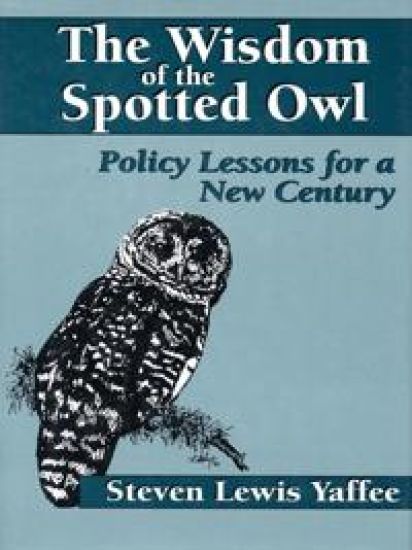
The Wisdom of the Spotted Owl

The Wisdom of the Spotted Owl

Steven Lewis Yaffee

Island Press
1994
nidottu
The controversy over the management of national forests in the Pacific Northwest vividly demonstrates the shortcomings of existing management institutions and natural resource policies. The Wisdom of the Spotted Owl explores the American policymaking process through the case of the spotted owl -- a case that offers a striking illustration of the failure of our society to cope with long-term, science-intensive issues requiring collective choices.Steven Lewis Yaffee analyzes the political and organizational dynamics from which the controversy emerged and the factors that led to our stunning inability to solve it. He examines the state of resource management agencies and policy processes, providing insight into questions such as: What caused the extreme polarization of opinion and lack of communication throughout the 1980s and early 1990s? How can the inadequate response of government agencies and the failure of the decisionmaking process be explained? What kinds of changes must be made to enable our resource policy institutions to better deal with critical environmental issues of the 1990s and beyond? By outlining a set of needed reforms, the book will assist those who are involved in re-creating natural resource agencies and public policy processes for the challenges of the next century. In explaining the policymaking process -- its realities and idiosyncrasies -- The Wisdom of the Spotted Owl provides a framework for understanding policies and institutions, and presents a prescription for change to allow for more effective handling of current and future environmental problems.
PISA, Policy and the OECD

PISA, Policy and the OECD

Steven Lewis

Springer Verlag, Singapore
2020
sidottu
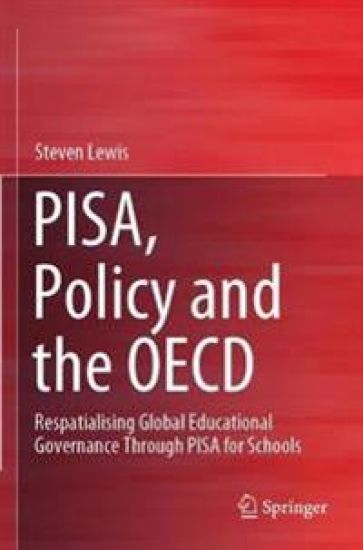
This book explores new modes, spaces and relations of the Organisation for Economic Cooperation and Development (OECD)'s global educational governance associated with the PISA for Schools test. Adopting a theoretically-rich policy sociology approach, with an emphasis on topological understandings of spatiality and power, the book examines the entire PISA for Schools policy cycle, from its initial development, to its administration and promotion in the U.S., and its local enactment by schools and teachers. It demonstrates how PISA for Schools helps to steer how schooling is locally understood and practised through separate and yet overlapping techniques: governing by (1) heterarchy, (2) respatialisation and (3) 'best practice'.The book reveals the specific effects of PISA for Schools as an exemplar of how global educational governance is increasingly enfolded within contemporary schooling, as well as discussing how we mightpractise a policy sociology in which the local is acknowledged as a relevant space of concern.
PISA, Policy and the OECD

PISA, Policy and the OECD

Steven Lewis

SPRINGER VERLAG, SINGAPORE
2021
nidottu
This book explores new modes, spaces and relations of the Organisation for Economic Cooperation and Development (OECD)'s global educational governance associated with the PISA for Schools test. Adopting a theoretically-rich policy sociology approach, with an emphasis on topological understandings of spatiality and power, the book examines the entire PISA for Schools policy cycle, from its initial development, to its administration and promotion in the U.S., and its local enactment by schools and teachers. It demonstrates how PISA for Schools helps to steer how schooling is locally understood and practised through separate and yet overlapping techniques: governing by (1) heterarchy, (2) respatialisation and (3) 'best practice'.The book reveals the specific effects of PISA for Schools as an exemplar of how global educational governance is increasingly enfolded within contemporary schooling, as well as discussing how we mightpractise a policy sociology in which the local is acknowledged as a relevant space of concern.
The Squirrels of Winter: A Chapbook of Poems

The Squirrels of Winter: A Chapbook of Poems

Paul Steven Lewis

Createspace Independent Publishing Platform
2018
nidottu
The Squirrels of Winter is a collection of poems about the silliness of life, written by an urban planner, musician, song-writer, and poet. While there are some serious poems about life, death, and social issues, for the most part, it is a light-hearted attempt to make sense of the world.
InCredible Communication

InCredible Communication

Rebecca Weintraub; Steven Lewis

Bloomsbury Business
2022
sidottu
The ultimate guide to the undervalued yet essential skill of selling yourself and becoming an outstanding communicator. In today’s competitive business landscape, the art of communication is more important than ever. It’s essential to develop a deep awareness of not only what we say, but also how we deliver it, resulting in a message that is both credible and incredibly impactful. In this era of digital communication and information overload, clear messaging has never been more vital – and personal credibility has never been more valuable. Regardless of experience or expertise, no interview, pitch or meeting will be successful unless it is succinctly, confidently and convincingly delivered. InCredible Communication brings 75 years’ combined experience of practical expertise to the art of effective business communication. Exploring both individual credibility and wider corporate culture, this book provides intuitive tools and techniques that anyone can use to become a more effective communicator or salesperson. It explores the best techniques when communicating in any medium – whether you are conversing in-person, over Zoom or even via social media.
Making Collaboration Work

Making Collaboration Work

Julia Marie Wondolleck; Steven Lewis Yaffee

Island Press
2000
pokkari
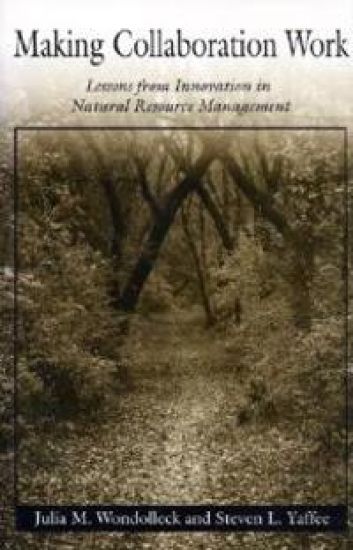
Across the United States, diverse groups are turning away from confrontation and toward collaboration in an attempt to tackle some of our nation's most intractable environmental problems. Government agencies, community groups, businesses, and private individuals have begun working together to solve common problems, resolve conflicts, and develop forward-thinking strategies for moving in a more sustainable direction."Making Collaboration Work" examines those promising efforts. With a decade of research behind them, the authors offer an invaluable set of lessons on the role of collaboration in natural resource management and how to make it work. The book: explains why collaboration is an essential component of resource management describes barriers that must be understood and overcome presents eight themes that characterize successful efforts details the specific ways that groups can use those themes to achieve success provides advice on how to ensure accountability Drawing on lessons from nearly two hundred cases from around the country, the authors describe the experience in practical terms and offer specific advice for agencies and individuals interested in pursuing a collaborative approach. The images of success offered can provide ideas to those mired in traditional management styles and empower those seeking new approaches. While many of the examples involve natural resource professionals, the lessons hold true in a variety of public policy settings including public health, social services, and environmental protection, among others."Making Collaboration Work" will be an invaluable source of ideas and inspiration for policy makers, managers and staff of government agencies andnongovernmental organizations, and community groups searching for more productive modes of interaction.
Marine Ecosystem-Based Management in Practice

Marine Ecosystem-Based Management in Practice

Julia M Wondolleck; Steven Lewis Yaffee

Island Press
2017
sidottu
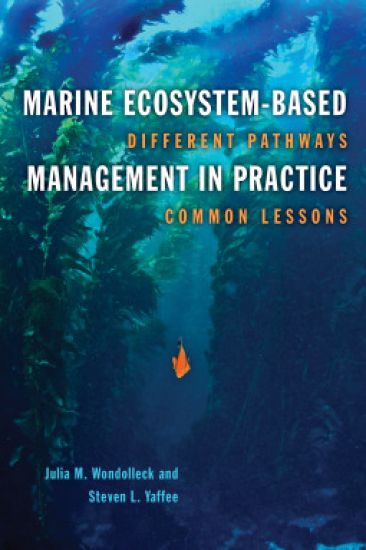
Julia Wondolleck and Steven Yaffee are hopeful. Rather than lamenting the persistent conflicts in global marine ecosystems, they instead sought out examples where managers were doing things differently and making progress against great odds. They interviewed planners, managers, community members, fishermen, and environmentalists throughout the world to find the best lessons for others hoping to advance marine conservation. Their surprising discovery? Successful marine management requires not only the right mix of science, law, financing, and organisational structure, but also an atmosphere of collaboration, a comfortable place for participants to learn about issues, craft solutions, and develop the interpersonal relationships, trust, and understanding needed to put plans into action. Marine Ecosystem-Based Management in Practice is the first practical guide for the marine conservation realm. In a unique collection of case studies, the authors showcase successful collaborative approaches to ecosystem-based management.The authors introduce the basic concepts of ecosystem-based management and five different pathways for making progress from community to multinational levels. They spotlight the characteristics that are evident in all successful cases --the governance structures and social motivations that make it work. Case analyses ranging from the Gulf of Maine to the Channel Islands in Southern California comprise the bulk of the book, augmented by text boxes showcasing examples of guiding documents important to the process. They devote several ending chapters to discussion of the interpersonal relationships critical to successful implementation of marine ecosystem-based management. The book concludes with a discussion of the implications for policy and on-the-ground practice. This book offers a hopeful message to policy makers, managers, practitioners, and students who will find this an indispensable guide to field-tested, replicable marine conservation management practices that work.
Marine Ecosystem-Based Management in Practice

Marine Ecosystem-Based Management in Practice

Julia M Wondolleck; Steven Lewis Yaffee

Island Press
2017
nidottu
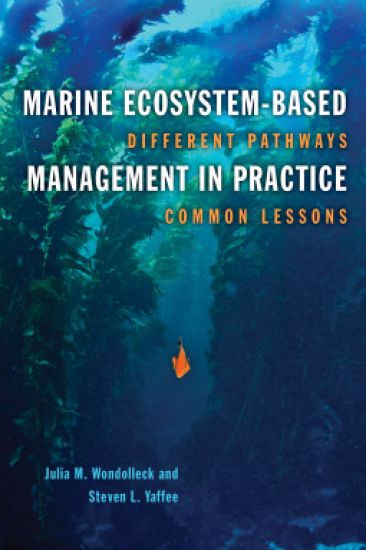
Julia Wondolleck and Steven Yaffee are hopeful. Rather than lamenting the persistent conflicts in global marine ecosystems, they instead sought out examples where managers were doing things differently and making progress against great odds. They interviewed planners, managers, community members, fishermen, and environmentalists throughout the world to find the best lessons for others hoping to advance marine conservation. Their surprising discovery? Successful marine management requires not only the right mix of science, law, financing, and organisational structure, but also an atmosphere of collaboration, a comfortable place for participants to learn about issues, craft solutions, and develop the interpersonal relationships, trust, and understanding needed to put plans into action. Marine Ecosystem-Based Management in Practice is the first practical guide for the marine conservation realm. In a unique collection of case studies, the authors showcase successful collaborative approaches to ecosystem-based management.The authors introduce the basic concepts of ecosystem-based management and five different pathways for making progress from community to multinational levels. They spotlight the characteristics that are evident in all successful cases --the governance structures and social motivations that make it work. Case analyses ranging from the Gulf of Maine to the Channel Islands in Southern California comprise the bulk of the book, augmented by text boxes showcasing examples of guiding documents important to the process. They devote several ending chapters to discussion of the interpersonal relationships critical to successful implementation of marine ecosystem-based management. The book concludes with a discussion of the implications for policy and on-the-ground practice. This book offers a hopeful message to policy makers, managers, practitioners, and students who will find this an indispensable guide to field-tested, replicable marine conservation management practices that work.