
Kirjahaku
Etsi kirjoja tekijän nimen, kirjan nimen tai ISBN:n perusteella.
1000 tulosta hakusanalla Steven H. Wander




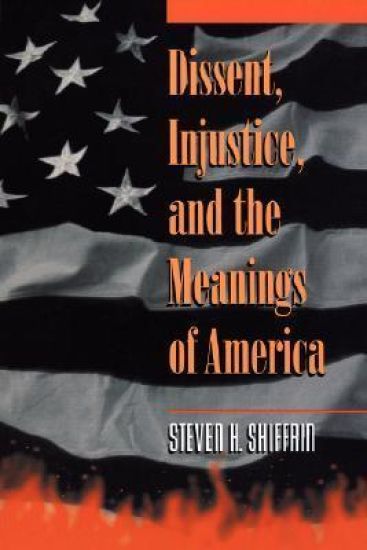
Dissent, Injustice, and the Meanings of America
Steven H. Shiffrin
Princeton University Press
2000
pokkari
Americans should not just tolerate dissent. They should encourage it. In this provocative and wide-ranging book, Steven Shiffrin makes this case by arguing that dissent should be promoted because it lies at the heart of a core American value: free speech. He contends, however, that the country's major institutions--including the Supreme Court and the mass media--wrongly limit dissent. And he reflects on how society and the law should change to encourage nonconformity. Shiffrin is one of the country's leading first-amendment theorists. He advances his dissent-based theory of free speech with careful reference to its implications for such controversial topics of constitutional debate as flag burning, cigarette advertising, racist speech, and subsidizing the arts. He shows that a dissent-based approach would offer strong protection for free speech--he defends flag burning as a legitimate form of protest, for example--but argues that it would still allow for certain limitations on activities such as hate speech and commercial speech. Shiffrin adds that a dissent-based approach reveals weaknesses in the approaches to free speech taken by postmodernism, Republicanism, deliberative democratic theory, outsider jurisprudence, and liberal theory. Throughout the book, Shiffrin emphasizes the social functions of dissent: its role in combating injustice and its place in cultural struggles over the meanings of America. He argues, for example, that if we took a dissent-based approach to free speech seriously, we would no longer accept the unjust fact that public debate is dominated by the voices of the powerful and the wealthy. To ensure that more voices are heard, he argues, the country should take such steps as making defamation laws more hospitable to criticism of powerful people, loosening the grip of commercial interests on the media, and ensuring that young people are taught the importance of challenging injustice. Powerfully and clearly argued, Shiffrin's book is a major contribution to debate about one of the most important subjects in American public life.

The Religious Left and Church-State Relations
Steven H. Shiffrin
Princeton University Press
2012
pokkari
In The Religious Left and Church-State Relations, noted constitutional law scholar Steven Shiffrin argues that the religious left, not the secular left, is best equipped to lead the battle against the religious right on questions of church and state in America today. Explaining that the chosen rhetoric of secular liberals is poorly equipped to argue against religious conservatives, Shiffrin shows that all progressives, religious and secular, must appeal to broader values promoting religious liberty. He demonstrates that the separation of church and state serves to protect religions from political manipulation while tight connections between church and state compromise the integrity of religious institutions. Shiffrin discusses the pluralistic foundations of the religion clauses in the First Amendment and asserts that the clauses cannot be confined to the protection of liberty, equality, or equal liberty. He explores the constitutional framework of religious liberalism, applying it to controversial examples, including the Pledge of Allegiance, the government's use of religious symbols, the teaching of evolution in public schools, and school vouchers. Shiffrin examines how the approaches of secular liberalism toward church-state relations have been misguided philosophically and politically, and he illustrates why theological arguments hold an important democratic position--not in courtrooms or halls of government, but in the public dialogue. The book contends that the great issue of American religious politics is not whether religions should be supported at all, but how religions can best be strengthened and preserved.

The First Amendment, Democracy, and Romance
Steven H. Shiffrin
Princeton University Press
2014
pokkari
If an organizing symbol makes sense in First Amendment jurisprudence, it is not the image of a content-neutral government, argues Steven Shiffrin, nor is it a town-hall meeting or even a robust marketplace of ideas. If the First Amendment is to have an organizing symbol, let it be an Emersonian symbol: let it be the image of the dissenter. Originally published in 1993. The Princeton Legacy Library uses the latest print-on-demand technology to again make available previously out-of-print books from the distinguished backlist of Princeton University Press. These editions preserve the original texts of these important books while presenting them in durable paperback and hardcover editions. The goal of the Princeton Legacy Library is to vastly increase access to the rich scholarly heritage found in the thousands of books published by Princeton University Press since its founding in 1905.

The First Amendment, Democracy, and Romance
Steven H. Shiffrin
Princeton University Press
2016
sidottu
If an organizing symbol makes sense in First Amendment jurisprudence, it is not the image of a content-neutral government, argues Steven Shiffrin, nor is it a town-hall meeting or even a robust marketplace of ideas. If the First Amendment is to have an organizing symbol, let it be an Emersonian symbol: let it be the image of the dissenter. Originally published in 1993. The Princeton Legacy Library uses the latest print-on-demand technology to again make available previously out-of-print books from the distinguished backlist of Princeton University Press. These editions preserve the original texts of these important books while presenting them in durable paperback and hardcover editions. The goal of the Princeton Legacy Library is to vastly increase access to the rich scholarly heritage found in the thousands of books published by Princeton University Press since its founding in 1905.

Joseph E.Johnston and the Defense of Richmond
Steven H. Newton
University Press of Kansas
1999
sidottu
Marked by research and analysis, this reconsideration of Johnston is an account of Confederate operations in the pivotal Eastern Virginian theatre in 1862. It provides a look at the episode in the war and attempts to rescue the unduly maligned leader from the shadow of Lee.

At a young age, Alfred Vanderbilt inherited a massive fortune of $40 million and control of the Vanderbilt railroading empire. With no interest in business matters, the youth squandered his wealth on horses and women on two continents. None of the Vanderbilts gave as much fuel for gossip to the curious public as Alfred. By the time the extravagant playboy boarded the Lusitania on May 7, 1915, he was the subject of numerous scandals, including the suicide of four different women. But as the ship went down, he spent the last minutes of his life rescuing women and children and forgoing his own life. How is it that this wraith, this gluttonous, opulent youth, could undergo an entire change of character in his last few moments? Alfred Gwynne Vanderbilt follows Alfred’s journey from philanderer to hero in this incredible, never-before-told story of the hero of the Lusitania.
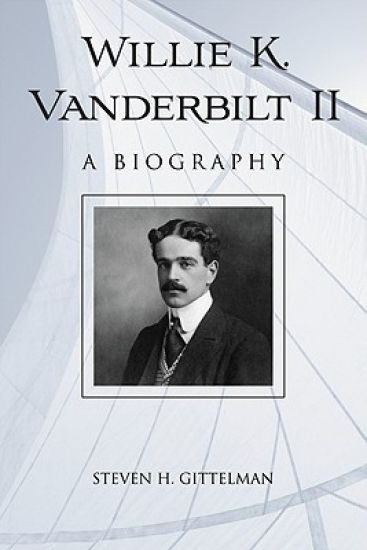
The Vanderbilts were one of the great American families of the industrial era. This book explores the life of one of its lesser-known scions of the fourth generation, William Kissam Vanderbilt II, known simply as Willie K. An inheritor, not a builder, Willie K. lacked the drive and ambition necessary for furthering the Vanderbilt dynasty, especially in the political atmosphere of bank failures, the dawn of progressivism, and the First World War. This biography, while the story of one man, is also an exploration of the burden of enormous wealth, the danger of inherited dreams, and the struggle for self-actualization regardless of wealth or social status.
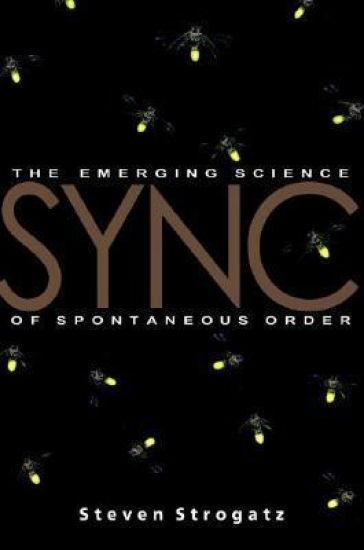
Sync: How Order Emerges from Chaos in the Universe, Nature, and Daily Life
Steven H. Strogatz
Grand Central Publishing
2004
nidottu
At the heart of the universe is a steady, insistent beat, the sound of cycles in sync. Along the tidal rivers of Malaysia, thousands of fireflies congregate and flash in unison; the moon spins in perfect resonance with its orbit around the earth; our hearts depend on the synchronous firing of ten thousand pacemaker cells. While the forces that synchronize the flashing of fireflies may seem to have nothing to do with our heart cells, there is in fact a deep connection. Synchrony is a science in its infancy, and Strogatz is a pioneer in this new frontier in which mathematicians and physicists attempt to pinpoint just how spontaneous order emerges from chaos. From underground caves in Texas where a French scientist spent six months alone tracking his sleep-wake cycle, to the home of a Dutch physicist who in 1665 discovered two of his pendulum clocks swinging in perfect time, this fascinating book spans disciplines, continents, and centuries. Engagingly written for readers of books such as Chaos and The Elegant Universe, Sync is a tour-de-force of nonfiction writing.
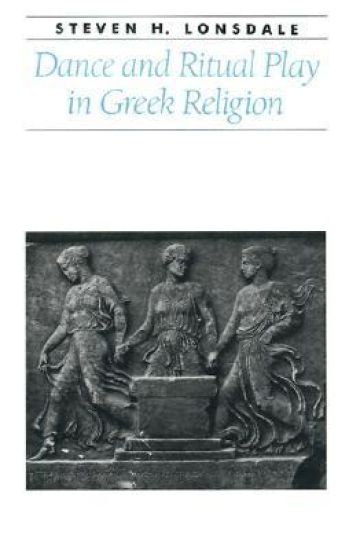
Dance and Ritual Play in Greek Religion
Steven H. Lonsdale
Johns Hopkins University Press
2001
pokkari
In private and in public life, the ancient Greeks danced to express divine adoration and human festivity. They danced at feasts and choral competitions, at weddings and funerals, in observance of the cycles of both nature and human existence. Formal and informal dances marked the rhythms of life and death. In Dance and Ritual Play in Greek Religion, Steven Lonsdale looks at how the Greeks themselves regarded the act of dance, and how dance and related forms of ritual play in Greek religious festivals served a wide variety of functions in Greek society. The act of worship, he explains, often implied engaging in collective rites regulated by playful behavior, the most common forms of which were group hymns and choral dances.
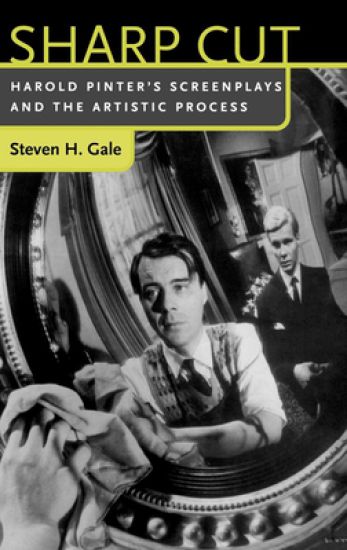
Best known as one of the most important playwrights of the twentieth century, Harold Pinter has also written many highly regarded screenplays, including Academy Award-nominated screenplays for The French Lieutenant's Woman and Betrayal, collaborations with English director Joseph Losey, and an unproduced script for the remake of Stanley Kubrick's 1962 adaptation of Lolita. In this definitive study of Pinter's screenplays, Steven H. Gale compares the scripts with their sources and the resulting films, analyzes their stages of development, and shows how Pinter creates unique works of art by extracting the essence from his source and rendering it in cinematic terms. Gale introduces each film, traces the events that led to the script's writing, examines critical reaction to the film, and provides an extensive bibliography, appendices, and an index.

Nonlinear Dynamics and Chaos with Student Solutions Manual
Steven H. Strogatz
Westview Press Inc
2016
muu
This textbook is aimed at newcomers to nonlinear dynamics and chaos, especially students taking a first course in the subject. The presentation stresses analytical methods, concrete examples, and geometric intuition. The theory is developed systematically, starting with first-order differential equations and their bifurcations, followed by phase plane analysis, limit cycles and their bifurcations, and culminating with the Lorenz equations, chaos, iterated maps, period doubling, renormalization, fractals, and strange attractors.

'We explore widely in the valley of ordinary representations, and we take the reader over the mountain pass leading to the valley of modular representations, to a point from which (s)he can survey this valley, but we do not attempt to widely explore it. We hope the reader will be sufficiently fascinated by the scenery to further explore both valleys on his/her own' - from the Preface. Representation theory plays important roles in geometry, algebra, analysis, and mathematical physics. In particular, it has been one of the great tools in the study and classification of finite groups. The theory contains some particularly beautiful results: Frobenius' theorem, Burnside's theorem, Artin's theorem, Brauer's theorem - all of which are covered in this textbook. Some seem uninspiring at first but prove to be quite useful. Others are clearly deep from the outset.And when a group (finite or otherwise) acts on something else (as a set of symmetries, for example), one ends up with a natural representation of the group. This book is an introduction to the representation theory of finite groups from an algebraic point of view, regarding representations as modules over the group algebra.The approach is to develop the requisite algebra in reasonable generality and then to specialize it to the case of group representations. Methods and results particular to group representations, such as characters and induced representations, are developed in depth. Arithmetic comes into play when considering the field of definition of a representation, especially for subfields of the complex numbers.The book has an extensive development of the semisimple case, where the characteristic of the field is zero or is prime to the order of the group, and builds the foundations of the modular case, where the characteristic of the field divides the order of the group. The book assumes only the material of a standard graduate course in algebra. It is suitable as a text for a year-long graduate course. The subject is of interest to students of algebra, number theory and algebraic geometry. The systematic treatment presented here makes the book also valuable as a reference.

Practical Computing for Biologists
Steven H. D. Haddock; Casey W. Dunn
Oxford University Press Inc
2010
nidottu
Published by Sinauer Associates, an imprint of Oxford University Press. Increasingly, scientists find themselves facing exponentially larger data sets and analyses without suitable tools to deal with them. Many biologists end up using spreadsheet programs for most of their data-processing tasks and spend hours clicking around or copying and pasting, and then repeating the process for other data files. Practical Computing for Biologists shows you how to use many freely available computing tools to work more powerfully and effectively. The book was born out of the authors' own experience in developing tools for their research and helping other biologists with their computational problems. Although many of the techniques are relevant to molecular bioinformatics, the motivation for the book is much broader, focusing on topics and techniques that are applicable to a range of scientific endeavors. Twenty-two chapters organized into six parts address these topics (and more; see Contents): * Searching with regular expressions * The Unix command line * Python programming and debugging * Creating and editing graphics * Databases * Performing analyses on remote servers * Working with electronics While most of the concepts and examples apply to any operating system, the main narrative focuses on Mac OS X. Where there are differences for Windows and Linux users, parallel instructions are provided in the margin and in an appendix. The book is designed to be used as a self-guided resource for researchers, a companion book in a course, or as a primary textbook. Practical Computing for Biologists will free you from the most frustrating and time-consuming aspects of data processing so you can focus on the pleasures of scientific inquiry.

Despite the importance of the concept of hope in human affairs, psychoanalysts have long had difficulty accepting responsibility for the manner in which their various interpretive orientations and explanations of therapeutic action express their own hopes for their patients. In Objects of Hope: Exploring Possibility and Limit in Psychoanalysis, Steven Cooper remedies this longstanding lacuna in the literature, and, in the process, provides a thorough comparative analysis of contemporary psychoanalytic models with respect to issues of hope and hopefulness. Cooper's task is challenging, given that the most hopeful aspects of human growth frequently entail acceptance of the destructive elements of our inner lives. The analysis of hope, then, implicates what Cooper sees as a central dialectic tension in psychoanalysis: that between psychic possibility and psychic limit. He argues that analysts have historically had difficulty integrating the concept of limit into a treatment modality so dedicated to the creation and augmentation of psychic possibility. And yet, it is only by accepting the realm of limit as a necessary counterpoise to the realm of possibility and clinically embracing the tension between the two realms that analysts can further their understanding of therapeutic process in the interest of better treatment outcomes. Cooper persuasively demonstrates how each psychoanalytic theory provides its own logic of hope; this logic, in turn, translates into a distinctive sense of what the analyst may hope for the patient, and what the patient is encouraged to hope for himself or herself. Objects of Hope brings ranging scholarship and refreshing candor to bear on the knotty issue of what can and cannot be achieved in the course of psychoanalytic therapy. It will be valued not only as an exemplary exercise in comparative psychoanalysis, but also as a thoughtful, original effort to place the vital issue of hope at the center of clinical concern.