As a founder of the Sierra Club and a promoter of the national parks, as a passionate nature writer and as a principle figure of the environmental movement, John Muir stands as a powerful symbol of connection with the natural world. But how did Muir's relationships with nature begin? In this book, Steven J. Holmes offers an interpretation of Muir's formative years, one that reveals the agony as well as the of his earliest experiences of nature. From his childhood in Scotland and Wisconsin through young adulthood in the Midwest and Canada, Muir struggled - often without success - to find a place for himself both in nature and in society. Far from granting comfort, the natural world confronted the young Muir with a full range of practical, emotional and religious conflicts. Only with the help of his family, religion, and the power of nature itself could Muir, in his late 20s, find a welcoming vision of nature as home.
Debates over hate speech, pornography, and other sorts of controversial speech raise issues that go to the core of the First Amendment. Supporters of regulation argue that these forms of expression cause serious injury to individuals and groups, assaulting their dignity as human beings and citizens. Civil libertarians respond that our commitment to free speech is measured by our willingness to protect it, even when it causes harm or offends our deepest values. In this important book, Steven J. Heyman presents a theory of the First Amendment that seeks to overcome the conflict between free speech and human dignity. This liberal humanist theory recognizes a strong right to freedom of expression while also providing protection against the most serious forms of assaultive speech. Heyman then uses the theory to illuminate a wide range of contemporary disputes, from flag burning and antiabortion demonstrations to pornography and hate speech.
A haunting consideration of the extraordinary mind of Saul Bellow’s unjustly forgotten friend and literary rival and the extremes of the writing life Born in Chicago in 1918, the prodigiously gifted and erudite Isaac Rosenfeld was anointed a “genius” upon the publication of his “luminescent” novel, Passage from Home and was expected to surpass even his closest friend and rival, Saul Bellow. Yet when felled by a heart attack at the age of thirty-eight, Rosenfeld had published relatively little, his life reduced to a metaphor for literary failure.In this deeply contemplative book, Steven J. Zipperstein seeks to reclaim Rosenfeld's legacy by “opening up” his work. Zipperstein examines for the first time the “small mountain” of unfinished manuscripts the writer left behind, as well as his fiercely candid journals and letters. In the process, Zipperstein unearths a turbulent life that was obsessively grounded in a profound commitment to the ideals of the writing life.Rosenfeld’s Lives is a fascinating exploration of literary genius and aspiration and the paradoxical power of literature to elevate and to enslave. It illuminates the cultural and political tensions of post-war America, Jewish intellectual life of the era, and—most poignantly—the struggle at the heart of any writer’s life.
A landmark biography of one of our most prominent chroniclers of American life In this groundbreaking literary biography, Steven J. Zipperstein captures the complex life and astonishing work of Philip Roth (1933–2018), one of America’s most celebrated writers. Born in Newark, New Jersey—where his short stories and books were often set—Roth wrote with ambition and awareness of what was required to produce great literature. No writer was more dedicated to his craft, even as he was rubbing shoulders with the Kennedys and engaging in a spate of famous and infamous romances. And yet, as much as Roth wrote about sex and self, he viewed himself as socially withdrawn, living much like an “unchaste monk” (his words). Zipperstein explores the unprecedented range of Roth’s work—from “Goodbye, Columbus” and Portnoy’s Complaint to the Pulitzer Prize–winning American Pastoral and The Plot Against America. Drawing on extensive archival materials and over one hundred interviews, including conversations with Roth about his life and work, Zipperstein provides an intimate and insightful look at one of the twentieth century’s most influential writers, placing his work in the context of his obsessions, as well as American Jewishness, freedom, and sexuality.
A workable vision of scientific practice has proven to be an elusive, if laudable, goal for professional psychology. The field cannot be faulted for failing to seek scientific wisdom, but it has been slow to integrate that wisdom fully with the wisdom of practice. This has proven to be a major oversight for, despite psychology's long if the standing commitment to science, practitioners are unlikely to think scientifically methods and products of science are described in ways that make it impossible to do so. Unfortunately, the rhetoric of science too often has done just that: So focused has it been on the problem of distinguishing good science from bad that it has inadvertently defeated any hope of a practical science developing in our field. We offer one remedy for this situation: This book is about scientific thinking for the professional psychologist. Specifically, it is a primer on the application of scientific logic to professional practice. We argue that the professional needs a more straightforward and realistic scientific identity than heretofore has been available. The professional consciously must become a local clinical scientist, bringing all the power of scientific thought to the specifics of the clinical situation. Contrary to forces in psychology that promote uncritical acceptance of science as given by academic researchers or, alternatively, that encourage criticism and ultimate disregard of the scientific endeavor, we call for a redoubling of efforts to incorporate scientific thought into practical professional inquiry.
Many children’s ministries are a flurry of activity, run by dedicated volunteers and staff who put in long hours and work hard for the good of the children and parents they serve. Yet despite good intentions, many children’s ministries today are not effective. They lack purpose and intentionality.A twenty-five year veteran of children’s ministry in the local church, pastor Steve Adams has ministered to families in multiple churches, from tiny church plants to his present position at Saddleback Church. In this book, Steve applies the revolutionary insights of the Purpose Driven Church to children’s ministry and leads readers on a journey of discovery, showing them how to develop an intentional ministry process that moves children toward spiritual health while building a healthy ministry environment for those who work with kids. You will learn how to ask and answer five simple but powerful questions:Why are we on this journey?Where are you and where are you going?Who are we trying to reach?How will we move our children towards spiritual health?What are the essential elements necessary for the journey?There is no single key to a successful children’s ministry, nor is there only one way that works for everyone. But there is a proven process you can follow and Steve shows how children’s ministries all over the world are reaching their God-given potential by discovering their biblical purpose, avoiding the traps of frustration and burnout.
This is the definitive sourcebook for collecting information required for corporate merger and acquisition research. A particular strength of the Guide is its focus on time-sharing online databanks for information retrieval. Readers can learn which databanks can be used for M&A research, and search examples and techniques are described. The authors use their research expertise to identify appropriate strategies, provide database tips and techniques, and point out unique features of the many M&A research tools discussed in the Guide. In addition, they discuss issues such as database cost and comprehensiveness and the currency of information delivery by identifying those databases offering current awareness capabilities. Examples of search sessions in electronic databases are provided to illustrate the creation and use of current awareness profiles. Monitoring M&A activity, researching specific deals, using Securities and Exchange Commission filings, researching with specialized M&A transaction databases, using electronic databanks to find acquisition candidates, tracking complex corporate relationships and international M&As are the primary subjects of coverage. The database categories--both print and electronic sources--include: filings databases, transaction databases, directory databases, monitoring databases, financial databases, legal databases and bibliographic databases. The Guide is a tool for the users of corporate change information that include economists, accountants, attorneys, financial analysts and officers, managers, academics, and students of business.
The decades of independence in Ghana have strengthened the idea of a national Ghanaian culture. The culture and customs of Ghana today are a product of diversity in traditional forms, influenced by a long history of Islamic and European contact. Culture and Customs of Ghana is the first book to concisely provide an up-to-date narrative on the most significant elements of the established cultural life and institutions as well as the most recent changes in the cultural landscape. Written expressly for students and the general reader, it belongs in every library supporting multicultural and African studies curricula. Ghana seeks to cultivate the philosophy of the African personality, to revive, maintain, and promote Ghanaian ways of life and integrate them into political and social institutions. Ghanaians also recognize their relationship to the rest of the world and continue to develop with the forces of globalization. Culture and Customs of Ghana authoritatively discusses the vibrant and adaptable people, from their religions to music and dance. A chronology, glossary, and numerous photos complement the text.
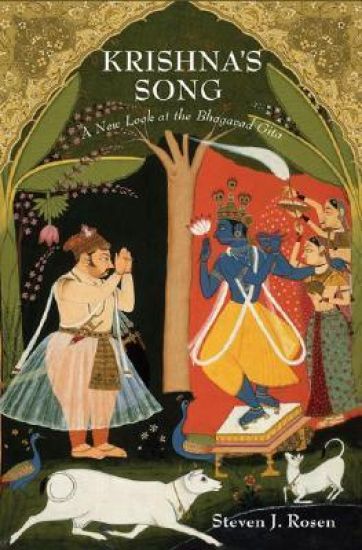
Rosen offers Westerners an easy-to-read introduction to a sacred text, demystifying its considerable philosophy in a user-friendly way. This is not yet another translation, merely reiterating what the Gita itself has to say. It is rather an attempt to culturally translate the text, making use of concepts and categories to which Western readers are accustomed. By engaging familiar motifs—such as issues of modernity, pop-culture icons, and well-known philosophers in the West—the author brings the Gita into focus for non-specialists and scholars alike. Through a series of contemporary news references and insightful summaries, readers will finally understand the facts and personalities that make up the Bhagavad Gita. Using his many years of Gita-centered research, Rosen unlocks the mysteries of the text's spiritual underpinnings. He provides an overview of the Gita's narrative and teachings alongside documentation of its traditional application and more modern ways in which the text can be understood. Students and scholars alike will rejoice in how well this book lays bare the culture and the context of the Gita, resulting in a reader's deep familiarity with this most sacred of all the world's wisdom texts.
Despite some enormous differences in salary among professional athletes, most aspects of their daily lives remain surprisingly constant across sports and income levels. In Living out of Bounds author Steven J. Overman mines a wide array of sports biographies, autobiographies, memoirs, and diaries to construct a representative picture of the athlete's life. In the course of the work a portrait emerges that transcends the individual lives lived. The shared experiences of devoted training, of travel and hotels, and of tension within and beyond the clubhouse or gym, force us to appreciate the often oppressive reality of the sporting life, at the same time that the individual lives lived also provide us with a glimpse of the rewards that make sports so compelling to audiences and athletes across America..
Students of religion and Eastern thought will welcome this readable translation and practical commentary on the Uddhava Gita, a Hindu text in which Krishna's teachings introduced in the Bhagavad Gita are extended and nuanced. Krishna's Other Song: A New Look at the Uddhava Gita examines the entire Uddhava Gita in relation to other Hindu scriptures, especially the Bhagavad Gita, and shares its teachings in light of interreligious understanding and nonsectarian spirituality. This edition's elaborate commentary, written by a prominent American scholar of Hindu studies, who is also a practitioner, opens up the text's esoteric teaching to a Western audience for the first time, adding context and relevance that make the book accessible and its teachings practicable for a Western readership. A foreword, written by prominent Hinduism scholar Charles S. J. White joins the author's own introduction to lay out the Uddhava Gita's background, philosophical dimensions, and religious significance. This edition does not include the original Sanskrit, nor does it labor to translate each word verbatim. Rather, it gives the reader all 1,030 verses in plain English, offering accessible commentary that allows the meaning and relevance of the Uddhava Gita to unfold to one and all.
This revealing compilation of essays by prominent practitioners and well-informed scholars lays to bear one simple truth: One must be a vegetarian to properly practice Yoga.Bringing together the work of nine distinguished scholars and practitioners of Yoga and Eastern thought, Food for the Soul: Vegetarianism and Yoga Traditions is organized around the fact that, although vegetarianism is a natural and inescapable part of the Yogic tradition, many Yogis and Yoginis today remain blissfully unaware of that fact. The essays gathered here explore the important and much-debated subject of vegetarianism in the major Yoga traditions, looking at what diet has to do with the practice of Yoga and whether ahimsa (harmlessness) is a prerequisite for achieving Yoga's goals. The contributors draw on history, philosophy, ancient Yoga texts, Hindu scriptures, comparative religion, contemporary practitioners, the words of sages, and the teachings of Yogic masters to forge illuminating insights into the subject. Readers, whether students of Hinduism, practitioners of Yoga, vegetarian or animal rights advocates, or simply people with an interest, will find both the questions and the answers provocative—and edifying.
This issue of Oral and Maxillofacial Surgery Clinics of North America focuses on Orofacial Pain, and is edited by Dr. Steven Scrivani. Articles will include: Classification and Differential Diagnosis or Orofacial Pain; Psychological Assessment for Chronic Orofacial Pain; Myofascial Pain Disorders; Disorders of the Temporomandibular Joints; Headache and Orofacial Pain; Neuropathic Orofacial Pain; Burning Mouth Syndrome; Orofacial Movement Disorder; Pharmacological Management of Orofacial Pain; Behavioral Medicine for Chronic Orofacial Pain; Injection Therapy for Headache and Facial Pain; Cranial Neuralgias; Intraoral Pain Disorders, and more!
The Guest Editors have tapped top key opinion leaders to provide current reviews on the clinical diagnosis and treatment of gastrointestinal disease in children. They have focused on topics related to GERD; Celiac Disease and Gluten Sensitivity; IBD; Motility Disorders; GI Bleeding and Management; Pancreatic Disorders; Hepatitis B and C; Liver Transplant; Abdominal Pain; Complications from Obesity; and Neonatal Cholestasis.These articles will provide a state-of-the-art overview of diagnosis and treatment of GI diseases that are impactful for the general pediatrician.
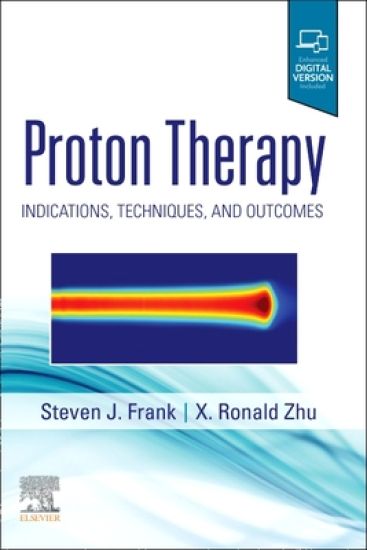
As proton therapy treatment centers become smaller and more cost-effective, education and training for today's multi-disciplinary oncology teams are more important than ever before. This state-of-the-art reference brings you fully up to date with all aspects of proton therapy, with guidance you can trust from MD Anderson Cancer Center, the largest and most experienced proton therapy center in the world. Led by Drs. Steven J. Frank and X. Ronald Zhu, Proton Therapy provides a unique opportunity to benefit from the unsurpassed knowledge and expertise of an esteemed team of leaders in the field. Covers all cancers for which proton therapy is used most often, including prostate, head and neck, pediatrics, central nervous system, gastrointestinal, sarcomas, lungs, breast, lymphomas, and gynecologic cancers. Provides up-to-date information on radiobiology, treatment planning and quality assurance, indications for proton therapy, management approaches, and outcomes after proton therapy by disease site. Discusses technologic advances such as spot scanning and treatment planning systems for the management of solid tumors; radiobiology of proton therapy, including DNA damage and repair mechanisms and acute and late effects on normal tissues; and multifield optimized intensity-modulated proton therapy (MFO-IMPT) for optimizing the distribution of linear energy transfer (LET) of proton beams within target volumes and away from critical normal structures. Includes a special section on head and neck cases in the e-book that photographically illustrates the full cycle of proton therapy care. Enhanced eBook version included with purchase. Your enhanced eBook allows you to access all of the text, figures, and references from the book on a variety of devices.
Data Assimilation for the Geosciences: From Theory to Application, Second Edition brings together all of the mathematical and statistical background knowledge needed to formulate data assimilation systems into one place. It includes practical exercises enabling readers to apply theory in both a theoretical formulation as well as teach them how to code the theory with toy problems to verify their understanding. It also demonstrates how data assimilation systems are implemented in larger scale fluid dynamical problems related to land surface, the atmosphere, ocean and other geophysical situations. The second edition of Data Assimilation for the Geosciences has been revised with up to date research that is going on in data assimilation, as well as how to apply the techniques. The new edition features an introduction of how machine learning and artificial intelligence are interfacing and aiding data assimilation. In addition to appealing to students and researchers across the geosciences, this now also appeals to new students and scientists in the field of data assimilation as it will now have even more information on the techniques, research, and applications, consolidated into one source.
Do you have contradictory dreams? Are you judged and tormented by the very people who are supposed to support you? Does Leadership attempt to manage you or even worse, are they threatened by you? Are You Unsatisfied? Have you held on to promises so long you can't even remember when they were made and by whom? Are you a Hannah Project? Steven J. Holiday takes the reader through a journey within the pain to find a calling that will shift atmospheres.
First published in 1997, this volume responds to the rapidly developing fields of nursing and health care fields and explores the meaning of nursing and the nurse-patient relationship through looking at the effects of a nurse’s personality, approach and understanding as being therapeutic for the patient’s experience. Steven J. Ersser explores areas including the concept of nursing as therapy, the presence of nurses and the effect of nursing on patient outcome. His book is part of a new series of monographs offering up-to-date reports of recently completed research projects in the fields of nursing and health care. The aim of the series is to report studies that have relevance to contemporary nursing and health care practice. It will include reports of research into aspects of clinical nursing care, management and education. This book, along with the series, will be of interest to all nurses and health care workers, researchers, managers and educators in the field.
First published in 1997, this volume responds to the rapidly developing fields of nursing and health care fields and explores the meaning of nursing and the nurse-patient relationship through looking at the effects of a nurse’s personality, approach and understanding as being therapeutic for the patient’s experience. Steven J. Ersser explores areas including the concept of nursing as therapy, the presence of nurses and the effect of nursing on patient outcome. His book is part of a new series of monographs offering up-to-date reports of recently completed research projects in the fields of nursing and health care. The aim of the series is to report studies that have relevance to contemporary nursing and health care practice. It will include reports of research into aspects of clinical nursing care, management and education. This book, along with the series, will be of interest to all nurses and health care workers, researchers, managers and educators in the field.
Is the Kuomintang - the nationalist party of China - the villain it is sometimes portrayed to be? Or is it the embodiment of the political and moral good that partisans have claimed it to be? The party has managed a feat of economic modernization in Taiwan and has become a proponent of democracy, yet its reputation has been marred by brutal acts of repression and ineptitude. Focusing on the role of Kuomintang party elites in the democratization process in Taiwan, this book considers the Kuomintang's evolution from a Leninist state party to a fractious one in a competitive political system.