Christine Raines; A. P. Cavanagh; C. Afamefule; K. Chibani; H. Gherli; P. Lopez; V. Mengin; B. Moreno-Garcia; S. Wall; Eva Rosenqvist; Coralie Salesse-Smith; Steven Driever; Victoria Clarke; R. F. Sage; Shunsuke Adachi; Tadashi Hirasawa; Martin A. J. Parry; João Paulo Pennacchi; Luis Robledo-Arratia; Elizabete Carmo-Silva
This collection features five peer-reviewed reviews on optimising photosynthesis in crops.The first chapter reviews current understanding of the biochemistry, regulation and limitation of the C3 photosynthesis cycle in crops. It provides detailed discussions on CO2 assimilation in C3 photosynthesis, as well as the carboxylation, reduction and regeneration phases of the C3 cycle.The second chapter considers the recent emergence of using phenotyping techniques to analyse crop functionality and photosynthesis. It reviews the relationship between photosynthesis, crop growth and stress response and explores phenotyping photosynthesis in varying environments.The third chapter discusses the process of modifying mesophyll conductance to optimise photosynthesis in crops. The chapter considers recent research efforts to manipulate the structure and composition of cells walls, membranes and liquid phases to achieve this.The fourth chapter explores improving photosynthesis in rice and details the need to optimise photosynthetic efficiency as a means of boosting yield ceilings in rice production.The final chapter reviews some of the key factors determining photosynthetic performance and explores the options for improving the photosynthetic capacity and efficiency of wheat by selecting for a range of important traits.
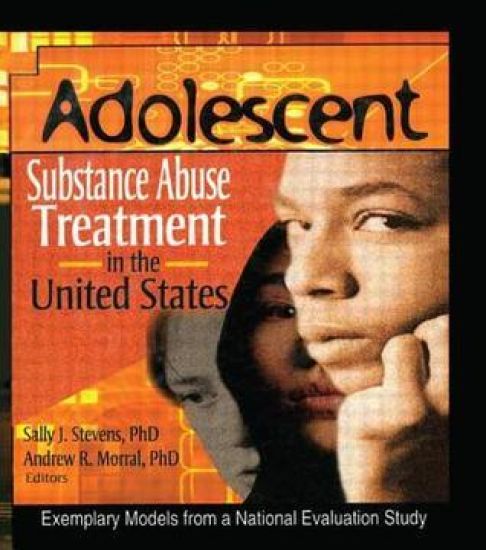
You don’t have to reinvent the wheel--select and implement an effective substance abuse program from this essential book!This essential book is the first ever published on exemplary models of adolescent drug treatment. It delivers detailed descriptions of exemplary drug treatment models and gives you the latest information on substance use and its consequences to aid your work with adolescents who use alcohol and drugs.The in-depth examinations of treatment models you’ll find in this book include programs serving adolescent substance users from a wide range of ethnic and cultural backgrounds (African Americans, Hispanics, Whites, Native Americans, Russian Immigrants). With sections covering outpatient, residential, family-oriented, and modified therapeutic community (TC) programs, this book is a vital reference for educators and students as well as practitioners.Adolescent Substance Abuse Treatment in the United States: Exemplary Models from a National Evaluation Study gives you thoughtful examinations of: trends in adolescent substance use and treatment approaches three exemplary outpatient treatment programs, including program design, treatment issues, and client characteristics the Multidimensional Family Therapy Approach (MDFT), a family-oriented outpatient treatment model used to intervene with younger adolescents a 30- to 60-day residential treatment program that is based on a medical model which blends in treatment approaches from the therapeutic community model the special treatment needs and issues of substance-using Native American youths issues of gender differences as they relate to drug use and trauma three different modified therapeutic community treatment models and much more!Adolescent Substance Abuse Treatment in the United States is an invaluable source of information for anyone working with this vulnerable population. Use it to choose and implement the program that will work best for you and your clients!
R.J.S.Stevens was an organist, composer and singer, active in late eighteenth- and early nineteenth-century London. His Recollections give a fascinating glimpse of the life of an ordinary musician as he went about his daily business serving as a church organist, singing glees - occasionally with the Prince of Wales - and teaching. They show how the events of his time bore, or failed to bear, on the lives of ordinary people, and present an entertaining insider's view of the famous musical institutions of London, including the Anacreontic Society, whose club song is now The Star-Spangled Banner, the national anthem of the USA.
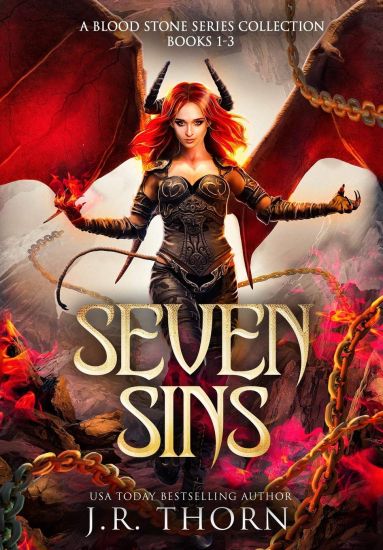
What does a fallen angel, a vampire, and a sexy bodyguard have in common?They're the carriers of the seven deadly sins-and it's my job to conquer them.I don't take shit from anybody, and that's what has gotten me through life so far. My mother's dead. My brother struck a deal with the Incubus King that gets me in all sorts of trouble, and my dreams are plagued by a black fog of death that's determined to hunt me down.Seems like destiny has finally caught up with me, and she's a bitch.If I want to survive what's coming next, I'm going to have to face this darkness I've been running from all my life. Hell isn't a terror locked in my dreams. It's real, and I'm going to need to find my mates to conquer it, starting with the sin of lust-my favorite.Turns out being the long-lost Queen of Hell has its perks.Seven Sins is a complete 3-book Fast-Burn Paranormal Reverse Harem collection ready to be devoured. This edition comes with a bonus scene not available anywhere else at the end of the book. Content includes violence, mature sexual scenes, F/F, F/F/M, F/M... you get the idea. (Sonya's a succubus, what can I say?)
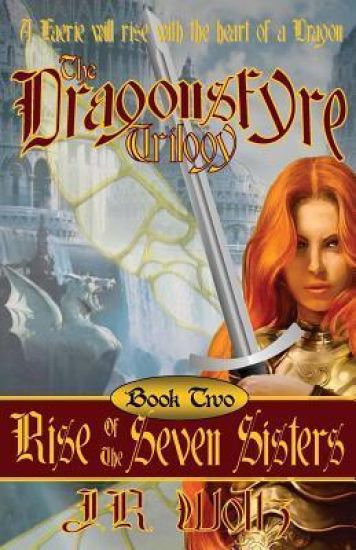
Know, ye now, the power of Magick Sir Geoffrey Valhurst has disappeared, the High Magick is rapidly vanishing from the land, and an even greater threat looms as strange, new, menacing creatures appear throughout the kingdoms of Victrial and Scotia. With one Faerie slain, her sisters must rally as they prepare for battle without the use of their enchanted abilities. Can the Knight-Cavalier be found? Can Victrial's ally, Scotia be saved? Most of all, will she, the greatest of the Fei, be somehow resurrected to fight against the growing threat as the epitome of evil, Darcelumbra the Vain, continues her savage reign of terror in a quest for nothing less than the destruction of the entire cosmos....and so, the saga continues as the greatest adventure fantasy of our generation forges on. Now, from the creative mind of J. R. Woltz, comes the second chapter in one of the most original and compelling stories of epic fantasy ever written. Contained within these pages are the metaphor and the allegory of a history long-since lost to the mists of time and legend. The story that is the Dragonsfyre Trilogy is one of courage, love, and renewed hope amid the chaos of a spiritual and benevolent world rapidly turning to evil. It is, in the end, a desperate message for our own time, as well.
It is 1963 when a half-breed twelve-year-old from Ohio decides to follow through with a daredevil move that leaves him injured and at the bottom of a sand pit. A short time later, after his rescue, the boy recovers in bed-a captive audience to another one of his Grandma Wick's stories. With an Indian smoking pipe firmly wedged between her teeth, Grandma Wick leads the boy back into the 1800's as she spins this fascinating tale about a Shawnee Indian girl and her life with her people. Ciicothe worked as a slave and abolitionist who eventually assimilated into the white world while displaying an unending love for her family. With additional insight from his Grandma Lu, the story ultimately reveals dark, long-held family secrets that include a shocking revelation about the first assassination of a United States president. Ciicothe's Seven Rivers shares the tale of a half-Native American boy whose grandmothers weave the legend of a Shawnee woman that ultimately unveils his lineage and dark family secrets.
What does good theology have to do with good entrepreneurship? In this pioneering work, Richard Goossen and R. Paul Stevens have written what many are already declaring to be the essential resource for Christian entrepreneurial leadership, based on exhaustive research, practical experience and decades of teaching marketplace theology. Entrepreneurial Leadership addresses both the ''how - come'' and the ''how - to, '' not only grounding the entrepreneurial calling in its proper source in the triune God but also providing practical guides for how to be an effective leader. Be inspired to find your calling and to make a difference in the marketplace, church and beyond.
Call centers have come, in the last three decades, to define the interaction between corporations, governments, and other institutions and their respective customers, citizens, and members. The offshoring and outsourcing of call center employment, part of the larger information technology and information-technology-enabled services sectors, continues to be a growing practice amongst governments and corporations in their attempts at controlling costs and providing new services. While incredible advances in technology have permitted the use of distant and "offshore" labor forces, the grander reshaping of an international political economy of communications has allowed for the acceleration of these processes. New and established labor unions have responded to these changes in the global regimes of work by seeking to organize call center workers. These efforts have been assisted by a range of forces, not least of which is the condition of work itself, but also attempts by global union federations to build a bridge between international unionism and local organizing campaigns in the Global South and Global North. Through an examination of trade union interventions in the call center industries located in Canada and India, this book contributes to research on post-industrial employment by using political economy as a juncture between development studies, the sociology of work, and labor studies.
Wendell Berry's poetry, fiction, and essays persistently ask the question: How can we live meaningful lives in a consumer-driven, fragmented age? His honest search for health in the midst of disease has garnered attention and discussion in both conservative and progressive circles. Wendell Berry and the Cultivation of Life thoroughly examines Berry's main themes of community, place, and conservation. It offers an apology for the power of Berry's vision and the ways in which his account of the world resonates with the biblical narrative. Pastors, students, professors, and laity will discover in this book how to flesh out Berry's worldview and foster a culture of life in their neighborhoods, churches, and schools.
What does good theology have to do with good entrepreneurship? In this pioneering work, Richard Goossen and R. Paul Stevens have written what many are already declaring to be the essential resource for Christian entrepreneurial leadership, based on exhaustive research, practical experience and decades of teaching marketplace theology. Entrepreneurial Leadership addresses both the "how-come" and the "how-to," not only grounding the entrepreneurial calling in its proper source in the triune God but also providing practical guides for how to be an effective leader. Be inspired to find your calling and to make a difference in the marketplace, church and beyond.
Adequate and reliable emergency and standby power is essential for all water and wastewater utilities. This book provides guidance to Assess the vulnerability, condition, and reliability of primary electrical equipmentEvaluate options for on-site electrical-generating equipmentAssess placement locations to facilitate integration with the existing electrical systemsDetermine current and historical electrical load demands and estimate future electrical demandsDetermine backup-power capacity needed to meet peak demandTable of Contents IntroductionHistoryAn Overview of Emergency and Standby PowerDefining Water and Wastewater Utility NeedsRisk Factors and Scenario PlanningPlanning, Evaluation, and DesignConclusionAppendices: Standby Power Information Checklist Survey Questions Emergency Response Scenario Planning Case Studies Cleveland Division of Water: Lessons Learned Emergency Preparedness Checklist