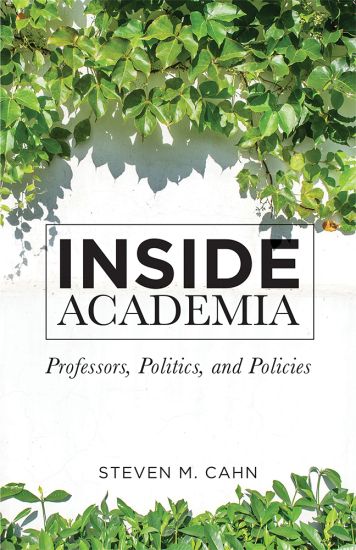
Drawing on decades of experience as a renowned teacher, advisor, administrator, and philosopher, Steven M. Cahn diagnoses problems plaguing America’s universities and offers his prescriptions for improvement. He explores numerous aspects of academic life, including the education of graduate students, the quality of teaching, the design of liberal arts curricula, and the procedures for appointing faculty and considering them for tenure. Inside Academia uses real cases to illustrate how faculty members, deans, and provosts often do not serve the best interests of schools or students. Yet the book also highlights efforts of those who have committed themselves and their institutions to the pursuit of academic excellence.
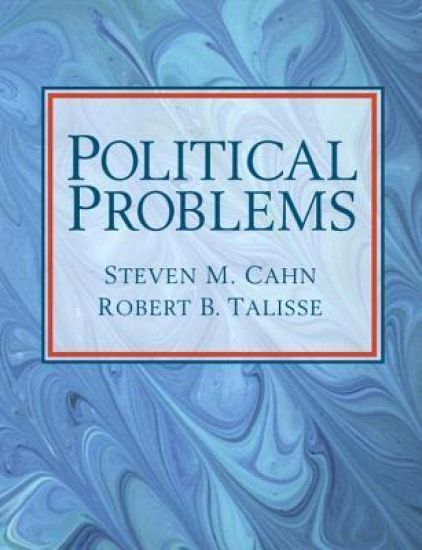
This anthology is intended to be used in Political Philosophy courses. It focuses on contemporary political problems, and it is intended to be paired with any of the numerous readers which are dedicated to the history of political philosophy. History, theory, and political problems are the three pillars of the political philosophy course. However, while the anthologies on the history of political philosophy are numerous, there are relatively few sources (and even fewer single sources) that focus on contemporary political problems. This book fills that gap, with the leading contemporary positions on school vouchers, government support for the arts, pornography, same sex marriage, drug legalization, gun control, terrorism, torture, capital punishment, affirmative action, Immigration, and the environment.
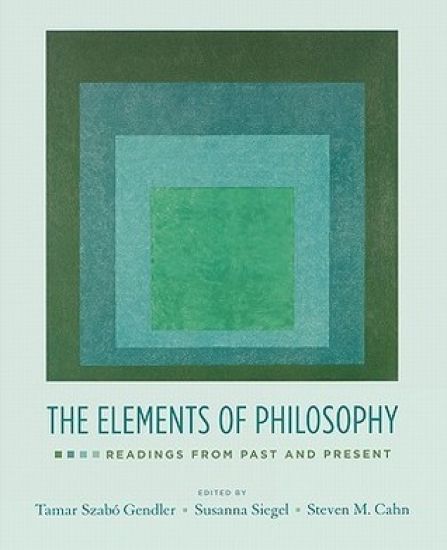
The Elements of Philosophy: Readings from Past and Present is a comprehensive collection of historical and contemporary readings across the major fields of philosophy. With depth and quality, this introductory anthology offers a selection of readings that is both extensive and expansive; the readings span twenty-five centuries. They are organized topically into five parts: Religion and Belief, Moral and Political Philosophy, Metaphysics and Epistemology, Philosophy of Mind and Language, and Life and Death. The product of the collaboration of three highly respected scholars in their fields - Tamar Szabó Gendler, Susanna Siegel, and Steven M. Cahn - The Elements of Philosophy also includes introductions from the editors, explanatory footnotes, and a glossary.
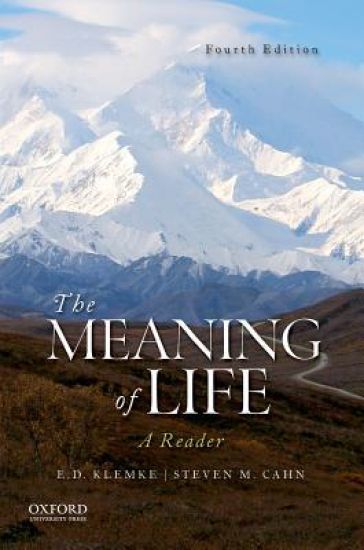
The Meaning of Life is the preeminent anthology on the topic. Featuring twenty-five insightful selections by prominent philosophers, it serves as an ideal core text for courses on the meaning of life and introduction to philosophy courses where the topic is emphasized. In Part I the articles defend the view that without faith in God, life has no meaning or purpose. In Part II the selections oppose this claim, defending instead a nontheistic, humanistic alternative—that life can have meaning even in the absence of theistic commitment. In Part III the readings address whether the question of the meaning of life is itself meaningful. A new Part IV on the end of life raises issues about how understanding death affects our understanding of the meaning of life.
In der Sozialen Arbeit verbirgt sich hinter dem Terminus "Multiperspektive Fallarbeit" ein spezifisches Handlungskonzept. Die komplexe Struktur sozialpadagogischer Problemstellungen erschliesst sich danach nur in multiperspektivischer Betrachtung. Mit ganz unterschiedlichen Zugangen gilt es, fur den Fall angemessene Forder- und Lernangebote, personliche und rechtliche Unterstutzung bzw. Hilfen und Therapien auszugestalten. Dieses Zusammenspiel macht das Buch anhand des Hilfeverlaufs eines konkreten Jugendhilfefalls deutlich. Der Junge, um den es dabei geht, weist Merkmale von Sucht, Vernachlassigung, Misshandlung, Delinquenz und nicht zuletzt einer zerissenen Familie mit offenen Konflikten auf. Zu diesem konkreten Fall entwerfen Fachautoren Hilfsangebote z.B. aus der Perspektive der Kinder- und Jugendpsychotherapie und -medizin, der Fruhkind- und Schulpadagogik, des Jugendamts bzw. der Sozialen Arbeit und des Strafrechts.
The must-read summary of Steven M. Gillon's book: "The Kennedy Assassination - 24 Hours After: Lyndon B. Johnson's Pivotal First Day as President". This complete summary of "The Kennedy Assassination - 24 Hours After" by Steven M. Gillon, a prominent American historian, outlines his examination of the transfer of powers to Lyndon B. Johnson 24 hours after the John F. Kennedy's assassination. He sheds new light on the events and explores how Johnson's actions immediately following Kennedy's assassinations had already determined the tragic outcome of his presidency.Added-value of this summary: - Save time- Understand Johnson's consolidation of power following Kennedy's assassination- Expand your knowledge of American politics and history To learn more, read "The Kennedy Assassination - 24 Hours After" and discover how Lyndon B. Johnson went about consolidating his presidential power in the hours following Kennedy's assassination and how this determined the unfortunate outcome of his presidency.
Over the past decade, there has been rapid growth in bioengineering applications in the field of spine implants. Spine Technology Handbook explains the technical foundation for understanding and expanding the field of spine implants, reviews the major established technologies related to spine implants, and provides reference material for developing and commercializing new spine implants. The editors, who have a track record of collaboration and editing technical books, provide a unified approach to this topic in the most comprehensive and useful book to date.
The Science of Animal Growth and Meat Technology, Second Edition, combines fundamental science- based and applied, practical concepts relating to the prenatal and postnatal growth of cattle, sheep and pigs. It provides the necessary components to understand the production and growth of livestock for safe and quality meat products and presents an understanding of the principles of meat science and technology that is needed to understand the meat industry. Information on the slaughter process of animals, muscle structure and meat tenderness, meat quality, meat safety, and microbiology makes this a valuable self-study reference for students and professionals entering the field.
France has been considered the pre-eminent nation of the petit bourgeois, yet fascism had only limited appeal there. This book will significantly revise our understanding of the petit bourgeoisie's own perception of its political interests. In the course of examining the rise and fall of the French artisans' political movement from the turn of the century to the 1960s, Zdatny uncovers the reasons for the French petit bourgeoisie's failure to embrace fascism, in contrast to their counterparts in other European countries.
The Berlin Jewish community was both the pioneer in intellectual modernization and the first to experience a crisis of modernity. This original and imaginative book connects intellectual and political transformation with the social structures and daily activities of the Jewish community. Steven M. Lowenstein has used extraordinarily rich documentation about the life of Berlin Jewry in the period and assembled a collective biography of the entire community of Berlin Jews. He has examined tax lists, subscription lists, genealogical records, and address lists as well as kosher meat accounts to give us a vivid picture of daily life. On another level in detailing the complexity of Jewish life in Berlin during this period, this book illuminates the connections between the "peaceful stage" of enlightenment and the crisis that followed.
Designed for both the practicing choral director and the choral methods student, this is a compact and comprehensive overview of the many teaching methods, strategies, materials, and assessments available for choral sight-singing instruction. Sight-singing is an important, if sometimes neglected, facet of choral music education that often inspires fear and uncertainty in student and teacher alike. Written in an accessible style, this book takes the mystery out of teaching music reading Topics covered include the history of sight-singing pedagogy and research, prominent methods and materials, and practical strategies for teaching and assessment. This is the only book to provide such a wealth of information under one cover and will become an essential part of every choral conductor's library.
Here, in one compact volume, is an illuminating survey of Jewish folkways on five continents. Filled with fascinating facts and keen insights, The Jewish Cultural Tapestry is a richly woven fabric that vividly captures the diversity of Jewish life. All traditional Jews are bound together by the common thread of the Torah and the Talmud, notes author Steven Lowenstein, but this thread takes on a different coloration in different parts of the world as Jewish tradition and local non-Jewish customs intertwine. Lowenstein describes these widely varying regional Jewish cultures with needlepoint accuracy, highlighting the often surprising similarities between Jewish and non-Jewish local traditions, and revealing why Jewish customs vary as much as they do from region to region. From Europe to India, Israel to America, The Jewish Cultural Tapestry offers an engaging overview of the customs and folkways of a people united by tradition, yet scattered to the far corners of the earth.
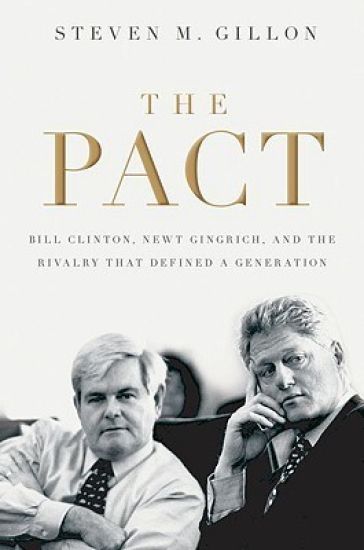
Most Americans saw President Bill Clinton and Speaker Newt Gingrich as staunch foes--"the polar extremes of Pennsylvania Avenue." But as Steven Gillon reveals in The Pact, these powerful adversaries formed a secret alliance in 1997, a pact that would have rocked the political landscape, had it not foundered in the wake of the Lewinsky scandal. A fascinating look at politics American-style, The Pact offers a riveting account of two of America's most charismatic and influential leaders, detailing both their differences and their striking similarities, and highlighting the profound and lasting impact the tumultuous 1960s had on both their personal and political lives. With the cooperation of both President Clinton and Speaker Gingrich, interviews with key players who have never before spoken about their experiences, along with unprecedented access to Gingrich's private papers, Gillon not only offers a behind-the-scenes look at the budget impasse and the government shutdown in 1995 - the famous face-off between Clinton and Gingrich - but he also reveals how the two moved closer together after 1996 - closer than anyone knew. In particular, the book illuminates their secret efforts to abandon the liberal and conservative wings of their own parties and strike a bi-partisan deal to reform the "third rail of American politics"-Social Security and Medicare. That potentially groundbreaking effort was swept away by the highly charged reaction to the Lewinsky affair, ending an initiative that might have transformed millions of American lives. Packed with compelling new revelations about two of the most powerful and intriguing figures of our time, this book will be must reading for everyone interested in politics or current events.
Physical organic chemistry is a modern scientific subdiscipline whose reach is pervasive throughout chemistry, underpinning every academic and industrial synthetic process. All current organic chemistry textbooks rest upon the foundations of physical organic chemistry, and all of them rely on the concept of reaction mechanism as the means for understanding organic reactions. Yet many outside of the discipline either fear the topic or know nothing about it at all. The perceived difficulty of the subject of organic chemistry often prevents consideration of how the methods of organic chemists, their process of asking questions, devising tests, and building models, can be translated into other disciplines. In Thinking Like a Physical Organic Chemist, Professor Steven M. Bachrach uses analogies and colorful examples to provide experts and nonexperts alike with an alternative way of thinking about organic chemistry. He highlights a number of reaction mechanisms, walking through the important experiments that they rest upon, with an emphasis on the rules and logic systems that organic chemists have built to understand and predict reaction outcomes.
The landscapes of Madagascar have long delighted zoologists, who have discovered, in and among the island's baobad trees and thickets, a dizzying array of animals, including something approaching one hundred species of lemur. Madagascar's mammal fauna, for example, is far more diverse, and more endemic, than early explorers and naturalists ever dreamed of. But in the 2,500 or so years since the arrival of the island's first human settlers, the vast majority of its forests have disappeared, and in the wake of this loss a number of species unique to Madagascar have vanished forever into extinction. In Extinct Madagascar, noted scientists Steven M. Goodman and William L. Jungers explore the recent past of these land animal extinctions. Beginning with an introduction to the geologic and ecological history of Madagascar that provides context for the evolution, diversification, and, in some cases, rapid decline of the Malagasy fauna, Goodman and Jungers then seek to recapture these extinct mammals in their environs. Aided in their quest by artist Velizar Simeonovski's beautiful and haunting paintings - images of both individual species and ecosystem assemblages reproduced here in full color - Goodman and Jungers reconstruct the lives of these lost animals and trace their relationships to those still living. Published in conjunction with an exhibition of Simeonovski's paintings set to open at the Field Museum, Chicago, in the fall of 2014, Goodman and Jungers' awe-inspiring book will serve not only as a sobering reminder of the very real threat of extinction, but also as a stunning tribute to Madagascar's biodiversity and a catalyst for further research and conservation.
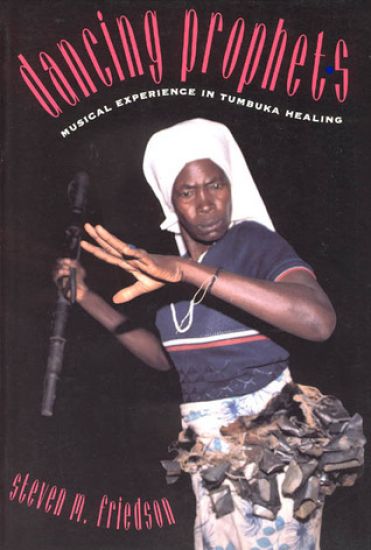
For the Tumbuka people of Malawi, traditional medical practices are filled with music. This ethnography explores a health care system populated by dancing prophets, singing patients and drummed spirits. Tumbuka healers diagnose diseases by enacting divination trances in which they "see" the causes of past events and their consequences for patients. Music is the structural nexus where healer, patient, and spirit meet - it is the energizing heat that fuels the trance, transforming both the bodily and social functioning of the individual. Friedson shows how the sound of the ng'oma drum, the clapping of the choir, call-and-response singing and the jangle of tin belts and iron anklets do not simply accompany other more important ritual activities - they are the very substance of a sacred clinical reality. This analysis of the relation between music and mental and biological health should interest medical anthropologists, Africanists, and religious scholars as well as ethnomusicologists.
For the Tumbuka people of Malawi, traditional medical practices are filled with music. This ethnography explores a health care system populated by dancing prophets, singing patients and drummed spirits. Tumbuka healers diagnose diseases by enacting divination trances in which they "see" the causes of past events and their consequences for patients. Music is the structural nexus where healer, patient, and spirit meet - it is the energizing heat that fuels the trance, transforming both the bodily and social functioning of the individual. Friedson shows how the sound of the ng'oma drum, the clapping of the choir, call-and-response singing and the jangle of tin belts and iron anklets do not simply accompany other more important ritual activities - they are the very substance of a sacred clinical reality. This analysis of the relation between music and mental and biological health should interest medical anthropologists, Africanists, and religious scholars as well as ethnomusicologists.
"Remains of Ritual", Steven M. Friedson's second book on the critical role of music in African ritual, focuses on the Brekete/Gorovodu religion of the Ewe people. Friedson analyzes their practices through a historical and ethnographic study of one of the dominant ritual sites on the southern coast of Ghana: a medicine shrine whose origins lie in the northern region of the country. In each chapter of this fascinating book, Friedson considers a different facet of the Ewe's religious practices, demonstrating throughout that none of them can be conceived of separately from their musicality - in the Brekete world music functions as ritual, and ritual as music. Dance and possession, chanted calls to prayer, animal sacrifice, the sounds and movements of wake keeping, and the play of the drums all come under Friedson's careful scrutiny, and he ends with a thoughtful reflection on his own position and experiences within this ritual-dominated society.Bridging the disciplinary divide between ethnomusicology and anthropology, "Remains of Ritual" will be warmly welcomed by scholars from both camps as well as anyone interested in African culture, music, or religion.
"Remains of Ritual", Steven M. Friedson's second book on the critical role of music in African ritual, focuses on the Brekete/Gorovodu religion of the Ewe people. Friedson analyzes their practices through a historical and ethnographic study of one of the dominant ritual sites on the southern coast of Ghana: a medicine shrine whose origins lie in the northern region of the country. In each chapter of this fascinating book, Friedson considers a different facet of the Ewe's religious practices, demonstrating throughout that none of them can be conceived of separately from their musicality - in the Brekete world music functions as ritual, and ritual as music. Dance and possession, chanted calls to prayer, animal sacrifice, the sounds and movements of wake keeping, and the play of the drums all come under Friedson's careful scrutiny, and he ends with a thoughtful reflection on his own position and experiences within this ritual-dominated society.Bridging the disciplinary divide between ethnomusicology and anthropology, "Remains of Ritual" will be warmly welcomed by scholars from both camps as well as anyone interested in African culture, music, or religion.
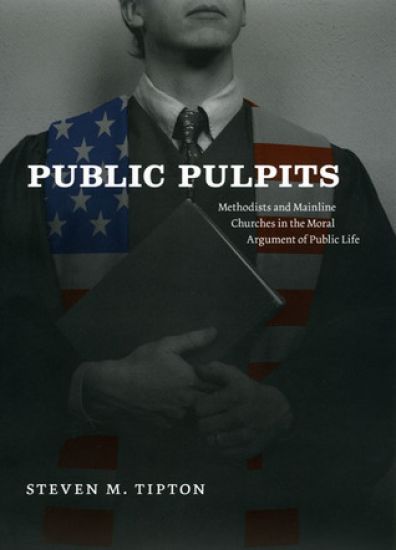
Since the 2000 presidential election, debate over the role of religion in public life has followed a narrow course as pundits and politicians alike have focused on the influence wielded by conservative Christians. But what about more mainstream Christians? Here, Steven M. Tipton examines the political activities of Methodists and mainline churches in this groundbreaking investigation into a generation of denominational strife among church officials, lobbyists, and activists. The result is an unusually detailed and thoughtful account that upends common stereotypes while asking searching questions about the contested relationship between church and state. Documenting a wide range of reactions to two radically different events - the invasion of Iraq and the creation of the faith-based initiatives program - Tipton charts the new terrain of religious and moral argument under the Bush administration from Pat Robertson to Jim Wallis. He then turns to the case of the United Methodist Church, of which President Bush is a member, to uncover the twentieth-century history of their political advocacy, culminating in current threats to split the Church between liberal peace-and-justice activists and crusaders for evangelical renewal. "Public Pulpits" balances the firsthand drama of this internal account with a meditative exploration of the wider social impact that mainline churches have had in a time of diverging fortunes and diminished dreams of progress. An eminently fair-minded and ethically astute analysis of how churches keep moral issues alive in politics, "Public Pulpits" delves deep into mainline Protestant efforts to enlarge civic conscience and cast clearer light on the commonweal and offers a masterly overview of public religion in America.