Kirjojen hintavertailu. Mukana 11 244 527 kirjaa ja 12 kauppaa.

Kirjahaku

Etsi kirjoja tekijän nimen, kirjan nimen tai ISBN:n perusteella.

1000 tulosta hakusanalla Stuart A. Cohen

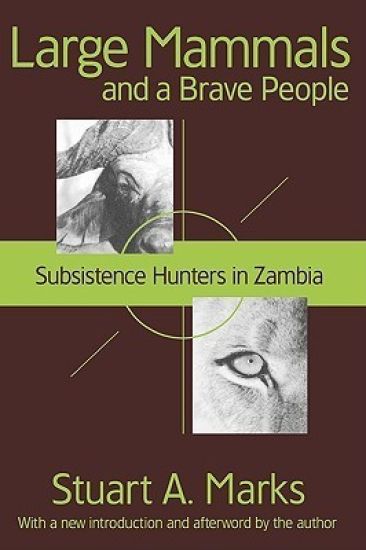
Large Mammals and a Brave People

Large Mammals and a Brave People

Stuart A. Marks

AldineTransaction
2005
nidottu
The Valley Bisa people inhabit the Luangwa Valley in central Zambia. Among them, the hunter, who tracks such large game as the lion, elephant, and buffalo, commands great respect and esteem from the other members of the lineage who traditionally rely on him for their subsistence and protection. Although the social organization and technology of the Bisa people have undergone tremendous change in the last one hundred years, the role of hunter retains its social importance, and the legitimizing hunting rituals have their roots in local history. Drawing on data collected during his fieldwork among the Bisa continuing since the 1960s, Stuart Marks describes the changes that have occurred in hunting patterns, the sociological variables that govern an individual's decision to become a hunter, and the common cosmological convictions that hunters bring to their profession. Available for the first time in paperback, the new introduction and afterword to this edition reflect on methodological and ideological changes in the anthropological study of African peoples as well as updating the circumstances of the Bisa people since the book's first appearance in 1976. Through the interventions of the larger national society the Bisa have lost much of their land and access to important portions of their resources while experiencing repression in their struggles to maintain livelihoods with what local assets are left. Nevertheless, Marks notes that they face their hardships with tolerance, integrity, persistence, and humility. The general reader, as well as prehistorians and anthropologists concerned with human evolution and hunting societies, will find this volume useful. It will also be of interest to wildlife managers and ecologists.

Professor Galindez: Disappearing from Earth: Governments, Complicity, and How a Kidnapping in the Midst of American Democracy Went Unsolve
On March 12, 1956 Jes s de Gal ndez, a Basque nationalist, Columbia University professor, and critic of Dominican dictator Rafael Trujillo, was kidnapped in New York and flown secretly to the Dominican Republic, where he disappeared. Although the case stimulated widespread press coverage, it remained shrouded in mystery for decades until the publication of this book, which unravels the complicated roles of the Dominican and US governments, as well as the FBI, the CIA and some NY police officers, in the affairs.
A Time of War

A Time of War

Murray Stuart A. P.

Countryman Press Inc.
2004
nidottu
Stuart Murray draws upon Berkshire County, Massachusetts diaries, letters, newspapers, military reports, church journals, and gravestones to tell the stories of the black Union soldiers drawn from New England factories and farms, and comprising the 54th Regiment. Here the reader will encounter Medal of Honor winners, Confederate generals, women volunteers, prisoners of war, leading abolitionists, pacifists, shopkeepers, poets, writers, artists, politicians, and a host of others, all contributing to a vivid portraits of the horrors and glories of the Civil War.
A Third Window

A Third Window

Robert W. Ulanowicz; Stuart A. Kauffman

Templeton Foundation Press,U.S.
2009
pokkari
Thus far, the dominant paradigms through which modern scientists have viewed nature have been structured primarily around Newtonian and Darwinian approaches. As theoretical ecologist Robert E. Ulanowicz observes in his new work, A Third Window, neither of these models is sufficient for explaining how real change-in the form of creative advance or emergence-takes place in nature. The metaphysical foundations laid by these great thinkers centuries ago are ill suited to sustain today's search for a comprehensive description of complex living systems. Ecosystem dynamics, for example, violate each and every one of the Newtonian presuppositions. Hence, Ulanowicz offers his titular "third window"-a new way of understanding evolution and other natural processes beyond the common mechanistic or materialistic philosophies of nature. Drawing on the writings of Walter Elsasser, Karl Popper, Gregory Bateson, Robert Rosen, and Alfred North Whitehead, as well as his own experience as a theoretical ecologist, Ulanowicz offers a new set of axioms for how nature behaves. Chance and disarray in natural processes are shown to be necessary conditions for real change. Randomness is shown to contribute richness and autonomy to the natural world. The metaphysical implications of these new axioms will lend A Third Window a wide appeal not only among scientists, but also among philosophers, theologians, and general readers who follow the science and religion dialogue. Ulanowicz's fresh perspective adds a new voice to the discussion.
Religious Fundamentalism In The Middle East: A Cross-national, Inter-faith, And Inter-ethnic Analysis
In Religious Fundamentalism in the Middle East, Moaddel and Karabenick analyse fundamentalist beliefs and attitudes across nations (Egypt, Iran, Lebanon and Saudi Arabia), faith (Christianity, Islam) and ethnicity (Azari-Turks, Kurds and Persians among Iranians), using comparative survey data. The authors' analysis reveals a 'cycle of spirituality' that reinforces the critical importance of taking historical and cultural contexts into consideration to understand the role of religious fundamentalism in contemporary Middle Eastern societies.
Eye to Eye Volume 3: Becoming a More Relaxed and Effective Parent

Eye to Eye Volume 3: Becoming a More Relaxed and Effective Parent

Gloria J. Walther; Stuart A. Lichtman

Createspace Independent Publishing Platform
2014
nidottu
Parenting is not only the most important job you'll ever have, it can be both the most challenging and most rewarding one, too. It seems that for most people, parenting is like a combination of immense joy combined with bouts of feeling overwhelmed, jolts of panicky "How do I handle this?" and occasional intellectual boredom ("I really miss the interaction with my friends at work..."). The purpose of Eye to Eye Volume Three is to show you how to sharply increase your joy and ease while sharply reducing the overwhelm, the panicky not-knowing how and any intellectual boredom that may arise while parenting. Eye to Eye Volumes One, Two and the forthcoming Volume Four present Gloria's advice. In contrast, Volume Three presents my proven ways of sharply increasing the ease, effectiveness and joy of your parenting. Among other key skills I'll teach you is how to change what I call your Blockers - your Self-Defeating Unconscious Habit Patterns, into self-supporting ones. Blockers that many parents frequently encounter include such things as: -Feeling overwhelmed. -Feeling exhausted. -Feeling like you don't have any time for yourself. -Not knowing how to handle a situation. -Finding it hard to balance your work as a parent with your paying job. -Feeling like you're not doing a good enough job as a parent. -Actually putting to work what you know will work when you're challenged. -Feeling like your relationship with your parenting partner has somehow gotten lost or diminished. -Missing intellectual stimulation. Do you encounter any of these in parenting your child? If so, which is most difficult for you to handle? Would you like to learn to rapidly and permanently change these Blockers into ease, effectiveness, bountiful energy and plenty of time for yourself and your relationship?
Traitors Among Us

Traitors Among Us

Stuart a Herrington

Mariner Books
2000
pokkari
As director of the elite Foreign Counterintelligence Activity, author Stuart Herrington was the U.S. Army's top counterintelligence officer. In this thrilling and informative account he details one of the most damaging and delicate cases of espionage ever committed against the United States. Between 1972 and 1988, thousands of highly classified documents were sold to the Soviet Union and her Warsaw pact surrogates. They were secrets so sensitive that had war broken out in Central Europe, our ability to defend our NATO allies would have been seriously compromised. It was up to Herrington and his team to root out the elusive spy ring responsible for this treachery. An intriguing page-turner with more twists and turns than a spy novel, Traitors Among Us guides us through the intricate spy catcher's world of Cold War Berlin, showing us how the "game" was played when the stakes were as high as national survival.
Believing in Magic: The Psychology of Superstition

Believing in Magic: The Psychology of Superstition

Stuart A. Vyse

Oxford University Press, USA
1997
sidottu
Although we live in a technologically advanced society, superstition is as widespread as it has ever been. Far from limited to athletes and actors, superstitious beliefs are common among people of all occupations and every educational and income level. Here, Stuart Vyse investigates our proclivity towards these irrational beliefs. Superstitions, he writes, are the natural result of several well-understood psychological processes, including our human sensitivity to coincidence, a penchant for developing rituals to fill time (to battle nerves, impatience, or both), our efforts to cope with uncertainty, the need for control, and more. Vyse examines current behavioral research to demonstrate how complex and paradoxical human behavior can be understood through scientific investigation, while he addresses the personality features associated with superstition and the roles of superstitious beliefs in actions. Although superstition is a normal part of human culture, Vyse argues that wemust provide alternative methods of coping with life's uncertainties by teaching decision analysis, promoting science education, and challenging ourselves to critically evaluate the sources of our beliefs.
The Origins of Order

The Origins of Order

Stuart A. Kauffman

Oxford University Press Inc
1993
nidottu
In what will certainly be one of the key works in the emerging science of complexity, Kauffman here presents a brilliant new paradigm for evolutionary biology. It extends the basic concepts of Darwinian evolution to accommodate recent findings and perspectives from the fields of biology, physics, chemistry, and mathematics. The book drives to the heart of the exciting debate on the origins of life and maintenance of order in complex biological systems. It focuses on the concept of self-organization - the first time this concept has been incorporated into evolutionary theory. The book shows how complex systems, contrary to expectations, can spontaneously exhibit stunning degrees of order, and how this order in turn is essential for the emergence and development of life on Earth. Origins of Order will advance our understanding of evolution and provoke considerable discussion among evolutionary, molecular, and developmental biologists.
Storming Zion

Storming Zion

Stuart A. Wright; Susan J. Palmer

Oxford University Press Inc
2016
sidottu
While scholars, media, and the public may be aware of a few extraordinary government raids on religious communities, such as the U.S. federal raid on the Branch Davidians in 1993, very few people are aware of the scope and frequency with which these raids occur. Following the Texas state raid on the Fundamentalist Church of Latter-day Saints in 2008, authors Stuart Wright and Susan Palmer decided to study these raids in the aggregate--rather than as individual cases--by collecting data on raids that have taken place over the last six decades. They did this both to establish for the first time an archive of raided groups, and to determine if any patterns could be identified. Even they were surprised at their findings; there were far more raids than expected, and the vast majority of them had occurred since 1990, reflecting a sharp, almost exponential increase. What could account for this sudden and dramatic increase in state control of minority religions? In Storming Zion, Wright and Palmer argue that the increased use of these high-risk and extreme types of enforcement corresponds to expanded organization and initiatives by opponents of unconventional religions. Anti-cult organizations provide strategic "frames" that define potential conflicts or problems in a given community as inherently dangerous, and construct narratives that draw on stereotypes of child and sexual abuse, brainwashing, and even mass suicide. The targeted group is made to appear more dangerous than it is, resulting in an overreaction by authorities. Wright and Palmer explore the implications of heightened state repression and control of minority religions in an increasingly multicultural, globalized world. At a time of rapidly shifting demographics within Western societies this book cautions against state control of marginalized groups and offers insight about why the responses to these groups is often so reactionary.
Storming Zion

Storming Zion

Stuart A. Wright; Susan J. Palmer

Oxford University Press Inc
2016
nidottu
While scholars, media, and the public may be aware of a few extraordinary government raids on religious communities, such as the U.S. federal raid on the Branch Davidians in 1993, very few people are aware of the scope and frequency with which these raids occur. Following the Texas state raid on the Fundamentalist Church of Latter-day Saints in 2008, authors Stuart Wright and Susan Palmer decided to study these raids in the aggregate--rather than as individual cases--by collecting data on raids that have taken place over the last six decades. They did this both to establish for the first time an archive of raided groups, and to determine if any patterns could be identified. Even they were surprised at their findings; there were far more raids than expected, and the vast majority of them had occurred since 1990, reflecting a sharp, almost exponential increase. What could account for this sudden and dramatic increase in state control of minority religions? In Storming Zion, Wright and Palmer argue that the increased use of these high-risk and extreme types of enforcement corresponds to expanded organization and initiatives by opponents of unconventional religions. Anti-cult organizations provide strategic "frames" that define potential conflicts or problems in a given community as inherently dangerous, and construct narratives that draw on stereotypes of child and sexual abuse, brainwashing, and even mass suicide. The targeted group is made to appear more dangerous than it is, resulting in an overreaction by authorities. Wright and Palmer explore the implications of heightened state repression and control of minority religions in an increasingly multicultural, globalized world. At a time of rapidly shifting demographics within Western societies this book cautions against state control of marginalized groups and offers insight about why the responses to these groups is often so reactionary.
Believing in Magic

Believing in Magic

Stuart A. Vyse

Oxford University Press Inc
2013
nidottu
While we live in a technologically and scientifically advanced age, superstition is as widespread as ever. Not limited to just athletes and actors, superstitious beliefs are common among people of all occupations, educational backgrounds, and income levels. In this fully updated edition of Believing in Magic, renowned superstition expert Stuart Vyse investigates our tendency towards these irrational beliefs. Superstitions, he writes, are the natural result of several psychological processes, including our human sensitivity to coincidence, a penchant for developing rituals to fill time (to battle nerves, impatience, or both), our efforts to cope with uncertainty, the need for control, and more. In a new Introduction, Vyse discusses important developments and the latest research on jinxes, paranormal beliefs, and luck. He also distinguishes superstition from paranormal and religious beliefs and identifies the potential benefits of superstition for believers. He examines the research to demonstrate how we can better understand complex human behavior. Although superstition is a normal part of our culture, Vyse argues that we must provide alternative methods of coping with life's uncertainties by teaching decision analysis, promoting science education, and challenging ourselves to critically evaluate the sources of our beliefs.
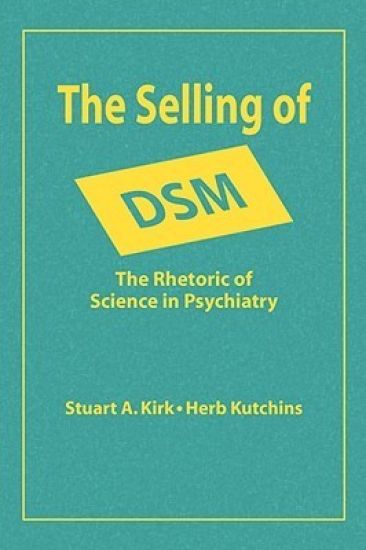
The Selling of DSM

The Selling of DSM

Stuart A. Kirk

AldineTransaction
1992
sidottu
When it was first published in 1980, the Diagnostic and Statistical Manual of Mental Disorders, Third Edition—univer-sally known as DSM-III—embodied a radical new method for identifying psychiatric illness. Kirk and Kutchins challenge the general understanding about the research data and the pro-cess that led to the peer acceptance of DSM-III. Their original and controversial reconstruction of that moment concen-trates on how a small group of researchers interpreted their findings about a specific problem—psychiatric reliability—to promote their beliefs about mental illness and to challenge the then-dominant Freudian paradigm.
The Selling of DSM

The Selling of DSM

Stuart A. Kirk

AldineTransaction
1992
nidottu
When it was first published in 1980, the Diagnostic and Statistical Manual of Mental Disorders, Third Edition—univer-sally known as DSM-III—embodied a radical new method for identifying psychiatric illness. Kirk and Kutchins challenge the general understanding about the research data and the pro-cess that led to the peer acceptance of DSM-III. Their original and controversial reconstruction of that moment concen-trates on how a small group of researchers interpreted their findings about a specific problem—psychiatric reliability—to promote their beliefs about mental illness and to challenge the then-dominant Freudian paradigm.
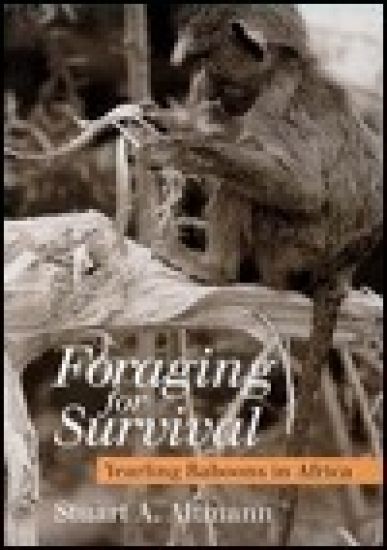
Foraging for Survival

Foraging for Survival

Stuart A. Altmann

University of Chicago Press
1998
sidottu
This text presents the results of a research project carried out on foraging behaviour among African baboons and its consequences for survival and reproduction. Detailed data is provided on the feeding habits of each baboon, with an analysis of its nutrient intake. These figures are then compared with those in optimum diets. The most striking result of this study is that the baboon's subsequent survival and reproductive success could be accurately predicted from what they had eaten as yearlings. The animals with energy intakes closest to the optimum and protein intakes furthest above their requirements were most likely to survive to adulthood and to successfully produce offspring.
Foraging for Survival

Foraging for Survival

Stuart A. Altmann

University of Chicago Press
2000
nidottu
This text presents the results of a research project carried out on foraging behaviour among African baboons and its consequences for survival and reproduction. Detailed data is provided on the feeding habits of each baboon, with an analysis of its nutrient intake. These figures are then compared with those in optimum diets. The most striking result of this study is that the baboon's subsequent survival and reproductive success could be accurately predicted from what they had eaten as yearlings. The animals with energy intakes closest to the optimum and protein intakes furthest above their requirements were most likely to survive to adulthood and to successfully produce offspring.
Institutional Literacies

Institutional Literacies

Stuart A. Selber

University of Chicago Press
2020
sidottu
Information technologies have become an integral part of writing and communication courses, shaping the ways students and teachers think about and do their work. But, too often, teachers and other educational stakeholders take a passive or simply reactive role in institutional approaches to technologies, and this means they are missing out on the chance to make positive changes in their departments and on campus.Institutional Literacies argues that writing and communication teachers and program directors should collaborate more closely and engage more deeply with IT staff as technology projects are planned, implemented, and expanded. Teachers need to both analyze how their institutions approach information technologies and intervene in productive ways as active university citizens with relevant expertise. To help them do so, the book offers a three-part heuristic, reflecting the reality that academic IT units are complex and multilayered, with historical, spatial, and textual dimensions. It discusses six ways teachers can intervene in the academic IT work of their own institutions: maintaining awareness, using systems and services, mediating for audiences, participating as user advocates, working as designers, and partnering as researchers. With these strategies in hand, educators can be proactive in helping institutional IT approaches align with the professional values and practices of writing and communication programs.