""A History of Sino-Russian Relations"" by Cheng, Tien Fong is a comprehensive exploration of the complex and often tumultuous relationship between China and Russia. The book traces the history of this relationship from the early interactions between the two countries in the 17th century to the present day, examining the political, economic, and cultural factors that have shaped their interactions over time.The book covers a wide range of topics, including the impact of the Mongol Empire on both China and Russia, the role of the two countries in the Cold War, and the recent efforts to strengthen economic ties between the two nations. It also delves into the cultural exchanges between China and Russia, including the influence of Russian literature on Chinese writers and the exchange of artistic and musical traditions.Throughout the book, Cheng provides a balanced and nuanced analysis of the relationship between China and Russia, highlighting the areas of cooperation and conflict that have characterized their interactions over the centuries. He also explores the implications of this relationship for global politics, including the impact of China's rise as a global superpower and Russia's efforts to assert its influence on the world stage.Overall, ""A History of Sino-Russian Relations"" is an essential read for anyone interested in understanding the complex dynamics of this important relationship, and the broader implications for global politics and international relations.This scarce antiquarian book is a facsimile reprint of the old original and may contain some imperfections such as library marks and notations. Because we believe this work is culturally important, we have made it available as part of our commitment for protecting, preserving, and promoting the world's literature in affordable, high quality, modern editions, that are true to their original work.
This book provides a general survey of Geocryology, which is the study of frozen ground called permafrost. Frozen ground is the product of cold climates as well as a variety of environmental factors. Its major characteristic is the accumulation of large quantities of ice which may exceed 90% by volume. Soil water changing to ice results in ground heaving, while thawing of this ice produces ground subsidence often accompanied by soil flowage. Permafrost is very susceptible to changes in weather and climate as well as to changes in the microenvironment. Cold weather produces contraction of the ground, resulting in cracking of the soil as well as breakup of concrete, rock, etc. Thus permafrost regions have unique landforms and processes not found in warmer lands.The book is divided into three parts. Part 1 provides an introduction to the characteristics of permafrost. Four chapters deal with its definition and characteristics, the unique processes operating there, the factors affecting it, and its general distribution. Part 2 consists of seven chapters describing the characteristic landforms unique to these areas and the processes involved in their formation. Part 3 discusses the special problems encountered by engineers in construction projects including settlements, roads and railways, the oil and gas industry, mining, and the agricultural and forest industries. The three authors represent three countries and three language groups, and together have over 120 years of experience of working in permafrost areas throughout the world. The book contains over 300 illustrations and photographs, and includes an extensive bibliography in order to introduce the interested reader to the large current literature.Finalist of the 2019 PROSE Awards.
Stuart Butler; Jade Bremner; Kate Chapman; Piera Chen; Megan Eaves; Daisy Harper; Damian Harper; Trent Holden; Tess Humphrys; Stephen Lioy; Vesna Maric; Tom Masters; Bradley Mayhew; Daniel McCrohan; Thomas O'Malley; Lorna Parkes; Christopher Pitts; Tom Spurling; Phillip Tang
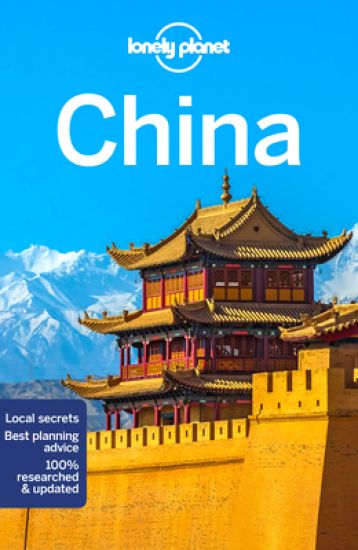
Lonely Planet’s China is your passport to the most relevant, up-to-date advice on what to see and skip, and what hidden discoveries await you. Explore Beijing’s Forbidden City, climb the Great Wall, and discover sacred Lhasa; all with your trusted travel companion. Get to the heart of China and begin your journey now! Inside Lonely Planet’s China Travel Guide: Up-to-date information - all businesses were rechecked before publication to ensure they are still open after 2020’s COVID-19 outbreak NEW top experiences feature - a visually inspiring collection of China’s best experiences and where to have them What's NEW feature taps into cultural trends and helps you find fresh ideas and cool new areas NEW pull-out, passport-size 'Just Landed' card with wi-fi, ATM and transport info - all you need for a smooth journey from airport to hotel Improved planning tools for family travellers - where to go, how to save money, plus fun stuff just for kids Colour maps and images throughout Highlights and itineraries help you tailor your trip to your personal needs and interests Insider tips to save time and money and get around like a local, avoiding crowds and trouble spots Essential info at your fingertips - hours of operation, websites, transit tips, prices Honest reviews for all budgets - eating, sleeping, sightseeing, going out, shopping, hidden gems that most guidebooks miss Cultural insights give you a richer, more rewarding travel experience - history, people, music, landscapes, wildlife, cuisine, politics Over 195 maps Covers Beijing, Tianjin & Hebei,Liaoning, Jilin, Shandong, Jiangsu, Shanghai, Zhejiang, Fujian, Shanxi, Anhui, Henan, Hubei, Jiangxi, Hunan, Hong Kong, Macau, Guangdong, Hainan, Guangxi, Guizhou, Yunnan, Sichuan, Chongqing, Xinjiang, Gansu, Ningxia, Inner Mongolia, Qinghai, Tibet The Perfect Choice: Lonely Planet’s China, our most comprehensive guide to China, is perfect for both exploring top sights and taking roads less travelled. Looking for just the highlights? Check out Pocket Beijing, a handy-sized guide focused on the can't-miss sights for a quick trip. About Lonely Planet: Lonely Planet is a leading travel media company, providing both inspiring and trustworthy information for every kind of traveller since 1973. Over the past four decades, we've printed over 145 million guidebooks and phrasebooks for 120 languages, and grown a dedicated, passionate global community of travellers. You'll also find our content online, and in mobile apps, videos, 14 languages, armchair and lifestyle books, ebooks, and more, enabling you to explore every day. 'Lonely Planet guides are, quite simply, like no other.' – New York Times 'Lonely Planet. It's on everyone's bookshelves; it's in every traveller's hands. It's on mobile phones. It's on the Internet. It's everywhere, and it's telling entire generations of people how to travel the world.' – Fairfax Media (Australia)
This book investigates the intersection of terrorism, digital technologies and cyberspace. The evolving field of cyber-terrorism research is dominated by single-perspective, technological, political, or sociological texts. In contrast, Terrorism Online uses a multi-disciplinary framework to provide a broader introduction to debates and developments that have largely been conducted in isolation. Drawing together key academics from a range of disciplinary fields, including Computer Science, Engineering, Social Psychology, International Relations, Law and Politics, the volume focuses on three broad themes: 1) how – and why – do terrorists engage with the Internet, digital technologies and cyberspace?; 2) what threat do these various activities pose, and to whom?; 3) how might these activities be prevented, deterred or addressed? Exploring these themes, the book engages with a range of contemporary case studies and different forms of terrorism: from lone-actor terrorists and protest activities associated with ‘hacktivist’ groups to state-based terrorism. Through the book’s engagement with questions of law, politics, technology and beyond, the volume offers a holistic approach to cyberterrorism which provides a unique and invaluable contribution to this subject matter. This book will be of great interest to students of cybersecurity, security studies, terrorism and International Relations.
Simon Richmond; Morgan Awyong; Austin Bush; Jayne D'Arcy; David Eimer; Mark Eveleigh; Marco Ferrarese; Michael Grosberg; Paul Harding; Nick Ray; Sarah Reid; Kara Santos; Cheng Sim; Aydan Stuart; Barbara Woolsey; Ria de Jong
Lonely Planet Southeast Asia on a Shoestring is your passport to having big experiences on a small budget, offering the most relevant, up-to-date advice on what to see and skip, what hidden discoveries await you and how to optimise your budget for an extended continental trip. Explore Hoi An; discover the Temples of Angkor; surf in Bali; and more. Inside Lonely Planet Southeast Asia on a Shoestring Travel Guide:Budget-oriented recommendations with honest reviews - eating, sleeping, sight-seeing, going out, hidden gems that most guidebooks missExtensive planning tools and budget calculatorsHighlights and 1-3 month itineraries help you tailor your trip to your personal needs and interestsInsider tips to save time and money and get around like a local, avoiding crowds and trouble spotsEssential info at your fingertips - hours of operation, phone numbers, websites, transit tips, pricesCultural insights give you a richer, more rewarding travel experience - history, art, literature, cinema, landscapesColour maps and images throughoutCovers: Brunei Darussalam; Cambodia; Indonesia; Laos; Malaysia; Myanmar (Burma); Philippines; Singapore; Thailand; Timor-leste; VietnamUseful features:First Time Southeast Asia, Big Adventures Small Budget, Off the Beaten Track, Border Crossing, Splurge, and Responsible Travel The Perfect Choice: Lonely Planet Southeast Asia on a Shoestring, is perfect for staying within a budget when taking a longer, multi-country trip, yet still getting to connect with the cultures and explore both top sights and roads less travelled. Looking for suggestions from a wider range of prices for a shorter, multi-country trip? Check out Lonely Planet Southeast Asia for a comprehensive look at all the continent has to offer. About Lonely Planet:Lonely Planet, a Red Ventures Company, is the world's number one travel guidebook brand. Providing both inspiring and trustworthy information for every kind of traveller since 1973, Lonely Planet reaches hundreds of millions of travellers each year online and in print and helps them unlock amazing experiences. Visit us at lonelyplanet.com and join our community of followers on Facebook (facebook.com/lonelyplanet), Twitter (@lonelyplanet), Instagram (instagram.com/lonelyplanet), and TikTok (@lonelyplanet). 'Lonely Planet. It's on everyone's bookshelves; it's in every traveller's hands. It's on mobile phones. It's on the Internet. It's everywhere, and it's telling entire generations of people how to travel the world.' Fairfax Media (Australia)
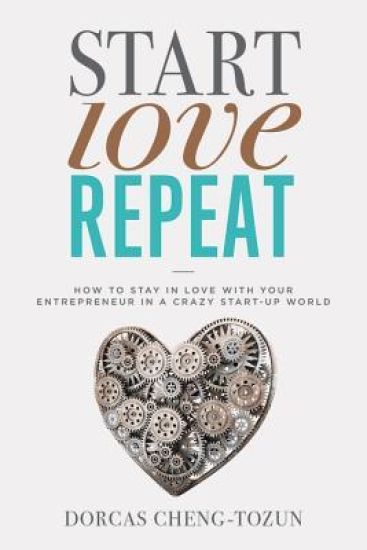
A prescriptive guide to how to launch your own business without sacrificing your personal life.The idea of starting your own business is both exhilarating and inspiring. It's one over 30 million Americans pursue. Some create innovative new products, others may aspire to develop a brilliant idea into a bestselling app, make a custom jewelry business a full-time career, or just be their own boss. But being the significant other of an entrepreneur is not so glamorous. Suddenly, there is no longer a clear boundary between your partner's home life and work life, personal finances become entwined with the finances of the company, you may be asked to relocate to another country for the sake of the business, or find yourself feeling like a single parent as your spouse travels, works late hours, and answers the call of the business 24-7. START, LOVE, REPEAT will help new and long-term entrepreneurial partners understand exactly how a start-up will affect their own lives-and what they can do to build a happy and healthy relationship in the midst of the madness. Married to the cofounder of the successful start-up d.light design, Dorcas Cheng-Tozun has lived through the perils and pitfalls of being married to an entrepreneur and has realistic, first-hand advice for any couple considering making the same leap. She also draws on research and interviews with other successful entrepreneurs, executive coaches, marriage family therapists, venture capitalists, and start-up authorities to offer practical insights and advice.
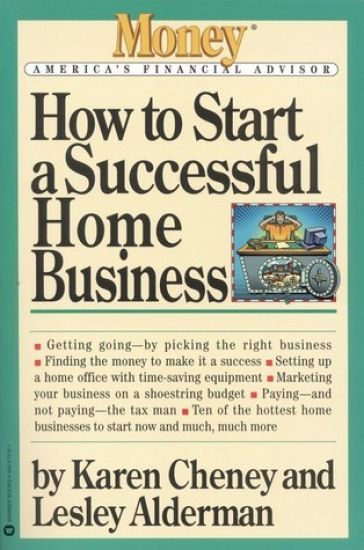
With computer, fax machines, and other technologies becoming commonplace, more and more people are running businesses from their homes and making a good living in the process. "Money" has been tracking the trend, and, in this new guide, two of the magazine's writers explain how to turn a hobby into a business, find money to start, create a winning business plan, manage cash flow, write great press releases, find low-cost health insurance and safeguard retirement, and much more.
â??Stuart does not like the manuscript. Heâ??s after a bestseller, â??like what Tom Clancy writesâ?. â??But you are not an assassin trying to frazzle the president with anthrax bombs,â? I point out. You are an ex-homeless, ex-junkie psychopath, I do not add.â??
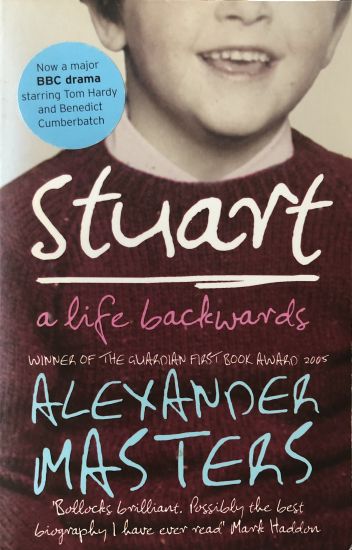
The winner of the Guardian First Book Award that reinvented the biographic form. One of the ten books – novels, memoirs and one very unusual biography – that make up our Matchbook Classics’ series, a stunningly redesigned collection of some of the best loved titles on our backlist. Stuart: A Life Backwards expanded the possibilities of what a biography could be: the stories it could tell, and how it could tell them. It is about a remarkable friendship between a reclusive writer (‘a middle-class scum ponce, if you want to be honest about it, Alexander’), and Stuart Shorter, a thief, hostage-taker, psycho and street raconteur. Told backwards – Stuart’s idea – it starts with a deeply troubled thirty-two-year-old stepping out in front of the 11.15 train from London to King’s Lynn, and ends with a ‘happy-go-lucky little boy’ of twelve. Compelling, humane and funny, it is as extraordinary and unexpected as the life it describes.
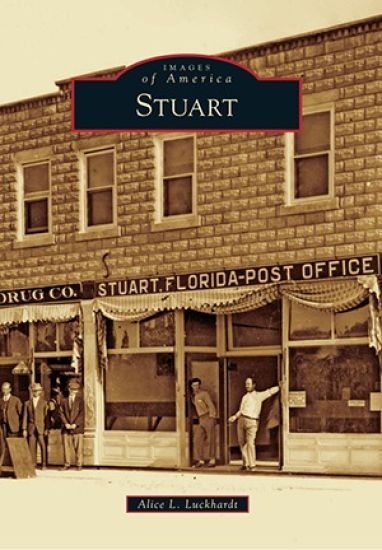
Explore the life and early times of Stuart, Florida through the lens of vintage images.On the southeast coast of Florida in the 1880s, a quaint little community was nestled along the tranquil waters of the St. Lucie River in a wilderness of tropical beauty, one of the region's last frontiers. As lucrative pineapple crops and the commercial fishing industry began to flourish, trade boats brought necessary supplies, and new settlers arrived on river steamers. With land available for homesteading or for sale at $1.25 an acre, the small village soon to be known as Stuart would become a mecca for innovative, hardworking young men seeking business and financial opportunities. By the dawn of the 20th century, the railroad had been established, and the town, forged by the fortitude of early pioneers, thrived, eventually becoming a beautiful, friendly incorporated city.
On the southeast coast of Florida in the 1880s, a quaint little community was nestled along the tranquil waters of the St. Lucie River in a wilderness of tropical beauty, one of the region s last frontiers. As lucrative pineapple crops and the commercial fishing industry began to flourish, trade boats brought necessary supplies, and new settlers arrived on river steamers. With land available for homesteading or for sale at $1.25 an acre, the small village soon to be known as Stuart would become a mecca for innovative, hardworking young men seeking business and financial opportunities. By the dawn of the 20th century, the railroad had been established, and the town, forged by the fortitude of early pioneers, thrived, eventually becoming a beautiful, friendly incorporated city."