Manual of Mythology - Greek and Roman, Norse, and Old German, Hindoo and Egyptian Mythology is an unchanged, high-quality reprint of the original edition of 1875. Hansebooks is editor of the literature on different topic areas such as research and science, travel and expeditions, cooking and nutrition, medicine, and other genres. As a publisher we focus on the preservation of historical literature. Many works of historical writers and scientists are available today as antiques only. Hansebooks newly publishes these books and contributes to the preservation of literature which has become rare and historical knowledge for the future.
One of the most articulate and biblically grounded voices of the Radical Reformation, Peter Riedemann was only twenty-three when he penned this impassioned confession of faith in the gloom of a sixteenth-century Austrian dungeon. Already a noted Anabaptist leader, Riedemann called fellow persecuted Christians to witness to a love that, “when it really burns, having kindled our eagerness for God, the more temptations and tribulations meet it, the more it flares, until it overcomes and consumes all injustice and wickedness.” A classic testament to religious liberty with a timely message for modern believers, Love Is Like Fire serves as a striking reminder of the spirit that fired the hearts of early “heretics” during the Reformation. A first translation into English, this book is an important addition to the small but growing number of primary sources on early Anabaptism.
Once used exclusively by bodybuilders other athletes, steroids are now primarily consumed by men who want to look better. Steroids and the Growing Crisis of Male Body Image aims to introduce laypeople, clinicians, and academics to a better and more modern understanding of steroids and the men who use them. This informative new resource discusses the history of steroids, the stigma and stereotypes surrounding use, the role of steroids in the realm of eating disorder behavior, muscle dysmorphia, connections between steroid use and masculinity, as well as ideas for clinical and population-level interventions to help body dissatisfied men who are or have considered using steroids.
Once used exclusively by bodybuilders other athletes, steroids are now primarily consumed by men who want to look better. Steroids and the Growing Crisis of Male Body Image aims to introduce laypeople, clinicians, and academics to a better and more modern understanding of steroids and the men who use them. This informative new resource discusses the history of steroids, the stigma and stereotypes surrounding use, the role of steroids in the realm of eating disorder behavior, muscle dysmorphia, connections between steroid use and masculinity, as well as ideas for clinical and population-level interventions to help body dissatisfied men who are or have considered using steroids.
Classrooms are continuously becoming harder places to work. There are discipline and engagement challenges, a relentless pace, high expectations, and so much to cover. The Cycle of Authentic Relevant Engagement (C.A.R.E.) is a simple, proven experiential learning method that will develop your ability to turn everything around and make you a superstar Through the proof of over 400 research studies, we can point to C.A.R.E. as a motivating, engaging learning method that erases most discipline problems and engages students and teachers on an adventurous learning journey Use the same curriculum you use today. Include important competencies in your students' learning - like critical thinking, collaboration, creativity, grit, and self-direction - and, do it all in an authentic, place-based experience. C.A.R.E. is adaptable and it is useful in every grade of schooling, including colleges, universities, alternate schooling, and business settings. This book will guide you to become confident and in control of a powerful experiential learning method that really makes a difference. We all know that education needs to change, especially when we see that world-wide only 34% of students who are still in school in their final grades are actually fully engaged with their schooling. This is a monumental loss of learning that can be rectified, and C.A.R.E. is your first step in helping us all turn this situation around. Don't wait for someone to tell you what the next great direction in education is; show them. C.A.R.E. is real, it is powerful, and we are sincere. Visit us at our website, read the book, and join the C.A.R.E. community. Sincerely, Agnes, Stuart, and Ross
Once the political centre of Lower Egypt, the city of Tanis was in ruins by the time pioneering archaeologist W. M. Flinders Petrie (1853–1942) arrived in the late nineteenth century. He recruited more than a hundred workers from nearby settlements to help with his excavations there. Now reissued together, these two reports of Petrie's discoveries were originally published separately in 1885 and 1888. His colleague Francis Llewellyn Griffith (1862–1934) contributes epigraphic analysis and translations. Each report contains much illustrative content, such as maps and photographs of the sites as well as drawings of the finds and hieroglyphic inscriptions. The 1888 publication also covers work carried out at Nebesheh and Defenneh, neither of which had been previously studied by archaeologists. Alexander Stuart Murray (1841–1904) discusses the important discoveries of painted vases at the latter site. Many of Petrie's other Egyptological publications are also reissued in this series.
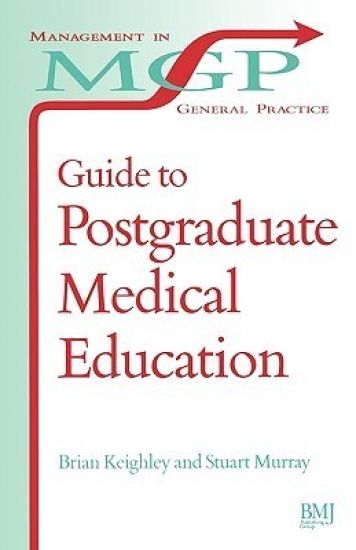
this unique book gives necessary advice and information to anyone considering further career development and education in general practice and to those confused by the new methods of continuing medical education being proposed
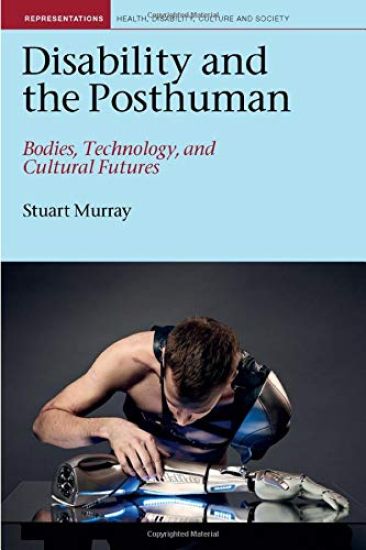
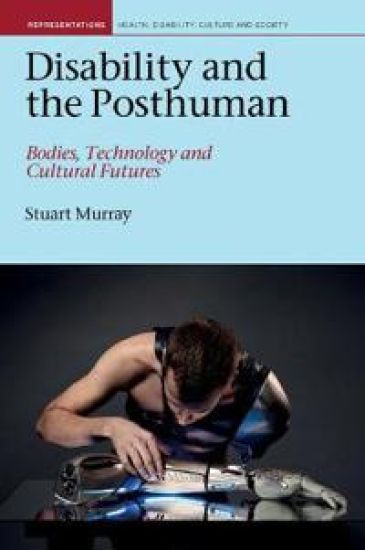
An Open Access edition of this book is available on the Liverpool University Press website and through Knowledge Unlatched.Disability and the Posthuman is the first study to analyse cultural representations and deployments of disability as they interact with posthumanist theories of technology and embodiment. Working across a wide range of texts, many new to critical enquiry, in contemporary writing, film and cultural practice from North America, Europe, the Middle East and Japan, it covers a diverse range of topics, including: contemporary cultural theory and aesthetics; design, engineering and gender; the visualisation of prosthetic technologies in the representation of war and conflict; and depictions of work, time and sleep. While noting the potential limitations of posthumanist assessments of the technologized body, the study argues that there are exciting, productive possibilities and subversive potentials in the dialogue between disability and posthumanism as they generate dissident crossings of cultural spaces. Such intersections cover both fictional/imagined and material/grounded examples of disability and look to a future in which the development of technology and complex embodiment of disability presence align to produce sustainable yet radical creative and critical voices.
An Open Access edition of this book is available on the Liverpool University Press website and through Knowledge Unlatched.Disability and the Posthuman is the first study to analyse cultural representations and deployments of disability as they interact with posthumanist theories of technology and embodiment. Working across a wide range of texts, many new to critical enquiry, in contemporary writing, film and cultural practice from North America, Europe, the Middle East and Japan, it covers a diverse range of topics, including: contemporary cultural theory and aesthetics; design, engineering and gender; the visualisation of prosthetic technologies in the representation of war and conflict; and depictions of work, time and sleep. While noting the potential limitations of posthumanist assessments of the technologized body, the study argues that there are exciting, productive possibilities and subversive potentials in the dialogue between disability and posthumanism as they generate dissident crossings of cultural spaces. Such intersections cover both fictional/imagined and material/grounded examples of disability and look to a future in which the development of technology and complex embodiment of disability presence align to produce sustainable yet radical creative and critical voices.
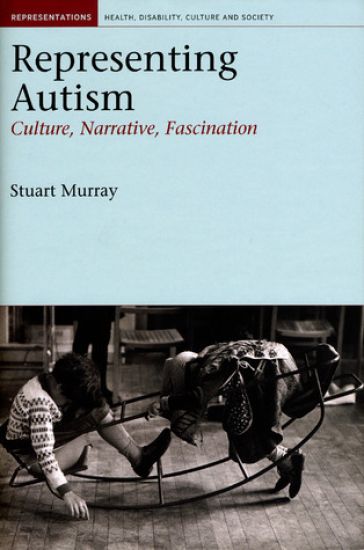
From concerns of an ‘autism epidemic’ to the MMR vaccine crisis, autism is a source of peculiar fascination in the contemporary media. Discussion of the condition has been largely framed within medicine, psychiatry and education but there has been no exploration of its power within representative narrative forms. Representing Autism is the first book to tackle this approach, using contemporary fiction and memoir writing, film, photography, drama and documentary together with older texts to set the contemporary fascination with autism in context. Representing Autism analyses and evaluates the place of autism within contemporary culture and at the same time examines the ideas of individual and community produced by people with autism themselves to establish the ideas of autistic presence that emerge from within a space of cognitive exceptionality. Central to the book is a sense of the legitimacy of autistic presence as a way by which we might more fully articulate what it means to be human.
From concerns of an ‘autism epidemic’ to the MMR vaccine crisis, autism is a source of peculiar fascination in the contemporary media. Discussion of the condition has been largely framed within medicine, psychiatry and education but there has been no exploration of its power within representative narrative forms. Representing Autism is the first book to tackle this approach, using contemporary fiction and memoir writing, film, photography, drama and documentary together with older texts to set the contemporary fascination with autism in context. Representing Autism analyses and evaluates the place of autism within contemporary culture and at the same time examines the ideas of individual and community produced by people with autism themselves to establish the ideas of autistic presence that emerge from within a space of cognitive exceptionality. Central to the book is a sense of the legitimacy of autistic presence as a way by which we might more fully articulate what it means to be human.
Stuart Murray draws upon Berkshire County, Massachusetts diaries, letters, newspapers, military reports, church journals, and gravestones to tell the stories of the black Union soldiers drawn from New England factories and farms, and comprising the 54th Regiment. Here the reader will encounter Medal of Honor winners, Confederate generals, women volunteers, prisoners of war, leading abolitionists, pacifists, shopkeepers, poets, writers, artists, politicians, and a host of others, all contributing to a vivid portraits of the horrors and glories of the Civil War.
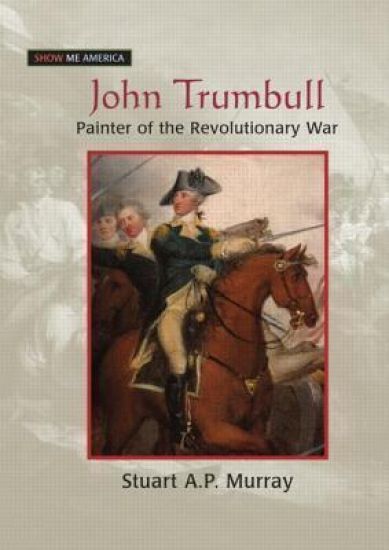
John Trumbull's sweeping historical paintings of battle scenes of the American Revolution hang in the United States Capitol in Washington, D.C., for all to see. This patriot-artist painted lifelike portraits of George Washington, Thomas Jefferson, and Benjamin Franklin, and he traveled around the country to capture realistic likenesses of the other Founding Fathers who drafted the Declaration of Independence in 1776.Pore over the landmark work left by this brilliant artist and become acquainted with a man who, despite great adversity, was determined to portray in lush detail the first stirrings of the nation that would become America. The inscription on John Trumbull's memorial fittingly reads: "To his country he gave his sword and pencil."
In a spellbinding account of her two-year teaching stint and travels in China, Woronov provides, through numerous anecdotes, insight into the everyday life of the modern Chinese people. 20 photos.
John Trumbull's sweeping historical paintings of battle scenes of the American Revolution hang in the United States Capitol in Washington, D.C., for all to see. This patriot-artist painted lifelike portraits of George Washington, Thomas Jefferson, and Benjamin Franklin, and he traveled around the country to capture realistic likenesses of the other Founding Fathers who drafted the Declaration of Independence in 1776.Pore over the landmark work left by this brilliant artist and become acquainted with a man who, despite great adversity, was determined to portray in lush detail the first stirrings of the nation that would become America. The inscription on John Trumbull's memorial fittingly reads: "To his country he gave his sword and pencil."
In a spellbinding account of her two-year teaching stint and travels in China, Woronov provides, through numerous anecdotes, insight into the everyday life of the modern Chinese people. 20 photos.
An early submariner, Murray was involved in the construction of the submarine base at Pearl Harbor in the early 1920s. He commanded the submarines USS R-17 (SS-94), L-8 (SS-48), R-13 (SS-90), and S-9 (SS-114). In the 1920s he served in the battleships USS Arkansas (BB-33) and New York (BB-34) and was an instructor at the Naval Academy. In the 1930s he commanded the submarine USS S-44 (SS-155), served at the Portsmouth Navy Yard, commanded the submarine USS Porpoise (SS-172), was damage control officer in the heavy cruiser USS Portland (CA-33), and was a submarine detailer in the Bureau of Navigation. When the Japanese attacked in 1941, Murray was commander of Submarine Division 15 at Manila, participating in the defense of the Philippines and Netherlands East Indies. His next assignment was chief of staff and aide to Commander Submarine Force, Southwest Pacific. In 1943 he became chief of staff to Charles Lockwood, Commander Submarine Force Pacific Fleet. In 1944-45 Murray was Commandant of Midshipmen at the Naval Academy. In the spring of 1945 he took command of the battleship USS Missouri (BB-63), flagship of Admiral William F. "Bull" Halsey Jr., Commander Third Fleet. In Murray's oral history, after relating the ship's wartime activities, including bombardments against Honshu, Hokkaido, and Okinawa, he then provides a marvelously detailed description of the events leading up to and during the Japanese surrender ceremony on board the Missouri on 2 September 1945. In November 1945, as a newly selected rear admiral, he was ordered to Commander Seventh Fleet for duty with the survey for forming the U.S. Advisory Group to China. Subsequent flag billets included the following: 1948-49, Pearl Harbor Naval Base; in 1949-50, Commander Amphibious Training Command Atlantic Fleet; 1950-52, Commander Submarine Force Atlantic Fleet; 1952-54, Commandant of the 14th Naval District in Hawaii; and 1954-56 as Naval Inspector General. He retired from active duty in 1956 and later worked as a consultant for the Rand Corporation.