Kirjojen hintavertailu. Mukana 11 244 527 kirjaa ja 12 kauppaa.

Kirjahaku

Etsi kirjoja tekijän nimen, kirjan nimen tai ISBN:n perusteella.

1000 tulosta hakusanalla Sumit Saxena

Molecular Dynamics Simulation of Nanocomposites using BIOVIA Materials Studio, Lammps and Gromacs
Molecular Dynamics Simulation of Nanocomposites using BIOVIA Materials Studio, Lammps and Gromacs, Second Edition introduces the three major software packages essential for the molecular dynamics simulation of nanocomposites, providing detailed instructions on utilizing each. This content is accompanied by real-world examples that illustrate when each should be applied. Numerous case studies demonstrate how each software package predicts various properties of nanocomposites, encompassing metal-matrix, polymer-matrix, and ceramic-matrix based nanocomposites. Explored properties include mechanical, thermal, optical, and electrical characteristics. This is a valuable resource for students, researchers, and scientists working in the field of molecular dynamics simulation. All chapters have been fully updated to reflect the latest developments in the field, and this new edition has been enriched with additional chapters covering Al composites, machine learning, polymer coatings, and graphene-based materials and carbon nanotubes.
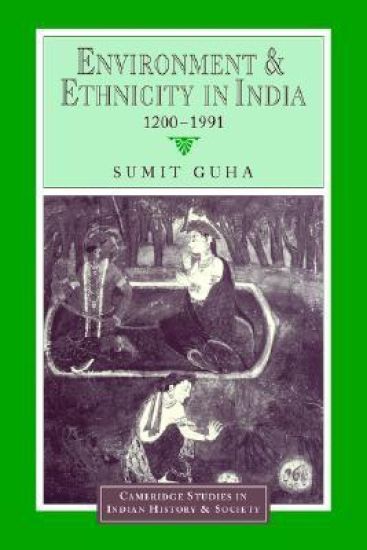
Environment and Ethnicity in India, 1200–1991

Environment and Ethnicity in India, 1200–1991

Sumit Guha

Cambridge University Press
2006
pokkari
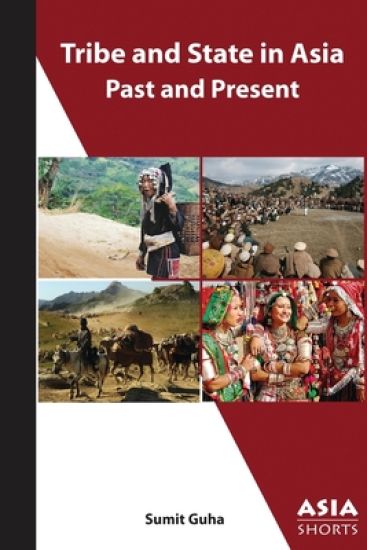
Drawing on a rich collection of sources, Sumit Guha's 1999 book reconstructs the history of the forest communities in western India to explore questions of tribal identity and the environment. In so doing, he demonstrates how the ideology of indigenous cultures, developed out of the notion of a pure and untouched ethnicity, is in fact rooted in nineteenth-century racial and colonial anthropology. As a challenge to this view, the author traces the processes by which the apparently immutable identities of South Asian populations took shape, and how these populations interacted politically, economically and socially with civilizations outside their immediate vicinity. While such theories have been discussed by scholars of South-East Asia and Africa, this study examines the South Asian case. Sumit Guha's penetrating and controversial critique will make a significant contribution to that literature.
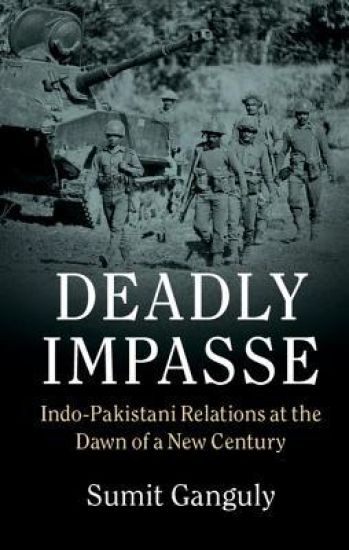
Deadly Impasse

Deadly Impasse

Sumit Ganguly

Cambridge University Press
2016
pokkari
What ails the Indo-Pakistani relationship? Rivalry between the two states has persisted since the partition of the British Indian Empire in 1947, and despite negotiations, four wars and multiple crises, India and Pakistan remain locked in a long-standing dispute. Evaluating relations from 1999 through to 2009, Sumit Ganguly seeks to understand this troubled relationship and why efforts at peace-making and conflict resolution, which have included unilateral Indian concessions, have not been more fruitful. Charting key sources of tension throughout the decade, including the origins and outcomes of the Kargil War in 1999, developments in the Indian-controlled portion of the state of Kashmir, the attack on the Indian parliament in December 2001 and the onset of the 2001–2 crisis, Deadly Impasse sets out to discover whether the roots of this hostile relationship stem from security dilemmas or reflect the dynamics between a status quo power and a predatory state.
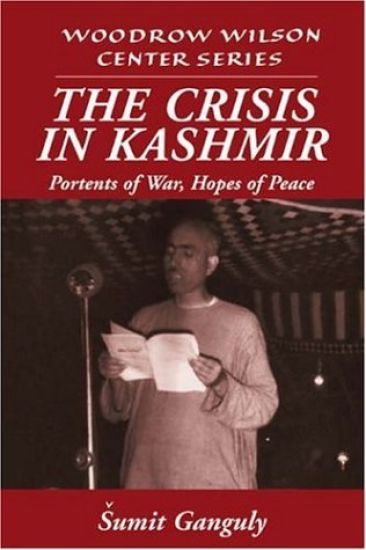
The Crisis in Kashmir

The Crisis in Kashmir

Šumit Ganguly

Cambridge University Press
1997
sidottu
This book traces the origins of the insurgency that has wracked the Indian-controlled portion (about two-thirds) of Jammu and Kashmir since 1989. The most complete, and the first theoretically grounded account, it is based on extensive interviews. Professor Ganguly's central argument is that the insurgency can be explained by the interlinked processes of political mobilisation and institutional decay. In an attempt to woo the citizens of India's only Muslim-majority state, the national government dramatically helped expand literacy, mass media, and higher education in Jammu and Kashmir. These processes produced a generation of Kashmiris who were politically knowledgeable and sophisticated. Simultaneously, the national government in New Delhi, fearful of potential secessionist proclivities amongst the Kashmiris, systematically stultified the development of political institutions in the state. Unable to express dissent in an institutional context, this new generation of Kashmiris resorted to violence.
Environment and Ethnicity in India, 1200–1991

Environment and Ethnicity in India, 1200–1991

Sumit Guha

Cambridge University Press
1999
sidottu
Drawing on a rich collection of sources, Sumit Guha's 1999 book reconstructs the history of the forest communities in western India to explore questions of tribal identity and the environment. In so doing, he demonstrates how the ideology of indigenous cultures, developed out of the notion of a pure and untouched ethnicity, is in fact rooted in nineteenth-century racial and colonial anthropology. As a challenge to this view, the author traces the processes by which the apparently immutable identities of South Asian populations took shape, and how these populations interacted politically, economically and socially with civilizations outside their immediate vicinity. While such theories have been discussed by scholars of South-East Asia and Africa, this study examines the South Asian case. Sumit Guha's penetrating and controversial critique will make a significant contribution to that literature.
The Crisis in Kashmir

The Crisis in Kashmir

Šumit Ganguly

Cambridge University Press
1999
pokkari
This book traces the origins of the insurgency that has wracked the Indian-controlled portion (about two-thirds) of Jammu and Kashmir since 1989. The most complete, and the first theoretically grounded account, it is based on extensive interviews. Professor Ganguly’s central argument is that the insurgency can be explained by the interlinked processes of political mobilisation and institutional decay. In an attempt to woo the citizens of India’s only Muslim-majority state, the national government dramatically helped expand literacy, mass media, and higher education in Jammu and Kashmir. These processes produced a generation of Kashmiris who were politically knowledgeable and sophisticated. Simultaneously, the national government in New Delhi, fearful of potential secessionist proclivities amongst the Kashmiris, systematically stultified the development of political institutions in the state. Unable to express dissent in an institutional context, this new generation of Kashmiris resorted to violence.
India Since 1980

India Since 1980

Sumit Ganguly; Rahul Mukherji

Cambridge University Press
2011
pokkari
This book considers the remarkable transformations that have taken place in India since 1980, a period that began with the assassination of the formidable Prime Minister Indira Gandhi. Her death, and that of her son Rajiv seven years later, marked the end of the Nehru-Gandhi era. Although the country remains one of the few democracies in the developing world, many of the policies instigated by these earlier regimes have been swept away to make room for dramatic alterations in the political, economic and social landscape. Sumit Ganguly and Rahul Mukherji, two leading political scientists of South Asia, chart these developments with particular reference to social and political mobilization, the rise of the BJP and its challenge to Nehruvian secularism and the changes to foreign policy that, in combination with its meteoric economic development, have ensured India a significant place on the world stage.
Deadly Impasse

Deadly Impasse

Sumit Ganguly

Cambridge University Press
2016
sidottu
What ails the Indo-Pakistani relationship? Rivalry between the two states has persisted since the partition of the British Indian Empire in 1947, and despite negotiations, four wars and multiple crises, India and Pakistan remain locked in a long-standing dispute. Evaluating relations from 1999 through to 2009, Sumit Ganguly seeks to understand this troubled relationship and why efforts at peace-making and conflict resolution, which have included unilateral Indian concessions, have not been more fruitful. Charting key sources of tension throughout the decade, including the origins and outcomes of the Kargil War in 1999, developments in the Indian-controlled portion of the state of Kashmir, the attack on the Indian parliament in December 2001 and the onset of the 2001–2 crisis, Deadly Impasse sets out to discover whether the roots of this hostile relationship stem from security dilemmas or reflect the dynamics between a status quo power and a predatory state.
India Since 1980

India Since 1980

Sumit Ganguly; Rahul Mukherji

Cambridge University Press
2011
sidottu
This book considers the remarkable transformations that have taken place in India since 1980, a period that began with the assassination of the formidable Prime Minister Indira Gandhi. Her death, and that of her son Rajiv seven years later, marked the end of the Nehru-Gandhi era. Although the country remains one of the few democracies in the developing world, many of the policies instigated by these earlier regimes have been swept away to make room for dramatic alterations in the political, economic and social landscape. Sumit Ganguly and Rahul Mukherji, two leading political scientists of South Asia, chart these developments with particular reference to social and political mobilization, the rise of the BJP and its challenge to Nehruvian secularism and the changes to foreign policy that, in combination with its meteoric economic development, have ensured India a significant place on the world stage.
Execute the Job Interview

Execute the Job Interview

Sumit Arora

Sumit\Arora
2013
nidottu
JobInterview.exe Ever wondered what all the employees at Google, IBM, Amazon, Microsoft, and Oracle have in common. How did they land jobs at these amazing companies... The secret sauce is their well-informed choices and the art of positioning to the company. The world of IT is not the more the same as early 2000s. The global IT giants such as Google, IBM, Oracle, Microsoft, Amazon etc. have established clear leadership over thousands of other IT companies and have set highest standards of interviewing. That said, the aspiring job seekers need to know what it takes to get though multiple rounds of those intriguing interview sessions. Author of this 700-page book "Execute the Job Interview", provides insider's view on what the world's top IT companies are looking for. He blends his 12 year career with Microsoft, Samsung, Aricent, and 8-year long IT consulting expertise spread across USA, India, China and South Korea. Several sections of this book, as described below, provide the most comprehensive and authentic information on interview preparation: Understanding the candidate ---------------------------- This part provides examples of structured and effective responses to behavioral questions such as self-introduction, skills, job fit, career choices etc., and approach to building strong resumes that attract attention of top recruiters. Proven competencies and skills ------------------------------ This part covers questions asked on past work experience and how the candidate can transfer soft and hard skills to the new job. Problem Solving --------------- This part, which forms bulk of the book, covers two areas: Algorithms - Sorting Approaches, Searching Approaches, Brute-Force Approach, Greedy Approaches, Task Scheduling Algorithm, Huffman Codes, Longest Common Subsequence, Na ve String Matching, Rabin-Karp Algorithm, NP-Completeness Algorithms, Red-Black Trees, B-Trees, Graph Traversals, Hash Tables and much more... Coding - Partition The Array Of Balls, Adding Two N-Bit Binary Integers, Trie Data Structure To Store Words, Algorithm To Do Wild Card String Matching, Compress String, Convert A BST Into A Linked List, N-Ary Tree, Graph's Breadth First Traversal, Shuffling A Deck Of Cards and much more... Lateral thinking ---------------- This part covers abstract open-ended case questions, which require presence of mind and strategic approach to solving problems out of candidate's area of concern. For example, 'How would you design a new browser? 'or 'How will you design a new operating system' or even 'How would you design a railway track?
Mongodb on Aws: Deployment and Administration
Hadoop and big data are ubiquitous words in the data world today. Although less discussed NoSQL databases are critical part of Big Data ecosystem and probably more broadly deployed among big data counterparts. Advent and popularity of cloud computing paltforms like AWS means NoSQL is becoming more readily available to larger audience. This book is an attempt to provide introductory text on deploying Mongodb on AWS. The book covers introduction on key Mongodb concepts using deployment scenarios on Amazon web services. - Each chapter centers around key Mongodb concepts like Replication, sharding, storage and cluster monitoring. - Deployment scenarios illustrated using step by step "cook-book" style approach. - Usage of deployment accelerators like CloudFormation, Mongodb management services (MMS) and cloudWatch. - Pictorial illustration of key concepts. - Discussion on AWS terminology and concepts for Relevant context.
The Kashmir Question

The Kashmir Question

Sumit Ganguly

Routledge
2003
nidottu
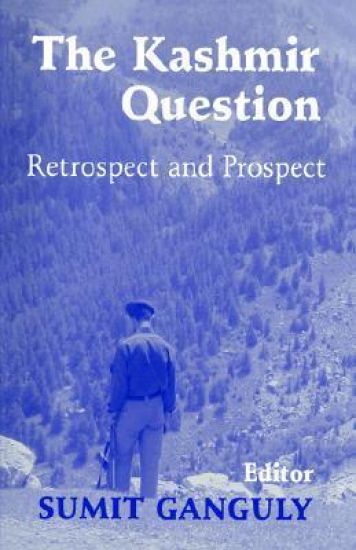
India, which had been created as a civic polity, initially sought to hold on to this Muslim-majority state to demonstrate its secular credentials. Pakistan, in turn, had laid claim to Kashmir because it had been created as the homeland for the Muslims of South Asia. After the break-up of Pakistan in 1971 the Pakistani irredentist claim to Kashmir lost substantial ground. If Pakistan could not cohere on the basis of religion alone it had few moral claims on its co-religionists in Kashmir. Similarly, in the 1980s, as the practice of Indian secularism was eroded, India's claim to Kashmir on the grounds of secularism largely came apart. Today their respective claims to Kashmir are mostly on the basis of statecraft. This title provides a comprehensive assessment of a number of different facets of the on-going dispute over Kashmir between India and Pakistan. Among other matters, it examines the respective endgames of both states, the evolution of American policy toward the dispute, the dangers of nuclear esculation in the region and the state of the insurgency in the Indian-controlled portion of the disputed state.
South Asia

South Asia

Sumit Ganguly

New York University Press
2006
sidottu
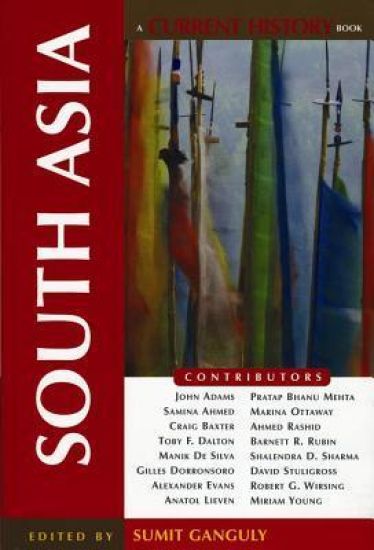
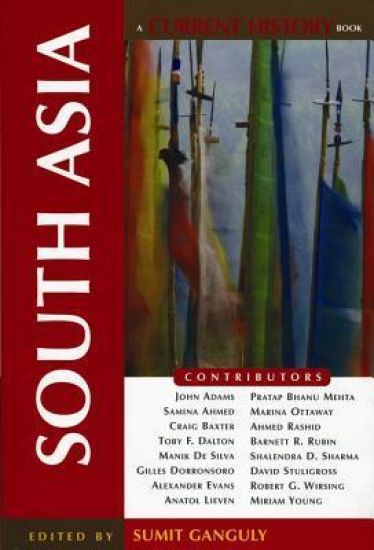
In recent years the world's focus on South Asia has increased dramatically. With the events of 9/11, the detonation of atomic weapons by both India and Pakistan, the discovery of an illicit nuclear proliferation network based in Islamabad, regime change in an unstable Afghanistan, and the rise of India as an economic power, global interest in the region has reached perhaps an all-time high. Leading experts analyze the key strategic, political, and economic issues touching on South Asia and its role in the world in the essays that make up this inaugural volume in the Current History Books Series. Focusing on modern South Asia, including India, Pakistan, Afghanistan, Bangladesh, and Sri Lanka, this authoritative volume provides an overview of the events and trends that have rocked this increasingly volatile region over the past decade. Edited and with an introduction by Sumit Ganguly, a leading expert on the region, this volume provides a critical introduction to South Asia. South Asia also contains current maps as well as a "Recent Chronology of Events" that provides a decade's worth of information on the region, organized by year and by country. This timely and comprehensive collection of essays provides a definitive account of modern South Asia.
South Asia

South Asia

Sumit Ganguly

New York University Press
2006
pokkari
In recent years the world's focus on South Asia has increased dramatically. With the events of 9/11, the detonation of atomic weapons by both India and Pakistan, the discovery of an illicit nuclear proliferation network based in Islamabad, regime change in an unstable Afghanistan, and the rise of India as an economic power, global interest in the region has reached perhaps an all-time high. Leading experts analyze the key strategic, political, and economic issues touching on South Asia and its role in the world in the essays that make up this inaugural volume in the Current History Books Series. Focusing on modern South Asia, including India, Pakistan, Afghanistan, Bangladesh, and Sri Lanka, this authoritative volume provides an overview of the events and trends that have rocked this increasingly volatile region over the past decade. Edited and with an introduction by Sumit Ganguly, a leading expert on the region, this volume provides a critical introduction to South Asia. South Asia also contains current maps as well as a "Recent Chronology of Events" that provides a decade's worth of information on the region, organized by year and by country. This timely and comprehensive collection of essays provides a definitive account of modern South Asia.
The Ballad of The Traveler

The Ballad of The Traveler

Sumit Deshpande

Sumit Deshpande
2017
sidottu
A stranger walks into a restaurant and has an even stranger request - a meal in exchange for a song. Would you be willing to help someone even though you know they could never repay you? One couple did, and what they received was so much more than what they gave. With witty prose and whimsical illustrations, the Ballad of the Traveler will be sure to entertain and inspire kids of all ages.
The Sino-Indian Rivalry

The Sino-Indian Rivalry

Šumit Ganguly; Manjeet S. Pardesi; William R. Thompson

Cambridge University Press
2023
pokkari
Drawing on a wide body of literature on international rivalries, this comprehensive and theoretically grounded work explains the origins and evolution of the Sino-Indian rivalry. Contrary to popular belief, the authors argue that the Sino-Indian rivalry started almost immediately after the emergence of the two countries in the global arena. They demonstrate how the rivalry has systemic implications for both Asia and the global order, intertwining the positional and spatial dimensions that lie at the heart of the Sino-Indian relationship. Showing how this rivalry has evolved from the late 1940s to the present day, the essays in this collection underscore its significance for global politics and highlight how the asymmetries between India and China have the potential to escalate conflict in the future.
The Sino-Indian Rivalry

The Sino-Indian Rivalry

Šumit Ganguly; Manjeet S. Pardesi; William R. Thompson

Cambridge University Press
2023
sidottu
Drawing on a wide body of literature on international rivalries, this comprehensive and theoretically grounded work explains the origins and evolution of the Sino-Indian rivalry. Contrary to popular belief, the authors argue that the Sino-Indian rivalry started almost immediately after the emergence of the two countries in the global arena. They demonstrate how the rivalry has systemic implications for both Asia and the global order, intertwining the positional and spatial dimensions that lie at the heart of the Sino-Indian relationship. Showing how this rivalry has evolved from the late 1940s to the present day, the essays in this collection underscore its significance for global politics and highlight how the asymmetries between India and China have the potential to escalate conflict in the future.
Local Selfhood, Global Turns

Local Selfhood, Global Turns

Sumit Chakrabarti

Cambridge University Press
2024
sidottu
The book examines the works of Akshay Kumar Dutta (1820–1886), who can be seen as ideologically inhabiting the cusp between religion and rationalism – the two most crucial avenues of debate and discussion in the public sphere in nineteenth-century Bengal. While nineteenth-century Bengal has been an important discourse within South Asian history, major figures of reform such as Rammohun Roy, Debendranath Tagore, Iswarchandra Vidyasagar, or Keshub Chunder Sen have generally been the focus. The book attempts to rescue Dutta from the clutches of academic amnesia, and to locate him as one of the foundational figures of intellectual refashioning among the common albeit educated public in nineteenth-century Bengal.