Memorials of the Life and Letters of Major-General Sir Herbert B. Edwardes - K.C.B., K.C.S.L., D.C.L. of Oxford; LL. D. of Cambridge is an unchanged, high-quality reprint of the original edition of 1886. Hansebooks is editor of the literature on different topic areas such as research and science, travel and expeditions, cooking and nutrition, medicine, and other genres. As a publisher we focus on the preservation of historical literature. Many works of historical writers and scientists are available today as antiques only. Hansebooks newly publishes these books and contributes to the preservation of literature which has become rare and historical knowledge for the future.
... a new twist on the eternal question of inequitable income distribution, though they focus on wealth (accumulated income) rather than income. The authors document the dramatic disparities in the distributions of income and wealth and describe the problems these cause. Their solution, the `alternative distribution system, is quite simple: tax inheritance rather than estates. Individuals could inherit up to $1 million tax free. Each succeeding million would be taxed at progressively higher rates. This plan, they argue, would force an estate to be distributed among more people and would cuase beneficiaries to use inheritances more `vigorously and creatively.' The authors do an excellent job of making obscure economic data understandable. BooklistA physicist and an economist, writing for a broad audience and using real--not theoretical--data, answer the age-old question: How rich is too rich? In the process, they suggest some practical solutions to the problem of excessive wealth. They outline a way to deal with the too rich that will also create a healthier economy. Merging a hundred years of economic theory and research on wealth and income distributions with anecdotal evidence, Herbert Inhaber and Sidney Carroll create a framework with which to evaluate proposals to redistribute great wealth and income. The authors set forth an Alternative Distribution System, based on the fact that much of the income of the well-off, that upper 3 percent of the United States population with incomes exceeding $110,000 per year, is due to wealth. The ADS, an inheritance plan, would bring the distribution of the lower 97 percent and the upper 3 percent closer together. It would allow a partial correction of the disparity while adding to the total fairness of our society. This very readable text is complemented by a dozen tables that illustrate The Power of Compound Interest, United States Income Distribution, The Estimated Size of the Domestic Underground Economy, and more.Inhaber and Carroll first describe the existence of an extremely unequal distribution of income and wealth, with enormous resources held by a small percentage of Americans at the top. Other chapters detail the law of income distribution, explain the difference between wealth and income, and explain previous theories of income and wealth distributions. In addition to defining and describing the rich, the authors devote a chapter to how the rich avoid income tax. The volume concludes with an examination of the Alternative Distribution System and how income would be altered by it. How Rich Is Too Rich? will enable the informed general reader to assess policies on wealth and income distribution that have been the subject of Congressional budget debates and best-selling books.
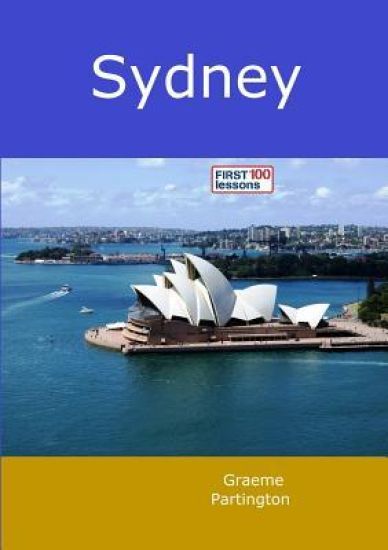
Sydney is renowned for the best tourist attractions in the southern hemisphere. Tourists are drawn to the Sydney Harbour Bridge and the Sydney Opera House. But Sydney is more than these two impressive icons. Much more This innovative travel guide looks at Sydney from a new perspective. Learn the most vital aspects about this modern city on the world's best natural harbour before you arrive. Chapters include history, geography, orientation, politics, architecture, culture, recreation, and more. Read and learn about Australia's biggest city. Then come to Sydney to enjoy and learn even more
Sydney is renowned for having the best tourist attractions in the southern hemisphere. Tourists from all over the world are attracted to the Sydney Harbour Bridge and the Sydney Opera House. But Sydney is more than these two icons. It is much more This guide looks at Sydney from a new and interesting perspective. Learn the most vital aspects about the harbour city before you arrive. Chapters include history, geography, orientation, politics, architecture, culture, recreation, and more. Read and learn what you need to know about Australia's biggest city. Then come to Sydney to enjoy and you will learn even more
Sydney is renowned for the best tourist attractions in the southern hemisphere. Tourists are drawn to the Sydney Harbour Bridge and the Sydney Opera House. But Sydney is more than these two icons. Much more This innovative travel guide looks at Sydney from a new and interesting perspective. Learn the most vital aspects about this modern city on the world's best natural harbour before you arrive. Chapters include history, geography, orientation, politics, architecture, culture, recreation, and more. Read and learn about Australia's biggest city. Then come to Sydney to enjoy and learn even more
Renowned and much-loved travel writer Jan Morris turns her eye to Sydney: 'not the best of the cities the British Empire created ... but the most hyperbolic, the youngest at heart, the shiniest.' Sydney takes us on the city's journey from penal colony to world-class metropolis, as lively and charming as the city it describes. With characteristic exuberance and sparkling prose, Jan Morris guides us through the history, people and geography of a fascinating and colourful city. Jan Morris's collection of travel writing and reportage spans over five decades and includes such titles as Venice, Hong Kong, Spain, Manhattan '45, A Writer's World and the Pax Britannica Trilogy. Hav, her novel, was shortlisted for the Booker Prize and the Arthur C. Clarke Award. 'Sydney should be flattered. A great portrait painter has chosen it for her recent subject . . . Few writers - a handful of novelists apart - have got so far under the city's skin as Morris . . . Few Sydneysiders could match her knowledge of their city's history and its anecdotes' The Times 'The writing is, at times, like surfing: sentences rise like vast waves above which she rides, never overbalancing into gush . . . Jan Morris convincingly explains modern Sydney through its history' Observer
Have we learnt anything from the ordinary people who were caught up in extraordinary Australian events and circumstances, and now rest in Sydney cemeteries? A recent report spotlighted the housing affordability crisis in Sydney where workers were being forced to live hours from their work. Was this forewarned by Juanita Nielsen and Mick Fowler 40 years ago when they campaigned to save areas for working class locals? Juanita lost her life as a result. Maggie Oliver trod the boards all over Australia in the 1860s. But when the curtain fell, her home life was one of domestic violence at the hands of husband, John. His employer, Mr Gougenheim, hearing of John's shameful treatment of Maggie, discharged him. Do we need more Mr Gougenheim's stepping up as Male Champions of Change against domestic violence? Henry O'Farrell was our first would-be assassin - he tried to kill Queen Victoria's son but failed and was executed with indecent haste. Today we would have recognised his mental illness... wouldn't we? Are we more tolerant? History colliding with the now; these are just some of the stories and personalities featured in the Grave Tales series. Grave Tales: Sydney visits cemeteries to feature people who willingly or unwillingly were participants in events that made local and national headlines. They may have lived in the same suburbs, streets, and even the same houses as exist now, or unexpectantly came to rest in Sydney.