Kirjojen hintavertailu. Mukana 11 627 378 kirjaa ja 12 kauppaa.

Kirjahaku

Etsi kirjoja tekijän nimen, kirjan nimen tai ISBN:n perusteella.

1000 tulosta hakusanalla T J (Thomas James) MacNamara

Essays and Texts in Honor of J David Thomas

Essays and Texts in Honor of J David Thomas

T. Gagos; Roger S. Bagnall

American Society of Papyrologists
2001
sidottu
A collection of nine essays focused on military and administrative institutions in the ancient world, and supplemented by a presentation of thirty texts in Greek and Latin written on papyrus and wooden fragments, some previously unpublished. The essays and textual editions are contributed by a host of distinguished international scholars in honour of Professor J David Thomas seventieth birthday. Professor Thomas (formerly at the University of Durham) has edited a large number of ancient texts over the last 50 years, and his work has been important to our understanding of subjects as diverse as the military strength on Hadrians Wall and the chain of command in the Egyptian civil service.

Why Washington Won't Work

Why Washington Won't Work

Marc J. Hetherington; Thomas J. Rudolph

University of Chicago Press
2015
sidottu
Polarization is at an all-time high in the United States. But contrary to popular belief, Americans are polarized not so much in their policy preferences as in their feelings toward their political opponents: To an unprecedented degree, Republicans and Democrats simply do not like one another. No surprise that these deeply held negative feelings are central to the recent (also unprecedented) plunge in congressional productivity. The past three Congresses have gotten less done than any since scholars began measuring congressional productivity. In Why Washington Won't Work, Marc J. Hetherington and Thomas J. Rudolph argue that a contemporary crisis of trust-people whose party is out of power have almost no trust in a government run by the other side-has deadlocked Congress. On most issues, party leaders can convince their own party to support their positions. In order to pass legislation, however, they must also create consensus by persuading some portion of the opposing party to trust in their vision for the future. Without trust, consensus fails to develop and compromise does not occur. Up until recently, such trust could still usually be found among the opposition, but not anymore. Political trust, the authors show, is far from a stable characteristic. It's actually highly variable and contingent on a variety of factors, including whether one's party is in control, which part of the government one is dealing with, and which policies or events are most salient at the moment. Political trust increases, for example, when the public is concerned with foreign policy-as in times of war-and it decreases in periods of weak economic performance. Hetherington and Rudolph do offer some suggestions about steps politicians and the public might take to increase political trust. Ultimately, however, they conclude that it is unlikely levels of political trust will significantly increase unless foreign concerns come to dominate and the economy is consistently strong.
Why Washington Won't Work

Why Washington Won't Work

Marc J. Hetherington; Thomas J. Rudolph

University of Chicago Press
2015
nidottu
Polarization is at an all-time high in the United States. But contrary to popular belief, Americans are polarized not so much in their policy preferences as in their feelings toward their political opponents: To an unprecedented degree, Republicans and Democrats simply do not like one another. No surprise that these deeply held negative feelings are central to the recent (also unprecedented) plunge in congressional productivity. The past three Congresses have gotten less done than any since scholars began measuring congressional productivity. In Why Washington Won't Work, Marc J. Hetherington and Thomas J. Rudolph argue that a contemporary crisis of trust-people whose party is out of power have almost no trust in a government run by the other side-has deadlocked Congress. On most issues, party leaders can convince their own party to support their positions. In order to pass legislation, however, they must also create consensus by persuading some portion of the opposing party to trust in their vision for the future. Without trust, consensus fails to develop and compromise does not occur.Up until recently, such trust could still usually be found among the opposition, but not anymore. Political trust, the authors show, is far from a stable characteristic. It's actually highly variable and contingent on a variety of factors, including whether one's party is in control, which part of the government one is dealing with, and which policies or events are most salient at the moment. Political trust increases, for example, when the public is concerned with foreign policy-as in times of war-and it decreases in periods of weak economic performance. Hetherington and Rudolph do offer some suggestions about steps politicians and the public might take to increase political trust. Ultimately, however, they conclude that it is unlikely levels of political trust will significantly increase unless foreign concerns come to dominate and the economy is consistently strong.
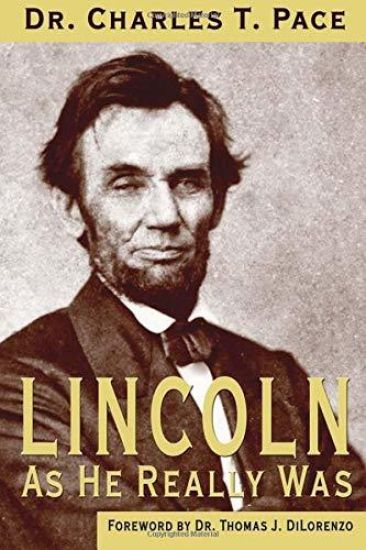
Lincoln As He Really Was

Lincoln As He Really Was

Thomas J Dilorenzo; Charles T Pace

Shotwell Publishing LLC
2018
pokkari
LINCOLN AS HE REALLY WAS by Charles T. Pace is a refreshingly truthful antidote to the standard Lincoln mythology. It is refreshing because it is so fact-based and well documented and devoted to historical truth. Lincoln As He Really Was is not your typical boring, voluminous biography filled with thousands of disconnected (and often irrelevant) facts dug up by a dozen graduate research assistants and published by a card-carrying member of the Ivy League Lincoln cult. It is the first book since Edgar Lee Masters' 1931 classic, Lincoln the Man, to attempt to reveal the truth about what kind of man Abraham Lincoln really was.- Dr. Thomas J. DiLorenzo, author of The Real Lincoln; Lincoln Unmasked; Hamilton's Curse; and The Problem With Socialism.Reader Comments on Dr. Pace's SOUTHERN INDEPENDENCE - WHY WAR? "This is the best work I have ever read on the War of 1861-present. I punctures the Great American Myth and topples Father Abraham from his throne in his Olympian Temple on the Mall. . . .""Having read countless books on Lincoln and the Civil War, I have to rate this one at the very top. . . . ""The best book I've read regarding the War to Prevent Southern Independence.""Best book I've read on the causes of the war."". . . I'm convinced the vast majority of political science classes that saturate our so-called institutions of higher education will go into convulsions over this one "
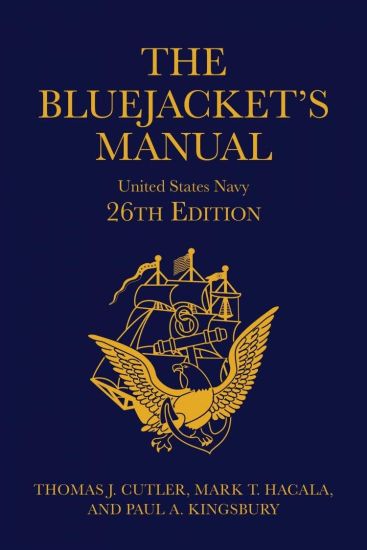
The Bluejacket's Manual, 26th Edition

The Bluejacket's Manual, 26th Edition

Thomas J. Cutler; Mark T. Hacala; Paul A Kingsbury

Naval Institute Press
2023
sidottu
The 26th edition of The Bluejacket's Manual continues the tradition of previous editions of this iconic work by serving as both an introduction to neophyte U.S. Navy Sailors and as a career-long reference work for all who wear the Blue and Gold. Readers of previous editions will note two significant changes in this latest rendition. The first recognizes the U.S. Navy's current emphasis on warfighting. While routine and administrative guidance--such things as uniforms, honors, and ceremonies, pay and benefits, standards of conduct, etc.--remain, this latest edition places greater emphasis on those aspects that Sailors are likely to encounter and must prepare for in the event of combat. The first chapter is titled and focused on warfighting, reflecting the emphasis on "Warrior Toughness" in the training curriculum at Recruit Training Command (AKA "boot camp") at Great Lakes, Illinois. Readers will find that this training emphasizes the psychological as well as practical aspects of preparation, providing a kind of "philosophy" that is tailored to Bluejackets who may well find themselves facing the challenges inherent to combat operations. Other chapters in the book--such as Weapons and Damage Control--complement this emphasis. The second major change to the book is its organization of information. The result is a more user-friendly book As always, the major purpose of revision is to bring the included information relevant and up to date. Readers will find coverage of those aspects of the Bluejacket's world that are evolving. Such things as cyberwar and drones are now included with the emphasis on warfighting. The Bluejacket's Manual, 26th Edition is a comprehensive yet manageable reference that will continue to serve the needs of the Navy and those who serve.
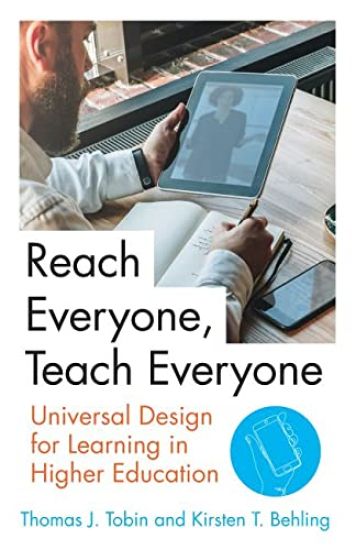
Reach Everyone, Teach Everyone

Reach Everyone, Teach Everyone

Thomas J. Tobin; Kirsten T. Behling

West Virginia University Press
2018
sidottu
Advocates for the rights of people with disabilities have worked hard to make universal design in the built environment “just part of what we do.” We no longer see curb cuts, for instance, as accommodations for people with disabilities, but perceive their usefulness every time we ride our bikes or push our strollers through crosswalks.This is also a perfect model for Universal Design for Learning (UDL), a framework grounded in the neuroscience of why, what, and how people learn. Tobin and Behling show that, although it is often associated with students with disabilities, UDL can be profitably broadened toward a larger ease-of-use and general diversity framework. Captioned instructional videos, for example, benefit learners with hearing impairments but also the student who worries about waking her young children at night or those studying on a noisy team bus.Reach Everyone, Teach Everyone is aimed at faculty members, faculty-service staff, disability support providers, student-service staff, campus leaders, and graduate students who want to strengthen the engagement, interaction, and performance of all college students. It includes resources for readers who want to become UDL experts and advocates: real-world case studies, active-learning techniques, UDL coaching skills, micro- and macro-level UDL-adoption guidance, and use-them-now resources.
Reach Everyone, Teach Everyone

Reach Everyone, Teach Everyone

Thomas J. Tobin; Kirsten T. Behling

West Virginia University Press
2018
nidottu
Advocates for the rights of people with disabilities have worked hard to make universal design in the built environment “just part of what we do.” We no longer see curb cuts, for instance, as accommodations for people with disabilities, but perceive their usefulness every time we ride our bikes or push our strollers through crosswalks.This is also a perfect model for Universal Design for Learning (UDL), a framework grounded in the neuroscience of why, what, and how people learn. Tobin and Behling show that, although it is often associated with students with disabilities, UDL can be profitably broadened toward a larger ease-of-use and general diversity framework. Captioned instructional videos, for example, benefit learners with hearing impairments but also the student who worries about waking her young children at night or those studying on a noisy team bus.Reach Everyone, Teach Everyone is aimed at faculty members, faculty-service staff, disability support providers, student-service staff, campus leaders, and graduate students who want to strengthen the engagement, interaction, and performance of all college students. It includes resources for readers who want to become UDL experts and advocates: real-world case studies, active-learning techniques, UDL coaching skills, micro- and macro-level UDL-adoption guidance, and use-them-now resources.