Kirjojen hintavertailu. Mukana 12 390 323 kirjaa ja 12 kauppaa.

Kirjahaku

Etsi kirjoja tekijän nimen, kirjan nimen tai ISBN:n perusteella.

414 tulosta hakusanalla Tadeusz Pióro

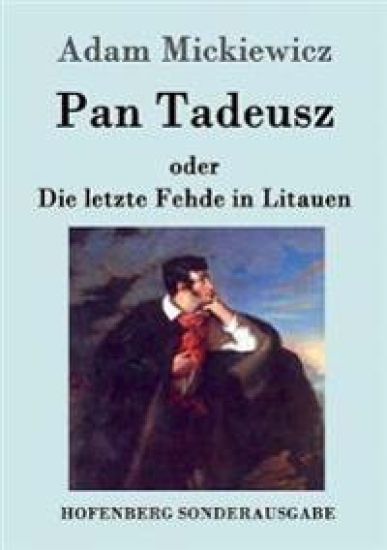
Pan Tadeusz oder Die letzte Fehde in Litauen

Pan Tadeusz oder Die letzte Fehde in Litauen

Adam Mickiewicz

Createspace Independent Publishing Platform
2013
nidottu
Adam Mickiewicz: Pan Tadeusz oder Die letzte Fehde in Litauen Pan Tadeusz erz hlt die Geschichte des Dorfes Soplicowo im 1811 zwischen Russland, Preu en und sterreich geteilten Polen. Im Streit um ein Schlo verfeinden sich zwei Adelsgeschlechter und Pan Tadeusz verliebt sich in Zosia. Das Nationalepos von Pan Tadeusz ist Pflichtlekt re in Polens Schulen und gilt nach der Bibel noch heute als meistgelesenes Buch. Edition Holzinger. Taschenbuch Berliner Ausgabe, 2016, 4. Auflage Durchgesehener Neusatz mit einer Biographie des Autors bearbeitet und eingerichtet von Michael Holzinger Erstdruck: Paris 1834 (2 Bde). Hier nach der bers. v. Siegfried Lippiner. Originaltitel: Pan Tadeusz czyli ostatni zajazd na Litwie Textgrundlage ist die Ausgabe: Mickiewicz, Adam: Herr Thadd us oder der letzte Einritt in Lithauen. In: Poetische Werke, Bd. 1, bers. v. Siegfried Lippiner, Leipzig: Breitkopf und H rtel, 1882. Herausgeber der Reihe: Michael Holzinger Reihengestaltung: Viktor Harvion Umschlaggestaltung unter Verwendung des Bildes: Adam Mickiewicz Gesetzt aus der Minion Pro, 10 pt.
Pan Tadeusz (Großdruck): Die letzte Fehde in Litauen

Pan Tadeusz (Großdruck): Die letzte Fehde in Litauen

Adam Mickiewicz

Createspace Independent Publishing Platform
2013
nidottu
Adam Mickiewicz: Pan Tadeusz oder Die letzte Fehde in Litauen Lesefreundlicher Gro druck in 16-pt-Schrift Pan Tadeusz erz hlt die Geschichte des Dorfes Soplicowo im 1811 zwischen Russland, Preu en und sterreich geteilten Polen. Im Streit um ein Schlo verfeinden sich zwei Adelsgeschlechter und Pan Tadeusz verliebt sich in Zosia. Das Nationalepos von Pan Tadeusz ist Pflichtlekt re in Polens Schulen und gilt nach der Bibel noch heute als meistgelesenes Buch. Edition Holzinger. Gro format, 216 x 279 mm Berliner Ausgabe, 2016 Durchgesehener Neusatz mit einer Biographie des Autors bearbeitet und eingerichtet von Michael Holzinger Erstdruck: Paris 1834 (2 Bde). Hier nach der bers. v. Siegfried Lippiner. Originaltitel: Pan Tadeusz czyli ostatni zajazd na Litwie Textgrundlage ist die Ausgabe: Mickiewicz, Adam: Herr Thadd us oder der letzte Einritt in Lithauen. In: Poetische Werke, Bd. 1, bers. v. Siegfried Lippiner, Leipzig: Breitkopf und H rtel, 1882. Herausgeber der Reihe: Michael Holzinger Reihengestaltung: Viktor Harvion Umschlaggestaltung unter Verwendung des Bildes: Adam Mickiewicz Gesetzt aus der Minion Pro, 16 pt.
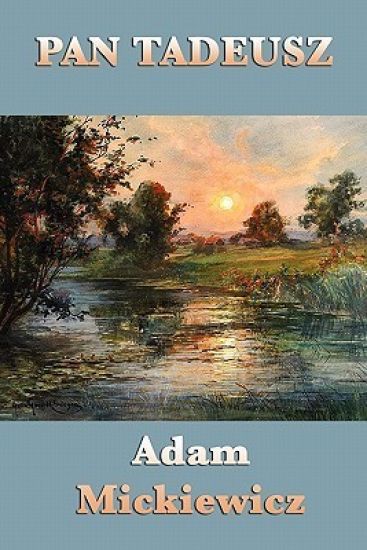
Pan Tadeusz

Pan Tadeusz

Adam Mickiewicz

SMK Books
2011
pokkari
Pan Tadeusz is an epic poem by the Polish-Lithuanian poet, writer and philosopher Adam Mickiewicz. The book was first published in June 1834 in Paris, and is considered by many to be the last great epic poem in European literature. The story takes place over the course of five days in 1811 and one day in 1812 at a point in Polish history, when Poland-Lithuania had already been divided between Russia, Prussia, and Austria and disappeared from the political map of Europe.
Pan Tadeusz

Pan Tadeusz

Adam Mickiewicz

Archipelago Books
2018
nidottu
A towering achievement in European literature, Pan Tadeusz is the central work of the Polish literary canon, heralded for its lovingly detailed recreation of a bygone world. The traditions of the Polish gentry and the social and natural landscape of the Lithuanian countryside are captured in verse of astounding beauty, simplicity, and power. Bill Johnston's translation of this seminal text allows English-language readers to experience the richness, humour, and narrative energy of the original.
Pan Tadeusz

Pan Tadeusz

Adam Mickiewicz

Dale Street Books
2015
nidottu
Two feuding families. A nation under foreign rule. And a love caught in the storm of history.Set in occupied Poland on the eve of Napoleon's march against Russia, Pan Tadeusz is a richly woven tale of honor, heartbreak, and hope. Written in exile by Poland's national poet, Adam Mickiewicz, this timeless saga captures the spirit of a people yearning for freedom and the passions that drive them-from the battlefield to the ballroom.Inside this grand historical drama: A simmering family feud threatens to erupt into warStar-crossed lovers struggle to find peace in a divided landRussian occupiers grow increasingly corrupt-and increasingly dangerousA mysterious monk prays like a saint... and shoots like a sharpshooterSwordsmen, coquettes, officers, and elders play out their fates in a world on the brink of changeFirst published in 1834, Pan Tadeusz remains required reading in Polish schools and a cornerstone of national identity. This English translation by George Rapall Noyes (1917) trades verse for prose, preserving the epic sweep and emotional richness of Mickiewicz's masterpiece while making it accessible to modern readers.At once a love story, a national epic, and a deeply personal ode to a lost homeland, this is Poland's answer to War and Peace.A family feud. A French invasion. A Polish soul.Before Poland rose, it dreamed-and Mickiewicz wrote its dream.
Pan Tadeusz: or the Last Foray in Lithuania

Pan Tadeusz: or the Last Foray in Lithuania

Adam Mickiewicz

Winged Hussar Publishing
2019
nidottu
A new annotated translation in elegant English prose of this masterpiece of European Romantic literature. Pan Tadeusz is a classic tale of mystery, war and patriotism set in the turbulent Napoleonic era. First published in 1834 in Paris, it has been called "the last epos" in world literature. The story takes place over the course of five days in 1811 and two days in 1812. The old Polish-Lithuanian Commonwealth lies dismembered, erased from the political map of Europe by the great powers of Russia, Prussia, and Austria. A brief ray of hope rekindles national hopes in 1807 when Napoleon establishes the Duchy of Warsaw by the terms of the Treaty of Tilsit and prepares to invade Russia. The oft-overshadowed counterpoint to War and Peace and the 1812 Overture.This is the first major rendering of this work since 1993 by one of the great translators of the Polish language Christopher Adam Zakrzewski.
Pan Tadeusz

Pan Tadeusz

Adam Mickiewicz

Zmok Books
2019
sidottu
Pan Tadeusz is an epic poem by the Polish poet, writer and philosopher Adam Mickiewicz. The book was first published in June 1834 in Paris and is considered by many to be the last great epic poem in European literature. It is a tale of mystery, mistaken identity and patriotism set the days before Napoleon's invasion of Russia. A new translation of the classic tale of mystery, war and patriotism by Adam Mickiewicz Pan Tadeusz is an epic poem by the Polish poet, writer and philosopher Adam Mickiewicz. The book was first published in June 1834 in Paris and is considered by many to be the last great epic poem in European literature. It is a tale of mystery, mistaken identity and patriotism set the days before Napoleon's invasion of Russia. The story takes place over the course of five days in 1811 and two days in 1812, at a time in history, when Poland-Lithuania had already been divided between the armies of Russia, Prussia, and Austria and erased from the political map of Europe, although in 1807, just before the story begins, Napoleon had established a satellite Duchy of Warsaw in the Prussian partition, in existence until the Congress of Vienna held in the aftermath of Napoleonic defeat. The place is situated within the Russian partition, in the village of Soplicowo; the country estate of the Soplica clan. Pan Tadeusz recounts the story of two feuding noble families, and the love between Tadeusz Soplica (the title character) of one family, and Zosia of the other. Another sub-plot involves a spontaneous revolt of the local inhabitants against the occupying Russian garrison. Since Mickiewicz published his poem as an exile in Paris, he was free of the Russian censors to talk openly about the occupation. This is the first major translation of this epic poem since the 1993 by one of the great translators of the Polish language Christopher Adam Zakrzewski