Kirjojen hintavertailu. Mukana 12 363 183 kirjaa ja 12 kauppaa.

Kirjahaku

Etsi kirjoja tekijän nimen, kirjan nimen tai ISBN:n perusteella.

1000 tulosta hakusanalla Tames Richard

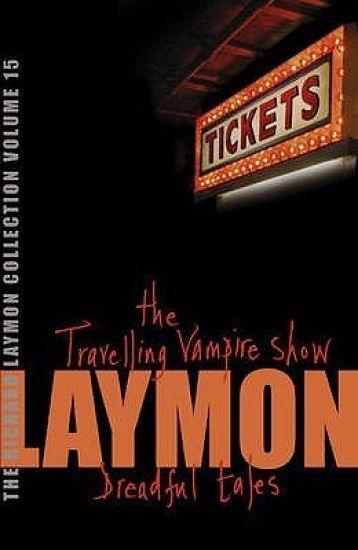
The Richard Laymon Collection Volume 15: The Travelling Vampire Show & Dreadful Tales
THE TRAVELLING VAMPIRE SHOW is coming to town and Dwight, Rusty and Slim are determined to go. But it's for over 18s only. They decide to go and watch the crew set up anyway, hoping to catch a glimpse of Valeria, billed as 'the only known vampire in captivity'. But when the three teenagers break the rules, they run into big trouble.DREADFUL TALES Shane Malone sits sweltering in front of his computer, trying to write an anthology in which every chilling tale must end in the death of a twenty-two-year-old woman in her apartment. But the deafening music from next door is not helping. He furiously bangs on his neighbour's door and discovers she's a twenty-two-year-old woman who will not be argued with. Shane is about to find out that life really can imitate art.
A Revealed Knowledge of the Prophecies and Times. ... Wrote Under the Direction of the Lord God, ... To Which is Added, The Testimony of the Authenticity of the Prophecies of Richard Brothers, ... By Nathaniel Brassey Halhed, M.P
The 18th century was a wealth of knowledge, exploration and rapidly growing technology and expanding record-keeping made possible by advances in the printing press. In its determination to preserve the century of revolution, Gale initiated a revolution of its own: digitization of epic proportions to preserve these invaluable works in the largest archive of its kind. Now for the first time these high-quality digital copies of original 18th century manuscripts are available in print, making them highly accessible to libraries, undergraduate students, and independent scholars.The Age of Enlightenment profoundly enriched religious and philosophical understanding and continues to influence present-day thinking. Works collected here include masterpieces by David Hume, Immanuel Kant, and Jean-Jacques Rousseau, as well as religious sermons and moral debates on the issues of the day, such as the slave trade. The Age of Reason saw conflict between Protestantism and Catholicism transformed into one between faith and logic -- a debate that continues in the twenty-first century.++++The below data was compiled from various identification fields in the bibliographic record of this title. This data is provided as an additional tool in helping to insure edition identification: ++++British LibraryT143260The first and second books of Brothers's 'A revealed knowledge .. ' and Halhed's 'testimony' are separately paginated, but the register is continuous.Dublin: printed in the year of Christ, 1795. 43, 1],66,22p.; 8
The Collected Tales of Nikolai Gogol: Introduction by Richard Pevear
Collected here are Gogol's finest tales--stories that combine the wide-eyed, credulous imagination of the peasant with the sardonic social criticism of the city dweller--allowing readers to experience anew the unmistakable genius of a writer who paved the way for Dostoevsky and Kafka. All of Gogol's most memorable creations are here: the minor official who misplaces his nose, the downtrodden clerk whose life is changed by the acquisition of a splendid new overcoat, the wily madman who becomes convinced that a dog can tell him everything he needs to know. The wholly unique blend of the mundane and the supernatural that Gogol crafted established his reputation as one of the most daring and inventive writers of his time. From the acclaimed translators of War and Peace, Crime and Punishment, and The Brothers Karamazov, a brilliant translation of Nikolai Gogol's short fiction.
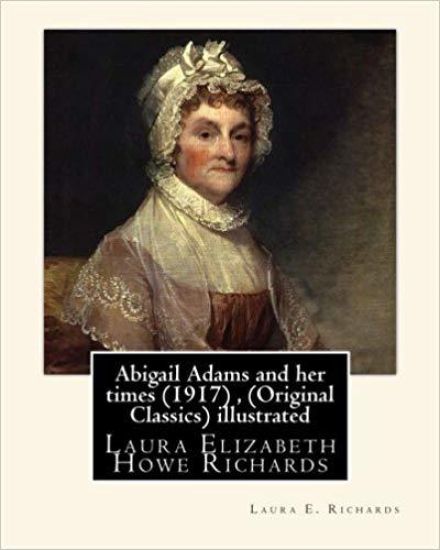
Abigail Adams and her times, By Laura E. Richards (Original Classics)

Abigail Adams and her times, By Laura E. Richards (Original Classics)

Laura E. Richards

Createspace Independent Publishing Platform
2016
nidottu
SEVENTEEN HUNDRED AND FORTY-FOUR George the Second on the throne of England, "snuffy old drone from the German hive"; Charles Edward Stuart ("bonnie Prince Charlie") making ready for his great coup which, the next year, was to cast down said George from the throne and set Charles Edward thereupon as "rightful, lawful prince-for wha'll be king but Charlie?", and which ended in Culloden and the final downfall and dispersion of the Scottish Stuarts. In France, Louis XV., Lord of Misrule, shepherding his people toward the Abyss with what skill was in him; at war with England, at war with Hungary; Frederick of Prussia alone standing by him. In Europe, generally, a seething condition which is not our immediate concern. In America, seething
Abigail Adams and her times (1917), By Laura E. Richards (Original Classics) illustrated: Laura Elizabeth Howe Richards
SEVENTEEN HUNDRED AND FORTY-FOUR George the Second on the throne of England, "snuffy old drone from the German hive"; Charles Edward Stuart ("bonnie Prince Charlie") making ready for his great coup which, the next year, was to cast down said George from the throne and set Charles Edward thereupon as "rightful, lawful prince-for wha'll be king but Charlie?", and which ended in Culloden and the final downfall and dispersion of the Scottish Stuarts. In France, Louis XV., Lord of Misrule, shepherding his people toward the Abyss with what skill was in him; at war with England, at war with Hungary; Frederick of Prussia alone standing by him. In Europe, generally, a seething condition which is not our immediate concern. In America, seething. Laura Elizabeth Howe Richards (February 27, 1850 - January 14, 1943) was an American writer. She wrote more than 90 books including biographies, poetry, and several for children. One well-known children's poem is her literary nonsense verse "Eletelephony", which is adapted into an animated segment (Vowel Letter Poem: E - Elephant) produced by Jeff Hale, and his animation studio, Imagination, Inc., for the television show Sesame Street.Laura Elizabeth Howe was born in Boston, Massachusetts, on February 27, 1850. Her father was Dr. Samuel Gridley Howe, an abolitionist and the founder of the Perkins Institution and Massachusetts School for the Blind. 1] She was named after his famous deaf-blind pupil Laura Bridgman. citation needed] Her mother Julia Ward Howe wrote the words to The Battle Hymn of the Republic. In 1871 Laura married Henry Richards. He would accept a management position in 1876 at his family's paper mill at Gardiner, Maine, where the couple moved with their three children. In 1917 Laura won a Pulitzer Prize for Julia Ward Howe, 1819-1910, a biography, which she co-authored with her sister, Maud Howe Elliott. She died on January 14, 1943. Abigail Adams (n e Smith; November 22 O.S. November 11] 1744 - October 28, 1818) was the wife of John Adams and the mother of John Quincy Adams. She is now designated the first Second Lady and second First Lady of the United States, although these titles were not in use at the time. Adams's life is one of the most documented of the first ladies: she is remembered for the many letters she wrote to her husband while he stayed in Philadelphia, Pennsylvania, during the Continental Congresses. John frequently sought the advice of Abigail on many matters, and their letters are filled with intellectual discussions on government and politics. The letters serve as eyewitness accounts of the American Revolutionary War home front.
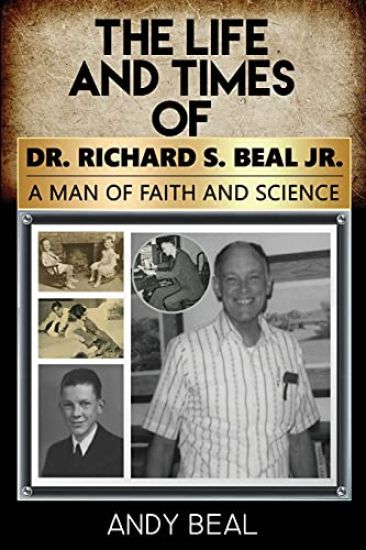
The Life and Times of Dr. Richard S. Beal Jr.
Dr. Richard S. Beal Jr. was my dad. A year or so before he died, he handed me his autobiography, the first draft of a book about his life, and asked me to publish it and pass it on to the family. As I read his notes and stories, I realized it was not unlike a graduate level textbook, easy for some to read but not for most of us. Considerable editing would be required.I also realized there were gaps. Large time periods had been omitted from his life which I thought would be of interest to a reader and should be included. Some of these gaps, I guessed, were perhaps too painful to address. I suspect some gaps indicated a different frame of mind, suggesting he was simply not interested in it or he had forgotten because it was dull. He was the graduate dean at Northern Arizona University for 20 years. You would think he would have a great deal to say about that time in his life, but he did not. His memory of administrative work at NAU consisted of pushing papers and attending meetings. He found joy and satisfaction outside, in nature, collecting insects and understanding more of God's creation. I recalled some stories about NAU's President, Dr. Walkup, his boss whom he admired greatly, and other interesting quips I heard at the dinner table. Dr. Walkup used to drop by and visit once a month or so. I also remembered many quiet conversations with Dad as well as many stories of adventure and discovery that simply had to be in such a book as this.The gaps in the book were written by me. They are my memories of living with him, as well as a few stories from others. Some of my memories are of conversations while sitting on his office floor at our house. There were conversations in the desert while camping out in sleeping bags, conversations at the dinner table and conversations in the car. Other memories consist of what I saw and learned about him for over 60 years. Much of the time he was turning over rocks, pulling bark off dead pine trees, looking under cow pies, pulling swallow nests out from under high bridges, finding aquatic insects, sitting in church, driving in the forest, camping, hiking, leading boy scouts, and more.When you read this book, you will first notice it is not in a perfect timeline. The first chapter tells you what my life with Dr. Richard S. Beal Jr. looked like growing up, accompanied by plenty of adventure and fun. The next chapters consist of his early life and are broken into categories like growing up in Tucson, snakes and zoology, Boy Scouts, homelife, pets and vacations, dating, education, and more adventure. You will see what life was like living in early Tucson before and during the great depression.The book brings you interesting people he and my mother, Billie, meet along the way like Virgil Partch, Bishop John Taylor Smith, John Dillinger, Dr. Lewis Sperry Chafer, Bernard Ramm, Jim Rayburn, Dr. Harry Ironside, Dr. Harold Ockenga, Dr. Robert Snodgrass, and Dr. Carl Armerding to name a few. After my Mother died, Dad remarried for the remaining 27 years of his life and made it all the way to the ripe old age of 98. It seemed as if the end of his life was just as, or even more productive, than the beginning, but you should decide that.I also included some addendum's at the end you might find interesting or helpful in understanding who he was and how he thought. I briefly prefaced each of his actual writings about Christian faith, atheism, and the Biblical account of the flood from the book of Genesis. After leaving NAU, he was deeply concerned with how Christian college students would keep their faith in such a faithless environment. He felt that few of them were well prepared. In Dad's view, they didn't know their Bible or have much understanding of science. This concern prompted the insertion of the addendum's.
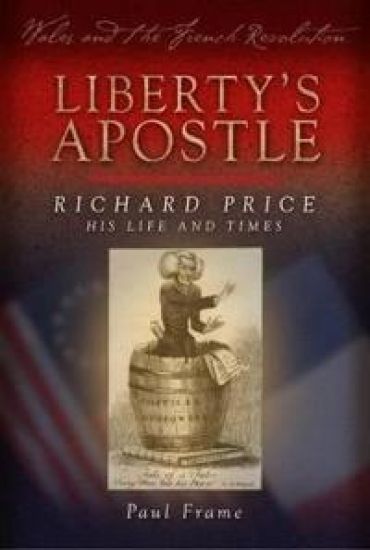
Liberty's Apostle - Richard Price, His Life and Times

Liberty's Apostle - Richard Price, His Life and Times

Paul Frame

University of Wales Press
2015
nidottu
Born in the village of Llangeinor, near Bridgend in south Wales, Richard Price (1723–91) was, to his contemporaries, an apostle of liberty, an enemy to tyranny and a great benefactor of the human race. His friend Benjamin Franklin described aspects of his work as ‘the foremost production of human understanding that this century has afforded us’. A supporter of the American and French Revolutions, Price corresponded with the likes of Jefferson, Adams, Washington, Mirabeau and Condorcet. In November 1789 he publicly welcomed the start of the French Revolution and thus inspired not only Edmund Burke to write his rebuttal in Reflections on the Revolution in France, but also the Revolution Controversy, ‘the most crucial ideological debate ever carried on in English’. Price also brought to world attention the Bayes-Price Theorem on probability, which is the invisible background to so much in modern life, and wrote a fundamental text on moral philosophy. Yet, despite all this and more, he remains little-known beyond academia, a situation that this biography helps to rectify. Liberty’s Apostle tells his life story through his published works and, fully for the first time, his now published correspondence with a host of eighteenth century celebrities. The life revealed is of a truly remarkable Welshman and, as Condorcet remarked, of ‘one of the formative minds’ of the eighteenth century Enlightenment.
Whispering Windows: Tales of the Waterside. London: Grant Richards, (1921). By: Thomas Burke: Thomas Burke (29 November 1886 - 22 Septembe
Thomas Burke (29 November 1886 - 22 September 1945) was a British author. He was born in Eltham, London (back then still part of Kent). His first successful publication was Limehouse Nights (1916), a collection of stories centred on life in the poverty-stricken Limehouse district of London. Many of Burke's books feature the Chinese character Quong Lee as narrator. "The Lamplit Hour", an incidental poem from Limehouse Nights, was set to music in the United States by Arthur Penn in 1919. That same year, American film director D. W. Griffith used another tale from the collection, "The Chink and the Child" as the basis of his screenplay for the movie Broken Blossoms. Griffith based his film Dream Street (1921) on Burke's "Gina of Chinatown" and "Song of the Lamp". Life: Thomas Burke was born Sydney Thomas Burke on 29 November 1886 in Clapham, a southern suburb of London that by the turn of the century had fallen out of favour with the middle-classes.Burke's father died when he was barely a few months old and he was eventually sent to live with his uncle in Poplar. At the age of ten he was removed to a home for middle class boys who were " r]espectably descended but without adequate means to their support." When Burke turned sixteen he started working as an office boy, a job that he deeply detested. In 1901, he published his first professional written work entitled "The Bellamy Diamonds" in the magazine Spare Moments.He also edited some anthologies of children's poetry that were published in 1910-1913. In 1915, Burke published Nights in Town: A London Autobiography, which featured his descriptions of working-class London nightlife including the essay, 'A Chinese Night, Limehouse' However, it was not until the publication of Limehouse Nights in 1916 that he obtained any substantial acclaim as an author. This collection of melodramatic short stories, set in a lower-class environment populated by Chinese immigrants, was published in three British periodicals, The English Review, Colour and The New Witness, and received marked attention from literary reviewers. Limehouse Nights helped to earn Burke a reputation as "the laureate of London's Chinatown".Burke's writing also influenced contemporary popular forms of entertainment, such as the nascent film industry. Indeed, D. W. Griffith used the short story "The Chink and the Child" from Limehouse Nights as the basis for his popular silent film Broken Blossoms (1919). Burke continued to develop his descriptions of London life throughout his later literary works. He gradually expanded his range with novels such as The Sun in Splendor, which was published in 1926. He also continued to publish essays on the London environment, including pieces such as "The Real East End" and "London in My Times". Burke died in the Homeopathic Hospital in Queens Square, Bloomsbury on 22 September 1945. His short story "The Hands of Ottermole" was later voted the best mystery of all time by critics in 1949........................
The Adventures of Sir Richard Whittington, Who Was Three Times Lord Mayor of London ... to Which Is Added, the Caledonian, a Poem
The 18th century was a wealth of knowledge, exploration and rapidly growing technology and expanding record-keeping made possible by advances in the printing press. In its determination to preserve the century of revolution, Gale initiated a revolution of its own: digitization of epic proportions to preserve these invaluable works in the largest archive of its kind. Now for the first time these high-quality digital copies of original 18th century manuscripts are available in print, making them highly accessible to libraries, undergraduate students, and independent scholars.Western literary study flows out of eighteenth-century works by Alexander Pope, Daniel Defoe, Henry Fielding, Frances Burney, Denis Diderot, Johann Gottfried Herder, Johann Wolfgang von Goethe, and others. Experience the birth of the modern novel, or compare the development of language using dictionaries and grammar discourses. ++++The below data was compiled from various identification fields in the bibliographic record of this title. This data is provided as an additional tool in helping to insure edition identification: ++++British LibraryT117188Banbury: printed and sold by J. Cheney, 1800?]. 24p.: ill.; 12