A agricultura org nica desenvolveu-se muito nas ltimas d cadas, e tornou-se presente na pauta de produ o de v rios pa ses, exibindo ao longo dos ltimos anos, elevadas taxas de crescimento. A acerola org nica cultivada no Distrito de Irriga o Tabuleiro Litor neo do Piau - DITALPI, onde existem tr s cooperativas com o intuito de aumentarem a produ o e gerarem emprego e renda. A institui o analisada a Cooperativa Biofruta, formada por 26 produtores, dos quais foram analisados somente 23. A quest o em an lise consiste em determinar se a produ o de acerola org nica economicamente vi vel e de baixo risco. Analisando-se deterministicamente, concluiu-se que os produtores do 1 cen rio n o tiveram preju zo, mas tamb m n o possu am uma boa rentabilidade, j os produtores do 2 cen rio tiveram preju zo, enquanto os do 3 cen rio expressaram receita L quida positiva e uma situa o mais confort vel em rela o aos outros cen rios. Na avalia o de risco, verificou-se que os produtores do 1 cen rio estavam sujeitos a elevados riscos na produ o, que os produtores do 2 cen rio correm risco de 100% de continuar produzindo e os produtores do 3 cen rio se mostraram bastante rent veis.
Die kologische Landwirtschaft hat sich in den letzten Jahrzehnten stark entwickelt und ist in der Produktion mehrerer L nder pr sent, wobei sie in den letzten Jahren hohe Wachstumsraten aufweist. Die Bio-Acerola wird im Bew sserungsgebiet Tabuleiro Litor neo von Piau - DITALPI - angebaut, wo drei Genossenschaften mit dem Ziel der Produktionssteigerung und der Schaffung von Arbeitspl tzen und Einkommen bestehen. Bei der untersuchten Institution handelt es sich um die Genossenschaft Biofruta, der 26 Erzeuger angeh ren, von denen nur 23 analysiert wurden. Die Analyse soll kl ren, ob der Anbau von Bio-Acerola wirtschaftlich rentabel und risikoarm ist. Die deterministische Analyse ergab, dass die Erzeuger des ersten Szenarios keine Verluste, aber auch keine gute Rentabilit t hatten, w hrend die Erzeuger des zweiten Szenarios Verluste hatten, w hrend die Erzeuger des dritten Szenarios ein positives Nettoeinkommen und eine komfortablere Situation im Vergleich zu den anderen Szenarien hatten. Bei der Risikobewertung wurde festgestellt, dass die Erzeuger des ersten Szenarios einem hohen Produktionsrisiko ausgesetzt waren, dass die Erzeuger des zweiten Szenarios ein 100 %iges Risiko hatten, ihre Produktion fortzusetzen, und dass die Erzeuger des dritten Szenarios sich als recht rentabel erwiesen.
The organic agriculture has developed a lot in the last decades, and became present in the production of several countries, exhibiting along the last years, high rates of growth. The organic acerola is cultivated in the Tabuleiro Litor neo Irrigation District of Piau - DITALPI, where three cooperatives exist with the aim of increasing production and generating employment and income. The institution analysed is the Biofruta Cooperative, made up of 26 producers, of which only 23 were analysed. The issue under analysis is to determine whether the production of organic acerola is economically viable and low risk. Analyzing deterministically, it was concluded that the producers of the 1st scenario did not have losses, but also did not have good profitability, while the producers of the 2nd scenario had losses, while those of the 3rd scenario expressed positive net income and a more comfortable situation in relation to the other scenarios. In the risk assessment, it was found that the producers of the 1st scenario were subject to high risks in production, that the producers of the 2nd scenario were at 100% risk of continuing to produce and the producers of the 3rd scenario proved to be quite profitable.
L'agriculture biologique s'est beaucoup d velopp e au cours des derni res d cennies et est devenue pr sente dans la production de plusieurs pays, affichant ces derni res ann es des taux de croissance lev s. L'ac rola biologique est cultiv dans le district d'irrigation Tabuleiro Litor neo de Piau - DITALPI, o trois coop ratives existent dans le but d'augmenter la production et de g n rer des emplois et des revenus. L'institution analys e est la coop rative Biofruta, compos e de 26 producteurs, dont 23 seulement ont t analys s. La question analys e est de d terminer si la production d'ac rola biologique est conomiquement viable et faible risque. L'analyse d terministe a permis de conclure que les producteurs du premier sc nario ne subissaient pas de pertes, mais n'avaient pas non plus une bonne rentabilit , tandis que les producteurs du deuxi me sc nario subissaient des pertes, tandis que ceux du troisi me sc nario exprimaient un revenu net positif et une situation plus confortable par rapport aux autres sc narios. L' valuation des risques a r v l que les producteurs du premier sc nario taient expos s des risques lev s en mati re de production, que les producteurs du deuxi me sc nario couraient un risque de 100 % en continuant produire et que les producteurs du troisi me sc nario s'av raient assez rentables.
L'agricoltura biologica si sviluppata molto negli ultimi decenni ed diventata presente nella produzione di diversi Paesi, mostrando negli ultimi anni alti tassi di crescita. L'acerola biologica coltivata nel Distretto di Irrigazione Tabuleiro Litor neo del Piau - DITALPI, dove esistono tre cooperative con l'obiettivo di aumentare la produzione e generare occupazione e reddito. L'istituzione analizzata la Cooperativa Biofruta, composta da 26 produttori, di cui solo 23 sono stati analizzati. L'obiettivo dell'analisi determinare se la produzione di acerola biologica sia economicamente conveniente e a basso rischio. Analizzando in modo deterministico, si concluso che i produttori del 1 scenario non hanno avuto perdite, ma nemmeno una buona redditivit , mentre i produttori del 2 scenario hanno avuto perdite, mentre quelli del 3 scenario hanno espresso un reddito netto positivo e una situazione pi confortevole rispetto agli altri scenari. Nella valutazione del rischio, emerso che i produttori del 1 scenario erano soggetti a rischi elevati nella produzione, che i produttori del 2 scenario rischiavano al 100% di continuare a produrre e che i produttori del 3 scenario si sono dimostrati abbastanza redditizi.
Observing the current context in relation to the lack of control of successive dengue epidemics in Brazil, as well as the rapid territorial expansion of Aedes Aegypti, we foresee the possibility of outbreaks and/or epidemics of Dengue Hemorrhagic Fever (DHF), and as a result, we will also see an increase in its lethality, given the current situation of our national health system. We know that some diseases present different immune responses in the face of polymorphism in cytokine genes. In this study, we seek to identify genetic factors related to the worsening of the disease in patients with DHF. This investigation focuses on the possibility of polymorphism in cytokine genes: TNF-α -308 G→A, TGF-β codon 10 and codon 25, IL-10 -1082 G→A, -819 C→T, -592 A→C, IL-6 -174G→C, and IFN-γ +874 T→A with FHD. We hope to contribute to the discovery of new paths in the search for a better understanding of this pathology that affects thousands of people worldwide.
Jane Rickson; Santanu Bakshi; Chumki Banik; Zhenli He; R. J. Rickson; E. Dowdeswell Downey; G. Alegbeleye; S. E. Cooper; Telmo Jorge Carneiro Amado; Carlos Alexandre Costa Crusciol; Claudio Hideo Martins da Costa; Otávio dos Anjos Leal; Luan Pierre Pott
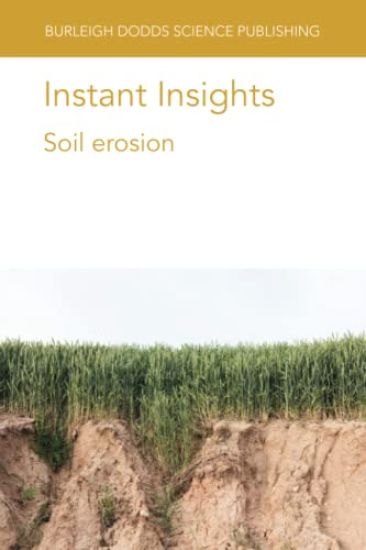
This collection features four peer-reviewed literature reviews on soil erosion in agriculture.The first chapter identifies different types of soil degradation, focussing primarily on soil erosion by water. The chapter explores the impact of soil erosion processes on soil properties that relate directly to crop growth, including soil depth, water-holding capacity, carbon content and nutrient reserves.The second chapter reviews advances in techniques used to assess and measure soil erodibility by water, such as computer aided tomography. The chapter considers the role of static and dynamic soil properties in the erosion process, as well as the challenges that have developed as a result of climate change.The third chapter assesses the impact of heavy metal contamination on soil and its consequent role in the degradation of soil health. The chapter describes the sources, impacts, indicators and remediation of heavy metal contamination, as well as the development of improved soil management practices, including effective pollution control strategies.The final chapter discusses the implementation of integrated strategies under Conservation Agriculture (CA) farming systems to restore soil productivity in degraded agricultural lands in tropical and subtropical regions in Brazil. The chapter additionally considers the adoption of CA as a tool to prevent and reverse instances of soil degradation.