
Kirjahaku
Etsi kirjoja tekijän nimen, kirjan nimen tai ISBN:n perusteella.
1000 tulosta hakusanalla Teodor Levin
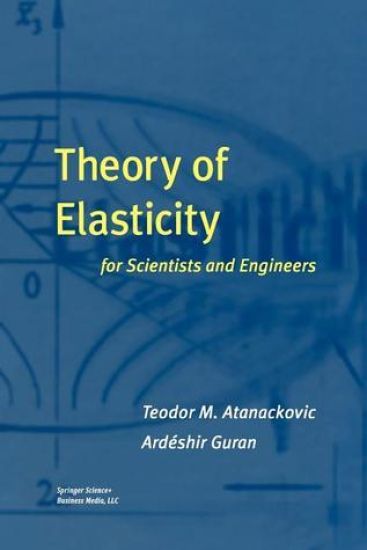
Theory of Elasticity for Scientists and Engineers
Teodor M. Atanackovic; Ardeshir Guran
Springer-Verlag New York Inc.
2012
nidottu
This book is intended to be an introduction to elasticity theory. It is as sumed that the student, before reading this book, has had courses in me chanics (statics, dynamics) and strength of materials (mechanics of mate rials). It is written at a level for undergraduate and beginning graduate engineering students in mechanical, civil, or aerospace engineering. As a background in mathematics, readers are expected to have had courses in ad vanced calculus, linear algebra, and differential equations. Our experience in teaching elasticity theory to engineering students leads us to believe that the course must be problem-solving oriented. We believe that formulation and solution of the problems is at the heart of elasticity theory. 1 Of course orientation to problem-solving philosophy does not exclude the need to study fundamentals. By fundamentals we mean both mechanical concepts such as stress, deformation and strain, compatibility conditions, constitu tive relations, energy of deformation, and mathematical methods, such as partial differential equations, complex variable and variational methods, and numerical techniques. We are aware of many excellent books on elasticity, some of which are listed in the References. If we are to state what differentiates our book from other similar texts we could, besides the already stated problem-solving ori entation, list the following: study of deformations that are not necessarily small, selection of problems that we treat, and the use of Cartesian tensors only.
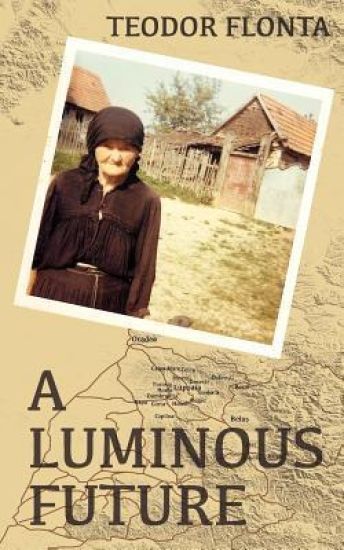
In 1946 ominous clouds are gathering on the narrow horizon of Lupoaia (Valley of the Wolves), a little village in Transylvania, where traditions, impregnated with prejudice and superstition, have endured over many generations. The Second World War is over but the lives of the villagers are thrown into turmoil with the imposition of drastic, senseless changes by a new regime, intent on creating a new man for a new society. The newly-installed totalitarian government threatens to eliminate the Flonta family by declaring Teodor's father, Pavel, a chiabur - an 'enemy of the people'. Pavel is arrested, imprisoned and tortured. When the wave of persecutions reaches its peak, he is forced to live in hiding. A trade, learned by Pavel in his youth, unexpectedly becomes his salvation - the Russians, who are extracting uranium in the Carpathians for their first atomic bomb, hire him. There, at the mine, the tentacles of the Securitate - the secret police - cannot reach him. Stalin is still alive when Teodor starts school. Torn between two opposite worlds - home, where traditional values are preserved and love abounds - and school, where indoctrination and inequity prevail, he constantly questions and ponders the twisted logic behind events, sometimes with cheekiness and humour, as only a child is capable of doing under the circumstances. Events, however, affect Teodor deeply from an early age, as in the communist system the sins of the father - imaginary as they might be - are made to fall on his young son's shoulders.***'A Luminous Future offers a unique insight into one of the most disturbing periods of modern European history. By turns amusing, terrifying and confronting, the story of Teodor Flonta, his father, his family and his community, is both a valuable social document and an intriguing read.' Chris McLeod, Man of Water, Fremantle Arts Centre Press'The author does a wonderful job combining the historical and the personal. The images and themes surrounding the wolves - both animal and human - are brilliant. One of the greatest things about this memoir is how the author balances the darkness and cruelty with pitch perfect humor. It is such a triumphant story in the face of seemingly insurmountable odds and I think readers will love this family and the spirit they show. It's funny and warm and heartbreaking - as life so often is.' Jayne Pupek, The Tomato Girl, AlgonquinThis is a charming and sometimes shocking portrait of growing up in a remote village in Romania during the Communist era. It is an intriguing portrayal of the customs and traditions that lingered on from the pre-Communist days, humorous and brutal as they were, and their destruction at the hands of what seems a madness that gripped the country during the 1940s and 50s. It is also a testament to the resilience of the author's father who endured unimaginable pressures, humiliations and imprisonments for committing no crime other than employing a couple of men. Personally I find the story quite gripping, and clearly and vividly told, with a mass of illuminating detail. The characters come to life well, the author makes a good guide to this - to us - strange world, and conveys the politics in a lively but understated way.' Helena Drysdale, Looking for George, Picador
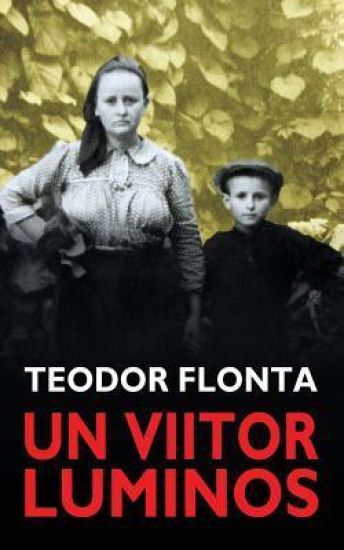
In 1946, nori amenintatori se aduna pe cerul unui satuc din Transilvania, Lupoaia, unde traditiile imbibate cu prejudecati si superstitii au dainuit de-a lungul multor generatii. Cel de-al Doilea Razboi Mondial s-a sfarsit dar vietile lupoienilor sunt ravasite de impunerea unor schimbari draconice si fara sens de catre un nou regim care doreste sa creeze un om nou, pentru o societate noua. Guvernul totalitar recent instalat ameninta sa elimine familia Flonta, declarandu-l pe Pavel, tatal lui Teodor, chiabur - "dusman al poporului." Pavel este arestat, intemnitat si torturat. C nd valul persecutiilor atinge apogeul, Pavel este obligat sa traiasca ascuns. In mod neasteptat, meseria pe care Pavel a invatat-o in tinerete il salveaza: rusii, care extrag uraniu in Carpati pentru prima lor bomba atomica, il angajeaza la ei. Acolo, la mina, bratul lung al Securitatii nu il poate ajunge. Stalin inca mai traieste cand Teodor incepe sa mearga la scoala. Sfasiat intre doua lumi opuse - casa, in care sunt pastrate valorile traditionale si unde oamenii se iubesc - si scoala, unde indoctrinarea si nedreptatea fac legea, Teodor pune mereu intrebari si cugeta asupra logicii incurcate din spatele evenimentelor, uneori cu obraznicie si umor, de care numai un copil este in stare in astfel de imprejurari. Evenimentele, desigur, il afecteaza puternic pe Teodor inca din pruncie, intrucat in comunism pacatele parintilor - imaginare sau reale - cad pe umerii copiilor lor.
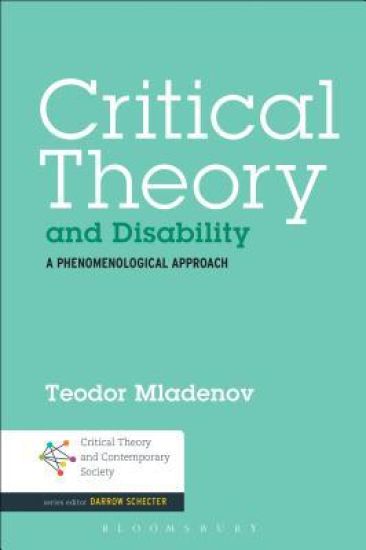
Critical Theory and Disability explores social and ontological issues encountered by present-day disabled people, applying ideas from disability studies and phenomenology. It focuses on disabling contexts in order to highlight and criticize the ontological assumptions of contemporary society, particularly those related to the meaning of human being. In empirical terms, the book explores critically social practices that undermine disabled people's well being, drawing on cases from contemporary Bulgaria. It includes in-depth examination of key mechanisms such as disability assessment, personal assistance (direct payments) and disability-based discrimination. On this basis, wider sociological and ontological claims are made concerning the body, identity, otherness, and exclusion.
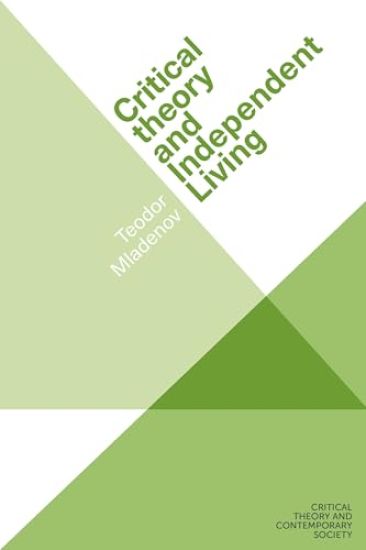
Critical theory and Independent Living explores intersections between contemporary critical theory and disabled people’s struggle for self-determination. The book highlights the affinities between the Independent Living movement and studies of epistemic injustice, biopower, and psychopower. It discusses in depth the activists’ critical engagement with welfare-state paternalism, neoliberal marketisation, and familialism. This helps develop a pioneering comparison between various welfare regimes grounded in Independent Living advocacy. The book draws on the activism of disabled people from the European Network on Independent Living (ENIL) by developing case studies of the ENIL’s campaigning for deinstitutionalisation and personal assistance. It is argued that this work helps rethink independence as a form of interdependence, and that this reframing is pivotal for critical theorising in the twenty-first century.
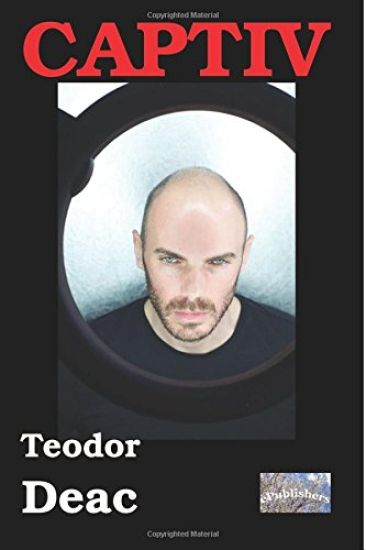
CAPTIVE. A NovelThis book is in Romanian. It is a great-length novel in which life is taken to the extremes; an exceptional achievement. Captiv este un roman-fluviu de 828 pagini n care viaţa este dusă la extreme. Un roman n care te pierzi şi te regăseşti, fiind n acelaşi timp şi foarte insolit, şi foarte actual. T nărul scriitor Teodor Deac scrie o proză foarte originală şi de-a dreptul acaparantă.Redăm mai jos entuziastul articol scris de jurnalistul Sorin Roşca Stănescu imediat după lectura romanului.Luptător cu scutulEste o imagine care mă obsedează. De foarte mulţi ani. Eram student c nd, la sala Dalles din Bucureşti, a fost organizată o expoziţie de sculptură av ndu-l drept autor pe Henry Moore. Unul dintre cei mai mari artişti moderni ai lumii. O lucrare era intitulată "Luptător cu scutul." Este un personaj aproape mitologic. Nu poate fi nvins. Moare lupt nd. Nu se predă. Este de o măreţie rară. Ţi de un tragism sf şietor. Aceasta a fost prima imagine care mi-a venit n minte după 828 de pagini de lectură din prima carte a lui Teodor Deac. De ce?Pentru uriaşul curaj al unei sincerităţi. O sinceritate aproape sinucigaşă.Pentru cutezanţa autodisecării şi analizării p nă la automutilare, lipsite de orice tentativă de cosmetizare.Pentru că acest Teodor Deac ştie să identifice, n viaţa obişnuită, n oamenii pe l ngă care trece pe stradă, abjecţia şi măreţia.Pentru demonstraţia literară pe care o face asupra efectelor terapeutice ale autoflagelării, atunci c nd o asemenea operaţiune este iniţiată cu credinţă n Dumnezeu şi cu iubire faţă de semeni.Pentru introspecţia profundă, uneori de tip freudian, prin care şi desenează, şi decupează şi şi animează personajele.Pentru sf şietoarea frescă a unei lumi ieşite dintr-o groapă a istoriei şi care aleargă haotic către lumină. Un fel de Guernică rom nească.Pentru că tot cam atunci, c nd mi s-a ntipărit n minte, pentru totdeauna, imaginea acelui "Luptător cu scutul" al lui Henry Moore, mai aveam o revelaţie. La fel de puternică. Nu n planul artelor vizuale. Ci, tocmai n plan literar. Citeam un fantastic roman, primul scris de Petru Popescu. După care a luat Premiul Uniunii Scriitorilor pentru "Dulce ca mierea e glonţul patriei." Acest prim roman de debut se numea "Prins." Era despre viaţa unei muşte, blocată ntre două ferestre. O existenţă tragică şi, n acelaşi timp, plină de neprevăzut şi chiar de senzaţional. O viaţă trăită intens. De o muscă. n principiu, nu ar fi trebuit să se nt mple nimic senzaţional. Ţi nimic romantic. Ţi cu toate astea, n această carte s-a nt mplat tot ce se poate nt mpla n existenţa umană. Pur şi simplu, s-au consumat toate experienţele posibile.Este pentru a două oară n viaţă c nd citesc un autor, de data asta chiar debutant, şi ştiu că mă aflu n prezenţa unui scriitor de primă mărime. Apărut de nicăieri. Cum ar fi musca lui Petru Popescu. Sau "Luptător cu scutul" de Henry Moore.SORIN ROŞCA STĂNESCU

Survival Guide: Useful Lessons on Building Storm Shelter and Root Cellar For Storing Food
Teodor Lamar
Createspace Independent Publishing Platform
2017
nidottu
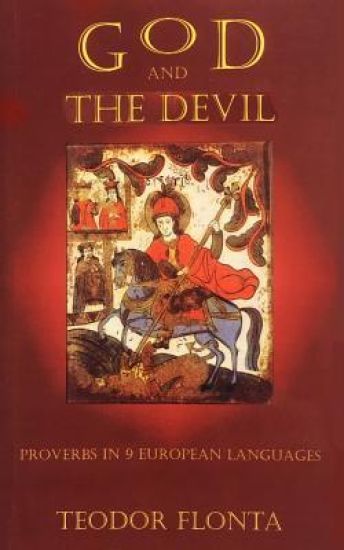
God and the Devil: Proverbs in 9 European Languages
Teodor Flonta
Createspace Independent Publishing Platform
2017
nidottu
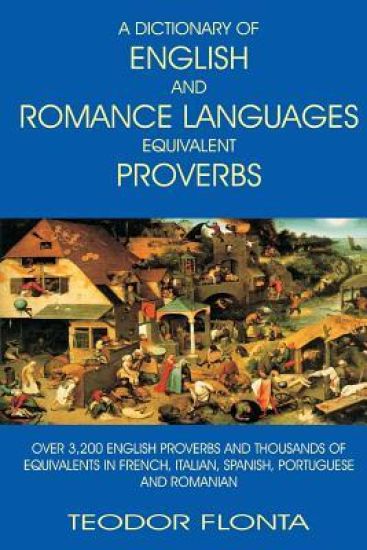
A Dictionary of English and Romance Languages Equivalent Proverbs
Teodor Flonta
Createspace Independent Publishing Platform
2017
nidottu
A Dictionary of English and French Equivalent Proverbs
Teodor Flonta
Createspace Independent Publishing Platform
2017
nidottu
This dictionary assembles 2,234 English proverbs and their French equivalents. Equivalent proverbs are those which express the same concept literally, such as "Love is blind" = "L'amour est aveugle" or with completely different words, such as "Every cloud has a silver lining" = "Dans toute chose il y a un bon c t ." The Dictionary is a very useful reference tool for scholars of the two languages, for researchers working in various associated fields such as linguistics, literature, folklore, anthropology, psychology, sociology, history, and for workers in newer areas such as advertising and contemporary media. The Dictionary is also of interest to diplomats and politicians who try to improve their communication by sharing ideas formulated in some common meaningful expressions; it will assist interpreters and translators, and teachers and students for whom it is important to understand not only what the target culture expresses in the same way as their own, but also what is formulated in a different way. The Dictionary is also of benefit to non-professionals who, for the sheer enjoyment of it, wish to savour the wisdom, wit, poetry and the colourful language of proverbs.
A Dictionary of English and Italian Equivalent Proverbs
Teodor Flonta
Createspace Independent Publishing Platform
2017
nidottu
This dictionary assembles 2,513 English proverbs and their Italian equivalents. Equivalent proverbs are those which express the same concept, be it literally, such as "Love is blind" = "L'amore cieco," or with completely different words, such as"Every cloud has a silver lining" = "Non tutto il male viene per nuocere." The Dictionary is a very useful reference tool for scholars of the two languages, for researchers working in various associated fields such as linguistics, literature, folklore, anthropology, psychology, sociology, history, and for workers in newer areas such as advertising and contemporary media. The Dictionary is also of interest to diplomats and politicians who try to improve their communication by sharing ideas formulated in some common meaningful expressions; it will assist interpreters and translators, and teachers and students for whom it is important to understand not only what the target culture expresses in the same way as their own, but also what is formulated in a different way. The Dictionary is also of benefit to non-professionals who, for the sheer enjoyment of it, wish to savour the wisdom, wit, poetry and the colourful language of proverbs.
A Dictionary of English and Portuguese Equivalent Proverbs
Teodor Flonta
Createspace Independent Publishing Platform
2017
nidottu
This dictionary assembles 1806 English proverbs and their Portuguese equivalents. Equivalent proverbs are those which express the same concept, be it literally, such as "Love is blind" = "O amor cego," or with completely different words, such as "Every cloud has a silver lining" = "N o h mal sem bem, cata para quem." The Dictionary is a very useful reference tool for scholars of the two languages, for researchers working in various associated fields such as linguistics, literature, folklore, anthropology, psychology, sociology, history, and for workers in newer areas such as advertising and contemporary media. The Dictionary is also of interest to diplomats and politicians who try to improve their communication by sharing ideas formulated in some common meaningful expressions; it will assist interpreters and translators, and teachers and students for whom it is important to understand not only what the target culture expresses in the same way as their own, but also what is formulated in a different way. The Dictionary is also of benefit to non-professionals who, for the sheer enjoyment of it, wish to savour the wisdom, wit, poetry and the colourful language of proverbs.
A Dictionary of English and Romanian Equivalent Proverbs
Teodor Flonta
Createspace Independent Publishing Platform
2017
nidottu
This dictionary assembles more than 1450 English proverbs and their Romanian equivalents. Equivalent proverbs are those which express the same concept, be it literally, such as "All that glitters is not gold" = "Nu tot ce sclipeste e aur", or with completely different words, such as "Every cloud has a silver lining" = "Nici un rau fara bine." The Dictionary is a very useful reference tool for scholars of the two languages, for researchers working in various associated fields such as linguistics, literature, folklore, anthropology, psychology, sociology, history, and for workers in newer areas such as advertising and contemporary media. The Dictionary is also of interest to diplomats and politicians who try to improve their communication by sharing ideas formulated in some common meaningful expressions; it will assist interpreters and translators, and teachers and students for whom it is important to understand not only what the target culture expresses in the same way as their own, but also what is formulated in a different way. The Dictionary is also of benefit to non-professionals who, for the sheer enjoyment of it, wish to savour the wisdom, wit, poetry and the colourful language of proverbs.
A Dictionary of English and Spanish Equivalent Proverbs
Teodor Flonta
Createspace Independent Publishing Platform
2017
nidottu