Kirjahaku
Etsi kirjoja tekijän nimen, kirjan nimen tai ISBN:n perusteella.
1000 tulosta hakusanalla Terence


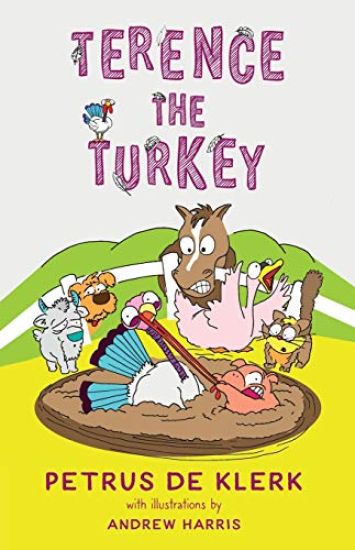
My experience and adventures as a primary school teacher during the last 15 years inspired me to write the 'Terence the Turkey' series. The students loved it when I read some of the stories to them after lunch time. My students were between eight and eleven years of age. Their response were always clapping and cheering - they just loved Terence. Now, in book format, I am convinced that children between seven and eleven years of age would love the adventures of 'Terence the Turkey'.Terence lives on a farm near Townsville with his loving parents Tommy and Teresa. He has a big bully of an older brother called Todd, as well as a loving little sister called Tammy. The book consists of short, funny, fictitious stories, with most adventures taking place on the farm with a variety of other animals. The main character is off course Terence, and he is well supported by others like Gopher the goose, Baby the bull, Patrick the pig, Ernie the eagle, Gerald the goat, Uncle Murdock, the Fearfeathers, and Aunt Suzie the swan.As the author, my main idea is to tell funny and interesting stories in every chapter. Readers will find a FUN SHEET at the end of the chapters. The fun sheet should be fun, but it can also be an educational tool for parents, schools, and even children-church programs. There are scriptures to be completed, life lessons, a variety of 'monkey puzzle' (multichoice) questions, vocabulary to be filled in, as well as a 'Go Quiz' with interesting facts about the chapter. The answers to all the questions are provided at the back of the book.'Terence the Turkey' will soon be followed up by 'Terence in Africa' - as this second book is completed and being edited at the moment. I am currently working on two more adventure books where Terence will be travelling to places like New Zealand
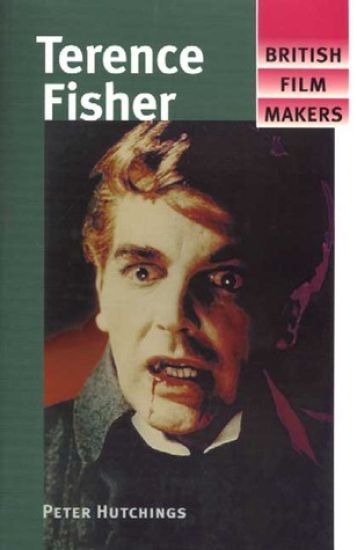
Terence Fisher is best known as the director who made most of the classic Hammer horrors – including The Curse of Frankenstein, Dracula and The Devil Rides Out. But there is more to Terence Fisher than Hammer horror. In a busy twenty-five-year career, he directed fifty films, not just horrors but also thrillers, comedies, melodramas and science-fiction. This book offers an appreciation of all of Fisher's films and also gives a sense of his place in British film history. Looking at Fisher’s career as a whole not only underlines his importance as a film-maker but also casts a new, interesting light on the areas in which he worked – Gainsborough melodrama, the 1950s B film, 1960s science-fiction and, of course, Hammer, one of the most successful independent film companies in the history of British cinema.
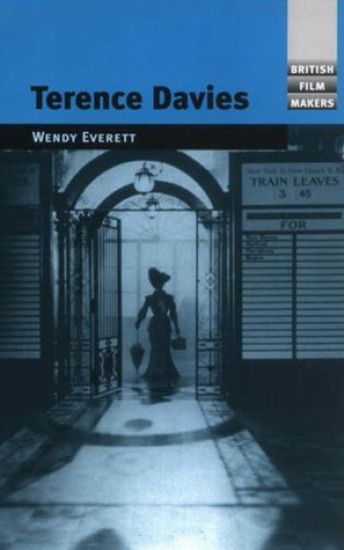
Terence Davies has made some of the most innovative, harrowing, and hauntingly lyrical films of the contemporary era. This is the first ever book-length study of his work, combining detailed analysis of all his films with a persuasive and stimulating investigation of key filmic issues of time and memory, identity and selfhood, and the nature of literary adaptation, as well as a previously unpublished interview with Davies himself.The book demonstrates that Davies's films successfully subvert traditional division between 'popular' culture and 'art-house' cinema. Gardner explores not only Davies's debt to social realism, the British Documentary movement, and Ealing comedies, but equally to the European auteur tradition and to the great Hollywood musicals and melodramas that continue to inspire him. It provides fresh insight into the centrality of music in Davies's work, and into his conviction that film itself is closer to music than to any other art form.
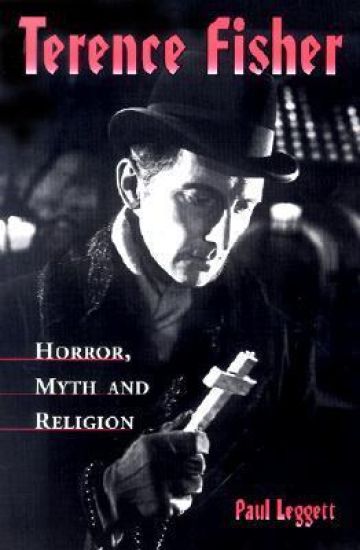
Some critics in England and France have long maintained that British director Terence Fisher, whose films dominated world markets in the 1950s and 60s, was one of the greatest directors of fantasy films in history. Since his death in 1980, Fisher's reputation has grown from relative obscurity and his influence on the development of the modern horror film has been widely recognized. However, Fisher's importance should not be limited to the context of the fantasy and horror film genres. His films should also be recognized as expressions of his generalizations about human spirituality. This critical study of Fisher's films begins with an introduction that provides biographical information on his film career, summaries of all of the films he directed and examples of his impact on contemporary cinema. All of Fisher's films are analyzed in terms of their Christian and religious themes as well as their mythical sources. Chapters are devoted to Fisher's work on the subjects of Frankenstein, Dracula, curses (The Devil Rides Out), the ancient goddess (The Gorgon), the divided self (The Man Who Could Cheat Death) and the redeemer hero (The Stranglers of Bombay). The concluding chapter analyzes the role and influence of Biblical narratives in Fisher's films. Also included is a filmography; the work is fully indexed.
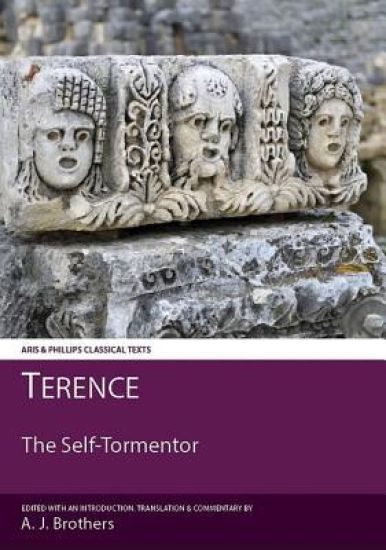
Terence: The Self-Tormentor
Aris Phillips Ltd
1988
nidottu
The Self-Tormentor is the most neglected of Terence's six comedies, no full scale edition having appeared in England since the end of the last century; yet it is in many ways the author's most exciting play. The plot, of the 'double' type favoured by Terence, is fast-moving, complicated and full of intrigues masterminded by the ever-optimistic Syrus, who provides one of the best examples of the 'cunning slave' of Roman comedy. The presence of the two old men, one the self-tormentor of the title, the two sons and the sons' romantic attachments provides a contrast and variety in characterisation which show Terence's perceptive treatment at its best.
"Terence's Brothers was put on in Rome in 160 B.C. when 'captive Greece was capturing her ruffian conqueror and bringing style to barnyard Latium', when Cato the Elder, still vigorous at 74, was defending 'the ways of our Roman ancestors' with pen and voice, and fourteen years before the destruction of Carthage and Corinth which marked a new epoch in Roman history. It is the latest surviving example of comoedia palliata, and for sustained verve, variety, characterization, and substance it is perhaps the most accomplished of the genre as we know it, as well as a document of the blending of Greek and Roman not yet quite complete. The play deals with a perennial domestic problem - how fathers should relate to teenage children - and raises the wider question of ends and means in education. Latin text with facing-page translation.
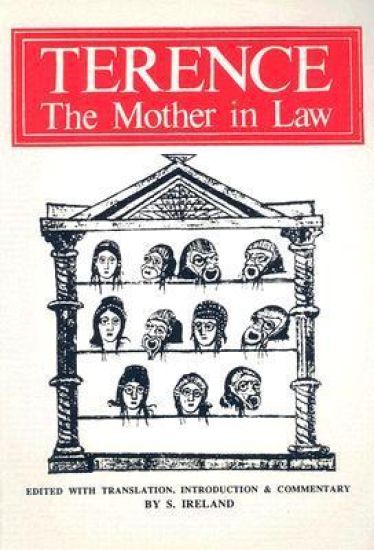
Terence: The Mother-in-Law
Aris Phillips Ltd
1990
nidottu
At the first two presentations of this play in 165 and 160 BC, the prospect of rival attractions drove the actors prematurely off the stage, and it was only in September 160 that it was finally performed in full. For this reason the play has been seen as spanning virtually the whole of Terence's career, while the fact that the playwright refused to abandon it to oblivion indicates the importance which he himself attached to it. Though its plot is founded upon the conventional theme of marital problems, The Mother in Law departs radically from the usual treatment of such topics to become at times more closely akin to tragedy than to comedy. It is the purpose of this edition to show Terence's skill not only in terms of plot construction and development but also in character portrayal and his ability to maintain the suspense of the situation almost to the last moment.
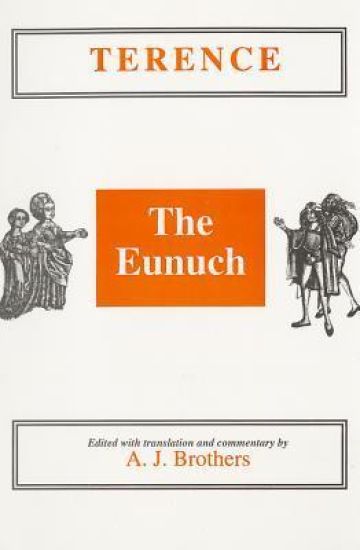
When first performed, The Eunuch was a great success. Today, with its larger-than-life characters (particularly the boastful soldier Thraso and the toady Gnatho), its farcical and exaggerated humour and its vigorous action, it strikes the modern reader as the funniest and most Plautine of Terence's six comedies. It is also a play of effective and entertaining contrasts, particularly that between the two brothers Phaedria and Chaerea. Their very different attitudes to love and romance provide one of the play's chief points of interest, while Thais presents yet another picture of love, that of the professional courtesan. The fact that Thais, Thraso and the slave Parmeno are not quite the stereotypes we might expect to find in this type of play adds yet more to an amusing and thought provoking comedy.
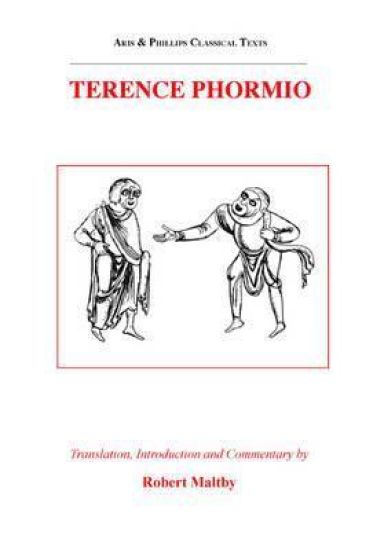
Terence: Phormio
Aris Phillips Ltd
2012
nidottu
Terence's Phormio , based on a Greek original by Apollodorus of Carystus, was produced towards the end of his short dramatic career in 161 BC. With its lively action, based on the traditional elements of love, deception and mistaken identity, the play provides an ideal introduction to the genre of New Comedy. What makes the Phormio unique amongst Terence's works is the central importance of the witty and scheming parasite who gives his name to the play and directs and controls its action throughout, even when absent from the stage. The use of the 'double' plot with its two young men in love and two contrasting fathers provides ample scope for depth and variety of characterisation. The aim of the present edition is to bring out to the full Terence's skill in plot development and character portrayal which was to make the Phormio one of his most entertaining plays. Latin text with facing-page translation, introduction and commentary.
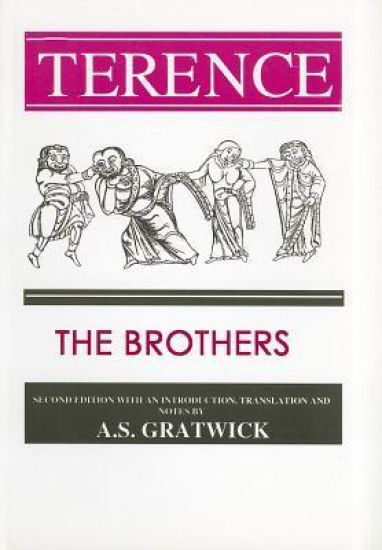
"Terence's Brothers was put on in Rome in 160 B.C. when 'captive Greece was capturing her ruffian conqueror and bringing style to barnyard Latium', when Cato the Elder, still vigorous at 74, was defending 'the ways of our Roman ancestors' with pen and voice, and fourteen years before the destruction of Carthage and Corinth which marked a new epoch in Roman history. It is the latest surviving example of comoedia palliata, and for sustained verve, variety, characterization, and substance it is perhaps the most accomplished of the genre as we know it, as well as a document of the blending of Greek and Roman not yet quite complete. The play deals with a perennial domestic problem - how fathers should relate to teenage children - and raises the wider question of ends and means in education. Latin text with facing-page translation.
Terence: Andria
Cambridge University Press
2022
sidottu
As the first play of the Terentian corpus, Andria has always attracted a special level of attention. It was the first Roman comedy produced after antiquity (at Florence in 1476) and the first translated into English, and it has inspired writers from Jonson and Dryden to Thornton Wilder. It provides an excellent introduction to Terence 's particular style of comedy, noteworthy for its ambivalence in representing the perspectives of woman and slaves and its experiments with a secondary plot line. The commentary is designed both to help students with the basic linguistic and technical problems confronting inexperienced readers of Roman comedy and to open discussion of essential interpretive questions involving the play and its relation to the wider comic corpus, as well as the utility of comedy for furthering our understanding of the Roman world and its values.
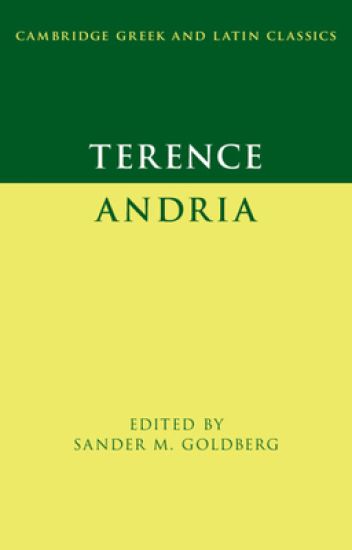
Terence: Andria
Cambridge University Press
2022
pokkari
As the first play of the Terentian corpus, Andria has always attracted a special level of attention. It was the first Roman comedy produced after antiquity (at Florence in 1476) and the first translated into English, and it has inspired writers from Jonson and Dryden to Thornton Wilder. It provides an excellent introduction to Terence 's particular style of comedy, noteworthy for its ambivalence in representing the perspectives of woman and slaves and its experiments with a secondary plot line. The commentary is designed both to help students with the basic linguistic and technical problems confronting inexperienced readers of Roman comedy and to open discussion of essential interpretive questions involving the play and its relation to the wider comic corpus, as well as the utility of comedy for furthering our understanding of the Roman world and its values.