Kirjahaku
Etsi kirjoja tekijän nimen, kirjan nimen tai ISBN:n perusteella.
1000 tulosta hakusanalla Terry L Probert

The Child Golfer: A Parent's Guide. Foreword by Mrs. Julius Boros.
Terry L. Glatt
Techleader Publishing
2013
nidottu

From ISO to Pos: Point of Sale from the Makers Exatouch(r)
Terry L. Glatt
Exatouch Publishing
2013
nidottu

The Liberty Keys: God's Instructions for Keeping America Free
Terry L. Kirby
Tlk Ministries Publishing
2018
nidottu
The Liberty Keys: God's Instructions for Keeping America Free is based upon the passage from Galatians 5:1 which says, "It was for freedom that Christ set us free; therefore keep standing firm and do not be subject again to a yoke of slavery."The Liberty Keys reminds all Americans that we face great challenges, but we can look forward to a free and prosperous future if we act now to keep America free. The Liberty Keys is a call to action for all Americans to help stop our country from moving away from the wisdom of our foundational documents and becoming a nation that would be unrecognizable to our founding fathers. The Liberty Keys is also a call to action for Christian Americans who have been silent far too long. Christian Americans must call upon the power of God to protect our union from a growing threat of expanding government. When readers follow the recommendations contained in the Liberty Keys, America will stay on course to remain free.


Inside Strategy: Value Creation from within Your Organization
Terry L. Mathis; Shawn M. Galloway
Sce Press
2016
nidottu

Lean Behavior-Based Safety: BBS for Today's Realities
Terry L. Mathis; Shawn M. Galloway
Sce Press
2017
nidottu
In 2001, ProAct Safety introduced Lean BBS(R) as a major update to traditional behavior-based safety (BBS) models with a focus on providing new value with more efficient, safer work. Simply put, Lean BBS focuses on adding value to employees rather than trying to control them. Lean BBS addresses the four major issues found within the average behavior-based safety process:1.BBS provides successful results for many organizations, but they are looking for a way to take the process to the next level. The Lean BBS methodology takes them there.2.Some are adamantly against BBS for a number of reasons (union resistance, questionable implementations, cookie-cutter and inflexible approaches, etc.). Lean BBS gains bargaining unit support, is fit-for-purpose and customized to the realities of each organization.3.Organizations with vastly different processes from site to site want to bring uniformity across the company. Simply changing from one methodology to another is not appealing nor rational. Implementing a more efficient Lean BBS model was both appealing and a rational solution to encourage the processes to evolve towards value-add.4.Some hesitate to pursue BBS due to high costs and demand on internal resources to operate the process. Lean BBS provides an alternative that addresses these concerns due to the hyper focus on efficiency and ensuring value-add.While several version of BBS have been around since the 1980s, few of them have truly adapted to the changing environment in which they must operate. The Lean BBS process has not only evolved, but continues to do so with each customized implementation. Making BBS fit your culture, operations and logistical realities, rather than trying to make your company fit some idealistic model, is a key to success in today's realities. From the authors of bestselling books on the future of safety excellence, safety strategy, culture and leadership, explore how to put the principles of Lean BBS to work in your operations. Discover the new realities of behavior-based safety.
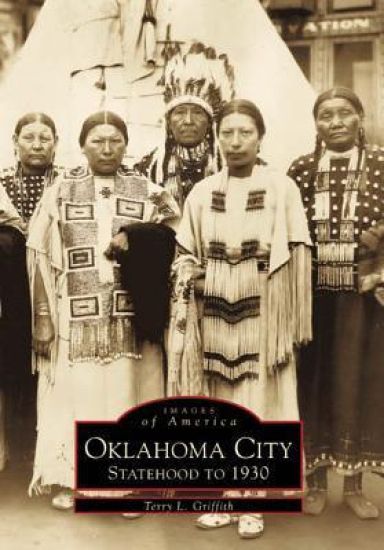
The first session of the 59th Congress introduced theconsideration of the statehood bill, providing for the admission of two states: one to be composed of the Indian and Oklahoma Territories, and the other formed by uniting Arizona and New Mexico Territories. The Omnibus Statehood Bill became law on June 14, 1906. On the morning of November 16, 1907, more than 10,000 residents from Oklahoma Citytraveled to Guthrie to celebrate their recently won statehood. Using over 200 images combined with well-documented facts from city directories, newspapers, and first-hand accounts, this book chronicles Oklahoma City''s unique history from its beginnings in the early 20th century as Packingtown to theDepression Era. Also featured are many glimpses into the city''s everyday past'--scenes of residents enjoying a day at Belle Isle, the State Fair, and on the streets of downtown'--and a section on Henry Samuel Overholser, the Father of Oklahoma City.

Were it not for a strategically important crossing over the River Tame, linking Tipton with West Bromwich over a thousand years ago, Great Bridge might not have grown into one of the most important centres of industry and commerce in the Black Country during the nineteenth and twentieth centuries. Its location on the main road between Birmingham and Dudley, and also at the junction of a highway from Tipton, was also a considerable factor in its success. Pictured in this book is a nostalgic account of life during the last century, touching on the occupations and pastimes of people from not only Great Bridge but also parts of the surrounding areas of Golds Hill, Greets Green, Horseley Heath, Swan Village and Toll End. The community spirit which existed and the changes that have occurred in these areas, in many cases within living memory, are shown here in a collection of over 300 photographs with informative captions compiled by local author Terry Price. In this, his second book dealing with Great Bridge, most of the photographic material has again originated from private collections and has therefore never previously been published.

The Artisans and Entrepreneurs of Dongyang County
Terry L Cooper; Yinhuo Jiang
Routledge
1998
sidottu
The book represents a continuation of research begun by Cooper in Hong Kong in the early 1970s among expatriate artisan furniture makers and woodcarvers from Dongyang County, Zhejiang Province. He now sets out to investigate the fate of the same craft in the hands of the same folk under totally different socio-economic conditions in their native county in communist People's Republic of China.
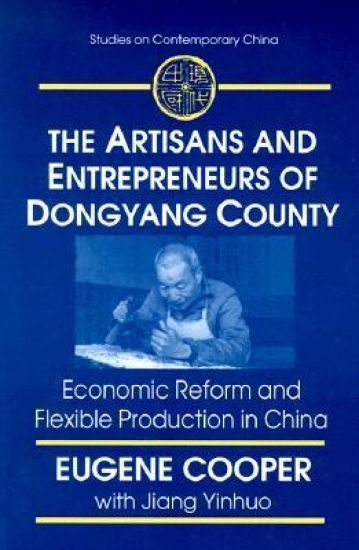
The Artisans and Entrepreneurs of Dongyang County
Terry L Cooper; Yinhuo Jiang
Routledge
1999
nidottu
The book represents a continuation of research begun by Cooper in Hong Kong in the early 1970s among expatriate artisan furniture makers and woodcarvers from Dongyang County, Zhejiang Province. He now sets out to investigate the fate of the same craft in the hands of the same folk under totally different socio-economic conditions in their native county in communist People's Republic of China.

This book shows students entering the public service as well as professionals in the field how to become ethically competent to provide the leadership needed to advance the public interest. The book doesn't just talk about ethics. The contributors describe how ethical competence should guide organizational conduct. All chapters are original, and written by experts in the PA field for this book.
This book shows students entering the public service as well as professionals in the field how to become ethically competent to provide the leadership needed to advance the public interest. The book doesn't just talk about ethics. The contributors describe how ethical competence should guide organizational conduct. All chapters are original, and written by experts in the PA field for this book.

Retelling 30 myths and legends of the Eastern Cherokee, this book presents the stories with important details providing a culturally authentic and historically accurate context. Background information is given within each story so the reader may avoid reliance on glossaries, endnotes, or other explanatory aids. The reader may thus experience the stories more as their original audiences would have. This approach to adapting traditional literature derives from ideas found in reader-response and translation theory and from research in cognitive psychology and sociolinguistics.

Examines the Toyota team culture as a conceptual framework and uses it to discuss related topics, such as workplace injuries, the implications of alienating assembly workers, and the role of women.In Team Toyota Besser presents the results of an in-depth study of Toyota's assembly plant in Georgetown, Kentucky. Based on employee interviews, analyses of company publications, newspaper accounts, interaction with company employees and attendance at company events over a five-year period, this book documents how Toyota is replicating its style of management and its team culture in its Kentucky plant. Team Toyota is one of the few books about Japanese organizations that incorporates the perspectives of both nonmanagement and management employees.The author, using "team" as an organizing metaphor, shows how Toyota is able to penetrate the small work group to increase employee commitment and recruit support for organizational goal achievement. The team metaphor shows how Toyota coordinates the myriad of departments, occupational categories and managerial levels into a "community of fate" (we're all in this together) ideology. Further, the team concept is used to elaborate an important and problematic component of workers' reality at the Camry plant—workplace disabilities. An overview of the position of female employees and wives of Japanese executives at Toyota's Kentucky plant is also provided.

In an environment where corporate scandals fill the headlines and ethics courses have suddenly become standard fare in business schools, Terry Leap offers welcome insights into and useful ways of thinking about a critical problem that permeates our society. His main contribution is an integrative model of white-collar crime, which smoothly incorporates influences from sociology, psychology, public policy, and business. As he explains the process that occurs across the many different categories of crimes within organizations, he finds that there are more similarities than differences between "criminals in the suites" and "criminals in the streets."Leap's definition of crimes within organizations and the people who commit them are laid out in his first chapter. He then goes on to discuss the causes of and events surrounding white-collar crime, types of crimes and criminals, the decision-making processes of white-collar criminals, and the impact of these crimes. His concluding chapter predicts future trends in corporate crime, including an explanation of why we are likely to see more crime in health care. Throughout, Leap presents numerous specific examples and cases—from famous meltdowns such as Enron and WorldCom to less-publicized incidents including a weight-loss franchisee mislabeling doughnuts as low fat and a CEO of a South Carolina regional transportation authority misusing taxpayer money for lavish meals, personal expenses, and world travel.

Phantom Billing, Fake Prescriptions, and the High Cost of Medicine
Terry L. Leap
ILR Press
2011
sidottu
U.S. health care is a $2.5 trillion system that accounts for more than 17 percent of the nation's GDP. It is also highly susceptible to fraud. Estimates vary, but some observers believe that as much as 10 percent of all medical billing involves some type of fraud. In 2009, New York's Medicaid fraud office recovered $283 million and obtained 148 criminal convictions. In July 2010, the U.S. Justice Department charged nearly 100 patients, doctors, and health care executives in five states of bilking the Medicare system out of more than $251 million through false claims for services that were medically unnecessary or never provided. These cases only hint at the scope of the problem. In Phantom Billing, Fake Prescriptions, and the High Cost of Medicine, Terry L. Leap takes on medical fraud and its economic, psychological, and social costs. Illustrated throughout with dozens of specific and often fascinating cases, this book covers a wide variety of crimes: kickbacks, illicit referrals, overcharging and double billing, upcoding, unbundling, rent-a-patient and pill-mill schemes, insurance scams, short-pilling, off-label marketing of pharmaceuticals, and rebate fraud, as well as criminal acts that enable this fraud (mail and wire fraud, conspiracy, and money laundering). After assessing the effectiveness of the federal laws designed to fight health care fraud and abuse—the antikickback statute, the Stark Law, the False Claims Act, HIPAA, and the food and drug laws—Leap suggests a number of ways that health care providers, consumers, insurers, and federal and state officials can bring health care fraud and abuse under control, thereby reducing the overall cost of medical care in America.

Mention of the American West usually evokes images of rough and tumble cowboys, ranchers, and outlaws. In contrast, The Not So Wild, Wild West casts America's frontier history in a new framework that emphasizes the creation of institutions, both formal and informal, that facilitated cooperation rather than conflict. Rather than describing the frontier as a place where heroes met villains, this book argues that everyday people helped carve out legal institutions that tamed the West. The authors emphasize that ownership of resources evolves as those resources become more valuable or as establishing property rights becomes less costly. Rules evolving at the local level will be more effective because local people have a greater stake in the outcome. This theory is brought to life in the colorful history of Indians, fur trappers, buffalo hunters, cattle drovers, homesteaders, and miners. The book concludes with a chapter that takes lessons from the American frontier and applies them to our modern "frontiers"—the environment, developing countries, and space exploration.