Kirjojen hintavertailu. Mukana 12 380 097 kirjaa ja 12 kauppaa.

Kirjahaku

Etsi kirjoja tekijän nimen, kirjan nimen tai ISBN:n perusteella.

1000 tulosta hakusanalla Thomas C Foster

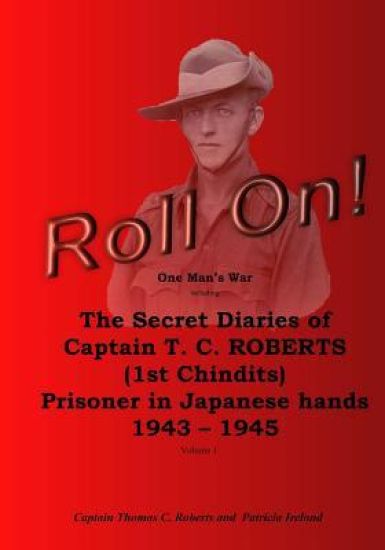
Roll On!: One Man's War Including The Secret Diaries Of Captain T. C. Roberts (1st Chindits), Prisoner In Japanese Hands 1943-19
This is the colour edition of 'Roll On in which Patricia Roberts faithfully presents her father's genuine, unique diary written as a Prisoner of War of the Japanese. After a forlorn childhood, Tommy Roberts joined the Liverpool King's Regiment and served in India, where for seven years this new life of friendship, discipline and education suited him well. On his return to England and civilian life, he quickly fell in love and he and Edith were married in June 1939. However, war was of course imminent. Tommy was quickly recalled to the Reserve and by August 1939 he had volunteered as a regular soldier. There followed a year as Instructor in Drill and Weapons Training in Burscough where, in September 1940, he and Ede welcomed their baby son. Yet the War was raging and in December Tommy felt called to active service once again. After a year in Coastal and Home Defence his 13th Battalion King 's Regiment was sent to India. Three months later Orde Wingate asked for volunteers for his 77th India Brigade which was to fight the Japanese behind enemy lines in Burma. Tommy volunteered. A gruelling training followed to prepare the volunteers for war against jungle, disease and a ruthless enemy. In early 1943 the Brigade, now known as the Chindits, entered Burma. An even more gruelling, perhaps unimaginable, time began. Tommy was Commander of the Support Group in Column 5, led by Major Bernard Fergusson. By April 1943, Column 5 was 250 miles behind Japanese lines. Meanwhile however, supply lines for food, ammunition and communication had evaporated. Column 5 became spread out and decimated. In April 1943 Tommy's group was ambushed at Kaukkwe and the few survivors taken prisoner. Arriving eventually at Changi Prison, Tommy would spend the next 3 years just managing to survive. Yet somehow, secretly, he was writing a diary. Written in tiny writing in pencil, hidden away as even risking execution if found, both he and the diary somehow did survive. In 1986 Tommy made a recording of his diary and Tommy's daughter Patricia, with the help of the recording, has managed to transcribe the tiny writing in the original Malay exercise books. She presents here this unique, genuine and historic record for all to read....
Roll On!: One Man's War including The Secret Diaries of Captain T.C. ROBERTS (1st Chindits) Prisoner in Japanese hands 1943 - 19
Patricia Ireland here faithfully presents her father's genuin and unique diary, secretly written when a prisoner of war of the Japanese. After a sad childhood, Tommy Roberts joined the Liverpool King's Regiment and served in India, where for seven years this new life of friendship, discipline and education suited him well. On his return to England and civilian life, he quickly fell in love and he and Edith were married in June 1939. However, war was of course imminent. Tommy was quickly recalled to the Reserve and by August 1939 he had volunteered as a regular soldier. There followed a year as Instructor in Drill and Weapons Training in Burscough where, in September 1940, he and Ede welcomed their baby son. Yet the War was raging and in December Tommy felt called to active service once again. After a year in Coastal and Home Defence his 13th Battalion King 's Regiment was sent to India. Three months later Orde Wingate asked for volunteers for his 77th India Brigade which was to fight the Japanese behind enemy lines in Burma. Tommy volunteered. A gruelling training followed to prepare the volunteers for war against jungle, disease and a ruthless enemy. In early 1943 the Brigade, now known as the Chindits, entered Burma. An even more gruelling, perhaps unimaginable, time began. Tommy was Commander of the Support Group in Column 5, led by Major Bernard Fergusson. By April 1943, Column 5 was 250 miles behind Japanese lines. Meanwhile however, supply lines for food, ammunition and communication had evaporated. Column 5 became spread out and decimated. In April 1943 Tommy's group was ambushed at Kaukkwe and the few survivors taken prisoner. Arriving eventually at Changi Prison, Tommy would spend the next 3 years just managing to survive. Yet somehow, secretly, he was writing a diary. Written in tiny writing in pencil, hidden away as even risking execution if found, both he and the diary somehow did survive. In 1986 Tommy made a recording of his diary and Tommy's daughter Patricia, with the help of the recording, has managed to transcribe the tiny writing in the original Malay exercise books. She presents here this unique, genuine and historic record for all to read....
Classic Christianity

Classic Christianity

Thomas C Oden

HarperOne
2009
sidottu
For the first time, Thomas Oden's Systematic Theology classic series (individually titled The Living God, The Word of Life, and Life in the Spirit) is available in one complete volume. A renowned theologian, Oden provides a consensus view of the Christian faith, delving deeply into ancient Christian tradition and bringing to the contemporary church the best wisdom from its past. In this magisterial work, Oden tackles the central questions of Christian belief and the nature of the trinity. Written for clergy, Christian educators, religious scholars, and lay readers alike, Classic Christianity provides the best synthesis of the whole history of Christian thought. Part one explores the most intriguing questions of the study of God--Does God exist? Does Jesus reveal God? Is God personal, compassionate, free?--and presents answers that reflect the broad consensus culled from the breadth of the church's teachers. It is rooted deeply and deliberately in scripture but confronts the contemporary mind with the vitality of the Christian tradition. Part two addresses the perplexing Christological issues of whether God became flesh, whether God became Christ, and whether Christ is the source of salvation. Oden details the core beliefs concerning Jesus Christ that have been handed down for the last two hundred decades, namely, who he was, what he did, and what that means for us today. Part three examines how the work of God in creation and redemption is being brought to consummation by the Holy Spirit in persons, through communities, and in the fullness of human destiny. Oden's magisterial study not only treats the traditional elements of systematical theology but also highlights the foundational exegetes throughout history. Covering the ecumenical councils and early synods; the great teachers of the Eastern church tradition, including Athanasius and John Chrysostom; and the prominent Western figures such as Augustine, Ambrose, Thomas Aquinas, Martin Luther, and John Calvin, this book offers the reader the fullest understanding of the Christian faith available.
Theory and Practice of Archaeology

Theory and Practice of Archaeology

Thomas C Patterson

Routledge Member of the Taylor and Francis Group
2004
nidottu
For courses in Introduction to Archaeology Theory and Methods.Intended for the Introductory Archaeology course with the goal of teaching students how to think like archaeologists, this workbook includes activities that challenge students to interpret and explain field findings and help them to see the link between theory and practice.
The Civil Rights Movement

The Civil Rights Movement

Thomas C. Holt

OXFORD UNIVERSITY PRESS INC
2023
nidottu
The Civil Rights Movement was among the most important historical developments of the twentieth century and one of the most remarkable mass movements in American history. Not only did it decisively change the legal and political status of African Americans, but it prefigured as well the moral premises and methods of struggle for other historically oppressed groups seeking equal standing in American society. And, yet, despite a vague, sometimes begrudging recognition of its immense import, more often than not the movement has been misrepresented and misunderstood. For many, a singular moment, frozen in time at the Lincoln Memorial, sums up much of what Americans and the world know about that remarkable decade of struggle. In The Civil Rights Movement: A Very Short Introduction, Thomas C. Holt provides an informed and nuanced understanding of the origins, character, and objectives of the mid-twentieth-century freedom struggle, privileging the aspirations and initiatives of the ordinary, grassroots people who made it. Holt conveys a sense of these developments as a social movement, one that shaped its participants even as they shaped it. He emphasizes the conditions of possibility that enabled the heroic initiatives of the common folk over those of their more celebrated leaders. This groundbreaking book reinserts the critical concept of "movement" back into our image and understanding of the Civil Rights Movement.
Cartesian Truth

Cartesian Truth

Thomas C. Vinci

Oxford University Press Inc
1998
sidottu
This book argues that science and metaphysics are closely and inseparably interwoven in the work of Descartes, so that the metaphysics cannot be understood without the science and vice versa. In order to make his case, Thomas Vinci offers a careful philosophical reconstruction of central parts of Descartes' metaphysics and of his theory of perception, each considered in relation to his epistemology. Vinci aims to show that Descartes gave an important positive role to sense-perception in his epistemology, and also that he used his reflections on sense-perception to frame his criticism of previous theories of the sensory qualities of objects.
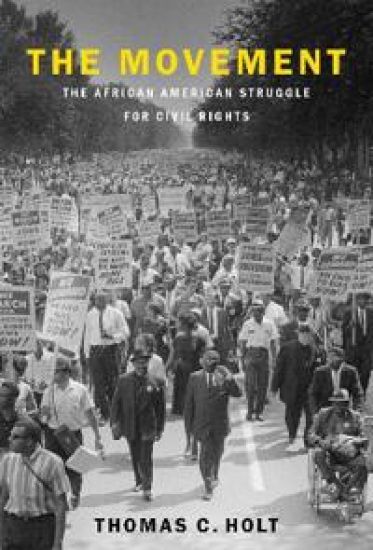
The Movement

The Movement

Thomas C. Holt

Oxford University Press Inc
2021
sidottu
The civil rights movement was among the most important historical developments of the twentieth century and one of the most remarkable mass movements in American history. Not only did it decisively change the legal and political status of African Americans, but it prefigured as well the moral premises and methods of struggle for other historically oppressed groups seeking equal standing in American society. And, yet, despite a vague, sometimes begrudging recognition of its immense import, more often than not the movement has been misrepresented and misunderstood. For the general public, a singular moment, frozen in time at the Lincoln Memorial, sums up much of what Americans know about that remarkable decade of struggle. In The Movement, Thomas C. Holt provides an informed and nuanced understanding of the origins, character, and objectives of the mid-twentieth-century freedom struggle, privileging the aspirations and initiatives of the ordinary, grassroots people who made it. Holt conveys a sense of these developments as a social movement, one that shaped its participants even as they shaped it. He emphasizes the conditions of possibility that enabled the heroic initiatives of the common folk over those of their more celebrated leaders. This groundbreaking book reinserts the critical concept of "movement" back into our image and understanding of the civil rights movement.
Socrates on Trial

Socrates on Trial

Thomas C. Brickhouse; Nicholas D. Smith

Clarendon Press
1991
nidottu
Brickhouse and Smith argue, contrary to virtually every modern interpretation of Plato's Apology of Socrates, that Plato's Socrates offers a sincere defence against the charges he faces. In doing so the book offers an exhaustive historical and philosophical interpretation of and commentary on Plato's Apology. The authors demonstrate that Socrates' moral and religious principles prohibit him from needlessly risking a negative vote at his trial. By providing a complete commentary, they show that each specific claim Socrates makes in the Apology can be construed as a sincere attempt to inform the jury of the truth and convince the jurors of his blamelessness. The effect of these two strategies is a novel interpretation of the Apology which sheds new light on various aspects of Socrates' life and philosophy.
Space, Geometry, and Kant's Transcendental Deduction of the Categories
Thomas C. Vinci aims to reveal and assess the structure of Kant's argument in the Critique of Pure Reason called the "Transcendental Deduction of the Categories." At the end of the first part of the Deduction in the B-edition Kant states that his purpose is achieved: to show that all intuitions in general are subject to the categories. On the standard reading, this means that all of our mental representations, including those originating in sense-experience, are structured by conceptualization. But this reading encounters an exegetical problem: Kant states in the second part of the Deduction that a major part of what remains to be shown is that empirical intuitions are subject to the categories. How can this be if it has already been shown that intuitions in general are subject to the categories? Vinci calls this the Triviality Problem, and he argues that solving it requires denying the standard reading. In its place he proposes that intuitions in general and empirical intuitions constitute disjoint classes and that, while all intuitions for Kant are unified, there are two kinds of unification: logical unification vs. aesthetic unification. Only the former is due to the categories. A second major theme of the book is that Kant's Idealism comes in two versions-for laws of nature and for objects of empirical intuition-and that demonstrating these versions is the ultimate goal of the Deduction of the Categories and the similarly structured Deduction of the Concepts of Space, respectively. Vinci shows that the Deductions have the argument structure of an inference to the best explanation for correlated domains of explananda, each arrived at by independent applications of Kantian epistemic and geometrical methods.
Aligning for Advantage

Aligning for Advantage

Thomas C. Lawton; Jonathan P. Doh; Tazeeb Rajwani

Oxford University Press
2014
sidottu
In today's multipolar world economy, strategic alignment is a key determinant of competitive advantage. Coca-Cola, Danone, Diageo, DuPont, Lufthansa and Tata are some of the companies that strive for a pragmatic approach to balancing competitive strategies with political and social obligations. Aligning for Advantage argues that to build and sustain corporate success, companies must synchronize business objectives and market positions with political and regulatory activism and social and environmental engagement. Moreover, to be credible and realizable, these external market and nonmarket strategies need to be equally attuned with corporate vision, values, and culture. The book advances a managerial process and conceptual framework for aligning corporate strategy. In some cases alignment may mean deep, strategically embedded partnerships with governments, NGOs, or other stakeholders. In others, alignment may take the form of looser, temporary collaborations with outside organizations. No matter the approach, the relationship between nonmarket and market strategies should be deliberate and genuine, not accidental or artificial. Truly aligned strategies should reconcile and modulate sometimes conflicting external demands in a way that is appropriate for the corporation's geographic and market positions. In the end, companies must leverage their overall nonmarket strategy as a source of competitive advantage.
Aligning for Advantage

Aligning for Advantage

Thomas C. Lawton; Jonathan P. Doh; Tazeeb Rajwani

Oxford University Press
2014
nidottu
In today's multipolar world economy, strategic alignment is a key determinant of competitive advantage. Coca-Cola, Danone, Diageo, DuPont, Lufthansa and Tata are some of the companies that strive for a pragmatic approach to balancing competitive strategies with political and social obligations. Aligning for Advantage argues that to build and sustain corporate success, companies must synchronize business objectives and market positions with political and regulatory activism and social and environmental engagement. Moreover, to be credible and realizable, these external market and nonmarket strategies need to be equally attuned with corporate vision, values, and culture. The book advances a managerial process and conceptual framework for aligning corporate strategy. In some cases alignment may mean deep, strategically embedded partnerships with governments, NGOs, or other stakeholders. In others, alignment may take the form of looser, temporary collaborations with outside organizations. No matter the approach, the relationship between nonmarket and market strategies should be deliberate and genuine, not accidental or artificial. Truly aligned strategies should reconcile and modulate sometimes conflicting external demands in a way that is appropriate for the corporation's geographic and market positions. In the end, companies must leverage their overall nonmarket strategy as a source of competitive advantage.
Governing Soviet Journalism

Governing Soviet Journalism

Thomas C. Wolfe

Indiana University Press
2005
sidottu
The Soviet project of creating a new culture and society entailed a plan for the modeling of "new" persons who embodied and fulfilled the promise of socialism, and this vision was expressed in the institutions of government. Using archival sources, essays, and interviews with journalists, Thomas C. Wolfe provides an account of the final four decades of Soviet history viewed through the lens of journalism and media. Whereas most studies of the Soviet press approach its history in terms of propaganda or ideology, Wolfe's focus is on the effort to imagine a different kind of person and polity. Foucault's concept of governmentality illuminates the relationship between the idea of the socialist person and everyday journalistic representation, from the Khrushchev period to the 1990s and the appearance of the tabloid press. This thought-provoking study provides insights into the institutions of the Soviet press and the lives of journalists who experienced important transformations of their work.