Kirjojen hintavertailu. Mukana 12 390 323 kirjaa ja 12 kauppaa.

Kirjahaku

Etsi kirjoja tekijän nimen, kirjan nimen tai ISBN:n perusteella.

1000 tulosta hakusanalla Thomas C. Hinkle

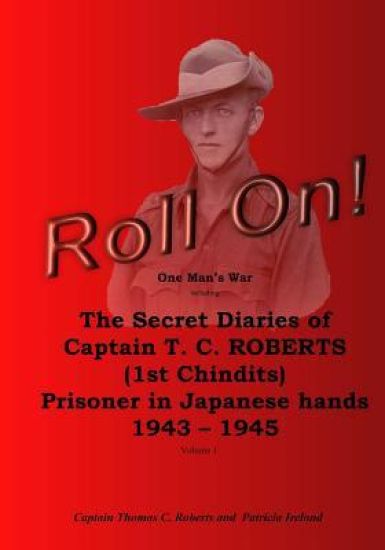
Roll On!: One Man's War Including The Secret Diaries Of Captain T. C. Roberts (1st Chindits), Prisoner In Japanese Hands 1943-19
This is the colour edition of 'Roll On in which Patricia Roberts faithfully presents her father's genuine, unique diary written as a Prisoner of War of the Japanese. After a forlorn childhood, Tommy Roberts joined the Liverpool King's Regiment and served in India, where for seven years this new life of friendship, discipline and education suited him well. On his return to England and civilian life, he quickly fell in love and he and Edith were married in June 1939. However, war was of course imminent. Tommy was quickly recalled to the Reserve and by August 1939 he had volunteered as a regular soldier. There followed a year as Instructor in Drill and Weapons Training in Burscough where, in September 1940, he and Ede welcomed their baby son. Yet the War was raging and in December Tommy felt called to active service once again. After a year in Coastal and Home Defence his 13th Battalion King 's Regiment was sent to India. Three months later Orde Wingate asked for volunteers for his 77th India Brigade which was to fight the Japanese behind enemy lines in Burma. Tommy volunteered. A gruelling training followed to prepare the volunteers for war against jungle, disease and a ruthless enemy. In early 1943 the Brigade, now known as the Chindits, entered Burma. An even more gruelling, perhaps unimaginable, time began. Tommy was Commander of the Support Group in Column 5, led by Major Bernard Fergusson. By April 1943, Column 5 was 250 miles behind Japanese lines. Meanwhile however, supply lines for food, ammunition and communication had evaporated. Column 5 became spread out and decimated. In April 1943 Tommy's group was ambushed at Kaukkwe and the few survivors taken prisoner. Arriving eventually at Changi Prison, Tommy would spend the next 3 years just managing to survive. Yet somehow, secretly, he was writing a diary. Written in tiny writing in pencil, hidden away as even risking execution if found, both he and the diary somehow did survive. In 1986 Tommy made a recording of his diary and Tommy's daughter Patricia, with the help of the recording, has managed to transcribe the tiny writing in the original Malay exercise books. She presents here this unique, genuine and historic record for all to read....
Roll On!: One Man's War including The Secret Diaries of Captain T.C. ROBERTS (1st Chindits) Prisoner in Japanese hands 1943 - 19
Patricia Ireland here faithfully presents her father's genuin and unique diary, secretly written when a prisoner of war of the Japanese. After a sad childhood, Tommy Roberts joined the Liverpool King's Regiment and served in India, where for seven years this new life of friendship, discipline and education suited him well. On his return to England and civilian life, he quickly fell in love and he and Edith were married in June 1939. However, war was of course imminent. Tommy was quickly recalled to the Reserve and by August 1939 he had volunteered as a regular soldier. There followed a year as Instructor in Drill and Weapons Training in Burscough where, in September 1940, he and Ede welcomed their baby son. Yet the War was raging and in December Tommy felt called to active service once again. After a year in Coastal and Home Defence his 13th Battalion King 's Regiment was sent to India. Three months later Orde Wingate asked for volunteers for his 77th India Brigade which was to fight the Japanese behind enemy lines in Burma. Tommy volunteered. A gruelling training followed to prepare the volunteers for war against jungle, disease and a ruthless enemy. In early 1943 the Brigade, now known as the Chindits, entered Burma. An even more gruelling, perhaps unimaginable, time began. Tommy was Commander of the Support Group in Column 5, led by Major Bernard Fergusson. By April 1943, Column 5 was 250 miles behind Japanese lines. Meanwhile however, supply lines for food, ammunition and communication had evaporated. Column 5 became spread out and decimated. In April 1943 Tommy's group was ambushed at Kaukkwe and the few survivors taken prisoner. Arriving eventually at Changi Prison, Tommy would spend the next 3 years just managing to survive. Yet somehow, secretly, he was writing a diary. Written in tiny writing in pencil, hidden away as even risking execution if found, both he and the diary somehow did survive. In 1986 Tommy made a recording of his diary and Tommy's daughter Patricia, with the help of the recording, has managed to transcribe the tiny writing in the original Malay exercise books. She presents here this unique, genuine and historic record for all to read....
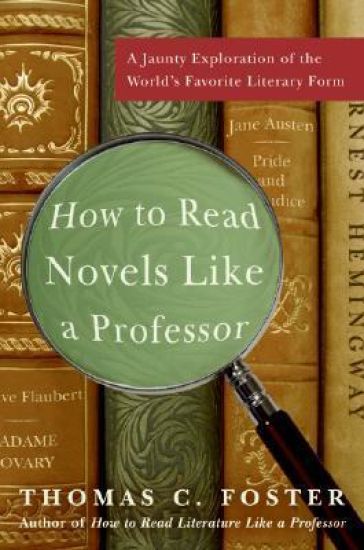
How to Read Novels Like a Professor: A Jaunty Exploration of the World's Favorite Literary Form
The follow-up and companion volume to the New York Times bestselling How to Read Literature Like a Professor--a lively and entertaining guide to understanding and dissecting novels to make everyday reading more enriching, satisfying, and funOf all the literary forms, the novel is arguably the most discussed . . . and fretted over. From Miguel de Cervantes's Don Quixote to the works of Jane Austen, F. Scott Fitzgerald, Ernest Hemingway, and today's masters, the novel has grown with and adapted to changing societies and technologies, mixing tradition and innovation in every age throughout history.Thomas C. Foster--the sage and scholar who ingeniously led readers through the fascinating symbolic codes of great literature in his first book, How to Read Literature Like a Professor--now examines the grammar of the popular novel. Exploring how authors' choices about structure--point of view, narrative voice, first page, chapter construction, character emblems, and narrative (dis)continuity--create meaning and a special literary language, How to Read Novels Like a Professor shares the keys to this language with readers who want to get more insight, more understanding, and more pleasure from their reading.
Classic Christianity

Classic Christianity

Thomas C Oden

HarperOne
2009
sidottu
For the first time, Thomas Oden's Systematic Theology classic series (individually titled The Living God, The Word of Life, and Life in the Spirit) is available in one complete volume. A renowned theologian, Oden provides a consensus view of the Christian faith, delving deeply into ancient Christian tradition and bringing to the contemporary church the best wisdom from its past. In this magisterial work, Oden tackles the central questions of Christian belief and the nature of the trinity. Written for clergy, Christian educators, religious scholars, and lay readers alike, Classic Christianity provides the best synthesis of the whole history of Christian thought. Part one explores the most intriguing questions of the study of God--Does God exist? Does Jesus reveal God? Is God personal, compassionate, free?--and presents answers that reflect the broad consensus culled from the breadth of the church's teachers. It is rooted deeply and deliberately in scripture but confronts the contemporary mind with the vitality of the Christian tradition. Part two addresses the perplexing Christological issues of whether God became flesh, whether God became Christ, and whether Christ is the source of salvation. Oden details the core beliefs concerning Jesus Christ that have been handed down for the last two hundred decades, namely, who he was, what he did, and what that means for us today. Part three examines how the work of God in creation and redemption is being brought to consummation by the Holy Spirit in persons, through communities, and in the fullness of human destiny. Oden's magisterial study not only treats the traditional elements of systematical theology but also highlights the foundational exegetes throughout history. Covering the ecumenical councils and early synods; the great teachers of the Eastern church tradition, including Athanasius and John Chrysostom; and the prominent Western figures such as Augustine, Ambrose, Thomas Aquinas, Martin Luther, and John Calvin, this book offers the reader the fullest understanding of the Christian faith available.
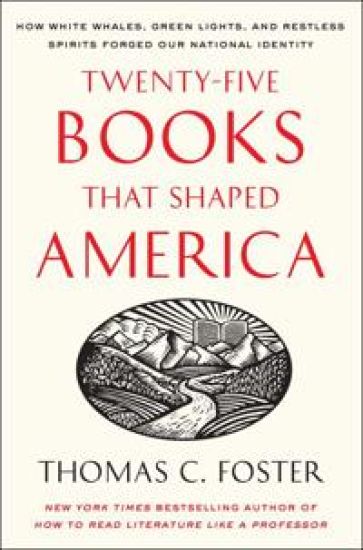
Twenty-five Books That Shaped America

Twenty-five Books That Shaped America

Thomas C. Foster

HARPERCOLLINS PUBLISHERS INC
2011
nidottu
From the author of the New York Times bestselling How to Read Literature Like a Professor comes a highly entertaining and informative new book on the twenty-five works of literature that have most shaped the American character. Foster applies his much-loved combination of wit, know-how, and analysis to explain how each work has shaped our very existence as readers, students, teachers, and Americans.Foster illuminates how books such as The Last of the Mohicans, Moby-Dick, My Ántonia, The Great Gatsby, The Maltese Falcon, Their Eyes Were Watching God, On the Road, The Crying of Lot 49, and others captured an American moment, how they influenced our perception of nationhood and citizenship, and what about them endures in the American character. Twenty-five Books That Shaped America is a fun and enriching guide to America through its literature.
Reading the Silver Screen

Reading the Silver Screen

Thomas C Foster

HarperPerennial
2018
nidottu
From the New York Times bestselling author of How to Read Literature Like a Professor comes an indispensable analysis of our most celebrated medium, film. No art form is as instantly and continuously gratifying as film. When the house lights go down and the lion roars, we settle in to be shocked, frightened, elated, moved, and thrilled. We expect magic. While we're being exhilarated and terrified, our minds are also processing data of all sorts-visual, linguistic, auditory, spatial-to collaborate in the construction of meaning. Thomas C. Foster's Reading the Silver Screen will show movie buffs, students of film, and even aspiring screenwriters and directors how to transition from merely being viewers to becoming accomplished readers of this great medium. Beginning with the grammar of film, Foster demonstrates how every art form has a grammar, a set of practices and if-then propositions that amount to rules. He goes on to explain how the language of film enables movies to communicate the purpose behind their stories and the messages they are striving to convey to audiences by following and occasionally breaking these rules. Using the investigative approach readers love in How to Read Literature Like a Professor, Foster examines this grammar of film through various classic and current movies both foreign and domestic, with special recourse to the "AFI 100 Years-100 Movies" lists. The categories are idiosyncratic yet revealing. In Reading the Silver Screen, readers will gain the expertise and confidence to glean all they can from the movies they love.
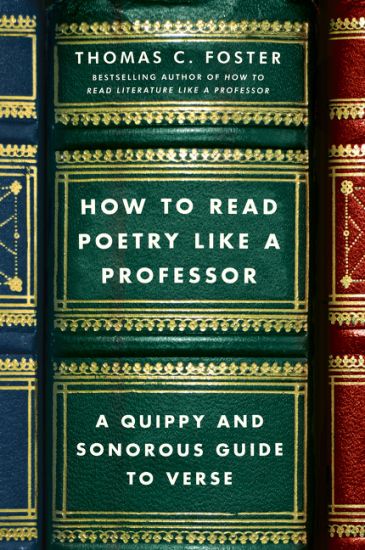
How to Read Poetry Like a Professor

How to Read Poetry Like a Professor

Thomas C Foster

HarperCollins
2018
nidottu
From the bestselling author of How to Read Literature Like a Professor comes this essential primer to reading poetry like a professor that unlocks the keys to enjoying works from Lord Byron to the Beatles.No literary form is as admired and feared as poetry. Admired for its lengthy pedigree—a line of poets extending back to a time before recorded history—and a ubiquitous presence in virtually all cultures, poetry is also revered for its great beauty and the powerful emotions it evokes. But the form has also instilled trepidation in its many admirers mainly because of a lack of familiarity and knowledge. Poetry demands more from readers—intellectually, emotionally, and spiritually—than other literary forms. Most of us started out loving poetry because it filled our beloved children's books from Dr. Seuss to Robert Louis Stevenson. Eventually, our reading shifted to prose and later when we encountered poetry again, we had no recent experience to make it feel familiar. But reading poetry doesn’t need to be so overwhelming. In an entertaining and engaging voice, Thomas C. Foster shows readers how to overcome their fear of poetry and learn to enjoy it once more. From classic poets such as Shakespeare, Samuel Taylor Coleridge, and Edna St. Vincent Millay to later poets such as E.E. Cummings, Billy Collins, and Seamus Heaney, How to Read Poetry Like a Professor examines a wide array of poems and teaches readers:How to read a poem to understand its primary meaning.The different technical elements of poetry such as meter, diction, rhyme, line structures, length, order, regularity, and how to learn to see these elements as allies rather than adversaries.How to listen for a poem’s secondary meaning by paying attention to the echoes that the language of poetry summons up.How to hear the music in poems—and the poetry in songs!With How to Read Poetry Like a Professor, readers can rediscover poetry and reap its many rewards.
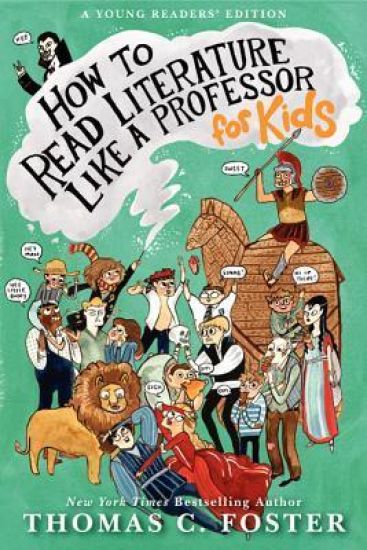
How to Read Literature Like a Professor: For Kids
In How to Read Literature Like a Professor: For Kids, New York Times bestselling author and professor Thomas C. Foster gives tweens the tools they need to become thoughtful readers. With funny insights and a conversational style, he explains the way writers use symbol, metaphor, characterization, setting, plot and other key techniques to make a story come to life.From that very first middle school book report to that first college course, kids need to be able to understand the layers of meaning in literature. Foster makes learning this important skill fun and exciting by using examples from How the Grinch Stole Christmas to The Adventures of Huckleberry Finn, from short stories and poems to movie scripts. This go-to guide unlocks all the hidden secrets to reading, making it entertaining and satisfying.
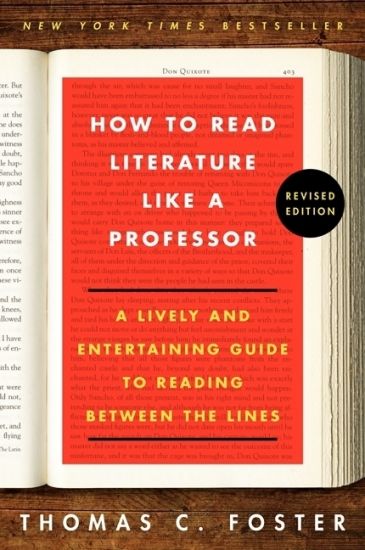
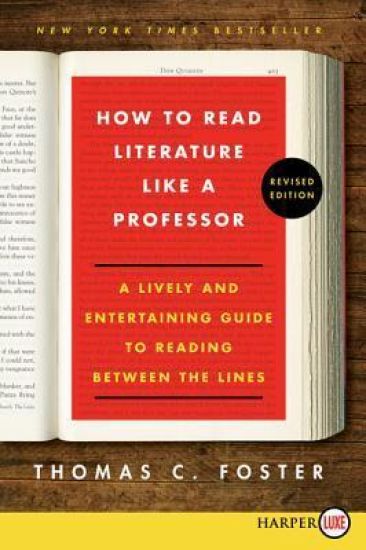
How to Read Literature Like a Professor Revised Edition
A thoroughly revised and updated edition of Thomas C. Foster's classic guide-a lively and entertaining introduction to literature and literary basics, including symbols, themes and contexts, that shows you how to make your everyday reading experience more rewarding and enjoyable. While many books can be enjoyed for their basic stories, there are often deeper literary meanings interwoven in these texts. How to Read Literature Like a Professor helps us to discover those hidden truths by looking at literature with the eyes-and the literary codes-of the ultimate professional reader, the college professor. What does it mean when a literary hero is traveling along a dusty road? When he hands a drink to his companion? When he's drenched in a sudden rain shower? Ranging from major themes to literary models, narrative devices and form, Thomas C. Foster provides us with a broad overview of literature-a world where a road leads to a quest, a shared meal may signify a communion, and rain, whether cleansing or destructive, is never just a shower-and shows us how to make our reading experience more enriching, satisfying, and fun. This revised edition includes new chapters, a new preface and epilogue, and incorporates updated teaching points that Foster has developed over the past decade.
How to Read Literature Like a Professor: A Lively and Entertaining Guide to Reading Between the Lines
Thoroughly revised and expanded for a new generation of readers, this classic guide to enjoying literature to its fullest--a lively, enlightening, and entertaining introduction to a diverse range of writing and literary devices that enrich these works, including symbols, themes, and contexts--teaches you how to make your everyday reading experience richer and more rewarding. While books can be enjoyed for their basic stories, there are often deeper literary meanings beneath the surface. How to Read Literature Like a Professor helps us to discover those hidden truths by looking at literature with the practiced analytical eye--and the literary codes--of a college professor.What does it mean when a protagonist is traveling along a dusty road? When he hands a drink to his companion? When he's drenched in a sudden rain shower? Thomas C. Foster provides answers to these questions as he explores every aspect of fiction, from major themes to literary models, narrative devices, and form. Offering a broad overview of literature--a world where a road leads to a quest, a shared meal may signify a communion, and rain, whether cleansing or destructive, is never just a shower--he shows us how to make our reading experience more intellectually satisfying and fun.The world, and curricula, have changed. This third edition has been thoroughly revised to reflect those changes, and features new chapters, a new preface and epilogue, as well as fresh teaching points Foster has developed over the past decade. Foster updates the books he discusses to include more diverse, inclusive, and modern works, such as Angie Thomas's The Hate U Give; Emily St. John Mandel's Station Eleven; Neil Gaiman's Neverwhere; Elizabeth Acevedo's The Poet X; Helen Oyeyemi's Mr. Fox and Boy, Snow, Bird; Sandra Cisneros's The House on Mango Street; Zora Neale Hurston's Their Eyes Were Watching God; Maggie O'Farrell's Hamnet; Madeline Miller's Circe; Pat Barker's The Silence of the Girls; and Tahereh Mafi's A Very Large Expanse of Sea.
How to Read Literature Like a Professor: A Lively and Entertaining Guide to Reading Between the Lines
The classic guide, now available in a hardcover edition--a lively and entertaining introduction to literature and literary basics, including symbols, themes and contexts, that shows you how to make your everyday reading experience more rewarding and enjoyable.While many books can be enjoyed for their basic stories, there are often deeper literary meanings interwoven in these texts. How to Read Literature Like a Professor helps us to discover those hidden truths by looking at literature with the eyes--and the literary codesof the ultimate professional reader, the college professor.What does it mean when a literary hero is traveling along a dusty road? When he hands a drink to his companion? When he's drenched in a sudden rain shower?Ranging from major themes to literary models, narrative devices and form, Thomas C. Foster provides us with a broad overview of literature--a world where a road leads to a quest, a shared meal may signify a communion, and rain, whether cleansing or destructive, is never just a shower--and shows us how to make our reading experience more enriching, satisfying, and fun.This revised edition includes new chapters, a new preface and epilogue, and incorporates updated teaching points that Foster has developed over the past decade.
How To Read Poetry Like A Professor

How To Read Poetry Like A Professor

Thomas C. Foster

HARPERCOLLINS PUBLISHERS INC
2018
nidottu
From the bestselling author of How to Read Literature Like a Professor comes this essential primer to reading poetry like a professor that unlocks the keys to enjoying works from Lord Byron to the Beatles.No literary form is as admired and feared as poetry. Admired for its lengthy pedigree--a line of poets extending back to a time before recorded history--and a ubiquitous presence in virtually all cultures, poetry is also revered for its great beauty and the powerful emotions it evokes. But the form has also instilled trepidation in its many admirers mainly because of a lack of familiarity and knowledge. Poetry demands more from readers--intellectually, emotionally, and spiritually--than other literary forms. Most of us started out loving poetry because it filled our beloved children's books from Dr. Seuss to Robert Louis Stevenson. Eventually, our reading shifted to prose and later when we encountered poetry again, we had no recent experience to make it feel familiar. But reading poetry doesn't need to be so overwhelming. In an entertaining and engaging voice, Thomas C. Foster shows readers how to overcome their fear of poetry and learn to enjoy it once more. From classic poets such as Shakespeare, Samuel Taylor Coleridge, and Edna St. Vincent Millay to later poets such as E.E. Cummings, Billy Collins, and Seamus Heaney, How to Read Poetry Like a Professor examines a wide array of poems and teaches readers: How to read a poem to understand its primary meaning.The different technical elements of poetry such as meter, diction, rhyme, line structures, length, order, regularity, and how to learn to see these elements as allies rather than adversaries.How to listen for a poem's secondary meaning by paying attention to the echoes that the language of poetry summons up.How to hear the music in poems--and the poetry in songs With How to Read Poetry Like a Professor, readers can rediscover poetry and reap its many rewards.
How to Read Nonfiction Like a Professor

How to Read Nonfiction Like a Professor

Thomas C Foster

HarperPerennial
2020
nidottu
The New York Times bestselling author of How to Read Literature Like a Professor uses the same skills to teach how to access accurate information in a rapidly changing 24/7 news cycle and become better readers, thinkers, and consumers of media.We live in an information age, but it is increasingly difficult to know which information to trust. Fake news is rampant in mass media, stoked by foreign powers wishing to disrupt a democratic society. We need to be more perceptive, more critical, and more judicious readers. The future of our republic may depend on it. How to Read Nonfiction Like a Professor is more careful, more attentive, more aware reading. On bookstore shelves, one book looks as authoritative as the next. Online, posts and memes don’t announce their relative veracity. It is up to readers to establish how accurate, how thorough, how fair material may be. After laying out general principles of reading nonfiction, How to Read Nonfiction Like a Professor offers advice for specific reading strategies in various genres from histories and biographies to science and technology to social media. Throughout, the emphasis will be on understanding writers’ biases, interrogating claims, analyzing arguments, remaining wary of broad assertions and easy answers, and thinking critically about the written and spoken materials readers encounter. We can become better citizens through better reading, and the time for that is now.
How to Read Nonfiction Like a Professor: A Smart, Irreverent Guide to Biography, History, Journalism, Blogs, and Everything in Between
The New York Times bestselling author of How to Read Literature Like a Professor uses the same skills to teach how to access accurate information in a rapidly changing 24/7 news cycle and become better readers, thinkers, and consumers of media.We live in an information age, but it is increasingly difficult to know which information to trust. Fake news is rampant in mass media, stoked by foreign powers wishing to disrupt a democratic society. We need to be more perceptive, more critical, and more judicious readers. The future of our republic may depend on it. How to Read Nonfiction Like a Professor is more careful, more attentive, more aware reading. On bookstore shelves, one book looks as authoritative as the next. Online, posts and memes don't announce their relative veracity. It is up to readers to establish how accurate, how thorough, how fair material may be. After laying out general principles of reading nonfiction, How to Read Nonfiction Like a Professor offers advice for specific reading strategies in various genres from histories and biographies to science and technology to social media. Throughout, the emphasis will be on understanding writers' biases, interrogating claims, analyzing arguments, remaining wary of broad assertions and easy answers, and thinking critically about the written and spoken materials readers encounter. We can become better citizens through better reading, and the time for that is now.
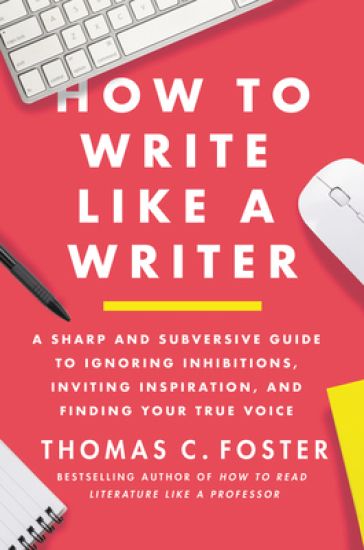
How to Write Like a Writer

How to Write Like a Writer

Thomas C Foster

HARPERCOLLINS PUBLISHERS INC
2022
nidottu
The New York Times bestselling author of the beloved classic How to Read Literature Like a Professor teaches you how to write everything from a report for your community association to a meaningful memoir in this masterful and engaging guide.Combing anecdotes and hard-won lessons from decades of teaching and writing—and invoking everyone from Hemingway to your third-grade teacher—retired professor Thomas C. Foster guides you through the basics of writing. With How to Write Like a Writer you’ll learn how to organize your thoughts, construct first drafts, and (not incidentally) keep you in your chair so that inspiration can come to visit.With warmth and wit, Foster shows you how to get into (and over) your best self, how to find your voice, and how to know when, if ever, a piece of work is done.Packed with enlightening anecdotes, highlighted with lists and bullet points, this invaluable guide reveals how writers work their magic, and reminds us that we all—for better or worse, whether we mean to or not—are known by what we put on paper or screen, both our thoughts and our words.