Kirjojen hintavertailu. Mukana 12 595 353 kirjaa ja 12 kauppaa.

Kirjahaku

Etsi kirjoja tekijän nimen, kirjan nimen tai ISBN:n perusteella.

1000 tulosta hakusanalla Thomas Doherty

Criticism and Modernity

Criticism and Modernity

Thomas Docherty

Oxford University Press
1999
sidottu
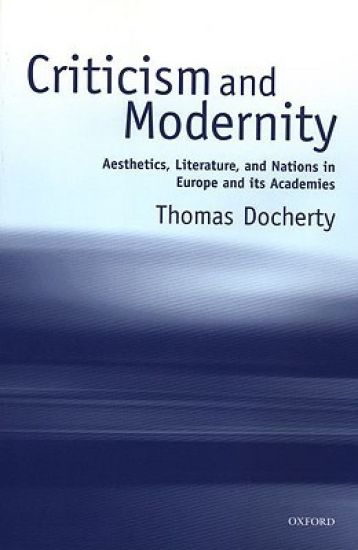
Criticism and Modernity traces the conditions under which criticism emerges as a socio-cultural practice within the institutionalized forms of European modernity and democracy. It argues that criticism is born out of anxieties about national supremacy in the late seventeenth century, with the consequence that the emergent national cultures of the eighteenth century and since become sites for the regulation of the democratic subject through the academic form of arguments about the proper relations of aesthetics to ethics and politics. The central issue is that of legitimation: how can subjective aesthetic experiences regulate the norms of ethical justice? That question is posed not as an abstract philosophical issue, but rather as a question properly located within the struggles for national culture. The usual Germanic source of modern aesthetics and criticism is here placed in the broader European context, involving contests between England, France, Scotland, Ireland, and the emergent Germany and Italy. Writers addressed include Corneille, Dryden, Molière, Shaftesbury, Hutcheson, Hume, Rousseau, Kant, Schiller, Hegel, Schopenhauer; and, throughout, the legacy of these thinkers is found in the most recent contemporary theory, in work by Agamben, Badiou, Lyotard, MacIntyre, and others. A closing chapter considers the formation of the university across modern Europe, in Vico's Naples, Humboldt's Berlin, Newman's Dublin, Blair's Edinburgh, the France of Alain and Benda, the England of Leavis, as well as our contemporary institutional predicaments.
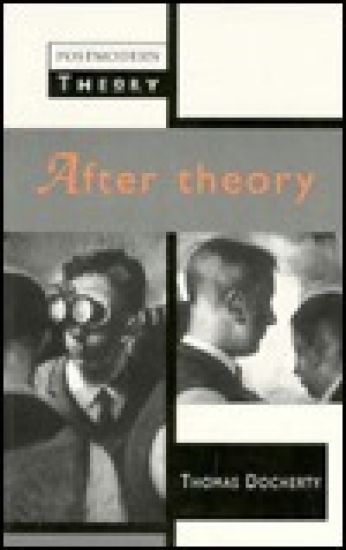
After Theory

After Theory

Thomas Docherty

Edinburgh University Press
1996
nidottu
This book proposes the necessity of a new critical attitude appropriate to a post-enlightenment social and political condition. Theory - the intellectual and his or her knowledge - has been institutionalised and tamed; the critic interested in praxis must find a new means of establishing an effective intellection. After Theory argues the demand for a post-theoretical or ana-theoretical attitude which will recondition and regenerate critique under the aegis of a philosophical and austere postmarxism. The 'waking' of theory advanced here ranges eclectically over twentieth-century practice in philosophy, literature, painting, music, dance, architecture, film and photography, breaking theory from its institutionalised bonds.
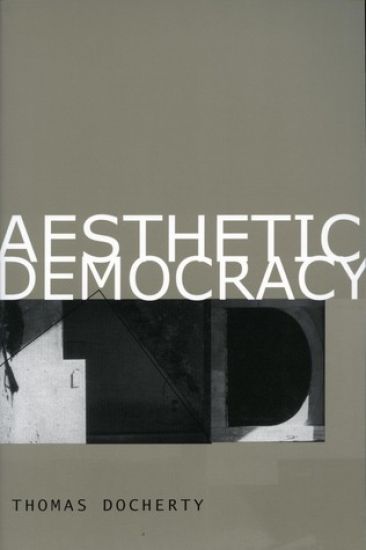
Aesthetic Democracy

Aesthetic Democracy

Thomas Docherty

Stanford University Press
2006
sidottu
Aesthetic Democracy argues that art and the aesthetic in general are the founding condition of the possibility of establishing social and political democracy. The book examines contemporary criticism and finds that it is historically shaped by colonialism, and that it sets up an opposition of east and west that shapes all contemporary cultural politics. The author argues for a way of outwitting this potentially dangerous struggle of east and west grounded in an aestheticism and a validation of sensory experience. Docherty proposes a new model of cultural critique, based on a revitalized and positively valorized notion of "hypocrisy," whose roots lie in Machiavelli, but whose contemporary strength lies in its potential for an ethical encounter with alterity as such.
Aesthetic Democracy

Aesthetic Democracy

Thomas Docherty

Stanford University Press
2006
pokkari
Aesthetic Democracy argues that art and the aesthetic in general are the founding condition of the possibility of establishing social and political democracy. The book examines contemporary criticism and finds that it is historically shaped by colonialism, and that it sets up an opposition of east and west that shapes all contemporary cultural politics. The author argues for a way of outwitting this potentially dangerous struggle of east and west grounded in an aestheticism and a validation of sensory experience. Docherty proposes a new model of cultural critique, based on a revitalized and positively valorized notion of "hypocrisy," whose roots lie in Machiavelli, but whose contemporary strength lies in its potential for an ethical encounter with alterity as such.
John Donne, Undone (Routledge Revivals)
Contemporary criticism of Donne has tended to ignore the historical culture and ideology that conditioned his writings, reinforcing the traditionally accepted model of the poet as a humanist of ethical, cultural and political individualism. In this title, first published in 1986, Thomas Docherty challenges this with a more rigorously theoretical reading of Donne, particularly in relation to the specific culture of the late Renaissance in Europe. Docherty locates Donne’s poetry at the crux of the various scientific, legal, domestic and rhetorical discourses that surrounded and informed it. With a broadly post-structuralist approach, this reissue will benefit literature students with an interest in the wider study and context of John Donne’s work.
John Donne, Undone (Routledge Revivals)
Contemporary criticism of Donne has tended to ignore the historical culture and ideology that conditioned his writings, reinforcing the traditionally accepted model of the poet as a humanist of ethical, cultural and political individualism. In this title, first published in 1986, Thomas Docherty challenges this with a more rigorously theoretical reading of Donne, particularly in relation to the specific culture of the late Renaissance in Europe. Docherty locates Donne’s poetry at the crux of the various scientific, legal, domestic and rhetorical discourses that surrounded and informed it. With a broadly post-structuralist approach, this reissue will benefit literature students with an interest in the wider study and context of John Donne’s work.
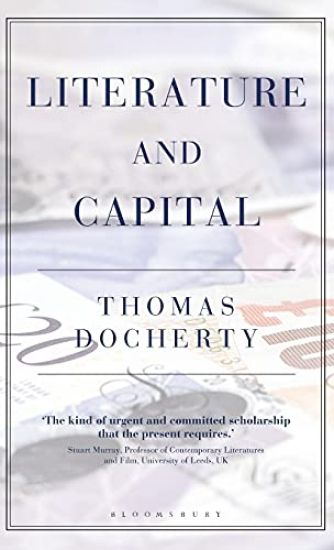
Literature and Capital

Literature and Capital

Thomas Docherty

Bloomsbury Academic
2018
nidottu
What is the value of literature? In this important new work, Thomas Docherty charts a new economic history of literary culture and its institutions in the modern age. From the literary patronage of the early modern period, through the colonial exploitation of the 18th and 19th centuries to the institutionalisation of “literature” in the neoliberal university of the 21st century, Literature and Capital explores the changing ways in which literary culture has both resisted and become complicit with exploitative economic notions of value.Drawing on the work of economic and political thinkers such as Thomas Piketty, Naomi Klein, Edward Said and Raymond Williams, the book includes readings of work by a wide range of canonical authors from Shakespeare, Donne and Swift to Tolstoy, Woolf and Ishiguro.
Literature and Capital

Literature and Capital

Thomas Docherty

Bloomsbury Academic
2018
sidottu
What is the value of literature? In this important new work, Thomas Docherty charts a new economic history of literary culture and its institutions in the modern age. From the literary patronage of the early modern period, through the colonial exploitation of the 18th and 19th centuries to the institutionalisation of “literature” in the neoliberal university of the 21st century, Literature and Capital explores the changing ways in which literary culture has both resisted and become complicit with exploitative economic notions of value.Drawing on the work of economic and political thinkers such as Thomas Piketty, Naomi Klein, Edward Said and Raymond Williams, the book includes readings of work by a wide range of canonical authors from Shakespeare, Donne and Swift to Tolstoy, Woolf and Ishiguro.
Political English

Political English

Thomas Docherty

Bloomsbury Academic
2019
nidottu
From post-truth politics to “no-platforming” on university campuses, the English language has been both a potent weapon and a crucial battlefield for our divided politics. In this important and wide-ranging intervention, Thomas Docherty explores the politics of the English language, its implication in the dynamics of political power and the spaces it offers for dissent and resistance. From the authorised English of the King James Bible to the colonial project of University English Studies, this book develops a powerful history for contemporary debates about propaganda, free speech and truth-telling in our politics. Taking examples from the US, UK and beyond - from debates about the Second Amendment and free-speech on campus, to the Iraq War and the Grenfell Tower fire - this book is a powerful and polemical return to Orwell’s observation that a degraded political language is intimately connected to an equally degraded political culture.
Political English

Political English

Thomas Docherty

Bloomsbury Academic
2019
sidottu
From post-truth politics to “no-platforming” on university campuses, the English language has been both a potent weapon and a crucial battlefield for our divided politics. In this important and wide-ranging intervention, Thomas Docherty explores the politics of the English language, its implication in the dynamics of political power and the spaces it offers for dissent and resistance. From the authorised English of the King James Bible to the colonial project of University English Studies, this book develops a powerful history for contemporary debates about propaganda, free speech and truth-telling in our politics. Taking examples from the US, UK and beyond - from debates about the Second Amendment and free-speech on campus, to the Iraq War and the Grenfell Tower fire - this book is a powerful and polemical return to Orwell’s observation that a degraded political language is intimately connected to an equally degraded political culture.
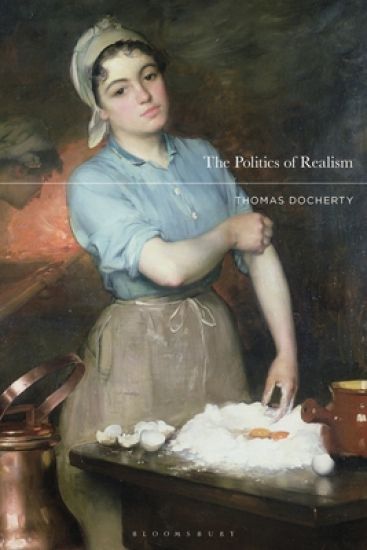
The Politics of Realism

The Politics of Realism

Thomas Docherty

Bloomsbury Academic
2021
sidottu
Exploring the controversial history of an aesthetic – realism – this book examines the role that realism plays in the negotiation of social, political, and material realities from the mid-19th century to the present day.Examining a broad range of literary texts from French, English, Italian, German, and Russian writers, this book provides new insights into how realism engages with themes including capital, social decorum, the law and its politicisation, modern science as a determining factor concerning truth, and the politics of identity.Considering works from Gustave Flaubert, Charles Baudelaire, Émile Zola, Henry James, Charles Dickens, and George Orwell, Docherty proposes a new philosophical conception of the politics of realism in an age where politics feels increasingly erratic and fantastical.
The Politics of Realism

The Politics of Realism

Thomas Docherty

BLOOMSBURY PUBLISHING PLC
2023
nidottu
Exploring the controversial history of an aesthetic – realism – this book examines the role that realism plays in the negotiation of social, political, and material realities from the mid-19th century to the present day.Examining a broad range of literary texts from French, English, Italian, German, and Russian writers, this book provides new insights into how realism engages with themes including capital, social decorum, the law and its politicisation, modern science as a determining factor concerning truth, and the politics of identity.Considering works from Gustave Flaubert, Charles Baudelaire, Émile Zola, Henry James, Charles Dickens, and George Orwell, Docherty proposes a new philosophical conception of the politics of realism in an age where politics feels increasingly erratic and fantastical.
The Horse That Jumped

The Horse That Jumped

Thomas Docherty

Farshore
2021
nidottu
A magical celebration of friendship – and the perfect bedtime story for every child who dreams of a horse of their own! Once there was a horse … that jumped. It jumped over a flower. It jumped over a rock. It jumped right over a fence … and out into the world. Jumping through country and town, the horse meets a girl, and together they keep on jumping: over waves and mountains, over clouds, the sun and the moon … into a world of stars and dreams. From the bestselling illustrator of The Snatchabook!
Confessions

Confessions

Thomas Docherty

Bloomsbury Academic
2014
nidottu
This book is available as open access through the Bloomsbury Open Access programme and is available on www.bloomsburycollections.com.This book explores what is at stake in our confessional culture. Thomas Docherty examines confessional writings from Augustine to Montaigne and from Sylvia Plath to Derrida, arguing that through all this work runs a philosophical substratum - the conditions under which it is possible to assert a confessional mode - that needs exploration and explication. Docherty outlines a philosophy of confession that has pertinence for a contemporary political culture based on the notion of 'transparency'. In a postmodern 'transparent society', the self coincides with its self-representations. Such a position is central to the idea of authenticity and truth-telling in confessional writing: it is the basis of saying, truthfully, 'here I take my stand'. The question is: what other consequences might there be of an assumption of the primacy of transparency? Two areas are examined in detail: the religious and the judicial. Docherty shows that despite the tendency to regard transparency as a general social and ethical good, our contemporary culture of transparency has engendered a society in which autonomy (or the very authority of the subject that proclaims 'I confess') is grounded in guilt, reparation and victimhood.
Universities at War

Universities at War

Thomas Docherty

SAGE Publications Ltd
2014
sidottu
"Docherty is not only is a brilliant critic of those forces that would like to transform higher education into an extension of the market-place... he is also a man of great moral and civic courage, who under intense pressure from the punishing neoliberal state has risked a great deal to remind us that higher education is a civic institution crucial to creating the formative cultures necessary for a democracy to survive, if not flourish." - Henry Giroux, McMasters University "Docherty engages with the secular university in its present crisis, reflecting on its origins and on its role in the future of democracy. He tackles the urgent issue of inequality with a compelling denunciation of the ways of entrenched privilege; he offers a view of governance and representation from the perspective of those who are silenced; and exposes the fundamental damage done to thought by management-speak. Docherty is moral, passionate and committed and this is a fierce and important book." - Mary Margaret McCabe, King's College London There is a war on for the future of the university worldwide. The stakes are high, and they reach deep into our social condition. On one side are self-proclaimed modernisers who view the institution as vital to national economic success. Here the university is a servant of the national economy in the context of globalization, its driving principles of private and personal enrichment necessary conditions of ‘progress’ and modernity. Others see this as a radical impoverishment of the university’s capacities to extend human possibilities and freedoms, to seek earnestly for social justice, and to participate in the endless need for the extension of democracy. This book analyses the former position, and argues for the necessity of taking sides with the latter. It does so with a sense of urgency, because the market fundamentalists are on the march. The fundamental war that is being fought is not just for scholars, but for a better – more democratic, more just, more emancipatory – form of life. Choose sides.
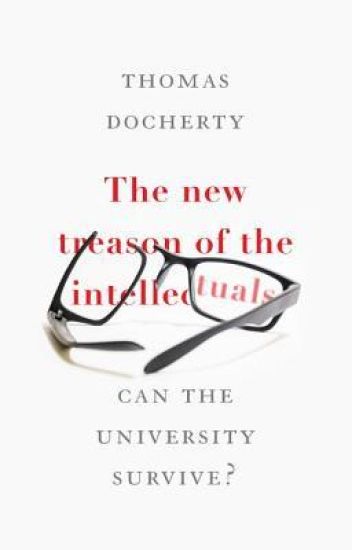
The New Treason of the Intellectuals

The New Treason of the Intellectuals

Thomas Docherty

Manchester University Press
2018
sidottu
The university is under threat. For forty years this indispensable democratic institution has been systematically betrayed by governments and the political class, who have redirected it from its proper social and cultural functions through a relentless programme of financialisation. Taking his cue from Julien Benda’s classic polemical essay of 1927, Thomas Docherty exposes the forces behind modern university ‘reform’. He demonstrates that the sector has been politicised and now works explicitly to advance a market-fundamentalist ideology that drives an ever-widening wedge between ordinary citizens and the privileged and wealthy. Against this, the intellectual and the university have an urgent duty to extend democracy and social justice. Looking to the future, Docherty concludes the book with seven hypotheses towards a manifesto and calls on intellectuals everywhere to assist in the survival of the species.
Complicity

Complicity

Thomas Docherty

Rowman Littlefield
2016
sidottu
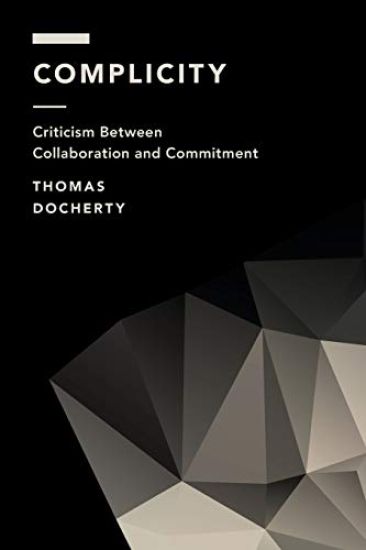
Complicity argues that all existing modes of cultural critique are regarded as legitimate and productive if and only if they are complicit with the very ideologies and values that the criticism sets out to undermine. Through philosophical, literary and theoretical analysis, Thomas Docherty shows how easy it has been for criticism to become essentially an act of political collaboration with existing governmental power. The book explores the various ways in which, both historically and theoretically, critical activity has become complicit with the over-arching social and political norms that it aims to undermine. Philosophically, ethically and politically, criticism’s fundamental impulse is too often intrinsically negated. In extreme political form, this places criticism in line with collaborationist activity. Docherty then finds a productive way out of the double-bind in which criticism has traditionally found itself, through an idea of criticism as a mode of ‘reserve’, a mode of commitment that eschews fundamentalism of all kinds.
Complicity

Complicity

Thomas Docherty

Rowman Littlefield
2016
nidottu
Complicity argues that all existing modes of cultural critique are regarded as legitimate and productive if and only if they are complicit with the very ideologies and values that the criticism sets out to undermine. Through philosophical, literary and theoretical analysis, Thomas Docherty shows how easy it has been for criticism to become essentially an act of political collaboration with existing governmental power. The book explores the various ways in which, both historically and theoretically, critical activity has become complicit with the over-arching social and political norms that it aims to undermine. Philosophically, ethically and politically, criticism’s fundamental impulse is too often intrinsically negated. In extreme political form, this places criticism in line with collaborationist activity. Docherty then finds a productive way out of the double-bind in which criticism has traditionally found itself, through an idea of criticism as a mode of ‘reserve’, a mode of commitment that eschews fundamentalism of all kinds.