

Kirjahaku
Etsi kirjoja tekijän nimen, kirjan nimen tai ISBN:n perusteella.
1000 tulosta hakusanalla Thomas L. Constable


Cylinder Filling Control of Variable-Valve-Actuation Equipped Engines
Thomas-L
Omniscriptum
2018
pokkari

Diagnostic Ultrasound Imaging provides a unified description of the physical principles of ultrasound imaging, signal processing, systems and measurements. This comprehensive reference is a core resource for both graduate students and engineers in medical ultrasound research and design. With continuing rapid technological development of ultrasound in medical diagnosis, it is a critical subject for biomedical engineers, clinical and healthcare engineers and practitioners, medical physicists, and related professionals in the fields of signal and image processing. The book contains 17 new and updated chapters covering the fundamentals and latest advances in the area, and includes four appendices, 450 figures (60 available in color on the companion website), and almost 1,500 references. In addition to the continual influx of readers entering the field of ultrasound worldwide who need the broad grounding in the core technologies of ultrasound, this book provides those already working in these areas with clear and comprehensive expositions of these key new topics as well as introductions to state-of-the-art innovations in this field.

Integrated Security Systems Design, 2nd Edition, is recognized as the industry-leading book on the subject of security systems design. It explains how to design a fully integrated security system that ties together numerous subsystems into one complete, highly coordinated, and highly functional system. With a flexible and scalable enterprise-level system, security decision makers can make better informed decisions when incidents occur and improve their operational efficiencies in ways never before possible. The revised edition covers why designing an integrated security system is essential and how to lead the project to success. With new and expanded coverage of network architecture, physical security information management (PSIM) systems, camera technologies, and integration with the Business Information Management Network, Integrated Security Systems Design, 2nd Edition, shows how to improve a security program’s overall effectiveness while avoiding pitfalls and potential lawsuits.

Electronic Access Control, Second Edition provides the latest advice on how to interface systems from multiple Electronic Access Control (EAC) manufacturers into a single cohesive system. The book shows how to provide integration, while also allowing building security managers to protect, control and manage their own users’ card data. This second edition details advanced card data management and advanced system access level management. Readers will be better able to manage their systems to protect the privacy of their cardholders’ private information, while providing much improved control over the security of their buildings. Like its highly regarded first edition, the book offers the complete picture on EAC for readers at any level of expertise. It provides comprehensive material on how to select, and interface to, the appropriate locking hardware, typically the most difficult responsibility for access control system designers, installers and end users.

Longitudes and Attitudes brings together reportage and reflections by one of the world's most admired journalists about the state of the world leading up to and after September 11, 2001 - the most momentous news story of our time. Travelling throughout the Middle East and Europe, Friedman talks to men and women in bazaars, schools and alleyways, as well as the world's leading political figures, developing and refining his unique perspective on the new kind of war the West finds itself fighting.
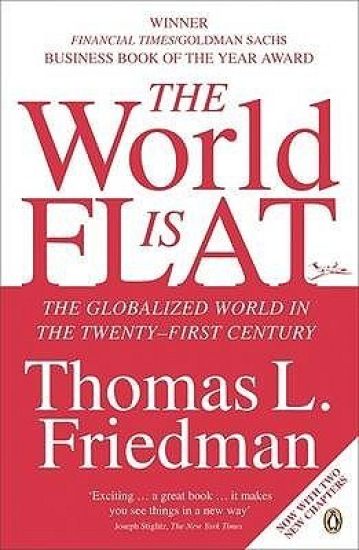
The beginning of the twenty-first century will be remembered, Friedman argues, not for military conflicts or political events, but for a whole new age of globalization – a ‘flattening’ of the world. The explosion of advanced technologies now means that suddenly knowledge pools and resources have connected all over the planet, levelling the playing field as never before, so that each of us is potentially an equal – and competitor – of the other. The rules of the game have changed forever – but does this ‘death of distance’, which requires us all to run faster in order to stay in the same place, mean the world has got too small and too flat too fast for us to adjust? Friedman brilliantly demystifies the exciting, often bewildering, global scene unfolding before our eyes, one which we sense but barely yet understand. The World is Flat is the most timely and essential update on globalization, its successes and its discontents, powerfully illuminated by a world-class writer. In his new chapters: 'If It's Not Happening, It's Because You're Not Doing It' and 'What Happens When We All Have Dog's Hearing?' the author explores both the benefits and disadvantages of the very latest developments in global communication. The emergent popularity of blogging, pod-casting, YouTube and MySpace enable the modern world citizen to broadcast their views to a potential audience of billions, and the proliferation of Internet access to even the poorest communities gives everyone who wants to the tools to address issues of social injustice and inequality. On the other hand the technology that seems to improve communication on a global scale causes it to deteriorate on a local scale. Identifying ours as 'The Age of Interruption', Friedman discusses the annoyance and dangers of BlackBerrys in meeting rooms, hands-free kits in conversation and using a phone or iPod whilst driving. In an age when we are always 'connected' via email or mobile phone how can we hope to concentrate on one thing without interruption? As expected the author has revitalised this new edition of The World Is Flat with timely insights into the nature of our flat world.

Thomas Friedman's phenomenal The World is Flat helped millions of people see globalization in a new way. Now he takes a fresh, provocative look at the biggest challenge facing us today - our hot, flat and crowded world.Climate change and rapid population growth mean that it's no longer possible for businesses, or the rest of us, to keep doing things the same old way. Things are going to have to change - and fast. Here Friedman provides a bold strategy for clean fuel, energy efficiency and conservation that he calls 'Code Green'. It will change everything, from what we put into our cars and see on our electricity bills to how we live our lives. Hot, Flat and Crowded is fearless, forward-looking and rich in common sense about the challenge - and the promise - of the future.
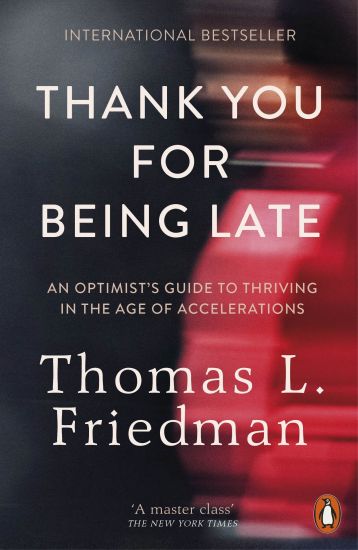
THE NEW INTERNATIONAL BESTSELLER FROM THE AUTHOR OF THE WORLD IS FLATWe all sense it: something big is going on. Life is speeding up, and it is dizzying. Here Thomas L. Friedman reveals the tectonic movements that are reshaping our world, how to adapt to this new age and why, sometimes, we all need to be late.'A master class ... As a guide for perplexed Westerners, this book is very hard to beat ... an honest, cohesive explanation for why the world is the way it is, without miracle cures or scapegoats' John Micklethwait, The New York Times Book Review'Wonderful ... admirably honest ... injects a badly needed dose of optimism into the modern debate' Gillian Tett, Financial Times'His main piece of advice for individuals, corporations, and countries is clear: Take a deep breath and adapt. This world isn't going to wait for you' Fortune'A humane and empathetic book' David Henkin, The Washington Post

The Third Coast: The Third Coast: When Chicago Built the American Dream
Thomas L. Dyja
PENGUIN BOOKS
2014
nidottu
Winner of the Chicago Tribune's 2013 Heartland Prize A critically acclaimed history of Chicago at mid-century, featuring many of the incredible personalities that shaped American culture Before air travel overtook trains, nearly every coast-to-coast journey included a stop in Chicago, and this flow of people and commodities made it the crucible for American culture and innovation. In luminous prose, Chicago native Thomas Dyja re-creates the story of the city in its postwar prime and explains its profound impact on modern America--from Chess Records to Playboy, McDonald's to the University of Chicago. Populated with an incredible cast of characters, including Mahalia Jackson, Muddy Waters, Howlin' Wolf, Chuck Berry, Sun Ra, Simone de Beauvoir, Nelson Algren, Gwendolyn Brooks, Studs Turkel, and Mayor Richard J. Daley, The Third Coast recalls the prominence of the Windy City in all its grandeur.
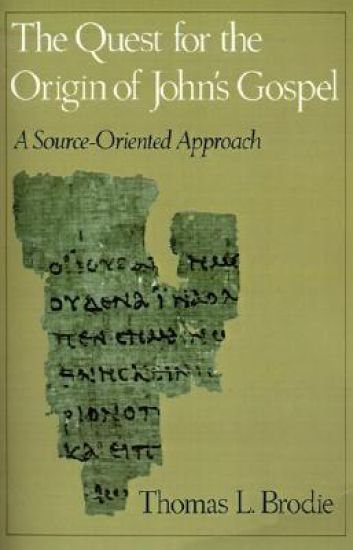
This book presents a controversial thesis concerning the composition of the Gospel According to John. Most New Testament scholars believe that John was independent of the other three (Synoptic) Gospels, although some hold that he may have been familiar with Mark. This has led many to attempt to reconstruct the history of the community within which and for which John must have written. Brodie argues, however, that until the source question is settled, the historical question remains fruitless. What has been missing from Johannine scholarship, he says, is an accurate sense of the way in which writers of the ancient world set about composing their works. Given this literary context, it can be argued that John knew and used not only all of the Synoptic Gospels, but Acts, Ephesians, and the Pentateuch as well. Finally Brodie concludes that `John' was the individual John and not the mouthpiece of a putative `Johannine Community'. The Gospel should thus be read as a unified work, and not as the product of an aggregation of different sources or different dates of redaction.
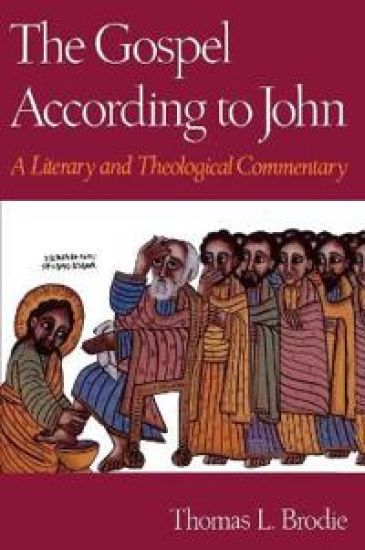
While synthesizing well-established commentators as diverse as Bultmann and Brown, Brodie expands Johannine studies in two directions. First, by drawing on the techniques of contemporary literary studies, he shows that John's Gospel, far from being poorly edited, is a carefully-wrought unity. Second, he shows that the final basis of this unity lies not in history or theology but, as ancient tradition suggested, in spirituality. Brodie also includes his own innovative translation of John. The result is a new type of commentary that is thoroughly contemporary in style, perspective, and method.

Recent years have seen a remarkable surge in interest in the book of Genesis - the first book of the Bible - and a foundational text of Western culture. In this new commentary, Thomas Brodie offers a complete and accessible overview of Genesis from literary, theological, and historical standpoints. Brodie's work is organized around three main ideas: the first is that the primary subject of Genesis is human existence - while full of historical echoes, it is primarily a sophisticated portrayal of the progress and pitfalls of human life. His second thesis is that Genesis' basic organizational unity is binary, or diptych: building on older insights that Genesis is somehow dialogical, he argues that the entire book is composed of diptychs - accounts which, like some paintings, consist of two parts or panels. Finally, Brodie contends that many of Genesis' sources still exist, and can be identified and verified.

The Multilateral Investment System and Multinational Enterprises
Thomas L. Brewer; Stephen Young
Oxford University Press
1998
sidottu
The multinational enterprise has been one of the foremost economic, political, and social influences in the world economy for many decades. As its role and influence have grown, so has the regime of institutions and rules concerning international investment from the proposal to create the ITO in the 1940s to the establishment of the WTO in the 1990s. Investment issues are now important items on the agenda of international economic policy-making and international business-government relations. The book provides a detailed analysis of the evolution of the international investment framework in the second half of the twentieth century -- the issues, the organizations, and current policy challenges. For instance, the book includes chapters on issues concerning the relationship of investment policy to trade and technology, competition, and economic development. In addition to a clear and well-informed description of the role of several organizations, including ITO, GATT, the OECD, and the WTO, the authors -- one American and one British -- present numerous examples, cases, and appendices to give context and `real' world examples to the book. They also discuss many key regional arrangements, such as NAFTA and the EU, as well as bilateral investment agreements. This up-to-date and accessible book will be vital reading for academics, students, executives, and policy-makers concerned to get to grips with the evolving international investment system.

The Multilateral Investment System and Multinational Enterprises
Thomas L. Brewer; Stephen Young
Oxford University Press
2000
nidottu
The multinational enterprise has been one of the foremost economic, political, and social influences in the world economy for many decades. As its role and influence have grown, so has the regime of institutions and rules concerning international investment-from the proposal to create the ITO in the 1940s to the establishment of the WTO in the 1990s. Investment issues are now important items on the agenda of international economic policy-making, international business-government relations, and public debate. The book provides a detailed analysis of the evolution of the international investment framework in the second half of the twentieth century-the issues, the organizations, and current policy challenges. For instance, the book includes chapters on issues concerning the relationship of investment policy to trade and technology, competition, and economic development. In addition to a clear and well-informed description of the role of several organizations, including ITO, GATT, the OECD, and the WTO, the authors-one American and one British-present numerous examples, cases, and appendices to give context and 'real' world examples to the book. They also discuss many key regional arrangements, such as NAFTA and the EU, as well as bilateral investment agreements. This up-to-date and accessible book will be vital reading for academics, students, executives, and policy-makers concerned to get to grips with the evolving international investment system.

Thomas Carson offers the most comprehensive and up-to-date investigation of moral and conceptual questions about lying and deception. Part I addresses conceptual questions and offers definitions of lying, deception, and related concepts such as withholding information, "keeping someone in the dark," and "half truths." Part II deals with questions in ethical theory. Carson argues that standard debates about lying and deception between act-utilitarians and their critics are inconclusive because they rest on appeals to disputed moral intuitions. He defends a version of the golden rule and a theory of moral reasoning. His theory implies that there is a moral presumption against lying and deception that causes harm -- a presumption at least as strong as that endorsed by act-utilitarianism. He uses this theory to justify his claims about the issues he addresses in Part III: deception and withholding information in sales, deception in advertising, bluffing in negotiations, the duties of professionals to inform clients, lying and deception by leaders as a pretext for fighting wars (with special attention to the case of Bush and Cheney), and lying and deception about history (with special attention to the Holocaust), and cases of distorting the historical record by telling half-truths. The book concludes with a qualified defence of the view that honesty is a virtue.

Thomas Carson offers the most comprehensive and up-to-date investigation of moral and conceptual questions about lying and deception. Part I addresses conceptual questions and offers definitions of lying, deception, and related concepts such as withholding information, "keeping someone in the dark," and "half truths." Part II deals with questions in ethical theory. Carson argues that standard debates about lying and deception between act-utilitarians and their critics are inconclusive because they rest on appeals to disputed moral intuitions. He defends a version of the golden rule and a theory of moral reasoning. His theory implies that there is a moral presumption against lying and deception that causes harm -- a presumption at least as strong as that endorsed by act-utilitarianism. He uses this theory to justify his claims about the issues he addresses in Part III: deception and withholding information in sales, deception in advertising, bluffing in negotiations, the duties of professionals to inform clients, lying and deception by leaders as a pretext for fighting wars, and lying and deception about history (with special attention to the Holocaust), and cases of distorting the historical record by telling half-truths. The book concludes with a qualified defence of the view that honesty is a virtue.

With "Aristotle's Teaching in the "Politics"", Thomas L. Pangle offers a masterly new interpretation of this classic philosophical work. It is widely believed that the Politics originated as a written record of a series of lectures given by Aristotle, and scholars have relied on that fact to explain seeming inconsistencies and instances of discontinuity throughout the text. Breaking from this tradition, Pangle makes the work's origin his starting point, reconceiving the Politics as the pedagogical tool of a master teacher. With the Politics, Pangle argues, Aristotle seeks to lead his students down a deliberately difficult path of critical thinking about civic republican life. He adopts a Socratic approach, encouraging his students - and readers - to become active participants in a dialogue. Seen from this perspective, features of the work that have perplexed previous commentators become perfectly comprehensible as artful devices of a didactic approach. Ultimately, Pangle's close and careful analysis shows that to understand the Politics, one must first appreciate how Aristotle's rhetorical strategy is inextricably entwined with the subject of his work.