Kirjojen hintavertailu. Mukana 11 244 527 kirjaa ja 12 kauppaa.

Kirjahaku

Etsi kirjoja tekijän nimen, kirjan nimen tai ISBN:n perusteella.

1000 tulosta hakusanalla Thomas M Cockrill

Neurological Concepts in Ancient Greek Medicine

Neurological Concepts in Ancient Greek Medicine

Thomas M. Walshe III

Oxford University Press Inc
2016
sidottu
Neurological history claims its earliest origins in the 17th century with Thomas Willis's publication of Anatomy of the Brain, coming fully into fruition as a field in the late 1850s as medical technology and advancements allowed for in depth study of the brain. However, many of the foundations in neurology can find the seed of their beginning to a time much earlier than that, to ancient Greece in fact. Neurological Concepts in Ancient Greek Medicine is a collection of essays exploring neurological ideas between the Archaic and Hellenistic eras. These essays also provide historic, intellectual, and cultural context to ancient Greek medical practice and emphasizing the interest in the brain of the early physicians. This book describes source material that is over 2,500 years old and reveals the observational skills of ancient physicians. It provides complete translations of two historic Hippocratic texts: On the Sacred Diseases and On the Wounds of the Head. The book also discusses the Hippocratic Oath and the modern applications of its meaning. Dr. Walshe connects this ancient history, usually buried in medical histories, and shows the ancient Greek notions that are the precursors of our understanding of the brain and nervous system.
Altered States

Altered States

Thomas M. Holbrook

Oxford University Press Inc
2016
sidottu
The 2012 presidential elections represented the second consecutive defeat for the Republican Party, and the fourth defeat out of the last six presidential elections. In recent years both Republican and Democratic strategists and pundits have spoken of an emerging Democratic Party "lock" on the Electoral College and speculated that even in the wake of Republican victories in Congress, presidential candidates are still at a major disadvantage due to the party's increasing demographic and geographic isolation. This prediction flies in the face of population shifts of the last several decades from Democratic regions (Upper-Midwest and Northeast) to Republican-leaning regions (South and Southwest); at the same time, it seems to follow from demographic changes favoring an increase in the minority vote. In fact, there is an initiative to convert Texas to a Democratic state by mobilizing Latino and Black voters. In Altered States, Thomas Holbrook looks at electoral change in presidential elections since 1972, documenting the magnitude, direction, and consequences of changes in party support in the states. He finds that the Democrats do not have a "lock" on the Electoral College, but that their position has improved dramatically over the past forty years in a number of formerly competitive or Republican-leaning states in the Northeast, Southeast, and Southwest. Republican candidates have made many fewer gains, mostly improving their position in "misplaced," formerly Democratic states, such as Kentucky and West Virginia, or in already deeply Republican states in the Plains and Mountain West. Holbrook looks at the ways that changes in the racial and ethnic composition of the state electorates, migratory patterns from large Democratic states to Republican-leaning states, and changes in the public's level of education and occupational status, state party identification, and ideology drive these changes. Additionally, he explores the extent to which the Republican "problem" stems from the geographic concentration of party support. While Democratic concentration in major metropolitan areas tends to put them at a disadvantage in House races, as Republican votes increasingly are concentrated in fewer states where they win by wider margins, they may be "wasting" more Electoral College votes than Democrats, whose supporters are more efficiently distributed.
Altered States

Altered States

Thomas M. Holbrook

Oxford University Press Inc
2016
nidottu
The 2012 presidential elections represented the second consecutive defeat for the Republican Party, and its fourth defeat out of the last six presidential elections. In recent years both Republican and Democratic strategists and pundits have spoken of an emerging Democratic Party "lock" on the Electoral College and speculated that even in the wake of Republican victories in Congress, presidential candidates are still at a major disadvantage due to the party's increasing demographic and geographic isolation. In Altered States, Thomas Holbrook looks at change in party fortunes in presidential elections since 1972, documenting the magnitude, direction, and consequences of changes in party support in the states. He finds that the Democrats do not have a "lock" on the Electoral College, but that their position has improved dramatically over the past forty years in a number of formerly competitive or Republican-leaning states in the Northeast, Southeast, and Southwest. Republican candidates have made many fewer gains, mostly improving their position in "misplaced," formerly Democratic states, such as Kentucky and West Virginia, or in already deeply Republican states in the Plains and Mountain West. Holbrook looks at the ways that changes in the racial and ethnic composition of the state electorates, internal (state to state) and external (foreign born) migratory patterns, and changes in other key demographic and political characteristics drive these changes. Additionally, he explores the ways in which increasing partisan polarization at the national level has altered group-based party linkages and contributed to changes in party support at the state level. These factors, along with an increasingly inefficient distribution of Republican votes, have converted what was once a Republican edge in electoral votes to an advantage for Democratic presidential candidates.
Generalist Practice in Larger Settings, Second Edition

Generalist Practice in Larger Settings, Second Edition

Thomas M Meenaghan; W Eugene Gibbons; John G McNutt

Oxford University Press
2005
pokkari
Throughout the book the authors help students logically develop practice with appropriate theoretical underpinnings and show them how they can be significant actors in larger systems. The authors chose to stress the use of the generalist model with larger systems and create an overarching integrated social work theory. In addition, they integrate possible practice responses with selected relevant human behavior knowledge. The authors stress critical thinking and problem solving which should help practitioners engage in relevant and accountable practices. The authors believe that when social workers feel comfortable and capable doing macropractice, they will then possess the necessary skills to help the community become empowered. This affordably priced core paperback is structured to be supplemented by additional readings and a teacher's own thoughts and social work experiences.
Nation Against Nation

Nation Against Nation

Thomas M. Franck

Oxford University Press Inc
1985
sidottu
The American public has become increasingly disenchanted with the United Nations. Some responsible sources in this country are already advocating withdrawal from U.N. agencies and perhaps even from the entire system. This book, by the former Director of Research at UNITAR, the U.N.'s "think tank," examines the record of the U.N. during its first 40 years in the clear light of American national interest. Franck offers a balance sheet which confirms that the U.N. during its first 40 years in the clear light of American national interest. Franck offers a balance sheet which confirms that the U.N. often operates in a way that undermines respect for individual human rights and hampers conflict resolution. At the same time, he does not shrink from showing that the fault frequently lies with the United States itself. He shows how the U.S. helped form the U.N. with unrealistic views of what it could do, how for a decade or more the U.S. was able to use the U.N. essentially as a tool and adjunct to its foreign policy, and how Washington failed to predict and plan for the inevitable shift in power at the U.N. led by the newly emergent Third World nations. Franck warns of the American penchant for treating international relations as a series of unrelated encounters instead of an ongoing, institutionalized system in which the tactics and outcome of one crisis inevitably affect the way the next context is played out. Taday the U.S. and its allies are often the butt of antagonisms that the U.N. system seems to encourage and exaggerate. Nevertheless Franck shows that even now the U.S. position in the U.N. is far from hopeless, and he provides a blueprint for a strategy of "playing hard ball," which is far more realistic than abandoning the world organization.
The Power of Legitimacy among Nations

The Power of Legitimacy among Nations

Thomas M. Franck

Oxford University Press Inc
1990
sidottu
QB: LEAVE THIS COPY AS IT IS In this work, Thomas Franck, an authority on international law, considers why it is that rules within the international system are for the most part obeyed, even though they are not usually enforced. Much of his discussion is theoretical, based on discussions of laws that do not involve coercion, but Franck also makes use of many practical examples to show how international law works successfully even without formal codes or laws.
Nerve Repair

Nerve Repair

Thomas M. Brushart

Oxford University Press Inc
2011
sidottu
Peripheral nerves are biologic wires that convey the desire for motion from brain to muscle, and the experience of touch from skin to brain. When a nerve is cut, the individual fibers, or axons, must regenerate from the site of injury to reconnect with their skin and muscle targets. Nerve regeneration is a process of bewildering complexity that requires the coordinated action of multiple biologic systems. Gene expression within the neuron is altered to support axon growth, regenerating axons must cross the complex environment of the nerve injury and enter pathways that lead to functionally appropriate end organs, Wallerian degeneration clears these pathways of axon debris, and Schwann cells in the distal nerve must produce growth factors to support regeneration. In spite of this complexity, the surgical repair of transected nerve remains a mechanical process that has changed little in the last century, and that restores normal function to only 10% of adults with nerve injuries. Improving the outcome of nerve repair will require close cooperation between surgeon and scientist. Skyrocketing clinical demands on the surgeon and the rapidly increasing sophistication of neuroscience have interacted to form two distinct cultures. Nerve Repair bridges these cultures by providing a translational review of the clinical and basic science relevant to nerve repair. It provides the clinician with an understanding of pertinent research, and the basic scientist with an overview of the clinical manifestations of nerve injury and regeneration. It is also grounded in the history of peripheral nerve surgery and biology so that modern concepts can be understood in the context of their origins.
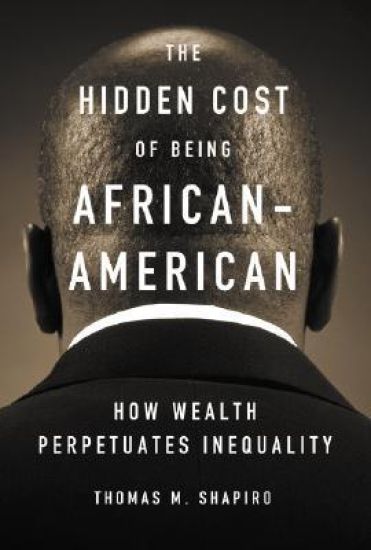
The Hidden Cost of Being African American

The Hidden Cost of Being African American

Thomas M. Shapiro

Oxford University Press Inc
2005
nidottu
Over the past three decades, racial prejudice in America has declined significantly and many African American families have seen a steady rise in employment and annual income. But alongside these encouraging signs, Thomas Shapiro argues in The Hidden Cost of Being African American, fundamental levels of racial inequality persist, particularly in the area of asset accumulation--inheritance, savings accounts, stocks, bonds, home equity, and other investments-. Shapiro reveals how the lack of these family assets along with continuing racial discrimination in crucial areas like homeownership dramatically impact the everyday lives of many black families, reversing gains earned in schools and on jobs, and perpetuating the cycle of poverty in which far too many find themselves trapped. Shapiro uses a combination of in-depth interviews with almost 200 families from Los Angeles, Boston, and St. Louis, and national survey data with 10,000 families to show how racial inequality is transmitted across generations. We see how those families with private wealth are able to move up from generation to generation, relocating to safer communities with better schools and passing along the accompanying advantages to their children. At the same time those without significant wealth remain trapped in communities that don't allow them to move up, no matter how hard they work. Shapiro challenges white middle class families to consider how the privileges that wealth brings not only improve their own chances but also hold back people who don't have them. This "wealthfare" is a legacy of inequality that, if unchanged, will project social injustice far into the future. Showing that over half of black families fall below the asset poverty line at the beginning of the new century, The Hidden Cost of Being African American will challenge all Americans to reconsider what must be done to end racial inequality.
The Paris Club, 1956-1980

The Paris Club, 1956-1980

Thomas M. Callaghy

OXFORD UNIVERSITY PRESS INC
2026
sidottu
Not long after the 1944 creation of the core Bretton Woods institutions--the World Bank and the International Monetary Fund--another international organization emerged to address the growing issue of sovereign debt: the Paris Club. The creditor-led international mechanism for restructuring developing-country debt was not alone at its genesis. Various creditor forums competed vigorously for dominance until 1980, when the French-led Paris Club came out on top. This book presents a comprehensive examination of the development of the Paris Club from founding to achieving its status as an informal third "Bretton Woods Sister." Drawing from over forty country cases of arduous maneuvering and contentious negotiation, Thomas M. Callaghy details the complex factors that shaped the mechanism's formation, including the geopolitical context, the domestic concerns of the creditor states, and the opposition by debtor states. He shows how, in largely secretive processes, the creditors struggled over restructuring terms, the role of economic conditionality, and the nature of development while also creating agreed norms, rules, and procedures that left them real flexibility. Although China's rise to power on the international stage has reduced the Paris Club's share of multilateral sovereign debt restructuring, it remains a central player, making this book essential reading for scholars of postwar international political economy and the Bretton Woods system.
Fairness in International Law and Institutions

Fairness in International Law and Institutions

Thomas M. Franck

Clarendon Press
1998
nidottu
This book is based on Professor Franck's highly acclaimed Hague Academy General Course. In it he offers a compelling view of the future of international legal reasoning and legal theory. The author offers a critical analysis of the prescriptive norms and institutions of modern international law and argues that international law has the capacity to advance, in practice, the abstract social values shared by the community of states and persons. This book is both thought-provoking and original and as such is essential reading for students of international law and legal theory.
Cultivated Landscapes of Middle America on the Eve of Conquest

Cultivated Landscapes of Middle America on the Eve of Conquest

Thomas M. Whitmore; B. L. Turner II

Oxford University Press
2002
sidottu
The human-environment conditions in the Americas on the eve of the sixteenth-century European conquest have of late attracted growing interest in both academic and public circles. Focusing on Middle America, this book completes a trilogy which has made the most comprehensive survey ever achieved of pre-Colombian agriculture and culture throughout the continents. It addresses the question of what lands were permanently occupied; how they were used; and what the environmental and social implications of this use were. The answers to these questions are central to such wide-ranging themes as indigenous land rights, the conservation and preservation 'ethic' of these native people, and the global carbon cycle. The kind, scale, and location of land use is documented and mapped in detail. The book not only demonstrates the sophistication of the agricultural landscapes and their local integration, but also investigates the omissions and land degradation of the native agriculturalists. Drawing on this wealth of data the authors make a stimulating contribution to the debate about resource, land, and population in the Americas.
Our Gigantic Zoo

Our Gigantic Zoo

Thomas M. Lekan

Oxford University Press Inc
2020
sidottu
How did the Seregenti become an internationally renowned African conservation site and one of the most iconic destinations for a safari? In this book, Thomas M. Lekan illuminates the controversial origins of this national park by examining how Europe's greatest wildlife conservationist, former Frankfurt Zoo director and Oscar-winning documentarian Bernhard Grzimek, popularized it as a global destination. In the 1950s, Grimzek and his son Michael began a quest to save the Serengeti from modernization and "overpopulation" by remaking an imperial game reserve into a gigantic zoo for the earth's last great mammals. Grzimek, well-known to German audiences through his long-running television program, A Place for Animals, used the film Seregenti Shall Not Die to convince ordinary Europeans that they could save nature. Yet their message sidestepped the uncomfortable legacies of German colonial exploitation in the region that had endangered animals and excluded local people. After independence, Grzimek raised funds, brokered diplomatic favors, and convinced German tourists to book travel packages--all to persuade Tanzanian leader Julius Nyerere that wildlife would fuel the young nation's economic development. Grzimek helped Tanzania to create almost a dozen new national parks by 1975, but wooing tourists conflicted with rights of the Maasai and other African communities to inhabit the landscape on their own terms. Grzimek's global priorities eventually clashed with Nyerere's nationalist ones, as a more self-assertive Tanzania resented conservationists' meddling and failed promises. A story that demonstrates the conflicts between international conservation, nature tourism, decolonization, and national sovereignty, Our Gigantic Zoo explores the legacy of the man who portrayed himself as a second Noah, called on a sacred mission to protect the last vestiges of paradise for all humankind.
The American Convention on Human Rights

The American Convention on Human Rights

Thomas M. Antkowiak; Alejandra Gonza

Oxford University Press Inc
2017
sidottu
This book offers a thorough, critical, and accessible analysis of the American Convention on Human Rights which is the main human rights treaty of the Americas. The authors closely review the jurisprudence and the binding judgments of the two institutions charged with interpreting the Convention: The Inter-American Court of Human Rights and The Inter-American Commission on Human Rights.They focus on the rights most developed by the Court and Commission, namely the rights to equality, life, humane treatment, personal liberty, property, due process and judicial protection, as well as the freedom of expression and reparations. They examine the case law with a victim-centered lens while identifying key jurisprudential developments, discussing critical areas that lack consistency and rigor, and proposing alternative conceptual approaches. Each chapter contains an Introduction to compare the Convention right's formulation with equivalent rights in other major international and regional treaties; a background section to consider the right's negotiation history; a Scope of Protection section to analyze the right's provisions (paragraph-by-paragraph or topic-by-topic); and lastly, a Limitations section, if applicable, to study any limitations to the right. In addition, the book's Introduction presents an up-to-date overview of the dynamic Inter-American Human Rights System, discussing the System's legal instruments, major institutions, significant impact, key developments, and current challenges.
Judicial Politics in Polarized Times

Judicial Politics in Polarized Times

Thomas M. Keck

University of Chicago Press
2014
sidottu
When the Supreme Court upheld the Affordable Care Act, some saw the decision as a textbook example of neutral judicial decision making, noting that a Republican Chief Justice joined the Court's Democratic appointees to uphold most provisions of the ACA. Others characterized the decision as the latest example of partisan justice and cited the actions of a bloc of the Court's Republican appointees, who voted to strike down the statute in its entirety. Still others argued that the ACA's fate ultimately hinged on the outcome of the 2012 election. These interpretations reflect larger stories about judicial politics that have emerged in polarized America. Are judges neutral legal umpires, unaccountable partisan activists, or political actors whose decisions conform to-rather than challenge-the democratic will? Thomas M. Keck argues that, despite judges' claims, legal decisions are not the politically neutral products of disembodied legal texts. But neither are judges "tyrants in robes," undermining democratic values by imposing their own preferences. Just as often, judges and the public seem to be pushing in the same direction. As for the argument that the courts are powerless institutions, Keck shows that their decisions have profound political effects. And, while advocates on both the left and right engage constantly in litigation to achieve their ends, neither side has consistently won. Ultimately, Keck argues, judges respond not simply as umpires, activists, or political actors, but in light of distinctive judicial values and practices.
Judicial Politics in Polarized Times

Judicial Politics in Polarized Times

Thomas M. Keck

University of Chicago Press
2014
nidottu
When the Supreme Court upheld the Affordable Care Act, some saw the decision as a textbook example of neutral judicial decision making, noting that a Republican Chief Justice joined the Court's Democratic appointees to uphold most provisions of the ACA. Others characterized the decision as the latest example of partisan justice and cited the actions of a bloc of the Court's Republican appointees, who voted to strike down the statute in its entirety. Still others argued that the ACA's fate ultimately hinged on the outcome of the 2012 election. These interpretations reflect larger stories about judicial politics that have emerged in polarized America. Are judges neutral legal umpires, unaccountable partisan activists, or political actors whose decisions conform to-rather than challenge-the democratic will? Thomas M. Keck argues that, despite judges' claims, legal decisions are not the politically neutral products of disembodied legal texts. But neither are judges "tyrants in robes," undermining democratic values by imposing their own preferences. Just as often, judges and the public seem to be pushing in the same direction. As for the argument that the courts are powerless institutions, Keck shows that their decisions have profound political effects. And, while advocates on both the left and right engage constantly in litigation to achieve their ends, neither side has consistently won. Ultimately, Keck argues, judges respond not simply as umpires, activists, or political actors, but in light of distinctive judicial values and practices.
The Most Activist Supreme Court in History

The Most Activist Supreme Court in History

Thomas M. Keck

University of Chicago Press
2004
nidottu
When conservatives took control of the federal judiciary in the 1980s, it was widely assumed that they would reverse the landmark rights-protecting precedents set by the Warren Court and replace them with a broad commitment to judicial restraint. Instead, the Supreme Court under Chief Justice William Rehnquist has reaffirmed most of those liberal decisions while creating its own brand of conservative judicial activism.Ranging from 1937 to the present, The Most Activist Supreme Court in History traces the legal and political forces that have shaped the modern Court. Thomas M. Keck argues that the tensions within modern conservatism have produced a court that exercises its own power quite actively, on behalf of both liberal and conservative ends. Despite the long-standing conservative commitment to restraint, the justices of the Rehnquist Court have stepped in to settle divisive political conflicts over abortion, affirmative action, gay rights, presidential elections, and much more. Keck focuses in particular on the role of Justices O'Connor and Kennedy, whose deciding votes have shaped this uncharacteristically activist Court.
A Touch of Fire

A Touch of Fire

Thomas M. Carr

McGill-Queen's University Press
2020
sidottu
Marie-André Duplessis (1687-1760) guided the Augustinian sisters at the Hôtel-Dieu of Quebec - the oldest hospital north of Mexico - where she was elected mother superior six times. Although often overshadowed by colonial nuns who became foundresses or saints, she was a powerhouse during the last decades of the French regime and an accomplished woman of letters. She has been credited with Canada’s first literary narrative, Canada’s first music manual, and the first book by a Canadian woman printed during her own lifetime. In A Touch of Fire, the first biography of Duplessis, Thomas Carr analyzes how she navigated, in peace and war, the unstable, male-dominated colonial world of New France. Through a study of Duplessis's correspondence, her writings, and the rich Hôtel-Dieu archives, Carr details how she channelled the fire of her commitment to the hospital in order to advance its interests, preserve its history, and inspire her sister nuns. Duplessis chronicled New France as she wrote for and about her institution. Her administrative correspondence reveals her managerial successes and failures, and her private letters reshaped her friendship with a childhood Jansenist friend, Marie-Catherine Hecquet. Carr also delves into her relationship with her sister Geneviève Duplessis, who joined her in the cloister and became her managerial and spiritual partner. The addition of Duplessis's last letters provides a dramatic insider's view into the female experience of the siege and capture of Quebec in 1759. A Touch of Fire examines the life and work of an enterprising leader and major woman author of early Canada.
A Touch of Fire

A Touch of Fire

Thomas M. Carr

McGill-Queen's University Press
2020
nidottu
Marie-André Duplessis (1687-1760) guided the Augustinian sisters at the Hôtel-Dieu of Quebec - the oldest hospital north of Mexico - where she was elected mother superior six times. Although often overshadowed by colonial nuns who became foundresses or saints, she was a powerhouse during the last decades of the French regime and an accomplished woman of letters. She has been credited with Canada’s first literary narrative, Canada’s first music manual, and the first book by a Canadian woman printed during her own lifetime. In A Touch of Fire, the first biography of Duplessis, Thomas Carr analyzes how she navigated, in peace and war, the unstable, male-dominated colonial world of New France. Through a study of Duplessis's correspondence, her writings, and the rich Hôtel-Dieu archives, Carr details how she channelled the fire of her commitment to the hospital in order to advance its interests, preserve its history, and inspire her sister nuns. Duplessis chronicled New France as she wrote for and about her institution. Her administrative correspondence reveals her managerial successes and failures, and her private letters reshaped her friendship with a childhood Jansenist friend, Marie-Catherine Hecquet. Carr also delves into her relationship with her sister Geneviève Duplessis, who joined her in the cloister and became her managerial and spiritual partner. The addition of Duplessis's last letters provides a dramatic insider's view into the female experience of the siege and capture of Quebec in 1759. A Touch of Fire examines the life and work of an enterprising leader and major woman author of early Canada.
Ukraine, the Middle East, and the West

Ukraine, the Middle East, and the West

Thomas M. Prymak

McGill-Queen's University Press
2021
sidottu
For decades, Ukrainian contacts with the outside world were minimal, impeded by politics, ideology, and geography. But prior to the Soviet period the country enjoyed diverse exchanges with, on the one hand, its Islamic neighbours, the Crimean Khanate and the Ottoman Empire, and, on the other, its central and western European neighbours, especially Poland and France.Thomas Prymak addresses geographical knowledge, international travel, political conflicts, historical relations with religiously diverse neighbours, artistic developments, and literary and language contacts to smash old stereotypes about Ukrainian isolation and tell a vivid and original story. The book treats a wide range of subjects, including Ukrainian travellers in the Middle East, from pilgrims to the Holy Land to political exiles in Turkey and Iran; Tatar slave raiding in Ukraine; the poetry of Taras Shevchenko and the Russian war against Imam Shamil in the High Caucasus; Ukrainian themes and the French writers Honoré de Balzac and Prosper Mérimée; Rembrandt's mysterious painting today titled The Polish Rider; and Ilya Repin's legendary painting of the Zaporozhian Cossacks writing their satirical letter mocking the Turkish sultan.Drawing together political and cultural history, languages and etymology, and folklore and art history, Ukraine, the Middle East, and the West is an original interdisciplinary study that reintroduces Ukraine's long-overlooked connections beyond Eastern Europe.
Ukraine, the Middle East, and the West

Ukraine, the Middle East, and the West

Thomas M. Prymak

McGill-Queen's University Press
2021
nidottu
For decades, Ukrainian contacts with the outside world were minimal, impeded by politics, ideology, and geography. But prior to the Soviet period the country enjoyed diverse exchanges with, on the one hand, its Islamic neighbours, the Crimean Khanate and the Ottoman Empire, and, on the other, its central and western European neighbours, especially Poland and France.Thomas Prymak addresses geographical knowledge, international travel, political conflicts, historical relations with religiously diverse neighbours, artistic developments, and literary and language contacts to smash old stereotypes about Ukrainian isolation and tell a vivid and original story. The book treats a wide range of subjects, including Ukrainian travellers in the Middle East, from pilgrims to the Holy Land to political exiles in Turkey and Iran; Tatar slave raiding in Ukraine; the poetry of Taras Shevchenko and the Russian war against Imam Shamil in the High Caucasus; Ukrainian themes and the French writers Honoré de Balzac and Prosper Mérimée; Rembrandt's mysterious painting today titled The Polish Rider; and Ilya Repin's legendary painting of the Zaporozhian Cossacks writing their satirical letter mocking the Turkish sultan.Drawing together political and cultural history, languages and etymology, and folklore and art history, Ukraine, the Middle East, and the West is an original interdisciplinary study that reintroduces Ukraine's long-overlooked connections beyond Eastern Europe.