The 18th century was a wealth of knowledge, exploration and rapidly growing technology and expanding record-keeping made possible by advances in the printing press. In its determination to preserve the century of revolution, Gale initiated a revolution of its own: digitization of epic proportions to preserve these invaluable works in the largest archive of its kind. Now for the first time these high-quality digital copies of original 18th century manuscripts are available in print, making them highly accessible to libraries, undergraduate students, and independent scholars.The Age of Enlightenment profoundly enriched religious and philosophical understanding and continues to influence present-day thinking. Works collected here include masterpieces by David Hume, Immanuel Kant, and Jean-Jacques Rousseau, as well as religious sermons and moral debates on the issues of the day, such as the slave trade. The Age of Reason saw conflict between Protestantism and Catholicism transformed into one between faith and logic -- a debate that continues in the twenty-first century.++++The below data was compiled from various identification fields in the bibliographic record of this title. This data is provided as an additional tool in helping to insure edition identification: ++++British LibraryT007275With a final page of advertisements.London: printed for J. Whiston, 1744. 19, 1]p; 4
Immanuel Kant (22 April 1724 - 12 February 1804) was a German philosopher who is a central figure in modern philosophy. Kant argues that the human mind creates the structure of human experience, that reason is the source of morality, that aesthetics arises from a faculty of disinterested judgment, that space and time are forms of human sensibility, and that the world as it is "in-itself" is independent of humanity's concepts of it. Kant took himself to have effected a "Copernican revolution" in philosophy, akin to Copernicus' reversal of the age-old belief that the sun revolves around the earth. Kant's beliefs continue to have a major influence on contemporary philosophy, especially the fields of metaphysics, epistemology, ethics, political theory, and aesthetics. Politically, Kant is one of the earliest exponents of the idea that perpetual peace could be secured through universal democracy and international cooperation. He believed that this will be the eventual outcome of universal history, although it is not rationally planned. The exact nature of Kant's religious ideas continues to be the subject of especially heated philosophical dispute, as viewpoints are ranging from the idea that Kant was an early and radical exponent of atheism who finally exploded the ontological argument for God's existence, to more critical treatments epitomized by Nietzsche who claimed that Kant had "theologian blood" and that Kant was merely a sophisticated apologist for traditional Christian religious belief, writing that "Kant wanted to prove, in a way that would dumbfound the common man, that the common man was right: that was the secret joke of this soul." In one of Kant's major works, the Critique of Pure Reason (Kritik der reinen Vernunft, 1781), he attempted to explain the relationship between reason and human experience and to move beyond the failures of traditional philosophy and metaphysics. Kant wanted to put an end to an era of futile and speculative theories of human experience, while resisting the skepticism of thinkers such as David Hume. Kant regarded himself as ending and showing the way beyond the impasse which modern philosophy had led to between rationalists and empiricists, and is widely held to have synthesized these two early modern traditions in his thought. Kant argued that our experiences are structured by necessary features of our minds. In his view, the mind shapes and structures experience so that, on an abstract level, all human experience shares certain essential structural features. Among other things, Kant believed that the concepts of space and time are integral to all human experience, as are our concepts of cause and effect. One important consequence of this view is that our experience of things is always of the phenomenal world as conveyed by our senses: we do not have direct access to things in themselves, the so-called noumenal world. Kant published other important works on ethics, religion, law, aesthetics, astronomy, and history. These included the Critique of Practical Reason (Kritik der praktischen Vernunft, 1788), the Metaphysics of Morals (Die Metaphysik der Sitten, 1797), which dealt with ethics, and the Critique of Judgment (Kritik der Urteilskraft, 1790), which looks at aesthetics and teleology..... Reverend Thomas Kingsmill Abbott (26 March 1829 - 18 December 1913) was an Irish scholar and educator. Abbott was born in Dublin and was educated at Trinity College. He took his degree in 1851 and was made a fellow of the college in 1854. He obtained an M.A. and a D.Litt. from Trinity, and was ordained a minister in the Church of Ireland. In 1852 he solved a geometrical problem posed by J. J. Sylvester.....
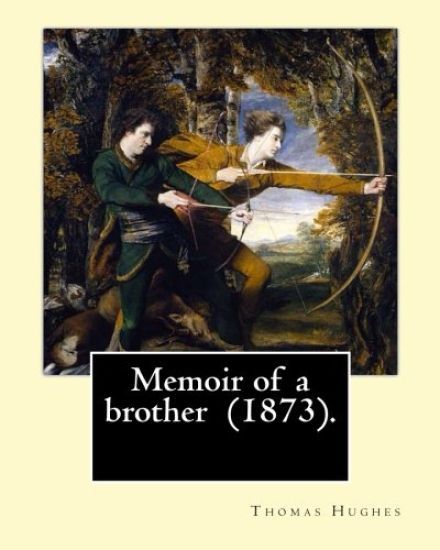
Thomas Hughes QC (20 October 1822 - 22 March 1896) was an English lawyer, judge, politician and author. He is most famous for his novel Tom Brown's School Days (1857), a semi-autobiographical work set at Rugby School, which Hughes had attended. It had a lesser-known sequel, Tom Brown at Oxford (1861). Hughes had numerous other interests, in particular as a Member of Parliament, in the British co-operative movement, and in a settlement in Tennessee reflecting his values. Early life Hughes was the second son of John Hughes, editor of the Boscobel Tracts (1830) and was born in Uffington, Berkshire (now Oxfordshire). He had six brothers, and one sister, Jane Senior who later became Britain's first female civil servant. At the age of eight he was sent to Twyford School, a preparatory public school near Winchester, where he remained until the age of eleven. In February 1834 he went to Rugby School, which was then under the celebrated Thomas Arnold, a contemporary of his father at Oriel College, Oxford. Hughes excelled at sports rather than in scholarship, and his school career culminated in a cricket match at Lord's Cricket Ground. In 1842 he went on to Oriel College, and graduated B.A. in 1845. At Oxford, he played cricket for the university team in the annual University Match against Cambridge University, also at Lord's, and a match that is still now regarded as first-class cricket. Legal career Hughes was called to the bar in 1848, became Queen's Counsel in 1869 and a bencher in 1870. He was appointed to a county court judgeship in the Chester district in July 1882. Works While living at Wimbledon, Hughes wrote his famous story Tom Brown's School Days, which was published in April 1857. He is associated with the novelists of the "muscular school", a loose classification but centred on the fiction of the Crimean War period.Although Hughes had never been a member of the sixth form at Rugby, his impressions of the headmaster Thomas Arnold were reverent. Hughes also wrote The Scouring of the White Horse (1859), Tom Brown at Oxford (1861), Religio Laici (1868), Life of Alfred the Great (1869) and the Memoir of a Brother. His brother, George Hughes, was the model for the Tom Brown character. While living at Wimbledon, Hughes wrote his famous story Tom Brown's School Days, which was published in April 1857. He is associated with the novelists of the "muscular school", a loose classification but centred on the fiction of the Crimean War period.Although Hughes had never been a member of the sixth form at Rugby, his impressions of the headmaster Thomas Arnold were reverent.Hughes also wrote The Scouring of the White Horse (1859), Tom Brown at Oxford (1861), Religio Laici (1868), Life of Alfred the Great (1869) and the Memoir of a Brother. His brother, George Hughes, was the model for the Tom Brown character.................
Thomas Hughes QC (20 October 1822 - 22 March 1896) was an English lawyer, judge, politician and author. He is most famous for his novel Tom Brown's School Days (1857), a semi-autobiographical work set at Rugby School, which Hughes had attended. It had a lesser-known sequel, Tom Brown at Oxford (1861). Hughes had numerous other interests, in particular as a Member of Parliament, in the British co-operative movement, and in a settlement in Tennessee reflecting his values. Early life Hughes was the second son of John Hughes, editor of the Boscobel Tracts (1830) and was born in Uffington, Berkshire (now Oxfordshire). He had six brothers, and one sister, Jane Senior who later became Britain's first female civil servant. At the age of eight he was sent to Twyford School, a preparatory public school near Winchester, where he remained until the age of eleven. In February 1834 he went to Rugby School, which was then under the celebrated Thomas Arnold, a contemporary of his father at Oriel College, Oxford. Hughes excelled at sports rather than in scholarship, and his school career culminated in a cricket match at Lord's Cricket Ground. In 1842 he went on to Oriel College, and graduated B.A. in 1845. At Oxford, he played cricket for the university team in the annual University Match against Cambridge University, also at Lord's, and a match that is still now regarded as first-class cricket. Legal career Hughes was called to the bar in 1848, became Queen's Counsel in 1869 and a bencher in 1870. He was appointed to a county court judgeship in the Chester district in July 1882. Works While living at Wimbledon, Hughes wrote his famous story Tom Brown's School Days, which was published in April 1857. He is associated with the novelists of the "muscular school", a loose classification but centred on the fiction of the Crimean War period.Although Hughes had never been a member of the sixth form at Rugby, his impressions of the headmaster Thomas Arnold were reverent. Hughes also wrote The Scouring of the White Horse (1859), Tom Brown at Oxford (1861), Religio Laici (1868), Life of Alfred the Great (1869) and the Memoir of a Brother. His brother, George Hughes, was the model for the Tom Brown character...............
Thomas Hughes QC (20 October 1822 - 22 March 1896) was an English lawyer, judge, politician and author. He is most famous for his novel Tom Brown's School Days (1857), a semi-autobiographical work set at Rugby School, which Hughes had attended. It had a lesser-known sequel, Tom Brown at Oxford (1861). Hughes had numerous other interests, in particular as a Member of Parliament, in the British co-operative movement, and in a settlement in Tennessee reflecting his values. Early life Hughes was the second son of John Hughes, editor of the Boscobel Tracts (1830) and was born in Uffington, Berkshire (now Oxfordshire). He had six brothers, and one sister, Jane Senior who later became Britain's first female civil servant. At the age of eight he was sent to Twyford School, a preparatory public school near Winchester, where he remained until the age of eleven. In February 1834 he went to Rugby School, which was then under the celebrated Thomas Arnold, a contemporary of his father at Oriel College, Oxford. Hughes excelled at sports rather than in scholarship, and his school career culminated in a cricket match at Lord's Cricket Ground. In 1842 he went on to Oriel College, and graduated B.A. in 1845. At Oxford, he played cricket for the university team in the annual University Match against Cambridge University, also at Lord's, and a match that is still now regarded as first-class cricket. Legal career Hughes was called to the bar in 1848, became Queen's Counsel in 1869 and a bencher in 1870. He was appointed to a county court judgeship in the Chester district in July 1882. Works While living at Wimbledon, Hughes wrote his famous story Tom Brown's School Days, which was published in April 1857. He is associated with the novelists of the "muscular school", a loose classification but centred on the fiction of the Crimean War period.Although Hughes had never been a member of the sixth form at Rugby, his impressions of the headmaster Thomas Arnold were reverent. Hughes also wrote The Scouring of the White Horse (1859), Tom Brown at Oxford (1861), Religio Laici (1868), Life of Alfred the Great (1869) and the Memoir of a Brother. His brother, George Hughes, was the model for the Tom Brown character.............
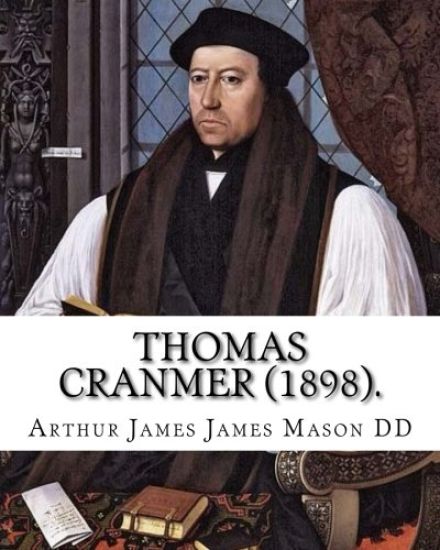
Thomas Cranmer (2 July 1489 - 21 March 1556) was a leader of the English Reformation and Archbishop of Canterbury during the reigns of Henry VIII, Edward VI and, for a short time, Mary I. He helped build the case for the annulment of Henry's marriage to Catherine of Aragon, which was one of the causes of the separation of the English Church from union with the Holy See. Along with Thomas Cromwell, he supported the principle of Royal Supremacy, in which the king was considered sovereign over the Church within his realm. During Cranmer's tenure as Archbishop of Canterbury, he was responsible for establishing the first doctrinal and liturgical structures of the reformed Church of England. Under Henry's rule, Cranmer did not make many radical changes in the Church, due to power struggles between religious conservatives and reformers. However, he succeeded in publishing the first officially authorised vernacular service, the Exhortation and Litany. When Edward came to the throne, Cranmer was able to promote major reforms. He wrote and compiled the first two editions of the Book of Common Prayer, a complete liturgy for the English Church. With the assistance of several Continental reformers to whom he gave refuge, he changed doctrine in areas such as the Eucharist, clerical celibacy, the role of images in places of worship, and the veneration of saints. Cranmer promulgated the new doctrines through the Prayer Book, the Homilies and other publications. After the accession of the Roman Catholic Mary I, Cranmer was put on trial for treason and heresy. Imprisoned for over two years and under pressure from Church authorities, he made several recantations and apparently reconciled himself with the Roman Catholic Church. However, on the day of his execution, he withdrew his recantations, to die a heretic to Roman Catholics and a martyr for the principles of the English Reformation. Cranmer's death was immortalised in Foxe's Book of Martyrs and his legacy lives on within the Church of England through the Book of Common Prayer and the Thirty-Nine Articles, an Anglican statement of faith derived from his work..... Arthur James Mason DD (4 May 1851 - 24 April 1928) was an English clergyman, theologian and classical scholar. He was Lady Margaret's Professor of Divinity, Master of Pembroke College, Cambridge, and Vice-Chancellor of the University of Cambridge. Early life: The third son of George William Mason JP, of Morton Hall, Retford, Nottinghamshire, by his marriage to Marianne Atherton Mitford (born 1821 in India), a daughter of Captain Joseph George Mitford (1791-1875), of the Madras Army, Mason was educated at Repton School and Trinity College, Cambridge. The third of four sons, his youngest brother, Charles Evelyn Mason, was killed in the Zulu War of 1879.His brother William Henry Mason was a High Sheriff of Nottinghamshire. His sister, Harriet, was a poor law inspector and another sister, Agnes founded a religious community. Their grandfather, J. G. Mitford, was the son of Bertram Mitford (1748-1800) of Mitford Castle in Northumberland. Career: Mason was elected a Fellow of Trinity College in 1873 and was a college tutor from 1874 to 1877, when he went to Cornwall as Canon of Truro. His departure from Cambridge was at the urging of his friend Edward White Benson, who had been appointed as Bishop of Truro and wanted Mason to act as diocesan missioner.....
The 18th century was a wealth of knowledge, exploration and rapidly growing technology and expanding record-keeping made possible by advances in the printing press. In its determination to preserve the century of revolution, Gale initiated a revolution of its own: digitization of epic proportions to preserve these invaluable works in the largest archive of its kind. Now for the first time these high-quality digital copies of original 18th century manuscripts are available in print, making them highly accessible to libraries, undergraduate students, and independent scholars.The Age of Enlightenment profoundly enriched religious and philosophical understanding and continues to influence present-day thinking. Works collected here include masterpieces by David Hume, Immanuel Kant, and Jean-Jacques Rousseau, as well as religious sermons and moral debates on the issues of the day, such as the slave trade. The Age of Reason saw conflict between Protestantism and Catholicism transformed into one between faith and logic -- a debate that continues in the twenty-first century.++++The below data was compiled from various identification fields in the bibliographic record of this title. This data is provided as an additional tool in helping to insure edition identification: ++++British LibraryT131986London: printed for the author; and to be had at Bethel Chapel, Welwyn, Herts; of Elvey and Green; Bayres; Cobbin; Row; A. Battenson, Welwyn, Herts; T. Barston, Grantham, Lincolnshire; R. Mockford, Lewes, Sussex; and at Providence Chapel, Little Titchfie 36p.; 8
The 18th century was a wealth of knowledge, exploration and rapidly growing technology and expanding record-keeping made possible by advances in the printing press. In its determination to preserve the century of revolution, Gale initiated a revolution of its own: digitization of epic proportions to preserve these invaluable works in the largest archive of its kind. Now for the first time these high-quality digital copies of original 18th century manuscripts are available in print, making them highly accessible to libraries, undergraduate students, and independent scholars.This collection reveals the history of English common law and Empire law in a vastly changing world of British expansion. Dominating the legal field is the Commentaries of the Law of England by Sir William Blackstone, which first appeared in 1765. Reference works such as almanacs and catalogues continue to educate us by revealing the day-to-day workings of society.++++The below data was compiled from various identification fields in the bibliographic record of this title. This data is provided as an additional tool in helping to insure edition identification: ++++Cambridge University LibraryT195531Gloucester: printed by John Pytt, 1788. 16p.; 8
Mary Augusta Ward CBE (nee Arnold; 11 June 1851 - 24 March 1920) was a British novelist who wrote under her married name as Mrs Humphry Ward. Mary Augusta Arnold was born in Hobart, Tasmania, Australia, into a prominent intellectual family of writers and educationalists.Mary was the daughter of Tom Arnold, a professor of literature, and Julia Sorrell. Her uncle was the poet Matthew Arnold and her grandfather Thomas Arnold, the famous headmaster of Rugby School.Her sister Julia married Leonard Huxley, the son of Thomas Huxley, and their sons were Julian and Aldous Huxley.The Arnolds and the Huxleys were an important influence on British intellectual life.Mary's father Tom Arnold was appointed inspector of schools in Van Diemen's Land (now Tasmania) and commenced his role on 15 January 1850. 8] Tom Arnold was received into the Roman Catholic Church on 12 January 1856, which made him so unpopular in his job (and with his wife) that he resigned and left for England with his family in July 1856.Mary Arnold had her fifth birthday the month before they left, and had no further connection with Tasmania. Tom Arnold was ratified as chair of English literature at the contemplated Catholic university, Dublin, after some delay.Mary Augusta Ward died in London, England, and was interred at Aldbury in Hertfordshire, near her beloved country home Stocks...... Thomas Hill Green (7 April 1836 - 15 March 1882) was an English philosopher, political radical and temperance reformer, and a member of the British idealism movement. Like all the British idealists, Green was influenced by the metaphysical historicism of G.W.F. Hegel. He was one of the thinkers behind the philosophy of social liberalism............... Octavia Laura Mary (Laura) Lyttelton formerly Tennant Born 28 Oct 1862 in Traquair, Peebles-Shire, Scotland, Daughter of Charles Clow Tennant 1st Bt. and Emma (Winsloe) Tennant Sister of Janet Tennant, Charles Tennant, John Aubrey Tennant, Pauline Emma Tennant, Charles Clow Tennant, Charlotte Monkton (Tennant) Lister, Edward Priaulx Tennant, Catherine Lucy Tennant, Francis John Tennant, Emma Alice Margaret (Tennant) Asquith, Harold John Tennant, Margaret (Tennant) Loder, private sister (1900s - unknown)] andNancy (Tennant) Dugdale.Died 24 Apr 1886 in Upper Brook Street, Mayfair, London, England..
Thomas Hughes QC (20 October 1822 - 22 March 1896) was an English lawyer, judge, politician and author. He is most famous for his novel Tom Brown's School Days (1857), a semi-autobiographical work set at Rugby School, which Hughes had attended. It had a lesser-known sequel, Tom Brown at Oxford (1861). Hughes had numerous other interests, in particular as a Member of Parliament, in the British co-operative movement, and in a settlement in Tennessee reflecting his values. Early life Hughes was the second son of John Hughes, editor of the Boscobel Tracts (1830) and was born in Uffington, Berkshire (now Oxfordshire). He had six brothers, and one sister, Jane Senior who later became Britain's first female civil servant. At the age of eight he was sent to Twyford School, a preparatory public school near Winchester, where he remained until the age of eleven. In February 1834 he went to Rugby School, which was then under the celebrated Thomas Arnold, a contemporary of his father at Oriel College, Oxford. Hughes excelled at sports rather than in scholarship, and his school career culminated in a cricket match at Lord's Cricket Ground. In 1842 he went on to Oriel College, and graduated B.A. in 1845. At Oxford, he played cricket for the university team in the annual University Match against Cambridge University, also at Lord's, and a match that is still now regarded as first-class cricket. Legal career Hughes was called to the bar in 1848, became Queen's Counsel in 1869 and a bencher in 1870. He was appointed to a county court judgeship in the Chester district in July 1882. Works While living at Wimbledon, Hughes wrote his famous story Tom Brown's School Days, which was published in April 1857. He is associated with the novelists of the "muscular school", a loose classification but centred on the fiction of the Crimean War period.Although Hughes had never been a member of the sixth form at Rugby, his impressions of the headmaster Thomas Arnold were reverent. Hughes also wrote The Scouring of the White Horse (1859), Tom Brown at Oxford (1861), Religio Laici (1868), Life of Alfred the Great (1869) and the Memoir of a Brother. His brother, George Hughes, was the model for the Tom Brown character............
Hobbes' economic theories are opposed to the logic of private gain. In theLeviathan, Hobbes develops a critique of "merchant law" to show that self-interest can neither guarantee peace nor help with the development of science and knowledge.