Kirjojen hintavertailu. Mukana 11 627 364 kirjaa ja 12 kauppaa.

Kirjahaku

Etsi kirjoja tekijän nimen, kirjan nimen tai ISBN:n perusteella.

1000 tulosta hakusanalla Thomas R. Cox

Taximator / Terror U.M.A.

Taximator / Terror U.M.A.

Thomas R.

Oktober
2009
sidottu
"Å stresse for mye i dette yrket er som å inngå en pakt med djevelen. Man blir sliten, nummen. Mangel på følelse blir følelsen." Taximator/Terror U.M.A teller ned fra kapittel ti til en, mens hovedpersonen kjører taxi i Bergen, og arbeider på en psykiatrisk institusjon. Han lider av insomnia, og taxisjåførvirkelighet og fantasi blander seg. Hans skjebne smeltes inn i tablåer fra filmer, eller Hollywoodbarokk og personlig vinklete beskrivelser av ulykker og katastrofer. "Jeg er taximannen. De kaller meg taximannen. Taximannen, er det Troldhaugen vi ser der borte? Taximannen, hvor lenge har du kjørt taxi? Taximannen, hvor lang tid tar det å kjøre fra Bergen sentrum til Flesland?"
Old Man Country

Old Man Country

Thomas R. Cole

Oxford University Press Inc
2020
sidottu
We live in a time of change, an era where old men can be celebrated as elders who are valued but who are not demeaned if they become ill and dependent. Where we aim to maintain health but find dignity in frailty. Old Man Country helps readers see and imagine this change for themselves. The book follows the journey of a writer in search of wisdom, as he narrates encounters with twelve distinguished American men over 80 -- including Paul Volcker, the former head of the Federal Reserve, and Denton Cooley, the world's most famous heart surgeon. In these and other intimate conversations, the book explores and honors the particular way that each man faces four challenges of living a good old age: Am I Still a Man? Do I Still Matter? What is the Meaning of My Life? Am I Loved? Readers will come to see how each man -- even the most famous -- faces challenges that are every man's challenges. Personal yet universal stories about work, love, sexuality, and hope mingle with stories about illness, loss and death. These stories will strengthen each of us as we anticipate and navigate our way through the passages of old age.
Thérèse of Lisieux

Thérèse of Lisieux

Thomas R. Nevin

Oxford University Press Inc
2006
sidottu
Thérèse of Lisieux (1873-1897), also known as St. Thérèse of the Child Jesus and the Holy Face, is popularly named the Little Flower. A Carmelite nun, doctor of the church, and patron of a score of causes, she was famously acclaimed by Pope Pius X as the greatest saint of modern times. Thérèse is not only one of the most beloved saints of the Catholic Church but perhaps the most revered woman of the modern age. Pope John Paul II described her as a living icon of God. Her autobiography Story of a Soul has been translated into sixty languages. Having long transcended national and linguistic boundaries, she has crossed even religious ones. As daughter of Allah, she is venerated widely in Islamic cultures. Therese has been the subject of innumerable biographies and treatises, ranging from hagiographies to attacks on her intelligence and mental health. Thomas R. Nevin has gained access to many untapped archival materials and previously unpublished photographs. As a consequence he is able to offer a much fuller and more accurate portrait of the saint's life and thought than his predecessors. He explores the dynamics of her family life and the early development of her spirituality. He draws extensively on the correspondence of her mother and documents her influence on Thérèses autobiography and spirituality. He charts the development of Thérèses career as a writer. He gives close attention to her poetry and plays usually dismissed as undistinguished and argues that they have great value as texts by which she addressed and informed her Carmelite community. He delves into the French medical literature of the time, in an effort to understand how the tuberculosis of which she died at the age of 24 was treated and lamentably mistreated. Finally, he offers a new understanding of Thérèse as a theologian for whom love, rather than doctrines and creeds, was the paramount value. Adding substantially to our knowledge and appreciation of this immensely popular and attractive figure, this book should appeal to many general readers as well as to scholars and students of modern Catholic history.
McWhinney's Textbook of Family Medicine

McWhinney's Textbook of Family Medicine

Thomas R. Freeman

Oxford University Press Inc
2016
nidottu
Highly acclaimed in its first three editions, McWhinney's Textbook of Family Medicine is one of the seminal texts in the field. While many family medicine texts simply cover the disorders a practitioner might see in clinical practice, McWhinney's defines the principles and practices of family medicine as a separate and distinct field of practice. The fourth edition presents six new clinical chapters of common problems in family medicine: respiratory illness, musculoskeletal pain, depression, diabetes, obesity and multimorbidity. This new edition also provides information on stewardship of resources, patient information and data, delivery of care in the home, and consultation and referral. The volume also covers continuing advances in the research base of family medicine. Readers will come away with a deeper appreciation for the role of the generalist in healthcare.
In the Field, Among the Feathered

In the Field, Among the Feathered

Thomas R. Dunlap

Oxford University Press Inc
2012
sidottu
America is a nation of ardent, knowledgeable birdwatchers. But how did it become so? And what role did the field guide play in our passion for spotting, watching, and describing birds? In the Field, Among the Feathered tells the history of field guides to birds in America from the Victorian era to the present, relating changes in the guides to shifts in science, the craft of field identification, and new technologies for the mass reproduction of images. Drawing on his experience as a passionate birder and on a wealth of archival research, Thomas Dunlap shows how the twin pursuits of recreation and conservation have inspired birders and how field guides have served as the preferred method of informal education about nature for well over a century. The book begins with the first generation of late 19th-century birdwatchers who built the hobby when opera glasses were often the best available optics and bird identification was sketchy at best. As America became increasingly urban, birding became more attractive, and with Roger Tory Peterson's first field guide in 1934, birding grew in both popularity and accuracy. By the 1960s recreational birders were attaining new levels of expertise, even as the environmental movement made birding's other pole, conservation, a matter of human health and planetary survival. Dunlap concludes by showing how recreation and conservation have reached a new balance in the last 40 years, as scientists have increasingly turned to amateurs, whose expertise had been honed by the new guides, to gather the data they need to support habitat preservation. Putting nature lovers and citizen-activists at the heart of his work, Thomas Dunlap offers an entertaining history of America's long-standing love affair with birds, and with the books that have guided and informed their enthusiasm.
Ethics Field Guide

Ethics Field Guide

Thomas R. Kerkhoff; Stephanie L. Hanson

Oxford University Press Inc
2013
nidottu
We have provided the reader with a resource for applied ethical decision-making for use in clinical, educational, and research settings. The Rehabilitation Psychologist using this book will have a choice of utilizing a Quick Reference guide including pro-con positions regarding possible resolutions and a tabular summary of the varied case examples presented, or making use of more detailed discussion of the ethical concepts pertinent to each case. The most important aspect of this book is inclusion of psycho-social context information for each case example. This critical factor allows the reader to understand the flow of events and other factors influencing the actions of the key stakeholders, thereby facilitating the ethical decision-making process. The mix of case examples is intentionally broad-based, including ample clinical practice situations, along with challenges found in educational and research settings. There is also variety among the case examples, with two detailed scenarios in each chapter, along with two briefer learning exercises with focused summaries. The reader is challenged to analyze each case and compare the results with the preferred resolution proposed by the authors. Finally, at the end of the book, the reader has access to a list of ethics-relevant reading resources. These resources are divided into categorical domains that will assist with literature searches and further research into applied ethics. The authors trust that this book will serve as a preparatory experience for those psychologists studying for the Rehabilitation Psychology specialty board exam, as well as trainees and clinicians at all levels who desire an applied approach to utilizing the APA Ethics Code as an invaluable guide to everyday professional practice.
The Last Years of Saint Therese

The Last Years of Saint Therese

Thomas R. Nevin

Oxford University Press Inc
2013
sidottu
For over a century, the Carmelite Sister Thérèse of the Child Jesus and the Holy Face (1873-1897) has been revered as Catholicism's foremost folk saint of modern times. Universally known as "the Little Flower, " she has been a source of consolation and uplift, an example of everyday sainthood by "the Little Way. " This book puts aside that piety and addresses the torment of doubt within the life and writing of a saint best known for the strength of her conviction. Nevin examines the dynamics of Christian doubt, and argues that it is integral to the journey toward selfless love which Therese was compelled to take. Thérèse's metaphors for doubt were 'tunnel', 'fog', and 'vault', each one suggesting darkness, dimness, and enclosure. What, Nevin asks, did doubt mean to her? What was its source and nature? What was its object? He gives close attention to her reading and interpretations of the Old and New Testaments as pathways through her inner wilderness. Her Carmel of spiritual sisters becomes a vivid setting for this drama, with other women challenging Thérèse by their own trials of faith. One of Thérèse's indispensable lessons, Nevin concludes, is the acceptance of helplessness. Bringing a new direction to the study of Therese, and of the problematics of sainthood itself, this book reveals how Thérèse's response to divine abandonment is a unique and painfully won imitation of Christ.
Sartre and Marxist Existentialism

Sartre and Marxist Existentialism

Thomas R. Flynn

University of Chicago Press
1986
nidottu
In this important book, Thomas R. Flynn reinterprets and evaluates Sartre's social and political philosophy, arguing that the existential ethics of Sartre's early phase is consistent with the Marxist-inspired views of his later writings. Displaying his mastery of Sartre's entire corpus, Flynn reconstructs Sartre's social ontology with its sensitive balance of the existentialist's respect for moral responsibility and the Marxist's sense of social causation. Flynn focuses on the issue of collective responsibility as a particularly apt test-case for assessing any proposed union of existentialist and Marxist perspectives. The study begins with an examination of the uses of "responsibility" in Being and Nothingness and in several postwar essays. Flynn then concentrates on the Critique of Dialectical Reason, offering a thorough analysis of the remarkable social theory Sartre constructs there. A masterful contribution to Sartre scholarship, Sartre and Marxist Existentialism will be of great interest to social and political philosophers involved in the debate over collective responsibility.
Sartre, Foucault, and Historical Reason, Volume One

Sartre, Foucault, and Historical Reason, Volume One

Thomas R. Flynn

University of Chicago Press
1997
sidottu
Sartre and Foucault were two of the most prominent and at times mutually antagonistic philosophical figures of the twentieth century. And nowhere are the antithetical natures of their existentialist and poststructuralist philosophies more apparent than in their disparate approaches to historical understanding. A history, thought Foucault, should be a kind of map, a comparative charting of structural transformations and displacements. But for Sartre, authentic historical understanding demanded a much more personal and committed narrative, a kind of interpretive diary of moral choices and risks compelled by critical necessity and an exacting reality. Sartre's history, a rational history of individual lives and their intrinsic social worlds, was in essence immersed in biography. In Volume One of this authoritative two-volume work, Thomas R. Flynn conducts a pivotal and comprehensive reconstruction of Sartrean historical theory, and provocatively anticipates the Foucauldian counterpoint to come in Volume Two.
Sartre, Foucault, and Historical Reason, Volume One

Sartre, Foucault, and Historical Reason, Volume One

Thomas R. Flynn

University of Chicago Press
1997
nidottu
Sartre and Foucault were two of the most prominent and at times mutually antagonistic philosophical figures of the twentieth century. And nowhere are the antithetical natures of their existentialist and poststructuralist philosophies more apparent than in their disparate approaches to historical understanding. A history, thought Foucault, should be a kind of map, a comparative charting of structural transformations and displacements. But for Sartre, authentic historical understanding demanded a much more personal and committed narrative, a kind of interpretive diary of moral choices and risks compelled by critical necessity and an exacting reality. Sartre's history, a rational history of individual lives and their intrinsic social worlds, was in essence immersed in biography. In Volume One of this authoritative two-volume work, Thomas R. Flynn conducts a pivotal and comprehensive reconstruction of Sartrean historical theory, and provocatively anticipates the Foucauldian counterpoint to come in Volume Two.
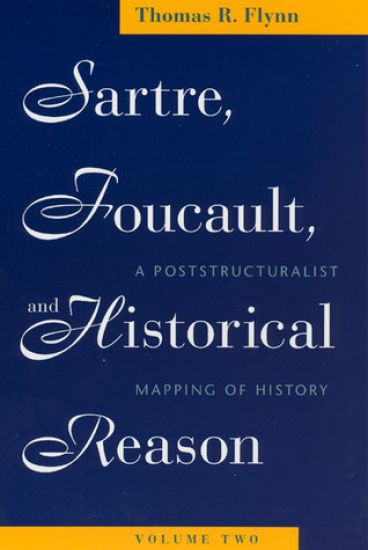
Sartre, Foucault, and Historical Reason, Volume Two

Sartre, Foucault, and Historical Reason, Volume Two

Thomas R. Flynn

University of Chicago Press
2005
sidottu
Sartre and Foucault were two of the most prominent and at times mutually antagonistic philosophical figures of the twentieth century. And nowhere are the antithetical natures of their existentialist and poststructuralist philosophies more apparent than in their disparate approaches to historical understanding. In Volume One of this authoritative two-volume study, Thomas R. Flynn conducted a pivotal and comprehensive reconstruction of Sartrean historical theory. This long-awaited second volume offers a comprehensive and critical reading of the Foucauldian counterpoint.A history, theorized Foucault, should be a kind of map, a comprehensive charting of structural transformations and displacements over time. Contrary to other Foucault scholars, Flynn proposes an "axial" rather than a developmental reading of Foucault's work. This allows aspects of Foucault's famous triad of knowledge, power, and the subject to emerge in each of his major works. Flynn maps existentialist categories across Foucault's "quadrilateral," the model that Foucault proposes as defining modernist conceptions of knowledge. At stake is the degree to which Sartre's thought is fully captured by this mapping, whether he was, as Foucault claimed, "a man of the nineteenth century trying to think in the twentieth."
Sartre, Foucault, and Historical Reason, Volume Two

Sartre, Foucault, and Historical Reason, Volume Two

Thomas R. Flynn

University of Chicago Press
2005
nidottu
Sartre and Foucault were two of the most prominent and at times mutually antagonistic philosophical figures of the twentieth century. And nowhere are the antithetical natures of their existentialist and poststructuralist philosophies more apparent than in their disparate approaches to historical understanding. In Volume One of this authoritative two-volume study, Thomas R. Flynn conducted a pivotal and comprehensive reconstruction of Sartrean historical theory. This long-awaited second volume offers a comprehensive and critical reading of the Foucauldian counterpoint.A history, theorized Foucault, should be a kind of map, a comprehensive charting of structural transformations and displacements over time. Contrary to other Foucault scholars, Flynn proposes an "axial" rather than a developmental reading of Foucault's work. This allows aspects of Foucault's famous triad of knowledge, power, and the subject to emerge in each of his major works. Flynn maps existentialist categories across Foucault's "quadrilateral," the model that Foucault proposes as defining modernist conceptions of knowledge. At stake is the degree to which Sartre's thought is fully captured by this mapping, whether he was, as Foucault claimed, "a man of the nineteenth century trying to think in the twentieth."
Elephants and Kings

Elephants and Kings

Thomas R. Trautmann

University of Chicago Press
2015
nidottu
Because of their enormous size, elephants have long been irresistible for kings as symbols of their eminence. In early civilizations - such as Egypt, Mesopotamia, the Indus Civilization, and China - kings used elephants for royal sacrifice, spectacular hunts, public display of live captives, or the conspicuous consumption of ivory - all of them tending toward the elephant's extinction. The kings of India, however, as Thomas R Trautmann shows in this study, found a use for elephants that actually helped preserve their habitat and numbers in the wild: war. Trautmann traces the history of the war elephant in India and the spread of the institution to the West-where elephants took part in some of the greatest wars of antiquity - and Southeast Asia (but not China, significantly), a history that spans 3,000 years and a considerable part of the globe, from Spain to Java. He shows that because elephants eat such massive quantities of food, it was uneconomic to raise them from birth. Rather, in a unique form of domestication, Indian kings captured wild adults and trained them, one by one, through millennia. Kings were thus compelled to protect wild elephants from hunters and elephant forests from being cut down. By taking a wide-angle view of human-elephant relations, Trautmann throws into relief the structure of India's environmental history and the reasons for the persistence of wild elephants in its forests.
The Universe as It Really Is

The Universe as It Really Is

Thomas R. Scott

Columbia University Press
2018
sidottu
The universe that science reveals to us can seem far outside the comfort zone of the human mind. Subjects near and far open up dizzying vistas, from the infinitesimal to the colossal. Humanity, the unlikely product of uncountable coincidences on unimaginable scales, inhabits a tumultuous universe that extends from our immediate environs to the most distant galaxies and beyond. But when the mind balks at the vertiginous complexity of the universe, science unveils the elegance amid the chaos.In this book, Thomas R. Scott ventures into the known and the unknown to explain our universe and the laws that govern it. The Universe as It Really Is begins with physics and the building blocks of the universe—time, gravity, light, and elementary particles—and chemistry’s ability to explain the interactions among them. Scott, with the assistance of James Lawrence Powell, next tours the earth and atmospheric sciences to explain the forces that shape our planet and then takes off for the stars to describe our place in the cosmos. He provides vivid introductions to our collective scientific inheritance, narrating discoveries such as the shape of the atom and the nature of the nucleus or how we use GPS to measure time and what that has to do with relativity. A clear demonstration of the power of scientific reasoning to bring the incomprehensible within our grasp, The Universe as It Really Is gives an engrossing account of just how much we do understand about the world around us.
American Presidents in Diplomacy and War

American Presidents in Diplomacy and War

Thomas R. Parker

UNIVERSITY OF NOTRE DAME PRESS
2023
sidottu
By analyzing how America's greatest presidents displayed their mastery of statecraft, American Presidents in Diplomacy and War offers important lessons about the most effective uses of national power abroad. American Presidents in Diplomacy and War chronicles the major foreign policy crises faced by twelve American presidents in order to uncover the reoccurring patterns of successful and less successful uses of diplomatic, economic, and military power. In this brief and highly readable book, Thomas R. Parker reveals how America's most successful leaders manage events instead of allowing events to control them. Parker explores how the U.S. presidency, from the days of the early Republic to the present, shaped the world. Ranging from George Washington to George H. W. Bush, Parker shows how successful statecraft requires the understanding of complex situations, the prudent evaluation of various courses of action, the ability to adapt and to anticipate, and personal determination. Parker compares each of these leaders to their contemporaries—reasonable political leaders who nonetheless made serious mistakes, such as Thomas Jefferson and Barack Obama—to examine the dangers of being unable to strike the right balance of aggressiveness and caution and to examine the costs of inexperience and ambivalence toward military power. The book concludes by discussing the increasingly complex international situation of today, particularly the manifold challenges posed by China and Russia to U.S. foreign policy, and the continued necessity of effective statecraft.
American Presidents in Diplomacy and War

American Presidents in Diplomacy and War

Thomas R. Parker

UNIVERSITY OF NOTRE DAME PRESS
2026
nidottu
By analyzing how America's greatest presidents displayed their mastery of statecraft, American Presidents in Diplomacy and War offers important lessons about the most effective uses of national power abroad.American Presidents in Diplomacy and War chronicles the major foreign policy crises faced by twelve American presidents in order to uncover the reoccurring patterns of successful and less successful uses of diplomatic, economic, and military power. In this brief and highly readable book, Thomas R. Parker reveals how America's most successful leaders manage events instead of allowing events to control them.Parker explores how the U.S. presidency, from the days of the early Republic to the present, shaped the world. Ranging from George Washington to George H. W. Bush, Parker shows how successful statecraft requires the understanding of complex situations, the prudent evaluation of various courses of action, the ability to adapt and to anticipate, and personal determination. Parker compares each of these leaders to their contemporaries—reasonable political leaders who nonetheless made serious mistakes, such as Thomas Jefferson and Barack Obama—to examine the dangers of being unable to strike the right balance of aggressiveness and caution and to examine the costs of inexperience and ambivalence toward military power. The book concludes by discussing the increasingly complex international situation of today, particularly the manifold challenges posed by China and Russia to U.S. foreign policy, and the continued necessity of effective statecraft.
The Pink Scar

The Pink Scar

Thomas R. Dunn

Pennsylvania State University Press
2025
sidottu
The Third Reich subjected some one hundred thousand individuals to a pernicious anti-homosexual campaign that included censorship, surveillance, medical experimentation, and death. Credible scholarship suggests that as many as fifteen thousand were interned in concentration camps, though the actual names and numbers of all those who suffered and died will never be known.Today, prevailing historical narratives hold that the persecution of homosexuals under Hitler was “discovered” in the 1970s by a post-Stonewall gay and lesbian community, who were the first to use these tragic events—emblematically symbolized by the pink triangle—to advance the struggle for LGBTQ+ rights around the world. The Pink Scar tells a different story. This book shows that Americans had ample opportunity to learn about this persecution before and during the war and explores how activists in the United States made Hitler’s anti-homosexual campaign a central, animating force in their arguments at almost every major turning point in the lesbian and gay struggle since 1934.Victims of the Nazi regime were among the most important and the most contested symbols in the history of lesbian and gay rights rhetoric—perhaps even more contested than the pink triangle itself. This book shows us how, nearly one hundred years after Hitler came to power, remembering the people persecuted by the Nazi regime is once again essential for defending LGBTQ+ rights in a new age of growing fascism and anti-queer/trans oppression.
The Pink Scar

The Pink Scar

Thomas R. Dunn

Pennsylvania State University Press
2025
pokkari
The Third Reich subjected some one hundred thousand individuals to a pernicious anti-homosexual campaign that included censorship, surveillance, medical experimentation, and death. Credible scholarship suggests that as many as fifteen thousand were interned in concentration camps, though the actual names and numbers of all those who suffered and died will never be known.Today, prevailing historical narratives hold that the persecution of homosexuals under Hitler was “discovered” in the 1970s by a post-Stonewall gay and lesbian community, who were the first to use these tragic events—emblematically symbolized by the pink triangle—to advance the struggle for LGBTQ+ rights around the world. The Pink Scar tells a different story. This book shows that Americans had ample opportunity to learn about this persecution before and during the war and explores how activists in the United States made Hitler’s anti-homosexual campaign a central, animating force in their arguments at almost every major turning point in the lesbian and gay struggle since 1934.Victims of the Nazi regime were among the most important and the most contested symbols in the history of lesbian and gay rights rhetoric—perhaps even more contested than the pink triangle itself. This book shows us how, nearly one hundred years after Hitler came to power, remembering the people persecuted by the Nazi regime is once again essential for defending LGBTQ+ rights in a new age of growing fascism and anti-queer/trans oppression.
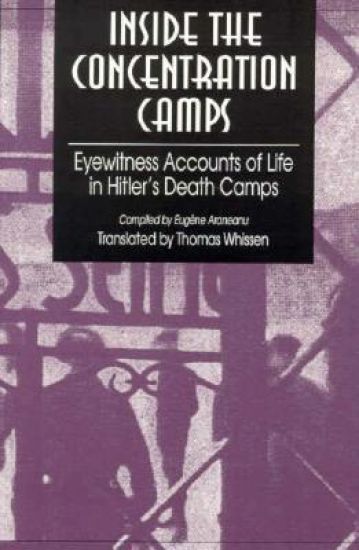
Inside the Concentration Camps

Inside the Concentration Camps

Thomas R. Whissen

Praeger Publishers Inc
1996
nidottu
This book is a translation of an oral history of the concentration camp experience recorded immediately after World War II as told by men and women who endured it and lived to tell about it. Their vivid, firsthand accounts heighten the reality of this experience in ways no third-person narrative can capture. Even when they are at a loss for words, their struggle to find language to express the unspeakable is, in itself, mute testimony to the ordeal etched forever on their memories. The testimonies are arranged to reflect the chronology of camp experience (from deportation to liberation), the living conditions of camp life (from malnutrition to forced labor), and the various methods of abuse and extermination (from castration to gassing and cremation). The chronology gives the accounts a narrative flow and even creates a certain suspense, especially as liberation nears and hopes rise.
Peace Operations and Intrastate Conflict

Peace Operations and Intrastate Conflict

Thomas R. Mockaitis

Praeger Publishers Inc
1999
sidottu
Based upon consideration of United Nation missions to the Congo (1960-64), Somalia (1992-95), and the former Yugoslavia (1992-95) and examination of counterinsurgency campaigns, Mockaitis develops a new model for intervening in intrastate conflicts and commends the British approach to civil strife as the basis for a new approach to peace operations. Both contemporary and historic examples demonstrate that military intervention to end civil conflict differs radically from traditional peacekeeping. Ending a civil war requires the selective and limited use of force to stop the fighting, safeguard humanitarian aid work, and restore law and order. Since intrastate conflict resembles insurgency far more than it does any other type of war, counterinsurgency principles should form the basis of a new intervention model.A comprehensive approach to resolve intrastate conflict requires that peace forces, NGOs, and local authorities cooperate in rebuilding a war-torn country. Only the British have enjoyed much success in counterinsurgency campaigns. Starting from the three broad principles of minimum force, civil-military cooperation, and flexibility, the British approach in responding to insurgency has combined the limited use of force with political and civil development. Carefully considered and correctly applied, these principles could produce a more effective model for peace operations to end intrastate conflict.