Kirjojen hintavertailu. Mukana 12 366 440 kirjaa ja 12 kauppaa.

Kirjahaku

Etsi kirjoja tekijän nimen, kirjan nimen tai ISBN:n perusteella.

1000 tulosta hakusanalla Thomas-M

The Essential Works of Thomas More

The Essential Works of Thomas More

Thomas More

Yale University Press
2020
sidottu
The first comprehensive one-volume collection of St. Thomas More’s writing “[A] tremendous scholarly undertaking. . . . Accessible and transparent to both scholars and the general audience.”—Renaissance and Reformation In this book, Gerard B. Wegemer and Stephen W. Smith assemble, for the first time in a single volume, the most important English and Latin works of Thomas More (1478–1535). This collection reveals the breadth of More’s writing—key works on theology, political philosophy, and law, as well as his poetry and prose—and includes a rich selection of illustrations and artwork. The book provides the most complete picture of More’s work available, serving as a major resource for early modern scholars, teachers, students, and the general reader.
Thomas More

Thomas More

Albert J. Geritz

Greenwood Press
1998
sidottu
Few people have had as enduring an influence as Thomas More (1478-1535), who—along with Erasmus, with whom he corresponded—was the quintessential Renaissance Humanist. More had a deep understanding of the classics. He wrote poems in Latin and prepared Latin translations of Lucian's Greek dialogues. Like so many thinkers of his day, he had a strong interest in the philosophy of education. Trained as a lawyer, he was also a leading political figure of his time. He became a member of Parliament in 1504, speaker of the House of Commons in 1523, Chancellor of the Duchy of Lancaster in 1525, and Lord Chancellor in 1529. But most importantly, he was a theologian and religious leader and had once contemplated pursuing a religious vocation. He challenged the influence of Lutheranism; debated Christopher St. German about the limits of ecclesiastical jurisdiction in England; and wrote theological treatises on the sufferings of Christ, the nature of heresies, and other religious topics. Though he saw himself as the king's servant, he refused to acknowledge the authority of Henry VIII as spiritual head of England. For his defiance, he was executed; for his martyrdom, he was canonized. Many of his views are reflected in what is perhaps his most famous work, Utopia, in which he offers a fictional portrait of an ideal society.Research on More has flourished in the centuries after his death, particularly since his canonization. This bibliography includes more than 1600 annotated entries for major works on his life and writings not only written in English, but also in French, German, Dutch, Italian, Spanish, and Portuguese. It contains entries for books, chapters, journal articles, and numerous unpublished dissertations. The opening chapters cover reference works, editions, and editorial concerns. A chapter on biography precedes sections on general critical studies; More's reception, reputation, and influence; the religious and philosophical background of his works; and his language, style, and use of classical and Christian sources. Individual chapters then treat particular major works, such as his History of King Richard III, or clusters of his shorter writings, such as his English and Latin poems. Entries include cross-references, and the volume closes with a detailed index.
A Critical Edition of Thomas Middleton's The Witch
Published in 1993: The first modern scholarly edition of the author's play, not published until 1778. Sebastian reclaims his betrothed from Antonio; the Duchess avenges herself on the Duke for making her drink from her father; and Abberzanes and Francesca have an illicite affair. The witches are credible forces of evil.
A Critical Edition of Thomas Middleton's The Witch
Published in 1993: The first modern scholarly edition of the author's play, not published until 1778. Sebastian reclaims his betrothed from Antonio; the Duchess avenges herself on the Duke for making her drink from her father; and Abberzanes and Francesca have an illicite affair. The witches are credible forces of evil.
Thomas Moore and Romantic Inspiration
Written by internationally established scholars of Thomas Moore’s music, poetry, and prose writing, Thomas Moore and Romantic Inspiration is a collection of twelve essays and a timely response to significant new biographical, historiographical and editorial work on Moore. This collection reflects the rich variety of cutting-edge work being done on this significant and prolific figure. Sarah McCleave and Brian Caraher have contributed an introduction that positions Moore in his own time (1800-1850), addresses subsequent neglect in the twentieth century, and contextualises the contemporary re-evaluation of Thomas Moore as a figure of considerable interdisciplinary artistic and cultural significance. The contributions to this collection establish Moore’s importance in the fields of Neoclassical and Romantic lyricism, musical performance, song-writing, postcolonial criticism, Orientalism and biographical writing— as well as defining the significance of his voice as an engaged social and political commentator of a strongly cosmopolitan and pluralistic inclination.
Saint Thomas More

Saint Thomas More

Thomas More

Random House USA Inc
2003
pokkari
Thomas More is perhaps most familiar to us from his courageous struggle with Henry VIII, unforgettably portrayed in Robert Bolt's classic, A Man for All Seasons. But that final struggle, which ended in his execution for treason, was only the crowning act in a life that he had devoted to God long before. In the first selection in decades made for the general reader from his collected works, this volume traces More's journey of moral conviction in his own words and writings. Drawing on a variety of More's late writings-the extraordinary "Tower Works," written in prison, his poignant last letters to his daughter Margaret, and his poems, private prayers and devotional works-this collection will provide even readers lacking a background in Renaissance humanism or history with a rich introduction to a startlingly modern man of spiritual principle. Also included is the famous "Life of Sir Thomas More," written by his son-in-law, William Roper. In the annals of spirituality certain books stand out both for their historical importance and for their continued relevance. The Vintage Spiritual Classics series offers the greatest of these works in authoritative new editions, with specially commissioned essays by noted contemporary commentators. Filled with eloquence and fresh insight, encouragement and solace, Vintage Spiritual Classics are incomparable resources for all readers who seek a more substantive understanding of mankind's relation to the divine.
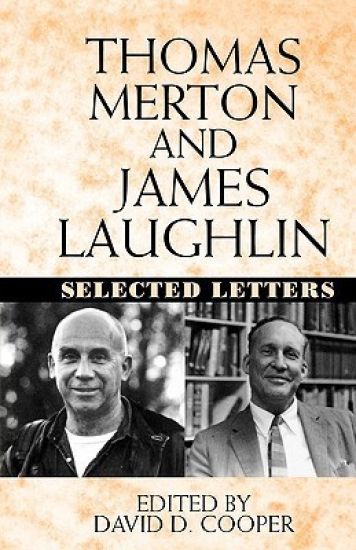
Thomas Merton and James Laughlin

Thomas Merton and James Laughlin

James Laughlin; Thomas Merton

WW NORTON CO
1997
nidottu
Thomas Merton may have seemed an unlikely candidate for a best-selling author. Cloistered in a remote Kentucky monastery, Merton struggled as a young man to reconcile the contemplative life he sought as a monk and his very public passion for writing. Publisher James Laughlin saw Merton's talent and played the muse, encouraging him with the poems, essays, and diaries of other writers and publishing nearly everything Merton sent in return. Ironically, the very society Merton rejected upon entering the monastery embraced his work, bringing him publishing success only dreamed of by more eager authors. Soon Merton discovered he had a podium, a voice, and a responsibility that weighed as heavily on him as his previous quest for silence. Laughlin's encouragement remained constant throughout, as political ally, publishing adviser, and supporting friend. Nearly thirty years of rich correspondence documents this strong literary and personal relationship and traces the remarkable development of Merton's vision: from an early focus on matters internal and religious, to a tremendous world view encompassing issues of race, politics, war, and the spiritual decay of modern society.
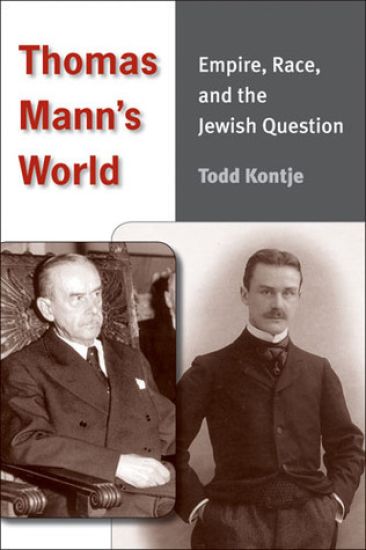
Thomas Mann's World

Thomas Mann's World

Todd Kontje

The University of Michigan Press
2011
sidottu
Praise for Todd Kontje". . . a refreshing example of what literary discourse can teach us about national identity, even historical events and trends---those aspects of a nation's evolving heritage and tradition usually reserved for other disciplines."---Colloquia Germanica"Kontje has pulled off the amazing feat of a grand narrative: from the epic literature of the Middle Ages to very recent texts on the emerging multicultural Germany. Kontje's grand narrative, it should be noted, is not at all simplistic or reductionistic. He gets at the individual texts in complex ways . . . he displays an enviable erudition and scholarship, tracing lines through centuries when most scholars today limit themselves to narrow specialties."---Russell Berman, Stanford UniversityExactly how Thomas Mann's significance registers with the scholarly and general public has been subject to change. For many, Mann retains the aura of the "good German," the Nobel Laureate who was the most vocal leader of the exile community against Hitler and the Third Reich. His diaries, however, contain some rather nasty comments about Mann's many Jewish friends and acquaintances, inspiring a renewed look at the negative Jewish stereotypes in his fiction. The man once venerated as a voice of reason and cosmopolitan tolerance against racist bigotry has been eviscerated as a clandestine anti-Semite.Thomas Mann's World is a comprehensive reevaluation of Mann as the representative German author of the Age of Empire, placing Mann's comments about Jews and the Jewish characters in his fiction in the larger context of his attentiveness to racial difference, both in the world at large and in himself. Kontje argues that Mann is a worldly author---not in the benign sense that he was an eloquent spokesman for a pan-European cosmopolitanism who had witnessed the evils of nationalism gone mad, although he was that, too---but in the sense of a writer whose personal prejudices reflected those of the world around him, a writer whose deeply autobiographical fiction expressed not only the concerns of the German nation, as he liked to claim, but also of the world in an era of imperial conquest and global conflict.Todd Kontje is Professor of German and Comparative Literature and Chair of the German Department at the University of California, San Diego. He is the author of German Orientalisms (University of Michigan Press, 2004).Jacket photographs: Thomas Mann, approximately 1900 and 1955, reproduced with the generous permission of the Buddenbrookhaus, Kulturstiftung Hansestadt Lübeck.
The Letters of Thomas Babington MacAulay: Volume 1, 1807–February 1831
Some of Macaulay's letters were printed in nineteenth-century memoirs, but a 'Complete Letters' of this eminent Victorian has long been needed. Professor Pinney is editing the whole body of surviving letters by Macaulay, giving accurate texts and textual and explanatory notes. The letters are in chronological order, grouped by historical theme and phases of Macaulay's life. The first two volumes deal with his childhood, career at Cambridge, early legal career and early political career, and end with him about to leave for India. The letters are lively because Macaulay (as lawyer, essayist, historian, politician, administrator, poet) was a man of enormous energy and very wide interests. They will add greatly to our sense of early Victorian political and cultural life as well as to our understanding of Macaulay himself.
The Letters of Thomas Babington MacAulay: Volume 2, March 1831–December 1833

The Letters of Thomas Babington MacAulay: Volume 2, March 1831–December 1833

Thomas MacAulay; Thomas Pinney

Cambridge University Press
2008
pokkari
Some of Macaulay's letters were printed in nineteenth-century memoirs, but a 'Complete Letters' of this eminent Victorian has long been needed. Professor Pinney is editing the whole body of surviving letters by Macaulay, giving accurate texts and textual and explanatory notes. The letters are in chronological order, grouped by historical theme and phases of Macaulay's life. The first two volumes deal with his childhood, career at Cambridge, early legal career and early political career, and end with him about to leave for India. The letters are lively because Macaulay (as lawyer, essayist, historian, politician, administrator, poet) was a man of enormous energy and very wide interests. They will add greatly to our sense of early Victorian political and cultural life as well as to our understanding of Macaulay himself.
The Letters of Thomas Babington MacAulay: Volume 3, January 1834–August 1841

The Letters of Thomas Babington MacAulay: Volume 3, January 1834–August 1841

Thomas MacAulay; Thomas Pinney

Cambridge University Press
2008
pokkari
The third volume of Thomas Pinney's acclaimed edition of Macaulay's letters brings the work to its halfway point. This volume begins with Macaulay preparing to sail for India as a member of the supreme Council, covers his Indian career, his return to England, renewed election to Parliament and appointment to the Whig Cabinet; it ends with the defeat of Melbourne's ministry. Many of the letters are previously unpublished, and are notable for their brisk and vivid style, clear and readable as was all Macaulay's prose. They throw particular light on his Indian years, in which Macaulay played a significant part in liberalising movement begun by Bentinck. The period also took Macaulay through several personal crises, brought about by the death of one favourite sister and the marriage of another. In these letters too Macaulay often concerns himself with his continuing literary career.
The Letters of Thomas Babington MacAulay: Volume 4, September 1841–December 1848
The fourth volume of Thomas Pinney's acclaimed edition of Macaulay's letters covers the period between September 1841 and December 1848, in which Macaulay is shown keeping up an active political life as MP for Edinburgh and member of Lord John Russell's Whig Cabinet. At the same time his literary reputation is extended by The Lays of Ancient Rome, the collected Essays, and, at the end of the period spanned by this volume, the triumphant publication of the first two volumes of the History of England. In the same years Macaulay was enjoying perhaps the most satisfactory period of his private life: we see him comfortably established in the Albany, enjoying the society of his sister and her family, taking part as a leading figure in Whig political and literary circles, and confidently at work on the book which was to crown his fame.
The Letters of Thomas Babington MacAulay: Volume 5, January 1849–December 1855
The years covered in this fifth volume of Macaulay's letters were a striking mixture of triumph and loss. The publication of the first part of The History of England at the end of 1848 set Macaulay at the top of his fame, not merely in England, but on the Continent and in America. Honours came pouring in, and the sales of his books began to make him a rich man. The publication of the second part of the History in 1855 was a publishing event of unparalleled magnitude: 25,000 copies were subscribed at once in England, and four times that number were quickly sold in the United States. To add to his triumph, the people of Edinburgh, who had so rudely and unexpectedly rejected him in 1847 as their representative in parliament, now recanted; though Macaulay refused even to appear before them, they insisted upon returning him to parliament, and did so in 1852.
Thomas Munro and the Development of Administrative Policy in Madras 1792–1818
This book was originally published in 1966. The great territorial acquisitions made by the British in South India at the end of the eighteenth century called for an administrative system differing in many ways from that in use in Bengal. These changes influenced subsequent administrative practice not only in Madras but in the whole of British India. Although it had long been recognised that Thomas Munro was in part responsible for the changes, this was the first full study of how his ideas developed and how much they were his alone. Dr Beaglehole's study added greatly to the knowledge of the personality and ideas of one of the key figures in British India. The analysis of the controversy and discussion which took place at the time also provided an insight into the nature of British rule in India.
Thomas Middleton in Context

Thomas Middleton in Context

Cambridge University Press
2011
sidottu
The redefinition of the Thomas Middleton canon has led to an explosion of interest in this quintessential Jacobean. Middleton's best-known plays, such as Women Beware Women and The Changeling, are now staged, filmed and rewritten for modern audiences. But Middleton also wrote religious poetry, satires, historical allegory, prose and less familiar plays, collaborating frequently, even with Shakespeare. His works are rooted in his historical and cultural environment, from the Overbury scandal to the fall of the boys' companies. Here, experts in literature, theatre, history, law and religion analyze the complex contexts of Middleton's works, clarifying debates over his religious and political affiliations. Divided into sections presenting new interpretations of the world in which Middleton wrote - as a Londoner, citizen, dramatist and early modern man - and concluding with a section on performance history, the essays cover the full range of his works, from the frequently performed to the newest attributions.
Thomas Mann

Thomas Mann

Thomas Mann; Erich Heller

Cambridge University Press
1981
pokkari
In this book, which was first published in 1958 and reissued in 1981, Professor Heller sees Mann as the late heir of the central tradition of modern German literature and also as one of the most ironic writers within that tradition. He offers a detailed study of the major works of fiction, Buddenbrooks, Tonio Kröher, Death in Venice, The Magic Mountain, Joseph and His Brothers, Doctor Faustus and Felix Krull, as well as a discussion of Mann's most significant political essay, 'Meditations of a Non-Political Man'. Beyond this, Heller's book is a profound commentary on Mann by a mind attuned to (and mouded by) precisely the intellectual and cultural traditions which are so much part of Mann's creative make-up.