Kirjahaku
Etsi kirjoja tekijän nimen, kirjan nimen tai ISBN:n perusteella.
1000 tulosta hakusanalla Tim Lebbon
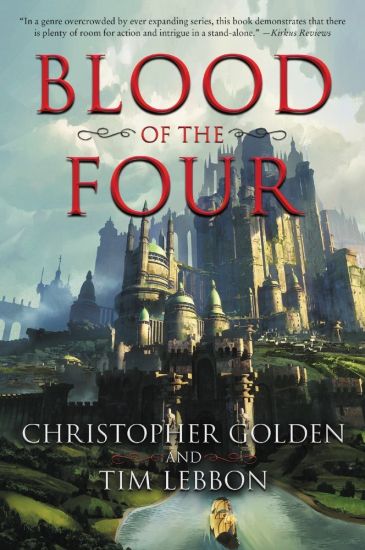
The acclaimed authors of The Map of Moments and The Secret Journeys of Jack London join creative forces once more in this epic, standalone novel—an exciting dark fantasy of gods and mortals, fools and heroes, saviors and destroyers with a brilliant beam of hope at its core—that should more than appeal to readers of N.K. Jemisin and Brandon Sanderson.In the great kingdom of Quandis, everyone is a slave. Some are slaves to the gods. Most are slaves to everyone else.Blessed by the gods with lives of comfort and splendor, the royal elite routinely perform their duties, yet some chafe at their role. A young woman of stunning ambition, Princess Phela refuses to allow a few obstacles—including her mother the queen and her brother, the heir apparent—stand in the way of claiming ultimate power and glory for herself.Far below the royals are the Bajuman. Poor and oppressed, members of this wretched caste have but two paths out of servitude: the priesthood . . . or death.Because magic has been kept at bay in Quandis, royals and Bajuman have lived together in an uneasy peace for centuries. But Princess Phela’s desire for power will disrupt the realm’s order, setting into motion a series of events that will end with her becoming a goddess in her own right . . . or ultimately destroying Quandis and all its inhabitants.
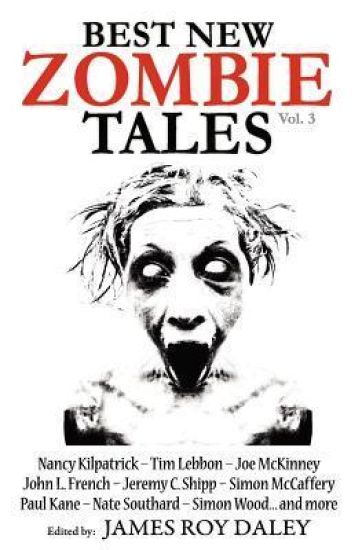
Want the Greatest Zombie Stories Ever Written? BEST NEW ZOMBIE TALES (Vol. 3) Over 100,000 words Includes Amazing Fiction by: Anthony Award Winner, Simon Wood Bram Stoker Award Nominee, Joe McKinney New York Times Bestselling Author, Tim Lebbon Arthur Ellis Award Winner, Nancy Kilpatrick British Fantasy Award Nominee, Paul Kane Bram Stoker Award Nominee, Jeremy C. Shipp And so much more... "James Roy Daley has created a series that not even a headshot could stop It just keeps getting better and better, stronger and stronger... I'm thrilled to be a part of such an unstoppable monster " -Matt Hults, Author of HUSK. "I'm proud to be a part of the Best New Zombie Tales series." World Horror Grand Master, Multiple Award Winning Horror Legend, Ray Garton James Roy Daley is doing a marvelous job with his Best New Zombie Tales series-- TERRIFIC Bloody well done " New York Times bestseller Jonathan Maberry, author of PATIENT ZERO and ROT & RUIN TABLE OF CONTENTS Introduction JAMES ROY DALEY The Lazarus Condition PAUL KANE Of Cabbages and Kings NATE SOUTHARD Those Below JEREMY C. SHIPP The Traumatized Generation MURRAY J.D. LEEDER The Cyclist SIMON WOOD Family First JG FAHERTY The Way of Things in Fly-Over Country AARON POLSON The Beach TIM LEBBON Fast Eddie's Big Night Out JOHN L. FRENCH Night of the Living Dead Bingo Women SIMON MCCAFFERY Worm-sacks and Dirt-backs LEE CLARK ZUMPE The Purple Word ERIK T. JOHNSON Sabbatical in the Ohio Methlands JOE MCKINNEY A Sense of Duty GREGORY MILLER The Basement WILLIAM T. VANDEMARK Working Man's Burden DAVID C. PINNT The Last Supper (The Anatomy Of Addiction) JOHN CLAUDE SMITH Memory Bones MICHAEL STONE Going Down NANCY KILPATRICK Sweetbread TONIA BROWN Mixed Drink Zombie #3 Don't forget to check out: Best New Zombie Tales Volume 1 Best New Zombie Tales Volume 2 & Best New Vampire Tales Volume 1
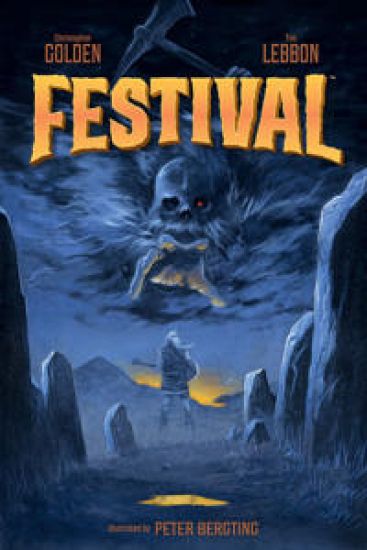
New York Times bestselling horror writers Christopher Golden and Tim Lebbon create a music festival to die for in this illustrated novel with artwork by Peter Bergting The Valhalla music festival commemorates a long-ago Viking slaughter, but when strange things start to happen it seems the massacre may be far from over. When festival-goers begin to disappear, and musicians find themselves playing mysterious and ancient songs as if possessed, the fans have to figure out what's going on before the festival site's haunting past comes back for blood.
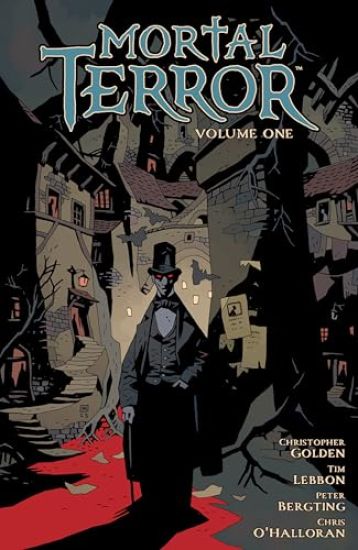
Mortal Terror Volume 1
Christopher Golden; Tim Lebbon; Peter Bergting
DARK HORSE COMICS,U.S.
2024
sidottu
A vampire-flipped Dracula in which mortality means life...and life means death. Vampires Jonathan Harker, Lucy Westenra, and Mina Murray live in underground London, trying to keep the undead city safe from the rumored mortals above who seek to give them life, only to kill them. But when the authorities refuse to believe mortals, let alone the mysterious Count Dracula, are anything more than myth, they are on their own to keep their city eternally dead. New York Times best-selling writers Christopher Golden and Tim Lebbon team up with award-winning horror and fantasy artist Peter Bergting for this revamped twist on Dracula

The Many Deaths Of Edgar Allan Poe Edgar Allan Poe's death remains a mystery even today. There are many theories as to what killed him. Some people believe Poe's death was caused by suicide, some believe murder, others consider cholera to be the leading factor, or hypoglycaemia, rabies, syphilis and even influenza. Whatever happened to him, Poe was found in a delirious state and wearing clothes believed to be belonging to someone else. In the days before his death, he was heard to be calling out for Reynolds, a man to which no one knew of Poe's connection. This book does not tell you the truth in what happened to Poe. That will remain, forever, a mystery. What this book does is bring together some of the biggest names in horror - from the mind behind the horror anthologies Masters Of Horror and NEXT DOOR - to tell THEIR version of what happened to Poe in his final moments. Expect gore, expect black humour, expect sex, expect violence, double-crossing and murder most foul... Expect pure fiction as we let our imaginations run riot. Including work from: Jim Goforth Kit Power Matt Shaw K. Trap Jones Tim Lebbon Shaun Hutson Gary McMahon Andrew Freudenberg Justin M. Woodward Mark Cassell Paul Flewitt Christine Morgan
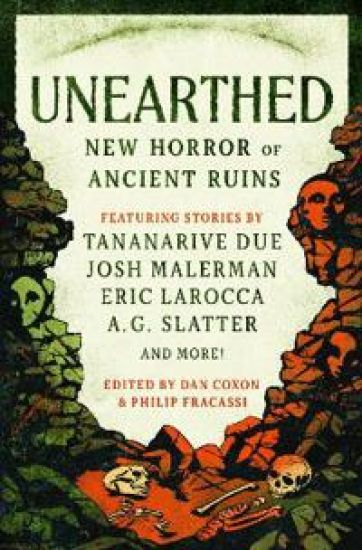
Unearthed
Philip Fracassi; Josh Malerman; Tim Lebbon; Eric LaRocca; A. M. Shine; Jonathan Maberry; A. G. Slatter; Mark Chadbourn; Priya Sharma
TITAN BOOKS LTD
2026
nidottu
Nineteen original horror stories exploring ancient sites, uncovering forgotten histories and prising open the tombs of the past, from award-winning authors and editors Dan Coxon and Philip Fracassi. Perfect for fans of Ellen Datlow. Unearthed digs beneath these crumbling structures to reveal their archaic pasts, and their darkest secrets. Featuring the best modern writers of horror and dark fantasy, these stories explore the caverns and the catacombs, the ruined temples and the monoliths - and drag an ancient evil back into the light. Featuring stories from: Tananarive Due Christopher Golden Josh Malerman Tim Lebbon Eric LaRocca A.M. Shine Jonathan Maberry Hildur Knutsdottir Ai Jiang A. G. Slatter Mark Chadbourn Priya Sharma Benjamin Percy V. Castro Gemma Amor Cavan Scott Premee Mohamed Hache Pueyo Steve Toase
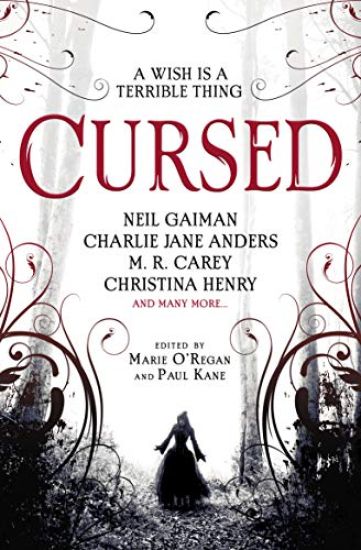
Cursed: An Anthology
Angela Slatter; Alison Littlewood; James Brogden; Tim Lebbon; Charlie Jane Anders; M. R. Carey; Christina Henry; Neil Gaiman
Titan Books Ltd
2020
pokkari
Twenty curses, old and new, from bestselling fantasy authors such as Neil Gaiman, Christina Henry, M.R. Carey and Charlie Jane Anders. ALL THE BETTER TO READ YOU WITH It's a prick of blood, the bite of an apple, the evil eye, a wedding ring or a pair of red shoes. Curses come in all shapes and sizes, and they can happen to anyone, not just those of us with unpopular stepparents... Here you'll find unique twists on curses, from fairy tale classics to brand-new hexes of the modern world - expect new monsters and mythologies as well as twists on well-loved fables. Stories to shock and stories of warning, stories of monsters and stories of magic. TWENTY TIMELESS FOLKTALES, NEW AND OLD NEIL GAIMAN JANE YOLEN KAREN JOY FOWLER M.R. CAREY CHRISTINA HENRY CHRISTOPHER GOLDEN TIM LEBBON MICHAEL MARSHALL SMITH CHARLIE JANE ANDERS JEN WILLIAMS CATRIONA WARD JAMES BROGDEN MAURA McHUGH ANGELA SLATTER LILLITH SAINTCROW CHRISTOPHER FOWLER ALISON LITTLEWOOD MARGO LANAGAN

Predator: Eyes of the Demon
Bryan Thomas Schmidt; Scott Sigler; Kim May; Tim Lebbon; Stephen Graham Jones
TITAN BOOKS LTD
2022
pokkari
A brand-new anthology with fifteen exclusive short stories offering taut and dramatic tales set on Earth and in dark reaches of space, featuring the ultimate hunters, the Yautja-also also known as Predators. The diverse lineup of authors includes Stephen Graham Jones, Linda Addison, Jonathan Maberry, Scott Sigler, Peter Briggs, and many more. Fifteen original, never-before-seen short stories set in the expanded Predator universe from the first film, featuring the ultimate hunters, the Yautja from the movie Predator. Set in the recent past, the present, and the future, these edge-of-your-seat adventures by many of today's top SF and horror authors take place on Earth and in the dark, unforgiving reaches of space. The diverse, multi-ethnic group of authors includes New York Times bestsellers, Stoker Award winners, and acclaimed contributors to the Alien and Predator universes. Included in this volume are Native American award-winning horror author Stephen Graham Jones, Linda Addison- the first African American to win the Stoker Award, Peter Briggs, screenwriter for Hellboy, New York Times bestselling author and visionary podcaster Scott Sigler (Aliens: Phalanx), award-winning author Ammar Habib (The Heart of Aleppo), New York Times bestseller Jonathan Maberry, Emmy nominated writer Joshua Pruett of Mystery Science Theater 3000, Tim Lebbon, author of the Aliens vs. Predators "Rage War", and many more. Featuring Stephen Graham Jones, Linda Addison, Jonathan Maberry, Scott Sigler, Peter Briggs, Tim Lebbon, A. R. Reddington, Robert Greenberger, Ammar Habib, Gini Koch, Kim May, Yvonne Navarro, Joshua Pruett and Bryan Thomas Schmidt. (c) 2021 20TH CENTURY STUDIOS
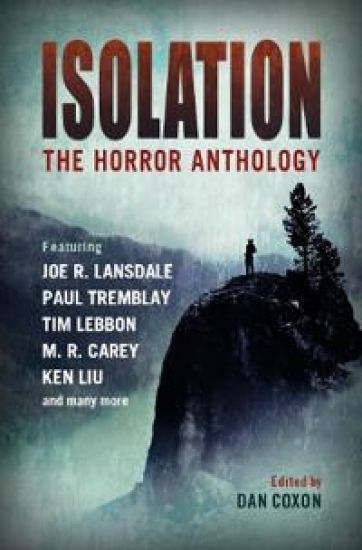
Isolation: The horror anthology
M.R. Carey; Ken Liu; Paul Tremblay; Tim Lebbon
TITAN BOOKS LTD
2022
pokkari
A chilling horror anthology of 18 stories about the terrifying fears of isolation, from the modern masters of horror. Featuring Tim Lebbon, Paul Tremblay, Joe R. Lansdale, M.R. Carey, Ken Liu and many more. Lost in the wilderness, or shunned from society, it remains one of our deepest held fears. This horror anthology calls on leading horror writers to confront the dark moments, the challenges that we must face alone: hikers lost in the woods; astronauts adrift in the silence of deep space; the quiet voice trapped in a crowd; the prisoner, with no hope of escape. Experience the chilling terrors of Isolation. Featuring Paul Tremblay, Joe R. Lansdale, Ken Liu, M.R. Carey, Jonathan Maberry, Tim Lebbon, Lisa Tuttle, Michael Marshall Smith, Ramsey Campbell, Nina Allan, Laird Barron, A.G. Slatter, Mark Morris, Alison Littlewood, Owl Goingback, Brian Evenson, Marian Womack, Gwendolyn Kiste, Lynda E. Rucker and Chikodili Emelumadu.

The Black Crow Book of Best New Horror Volume 1
Olivie Blake; Ramsey Campbell; Lisa Tuttle; Tim Lebbon; V. Castro; Ally Wilkes; Rian Hughes; Lindy Ryan; Susi Holliday; Lily Kade; TL Huchu; Adrian Tchaikovsky; Clay McLeod Chapman
Black Crow Books
2025
sidottu
Be careful what you wish for. Whether searching for love, fame, money or revenge, remember that everything comes with a price. From stepping into an unknown in nature to ignoring the warnings of locals, to finding your perfect match or facing the hidden horrors of your past, beware. The thirteen stories in this brand-new anthology explore the dark side of human nature and take us into the hidden, terrifying recesses of a world we never see. Until it’s too late . . .
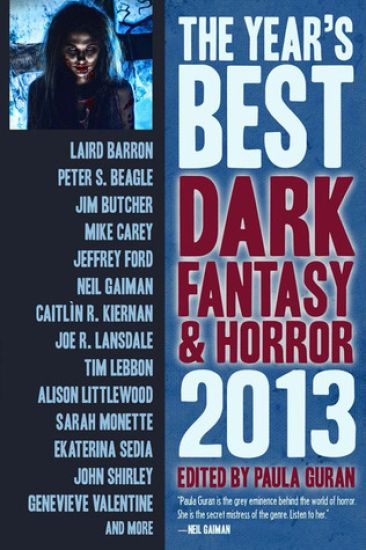
The Year's Best Dark Fantasy & Horror: 2013 Edition
Peter S. Beagle; Jim Butcher; Neil Gaiman; Caitlin R. Kiernan; Joe R. Lansdale; Tim Lebbon; Sarah Monette; John Shirley
Prime Books
2013
nidottu
The darkness creeps upon us and we shudder, or it suddenly startles and we scream. There need be no monsters for us to be terrified in the dark, but if there are, they are just as often human and supernatural. Join us in this outstanding annual exploration of the year's best dark fiction that includes stories of quiet fear, the utterly fantastic, the weirdly surreal, atmospheric noir, mysterious hauntings, seductive nightmares, and frighteningly plausible futures. Featuring thirty-five tales from masterful authors and talented new writers sure to make you reconsider walking in the shadows alone...
Independent on Sunday October 2nd One of the country's leading philosophical counsellers, and chairman of the Society for Philosophy in Practice (SPP), Tim LeBon, said it typically took around six 50 minute sessions for a client to move from confusion to resolution. Mr LeBon, who has 'published a book on the subject, Wise Therapy, said philosophy was perfectly suited to this type of therapy, dealing as it does with timeless human issues such as love, purpose, happiness and emotional challenges. `Wise Therapy, is part of a series aimed at promoting an integrative attitude as its ethos. Among all the many perspectives of psychotherapists and counselors, philosophy needs to take its place and needs to find its voice. Tim LeBon has provided an effective means by which counselors can bring philosophy into their work with clients' - APPA journal `Tim Le Bon's Wise Therapy is a comprehensible and well argued book dealing with the practical therapeutic applications of philosophical research that may well be of interest to philosophers but -- as the author himself intends -- will be of most obvious benefit to therapists and counselors, both by informing their dialogue with clients in new ways and by helping them become more informed about ways to resolve the ethical dilemmas arising within the context of their own work' - Metapsychology `A fascinating workshop for therapists and clients, backed up a thorough degree if philosophical acuity' - Journal of the Society for Existential Analysis `I strongly recommend the book for philosophers as well as practitioners, teachers, students and supervisors in counselling and psychotherapy' - Self and Society `Provides some additional and valuable arrows for the therapist's quiver' - Irvin Yalom, author of Love's Executioner `Like Aristotle, Tim LeBon examines what is said and extracts what is best from it…. There are many fascinating exercises designed to bring out and enlighten the client's values, conception of the good life, well-being, happiness, pleasure, and the proper place of reason in life…. Wise Therapy is well written and engaging. The case histories are illuminating examples of therapeutic techniques at work, the thought experiments are well designed, and the philosophical position adapted from the internal debates of the philosophers is level headed…. I recommend it highly to philosophers with an interest in counselling, and psychological counsellors with an interest in philosophy' - Jeff Mason, The Philosophers' Magazine `Tim LeBon has… authored a text which should become a staple on the philosophical counsellor's bookshelf…. Wise Therapy is a concise, well-written book…. His ability to relate philosophical concepts to counselling concerns is admirable and attests to the skill and knowledge he possesses as a working counsellor. But, by far the most important part of Tim LeBon's book to PC is the last chapter, "The Counsellor's Philosophical Toolbox"' - Craig Munns in The Examined Life ` Tim LeBon has done a good job of offering practical approaches to some of the most important and vexing issues that arise in counselling…. Tim LeBon's book contains helpful suggestions, practical information, and useful examples, and would make a good addition to the library of any counsellors willing to allow philosophy to turn mere client sessions into wise therapy' - Peter Raabe, Practical Philosophy Wise Therapy is an original and practical guide to how philosophy can benefit counselling and psychotherapy. Tim LeBon argues that therapy, informed by philosophy, can help clients make better decision and achieve emotional wisdom. He uses philosophical approaches to explore issues of right and wrong, the emotions and reasons, well-being and the meaning of life, and develops a 'counsellor's toolbox' of techniques that can help practitioners apply the wisdom of philosophy to good therapeutic practice. For counsellors who may find philosophical approaches to therapy useful, this work addresses key philosophical topics - the emotions, free will, the meaning of life and ethics. It is jargon-free where possible and assumes no previous philosophical training. From The Independent, 16th November 2004 Plato is my agony aunt It was the end of a love affair that broke her heart. Could the wisdom of the great philosophers show her how to be happy again? Claire Smith tries a novel form of therapy "The unexamined life is not worth living," Socrates said. Nor is the life you're left with after your boyfriend has left you for another woman - at least, that's how it felt in October last year when mine broke rank and went off with an art student from Cleveland, Ohio. We were over there for the opening of his new art exhibition. He'd flown over four days before me and had met her at a party. Supposedly, they "connected". The five months that followed were a roller-coaster of confusion, vitriol and despair. I knew there'd been problems in our relationship. We saw the world very differently; he delighted in the charm of the ordinary, I wanted maximum divinity. He walked; I galloped. He drank tea; I loathed the stuff. But, along the banks of the Thames, we'd made a promise to always stick together. Our love was something unique: "transcendental", I called it. And besides, we recycled. Surely a commitment to save the world would save our relationship? Alas, no. So there I was, a woman scorned. Hell truly hath no greater fury. And what made it worse was that I still believed in our transcendental love. If I wanted to change the way I was feeling, I needed to alter the way I was thinking. But how? A few bottles of wine and a sharp blow to the head might have done the trick. Fortunately, there's an older, more trusted way of turning your head on its head that counsellors are starting to use: philosophy. The idea of employing Plato as an agony aunt was begun in 1981 by the German philosopher Gerd Achenbach. Although philosophy spends a lot of its time asking real-life questions that affect real-life people - What is happiness? And is it always wrong to lie? - most of the debate goes on in ivory towers. What Achenbach and subsequent philosophers including Tim LeBon, the chairman of the UK's Society for Philosophy in Practice, wanted to do was "give practical application" to this gigantic library of great thoughts. So how does it work? Like most types of therapy, you sign up for a set of sessions. "Two would give you a new perspective on one issue; six would help you to make a major life-decision, like a career change; with 12 you can start to rethink your entire life philosophy," explains LeBon. Each session lasts 50 minutes and costs £50 - and, no, you don't have to have any previous knowledge of philosophy. "If you think of Friends, it would suit Ross and Chandler more than Joey," LeBon says. "It's for anyone who wants to make their emotions more intelligent. Or for those who have tried other kinds of therapy, and want something more cerebral." The first session begins with the patient venting off about whatever's troubling them. The rant over, the counsellor then picks out some key concepts that are crucial to the problem - in the case of heartbreak, it is love and happiness that come hurtling to the fore - and then gets the patient to define what they mean. So, what is love? What is happiness? To kick-start the patient's thinking, LeBon describes what a great philosopher had to say about it. In my case, he tells me what Plato wrote about love in his Symposium: that to stop man fighting the gods, Zeus decided to cut each human in two, so they would lose their strength. "This, then, is the source of our desire to love each other," Plato said. "Each of us is a 'matching half' of a human whole, because each was sliced like a flatfish, two out of one, and each of us is always seeking the half that matches him." This method of probing what we might think are "obvious" ideas, such as love and happiness, was devised by Socrates in the squares of Athens. "The only I thing I know is that I know nothing at all," he boasted. What Socrates showed was that although many of the thinkers of his time thought they knew what justice, happiness and goodness meant, their understanding was tied in to their personal agenda and world view, and, what's more, when pushed, their ideas often contradicted themselves. A bit like me on love. Whereas part of my understanding of love was something that gave life meaning, made it worth living and bound us together, I also believed that true love was "transcendental": that it was out of this world, and it didn't matter if the two people who loved each other couldn't get along in the day-to-day. Love was bigger than the mundane. But when it came to the next stage of the therapy, critical thinking - "to check out whether your assumptions stand up to examination" - I walked head first into a contradiction. If I think love's purpose is to make life worth living, but then say it's irrelevant to daily life, surely my two ideas of love are not compatible? As the cogs in my brain start to creak into motion, I feel myself taking a step back from my predicament: thinking about how I've been thinking. This idea I had of transcendental love might have started off as a romantic dream. But when the relationship stopped working, and I found myself feeling trapped and frustrated, I used it to justify the mechanics of a relationship that just didn't work in the daily grind. I used it to lie to myself. In the final stage, LeBon gets me to start thinking about how to go forward. "You can't change what has happened," he says. "You can't change that he's left you, or how you behaved in the relationship. So, as the Stoics did, let's work on controlling the controllables: the things that you can change." To work out what can be changed, he gets me to try out a thought experiment, a method often used in philosophy to imagine other worlds where people can have different codes of behaviour. Thought experiments shatter your preconceived ideas of how the world should be and let your imagination run wild to how the world could be. "I find Viktor Frankl very useful here, the Austrian psychiatrist and concentration-camp survivor who actually believed that everything in life happens for a purpose," LeBon says. "Suppose this break-up did happen for a reason that will work to your benefit," he suggests. "What might that be? The answer might be that you can now focus on something important that was denied in the relationship. Or - the Hollywood version - so you'll meet someone who is really right for you." Temporarily freed of any sense of responsibility for the relationship that was, and its sorry demise, the list came fast. I could now travel more; he didn't like me travelling on my own, but too often he didn't want to go anywhere, preferring to stay in his studio and make art. I'd love to meet someone with a similar sense of adventure to mine. For the first time in two years, I was being honest with myself about what I really wanted - listening to those voices that we all have inside our heads, and too often try to muzzle. So did philosophy save me? Well, I'm now dating a travel writer I have to run to keep up with. I still haven't got over the fact that my replacement came from Cleveland, Ohio. But I guess I never will. Tim LeBon can be reached by e-mail at [email protected] A FEW WORDS FROM THE WISE Compiled by Ed Caesar · "At the touch of love, everyone becomes a poet" - Plato · "There is always some madness in love. But there is also always some reason in madness" - Friedrich Nietzsche · "That man shall live as his own master and in happiness who can say each day 'I have lived'" - Horace · "The good of man is the active exercise of his soul's faculties in conformity with excellence or virtue... Moreover this activity must occupy a complete lifetime; for one swallow does not make spring, nor does one fine day; and similarly one day or a brief period of happiness does not make a man supremely blessed and happy" - Aristotle · "There is nothing on this earth more to be prized than friendship" - Thomas Aquinas · "Whatever you do... love those who love you" - Voltaire · "Happiness is not an ideal of reason but of imagination" - Immanuel Kant · "Happiness is a state of which you are unconscious. The moment you are aware that you are happy, you cease to be happy" - Jiddu Krishnamurti · "Love is an ideal thing. Marriage is a real thing" - Johann Wolfgang von Goethe I shrink, therefore I am Therapy has many answers, but some questions require the help of a philosopher, says Clint Witchalls Sunday November 21, 2004 The Observer Danny had worked in the City of London for 10 years. As a research analyst, stockbroker and fund manager, he'd made a lot of valuable contacts, earnt a lot of cash, and learnt some important business skills. However, as he approached his mid-thirties, he no longer felt good about himself or what he did for a living, and he found his colleagues cold and unfriendly. A chronic illness made him realise his mortality, and he began to reassess his priorities. Danny had been struggling with his career conundrum for nearly five years when he met David Arnaud, a philosophical counsellor. After a few soul-searching sessions, Danny arrived at a decision. Today, he teaches economics to sixth-formers, and he loves it. 'It's a much better lifestyle,' he says. Many people are turning to philosophical counsellors to get answers to questions such as: 'How do I make sense of myself?' 'What is important to me?' 'Where am I going?' These are perhaps not the sort of questions that require psychiatric intervention, but Arnaud, who recently completed the first empirical study of philosophical counselling in the UK, has found that within just five sessions the majority of clients, with important decisions to make, tend to move from a state of concern and confusion to a resolution. Modern philosophical counselling can be traced back to 1981, when the philosopher Gerd Achenbach opened the first practice near Cologne. Achenbach referred to the new discipline as 'therapy for the sane.' Today, there are hundreds of philosophical counsellors around the world, with the movement particularly strong in the US, Britain and the Netherlands. 'The dilemmas people face aren't always primarily psychological,' says Alex Howard, a philosophical counsellor from Newcastle. 'If people face problems that are social or economic, it doesn't make sense to define their problems in purely psychological terms.' Tim LeBon, a founder member of the Society for Philosophy in Practice (SPP) and author of Wise Therapy, adds: 'We are faced with far more life choices than our grandparents, yet have far fewer resources to deal with them. Our grandparents may have gone to a priest or to other family members for advice; most people don't trust these solutions any more and so want to make their own well-informed, well thought-out choices. Philosophical counselling can help these people - people in mid-life crises who are wondering how to make the most of the rest of their life. People who want to take stock of their values.' Where stressed executives might once have been prescribed a course of tranquillisers or antidepressants, they can now get a dose of Bertrand Russell instead: 'Success is too dearly purchased if all the other ingredients have been sacrificed to obtain it.' While some philosophical counsellors do recommend books for their clients to read, most sessions are about helping the client identify faulty thoughts. For example, a briefing in Aristotelian logic might show a client why their beliefs are erroneous. The person might infer that they're a screw-up because they've screwed up. The counsellor could point out that they're making an error called 'fallacy of composition' - that is, what's true of the part isn't necessarily true of the whole. In philosophical counselling, problems aren't pathologised as they are by the psychiatric profession, and the dialogue between client and counsellor is more like a meeting of equals, compared to many therapies where the client is treated like a patient and seen as someone who is, in some way, inadequate. 'Anybody can benefit from philosophical counselling,' says Howard. 'But it does require someone who is willing to take stock.' Lou Marinoff, author of international bestseller Plato Not Prozac! has done much to promote philosophical counselling. 'Some people who have stabilised their neurochemistry and validated their emotions now wish to examine or re-examine the criteria of their beliefs, the principles of their conduct, or the meaning of their lives,' he says. 'With whom shall they do this? Psychologists and psychiatrists can shed light on such issues - as can rabbis, priests, imams and gurus. Philosophers are now rejoining the ranks of helpers.' LeBon believes certain therapies (such as cognitive behavioural therapy) don't go far enough in helping their clients. 'For instance, if you are anxious about your relationship, a cognitive therapist would try to dispute your catastrophising and jump to conclusions to make you feel less anxious,' says LeBon. 'A philosophical counsellor would do this, but would also look for existential meaning in your anxiety - perhaps you really don't want to be in the relationship and that is what your anxiety is telling you.' LeBon also gives short shrift to psychoanalysts. 'There's very little evidence for the Freudian unconscious, and it's time to move on to more intellectually satisfying and helpful therapies,' he says. However, Alain de Botton, the man who popularised philosophy as self-help, isn't ready to bury psychologists and their ilk just yet. 'The truth is that psychoanalysis grew out of philosophy - it's not some completely new idea, and in fact, done properly, psychoanalysis is philosophical anyway. It may even be dangerous to the mental health of some people to suggest a philosopher rather than a properly trained analyst. The knowledge of analysts when it comes to many emotional problems is now much greater than that of most philosophers.' Guardian Unlimited © Guardian Newspapers Limited 2004

Independent on Sunday October 2nd One of the country's leading philosophical counsellers, and chairman of the Society for Philosophy in Practice (SPP), Tim LeBon, said it typically took around six 50 minute sessions for a client to move from confusion to resolution. Mr LeBon, who has 'published a book on the subject, Wise Therapy, said philosophy was perfectly suited to this type of therapy, dealing as it does with timeless human issues such as love, purpose, happiness and emotional challenges. `Wise Therapy, is part of a series aimed at promoting an integrative attitude as its ethos. Among all the many perspectives of psychotherapists and counselors, philosophy needs to take its place and needs to find its voice. Tim LeBon has provided an effective means by which counselors can bring philosophy into their work with clients' - APPA journal `Tim Le Bon's Wise Therapy is a comprehensible and well argued book dealing with the practical therapeutic applications of philosophical research that may well be of interest to philosophers but -- as the author himself intends -- will be of most obvious benefit to therapists and counselors, both by informing their dialogue with clients in new ways and by helping them become more informed about ways to resolve the ethical dilemmas arising within the context of their own work' - Metapsychology `A fascinating workshop for therapists and clients, backed up a thorough degree if philosophical acuity' - Journal of the Society for Existential Analysis `I strongly recommend the book for philosophers as well as practitioners, teachers, students and supervisors in counselling and psychotherapy' - Self and Society `Provides some additional and valuable arrows for the therapist's quiver' - Irvin Yalom, author of Love's Executioner `Like Aristotle, Tim LeBon examines what is said and extracts what is best from it…. There are many fascinating exercises designed to bring out and enlighten the client's values, conception of the good life, well-being, happiness, pleasure, and the proper place of reason in life…. Wise Therapy is well written and engaging. The case histories are illuminating examples of therapeutic techniques at work, the thought experiments are well designed, and the philosophical position adapted from the internal debates of the philosophers is level headed…. I recommend it highly to philosophers with an interest in counselling, and psychological counsellors with an interest in philosophy' - Jeff Mason, The Philosophers' Magazine `Tim LeBon has… authored a text which should become a staple on the philosophical counsellor's bookshelf…. Wise Therapy is a concise, well-written book…. His ability to relate philosophical concepts to counselling concerns is admirable and attests to the skill and knowledge he possesses as a working counsellor. But, by far the most important part of Tim LeBon's book to PC is the last chapter, "The Counsellor's Philosophical Toolbox"' - Craig Munns in The Examined Life ` Tim LeBon has done a good job of offering practical approaches to some of the most important and vexing issues that arise in counselling…. Tim LeBon's book contains helpful suggestions, practical information, and useful examples, and would make a good addition to the library of any counsellors willing to allow philosophy to turn mere client sessions into wise therapy' - Peter Raabe, Practical Philosophy Wise Therapy is an original and practical guide to how philosophy can benefit counselling and psychotherapy. Tim LeBon argues that therapy, informed by philosophy, can help clients make better decision and achieve emotional wisdom. He uses philosophical approaches to explore issues of right and wrong, the emotions and reasons, well-being and the meaning of life, and develops a 'counsellor's toolbox' of techniques that can help practitioners apply the wisdom of philosophy to good therapeutic practice. For counsellors who may find philosophical approaches to therapy useful, this work addresses key philosophical topics - the emotions, free will, the meaning of life and ethics. It is jargon-free where possible and assumes no previous philosophical training. From The Independent, 16th November 2004 Plato is my agony aunt It was the end of a love affair that broke her heart. Could the wisdom of the great philosophers show her how to be happy again? Claire Smith tries a novel form of therapy "The unexamined life is not worth living," Socrates said. Nor is the life you're left with after your boyfriend has left you for another woman - at least, that's how it felt in October last year when mine broke rank and went off with an art student from Cleveland, Ohio. We were over there for the opening of his new art exhibition. He'd flown over four days before me and had met her at a party. Supposedly, they "connected". The five months that followed were a roller-coaster of confusion, vitriol and despair. I knew there'd been problems in our relationship. We saw the world very differently; he delighted in the charm of the ordinary, I wanted maximum divinity. He walked; I galloped. He drank tea; I loathed the stuff. But, along the banks of the Thames, we'd made a promise to always stick together. Our love was something unique: "transcendental", I called it. And besides, we recycled. Surely a commitment to save the world would save our relationship? Alas, no. So there I was, a woman scorned. Hell truly hath no greater fury. And what made it worse was that I still believed in our transcendental love. If I wanted to change the way I was feeling, I needed to alter the way I was thinking. But how? A few bottles of wine and a sharp blow to the head might have done the trick. Fortunately, there's an older, more trusted way of turning your head on its head that counsellors are starting to use: philosophy. The idea of employing Plato as an agony aunt was begun in 1981 by the German philosopher Gerd Achenbach. Although philosophy spends a lot of its time asking real-life questions that affect real-life people - What is happiness? And is it always wrong to lie? - most of the debate goes on in ivory towers. What Achenbach and subsequent philosophers including Tim LeBon, the chairman of the UK's Society for Philosophy in Practice, wanted to do was "give practical application" to this gigantic library of great thoughts. So how does it work? Like most types of therapy, you sign up for a set of sessions. "Two would give you a new perspective on one issue; six would help you to make a major life-decision, like a career change; with 12 you can start to rethink your entire life philosophy," explains LeBon. Each session lasts 50 minutes and costs £50 - and, no, you don't have to have any previous knowledge of philosophy. "If you think of Friends, it would suit Ross and Chandler more than Joey," LeBon says. "It's for anyone who wants to make their emotions more intelligent. Or for those who have tried other kinds of therapy, and want something more cerebral." The first session begins with the patient venting off about whatever's troubling them. The rant over, the counsellor then picks out some key concepts that are crucial to the problem - in the case of heartbreak, it is love and happiness that come hurtling to the fore - and then gets the patient to define what they mean. So, what is love? What is happiness? To kick-start the patient's thinking, LeBon describes what a great philosopher had to say about it. In my case, he tells me what Plato wrote about love in his Symposium: that to stop man fighting the gods, Zeus decided to cut each human in two, so they would lose their strength. "This, then, is the source of our desire to love each other," Plato said. "Each of us is a 'matching half' of a human whole, because each was sliced like a flatfish, two out of one, and each of us is always seeking the half that matches him." This method of probing what we might think are "obvious" ideas, such as love and happiness, was devised by Socrates in the squares of Athens. "The only I thing I know is that I know nothing at all," he boasted. What Socrates showed was that although many of the thinkers of his time thought they knew what justice, happiness and goodness meant, their understanding was tied in to their personal agenda and world view, and, what's more, when pushed, their ideas often contradicted themselves. A bit like me on love. Whereas part of my understanding of love was something that gave life meaning, made it worth living and bound us together, I also believed that true love was "transcendental": that it was out of this world, and it didn't matter if the two people who loved each other couldn't get along in the day-to-day. Love was bigger than the mundane. But when it came to the next stage of the therapy, critical thinking - "to check out whether your assumptions stand up to examination" - I walked head first into a contradiction. If I think love's purpose is to make life worth living, but then say it's irrelevant to daily life, surely my two ideas of love are not compatible? As the cogs in my brain start to creak into motion, I feel myself taking a step back from my predicament: thinking about how I've been thinking. This idea I had of transcendental love might have started off as a romantic dream. But when the relationship stopped working, and I found myself feeling trapped and frustrated, I used it to justify the mechanics of a relationship that just didn't work in the daily grind. I used it to lie to myself. In the final stage, LeBon gets me to start thinking about how to go forward. "You can't change what has happened," he says. "You can't change that he's left you, or how you behaved in the relationship. So, as the Stoics did, let's work on controlling the controllables: the things that you can change." To work out what can be changed, he gets me to try out a thought experiment, a method often used in philosophy to imagine other worlds where people can have different codes of behaviour. Thought experiments shatter your preconceived ideas of how the world should be and let your imagination run wild to how the world could be. "I find Viktor Frankl very useful here, the Austrian psychiatrist and concentration-camp survivor who actually believed that everything in life happens for a purpose," LeBon says. "Suppose this break-up did happen for a reason that will work to your benefit," he suggests. "What might that be? The answer might be that you can now focus on something important that was denied in the relationship. Or - the Hollywood version - so you'll meet someone who is really right for you." Temporarily freed of any sense of responsibility for the relationship that was, and its sorry demise, the list came fast. I could now travel more; he didn't like me travelling on my own, but too often he didn't want to go anywhere, preferring to stay in his studio and make art. I'd love to meet someone with a similar sense of adventure to mine. For the first time in two years, I was being honest with myself about what I really wanted - listening to those voices that we all have inside our heads, and too often try to muzzle. So did philosophy save me? Well, I'm now dating a travel writer I have to run to keep up with. I still haven't got over the fact that my replacement came from Cleveland, Ohio. But I guess I never will. Tim LeBon can be reached by e-mail at [email protected] A FEW WORDS FROM THE WISE Compiled by Ed Caesar · "At the touch of love, everyone becomes a poet" - Plato · "There is always some madness in love. But there is also always some reason in madness" - Friedrich Nietzsche · "That man shall live as his own master and in happiness who can say each day 'I have lived'" - Horace · "The good of man is the active exercise of his soul's faculties in conformity with excellence or virtue... Moreover this activity must occupy a complete lifetime; for one swallow does not make spring, nor does one fine day; and similarly one day or a brief period of happiness does not make a man supremely blessed and happy" - Aristotle · "There is nothing on this earth more to be prized than friendship" - Thomas Aquinas · "Whatever you do... love those who love you" - Voltaire · "Happiness is not an ideal of reason but of imagination" - Immanuel Kant · "Happiness is a state of which you are unconscious. The moment you are aware that you are happy, you cease to be happy" - Jiddu Krishnamurti · "Love is an ideal thing. Marriage is a real thing" - Johann Wolfgang von Goethe I shrink, therefore I am Therapy has many answers, but some questions require the help of a philosopher, says Clint Witchalls Sunday November 21, 2004 The Observer Danny had worked in the City of London for 10 years. As a research analyst, stockbroker and fund manager, he'd made a lot of valuable contacts, earnt a lot of cash, and learnt some important business skills. However, as he approached his mid-thirties, he no longer felt good about himself or what he did for a living, and he found his colleagues cold and unfriendly. A chronic illness made him realise his mortality, and he began to reassess his priorities. Danny had been struggling with his career conundrum for nearly five years when he met David Arnaud, a philosophical counsellor. After a few soul-searching sessions, Danny arrived at a decision. Today, he teaches economics to sixth-formers, and he loves it. 'It's a much better lifestyle,' he says. Many people are turning to philosophical counsellors to get answers to questions such as: 'How do I make sense of myself?' 'What is important to me?' 'Where am I going?' These are perhaps not the sort of questions that require psychiatric intervention, but Arnaud, who recently completed the first empirical study of philosophical counselling in the UK, has found that within just five sessions the majority of clients, with important decisions to make, tend to move from a state of concern and confusion to a resolution. Modern philosophical counselling can be traced back to 1981, when the philosopher Gerd Achenbach opened the first practice near Cologne. Achenbach referred to the new discipline as 'therapy for the sane.' Today, there are hundreds of philosophical counsellors around the world, with the movement particularly strong in the US, Britain and the Netherlands. 'The dilemmas people face aren't always primarily psychological,' says Alex Howard, a philosophical counsellor from Newcastle. 'If people face problems that are social or economic, it doesn't make sense to define their problems in purely psychological terms.' Tim LeBon, a founder member of the Society for Philosophy in Practice (SPP) and author of Wise Therapy, adds: 'We are faced with far more life choices than our grandparents, yet have far fewer resources to deal with them. Our grandparents may have gone to a priest or to other family members for advice; most people don't trust these solutions any more and so want to make their own well-informed, well thought-out choices. Philosophical counselling can help these people - people in mid-life crises who are wondering how to make the most of the rest of their life. People who want to take stock of their values.' Where stressed executives might once have been prescribed a course of tranquillisers or antidepressants, they can now get a dose of Bertrand Russell instead: 'Success is too dearly purchased if all the other ingredients have been sacrificed to obtain it.' While some philosophical counsellors do recommend books for their clients to read, most sessions are about helping the client identify faulty thoughts. For example, a briefing in Aristotelian logic might show a client why their beliefs are erroneous. The person might infer that they're a screw-up because they've screwed up. The counsellor could point out that they're making an error called 'fallacy of composition' - that is, what's true of the part isn't necessarily true of the whole. In philosophical counselling, problems aren't pathologised as they are by the psychiatric profession, and the dialogue between client and counsellor is more like a meeting of equals, compared to many therapies where the client is treated like a patient and seen as someone who is, in some way, inadequate. 'Anybody can benefit from philosophical counselling,' says Howard. 'But it does require someone who is willing to take stock.' Lou Marinoff, author of international bestseller Plato Not Prozac! has done much to promote philosophical counselling. 'Some people who have stabilised their neurochemistry and validated their emotions now wish to examine or re-examine the criteria of their beliefs, the principles of their conduct, or the meaning of their lives,' he says. 'With whom shall they do this? Psychologists and psychiatrists can shed light on such issues - as can rabbis, priests, imams and gurus. Philosophers are now rejoining the ranks of helpers.' LeBon believes certain therapies (such as cognitive behavioural therapy) don't go far enough in helping their clients. 'For instance, if you are anxious about your relationship, a cognitive therapist would try to dispute your catastrophising and jump to conclusions to make you feel less anxious,' says LeBon. 'A philosophical counsellor would do this, but would also look for existential meaning in your anxiety - perhaps you really don't want to be in the relationship and that is what your anxiety is telling you.' LeBon also gives short shrift to psychoanalysts. 'There's very little evidence for the Freudian unconscious, and it's time to move on to more intellectually satisfying and helpful therapies,' he says. However, Alain de Botton, the man who popularised philosophy as self-help, isn't ready to bury psychologists and their ilk just yet. 'The truth is that psychoanalysis grew out of philosophy - it's not some completely new idea, and in fact, done properly, psychoanalysis is philosophical anyway. It may even be dangerous to the mental health of some people to suggest a philosopher rather than a properly trained analyst. The knowledge of analysts when it comes to many emotional problems is now much greater than that of most philosophers.' Guardian Unlimited © Guardian Newspapers Limited 2004
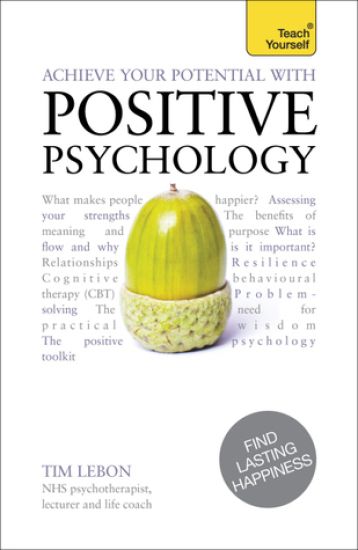
Everybody wants to be happier and fulfil their potential, and for years many self-help books have claimed they know the answer. Only in the last two decades has Positive Psychology started to provide evidence-based ideas that have been scientifically shown to work.In this book psychotherapist, lecturer and life coach Tim LeBon shows you how you can use the tools of Positive Psychology to achieve your goals. You will discover how ideas from CBT, mindfulness and practical philosophy can produce a more balanced, wiser version of Positive Psychology. Learn how to:* flourish and be happier* maintain and sustain positive relationships* find more meaning in life and accomplish more* become wiser and more resilient* discover the real benefits that a genuine understanding of positive psychology can bring."This book has a wealth of information and fascinating case studies which will take you on a fulfilling journey through the relatively new perspective of positive psychology. Tim LeBon does not leave you to fend alone but encourages us to take responsibility for ourselves through guided action plans, diagnostic tests and key ideas leading to newer and fresher outlooks. I would encourage anyone interested in positive psychology to soak this book up and take a step towards a better life."Ilona Boniwell, Associate Professor at Ecole Centrale Paris and author of Positive Psychology in a Nutshell
HAPPINESS, SERENITY AND FULFILMENT ARE ALL WITHIN YOUR CONTROL365 WAYS TO BE MORE STOIC is a full year's worth of daily inspiration, tools, stories, actions, and rituals that will guide you to a meaningful life, filled with happiness. It is a simple, list-driven, practical guide that will allow you to immediately begin putting Stoic wisdom into practice in your daily life. Each short chapter makes Stoicism fun to read about and easily digestible, presenting ideas in engaging, bite-size chunks.Immerse yourself in stoicism right from the first chapter, through prompts, concepts, challenges, inspiration, quotes, examples, quizzes and case-studies. You'll learn to navigate through the controllable and inevitable. You'll develop constructive ways to handle frustration, adversity and even your own mortality. You'll learn habit-forming strategies, pick up helpful concepts, and uncover tips for lasting change. This fun and engaging manual will help you live like a Stoic in the modern world. 365 WAYS TO BE MORE STOIC focuses on the small stuff you can do every day to live a happier and wiser life. Because when you get the little things right, the big things follow.