Kirjojen hintavertailu. Mukana 11 699 587 kirjaa ja 12 kauppaa.

Kirjahaku

Etsi kirjoja tekijän nimen, kirjan nimen tai ISBN:n perusteella.

1000 tulosta hakusanalla Timothy D. Schowalter

The Mat

The Mat

Timothy D Mitchell

Match of Life
2019
pokkari
My name is Timothy Mitchell, I've been involved with amateur wrestling since 1981. As a wrestler, coach and official. Being a wrestler. I learned how to handle many situations that have come my way. I feel there's nothing I can't achieve or have anything to fear. This is a direct result from being a wrestler.
Abacar the Wizard

Abacar the Wizard

Timothy D Erenberger

iUniverse
2001
pokkari
An adventure across ancient Europe upon the Magical Earth. Monsters and magic are an everyday occurrence in Abacar's world.A fantastic adventure with plenty of magic, sword fighting, and monsters.
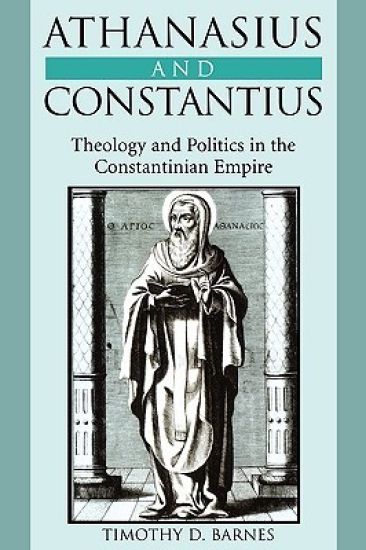
Athanasius and Constantius

Athanasius and Constantius

Timothy D. Barnes

Harvard University Press
2001
nidottu
As the high-ranking Bishop of Alexandria from 328 to 373, Athanasius came into conflict with no fewer than four Roman emperors—Constantine himself, his son Constantius, Julian the Apostate, and the “Arian” Valens. In this new reconstruction of Athanasius’s career, Timothy D. Barnes analyzes the nature and extent of the Bishop’s power, especially as it intersected with the policies of these emperors.Repeatedly condemned and deposed by church councils, the Bishop persistently resurfaced as a player to contend with in ecclesiastic and imperial politics. Barnes’s work reveals that Athanasius’s writings, though a significant source for this period, are riddled with deliberate misinterpretations, which historians through the ages have uncritically accepted.Untangling longstanding misconceptions, Barnes reveals the Bishop’s true role in the struggles within Christianity, and in the relations between the Roman emperor and the Church at a critical juncture.
Strangers to Ourselves

Strangers to Ourselves

Timothy D. Wilson

The Belknap Press
2004
nidottu
"Know thyself," a precept as old as Socrates, is still good advice. But is introspection the best path to self-knowledge? What are we trying to discover, anyway? In an eye-opening tour of the unconscious, as contemporary psychological science has redefined it, Timothy D. Wilson introduces us to a hidden mental world of judgments, feelings, and motives that introspection may never show us. This is not your psychoanalyst's unconscious. The adaptive unconscious that empirical psychology has revealed, and that Wilson describes, is much more than a repository of primitive drives and conflict-ridden memories. It is a set of pervasive, sophisticated mental processes that size up our worlds, set goals, and initiate action, all while we are consciously thinking about something else.If we don't know ourselves—our potentials, feelings, or motives—it is most often, Wilson tells us, because we have developed a plausible story about ourselves that is out of touch with our adaptive unconscious. Citing evidence that too much introspection can actually do damage, Wilson makes the case for better ways of discovering our unconscious selves. If you want to know who you are or what you feel or what you're like, Wilson advises, pay attention to what you actually do and what other people think about you. Showing us an unconscious more powerful than Freud's, and even more pervasive in our daily life, Strangers to Ourselves marks a revolution in how we know ourselves.
Holding Bishops Accountable

Holding Bishops Accountable

Timothy D. Lytton

Harvard University Press
2008
sidottu
The sexual abuse of children by Catholic clergy is arguably the most acute crisis Catholicism has faced since the Reformation. The prevalence of clergy sexual abuse and its shocking cover-up by church officials have obscured the largely untold story of the tort system’s remarkable success in bringing the scandal to light, focusing attention on the need for institutional reform, and spurring church leaders and public officials into action. Stories of the tort system as an engine of social justice are rare. Holding Bishops Accountable tells one such story by revealing how pleadings, discovery documents, and depositions fueled media coverage of the scandal. Timothy Lytton shows how the litigation strategy of plaintiffs’ lawyers gave rise to a widespread belief that the real problem was not the actions of individual priests but rather the church’s massive institutional failure. The book documents how church and government policymakers responded to the problem of clergy sexual abuse only under the pressure of private lawsuits. As Lytton deftly demonstrates, the lessons of clergy sexual abuse litigation give us reason to reconsider the case for tort reform and to look more closely at how tort litigation can enhance the performance of public and private policymaking institutions.
Kosher

Kosher

Timothy D. Lytton

Harvard University Press
2013
sidottu
Generating over $12 billion in annual sales, kosher food is big business. It is also an unheralded story of successful private-sector regulation in an era of growing public concern over the government’s ability to ensure food safety. Kosher uncovers how independent certification agencies rescued American kosher supervision from fraud and corruption and turned it into a model of nongovernmental administration.Currently, a network of over three hundred private certifiers ensures the kosher status of food for over twelve million Americans, of whom only eight percent are religious Jews. But the system was not always so reliable. At the turn of the twentieth century, kosher meat production in the United States was notorious for scandals involving price-fixing, racketeering, and even murder. Reform finally came with the rise of independent kosher certification agencies which established uniform industry standards, rigorous professional training, and institutional checks and balances to prevent mistakes and misconduct.In overcoming many of the problems of insufficient resources and weak enforcement that hamper the government, private kosher certification holds important lessons for improving food regulation, Timothy Lytton argues. He views the popularity of kosher food as a response to a more general cultural anxiety about industrialization of the food supply. Like organic and locavore enthusiasts, a growing number of consumers see in rabbinic supervision a way to personalize today’s vastly complex, globalized system of food production.
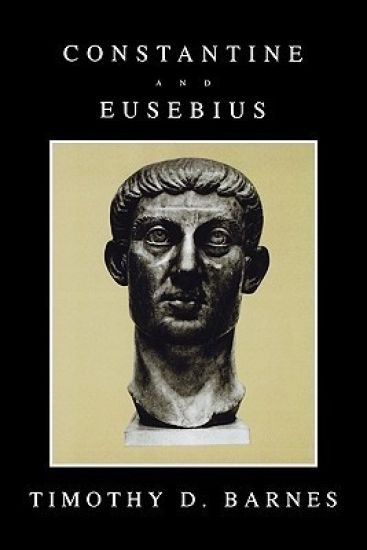
Constantine and Eusebius

Constantine and Eusebius

Timothy D. Barnes

Harvard University Press
1984
nidottu
This study of the Roman Empire in the age of Constantine offers a thoroughly new assessment of the part Christianity played in the Roman world of the third and fourth centuries.Timothy D. Barnes gives the fullest available narrative history of the reigns of Diocletian and Constantine. He analyzes Constantine’s rise to power and his government, demonstrating how Constantine’s sincere adherence to Christianity advanced his political aims. He explores the whole range of Eusebius’ writings, especially those composed before Constantine became emperor, and shows that many attitudes usually deemed typical of the “Constantinian revolution” were prevalent before the new Christian empire came into existence. This authoritative political and cultural history of the age of Constantine will prove essential to students and historians of the ancient world.
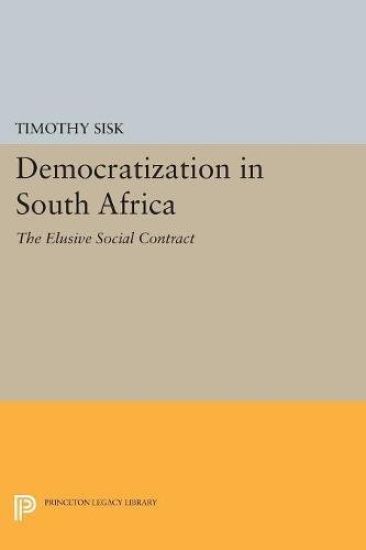
Democratization in South Africa

Democratization in South Africa

Timothy D. Sisk

Princeton University Press
2017
pokkari
Timothy Sisk presents a new way of conceiving the transition to democracy in South Africa. Unlike authors such as Horowitz and Lijphart, who have sought to prescribe an ideal set of post-apartheid political institutions, Sisk asks what kinds of institutions show signs of actually emerging, given recent history and present realities. He treats the problem of constructing a democratic post-apartheid society in South Africa as part of a larger condition common to societies deeply divided by ethnic, religious, racial, or national discord. Though its profound cleavages of race and class make it a "least likely" candidate for conflict resolution through democratization, Sisk argues that the centripetal pull on moderate politicians of all parties was greater than the seemingly natural polarizing trend in a divided society. This centripetal pull led to the adoption of an interim constitution in 1993 after protracted negotiations. An American Fulbright scholar sent to South Africa after the end of the 21-year rupture of official scholarly exchanges between the two countries, Sisk analyzes the changes in the strategic calculations of the white minority government, the black liberation movement, and other parties over the course of negotiations since 1990. He concludes that intermittent upsurges of violence often reinforced, rather than reduced, the incentives of leaders on both sides to negotiate a settlement that would avoid mutually damaging outcomes. Drawing on extensive interviews with political figures, as well as other primary and secondary sources, Sisk finds reason for hope that a democratic social contract can evolve, balancing majority rule with minority representation and guaranteeing equal economic opportunity and social justice. Originally published in 1994. The Princeton Legacy Library uses the latest print-on-demand technology to again make available previously out-of-print books from the distinguished backlist of Princeton University Press. These editions preserve the original texts of these important books while presenting them in durable paperback and hardcover editions. The goal of the Princeton Legacy Library is to vastly increase access to the rich scholarly heritage found in the thousands of books published by Princeton University Press since its founding in 1905.
Democratization in South Africa

Democratization in South Africa

Timothy D. Sisk

Princeton University Press
2017
sidottu
Timothy Sisk presents a new way of conceiving the transition to democracy in South Africa. Unlike authors such as Horowitz and Lijphart, who have sought to prescribe an ideal set of post-apartheid political institutions, Sisk asks what kinds of institutions show signs of actually emerging, given recent history and present realities. He treats the problem of constructing a democratic post-apartheid society in South Africa as part of a larger condition common to societies deeply divided by ethnic, religious, racial, or national discord. Though its profound cleavages of race and class make it a "least likely" candidate for conflict resolution through democratization, Sisk argues that the centripetal pull on moderate politicians of all parties was greater than the seemingly natural polarizing trend in a divided society. This centripetal pull led to the adoption of an interim constitution in 1993 after protracted negotiations. An American Fulbright scholar sent to South Africa after the end of the 21-year rupture of official scholarly exchanges between the two countries, Sisk analyzes the changes in the strategic calculations of the white minority government, the black liberation movement, and other parties over the course of negotiations since 1990. He concludes that intermittent upsurges of violence often reinforced, rather than reduced, the incentives of leaders on both sides to negotiate a settlement that would avoid mutually damaging outcomes. Drawing on extensive interviews with political figures, as well as other primary and secondary sources, Sisk finds reason for hope that a democratic social contract can evolve, balancing majority rule with minority representation and guaranteeing equal economic opportunity and social justice. Originally published in 1994. The Princeton Legacy Library uses the latest print-on-demand technology to again make available previously out-of-print books from the distinguished backlist of Princeton University Press. These editions preserve the original texts of these important books while presenting them in durable paperback and hardcover editions. The goal of the Princeton Legacy Library is to vastly increase access to the rich scholarly heritage found in the thousands of books published by Princeton University Press since its founding in 1905.
A Gallant Little Army

A Gallant Little Army

Timothy D. Johnson

University Press of Kansas
2007
sidottu
In 1847, General Winfield Scott boldly led a small but undaunted army from the Mexican coast all the way to the Hall of Montezuma, routing Mexican forces at every turn while pacifying the countryside. Scott's military campaign - America's first ever in a foreign country - helped pave the way for victory in the wider war against Mexico and also posed new challenges for discipline, logistics, and the treatment of civilian. Yet it has remained largely neglected by historians. In this first book-length study of Scott's brilliant six-month campaign, Timothy Johnson shows how Scott overcame such obstacles as inadequate supplies, intense officer rivalries, and lack of support from President Polk - not to mention a country full of potentially hostile Mexicans - to keep his army intact deep in enemy territory and win the war. He interweaves a compelling narrative of the campaign - including detailed battle replays, terrain descriptions, and eyewitness accounts - with a comprehensive analysis of strategy, operations, and tactics. Along the way, he also provides considerable insight into Scott's efforts to fight a ""limited war"" by combining military force with diplomatic negotiation and by implementing a pacification plan that now seems far ahead of its time. Scott developed a sophisticated strategy of moderation to end the war by employing a sword-and-olive-branch approach. Although his army repeatedly won battles against superior numbers as it drove ever deeper into Mexico's interior, Scott paused after each contest to give the enemy an opportunity to sue for peace. And by respecting civilian property and purchasing supplies from the populace, his troops limited local support for guerrillas that threatened communication lines. Meanwhile on the battlefield, Scott successfully executed surprise flank attacks at CErro Gordo and Padierna, tactical masterpieces that inspired a generation of Civil War generals - like Grant, Lee, McClellan, and countless others. Providing the definitive work on the Mexico City campaign, ""A gallant Little Army"" highlights the visionary command of a legendary general, the flinty toughness of the troops he led, and the emergence of the United States as a potential global military power.
Winfield Scott

Winfield Scott

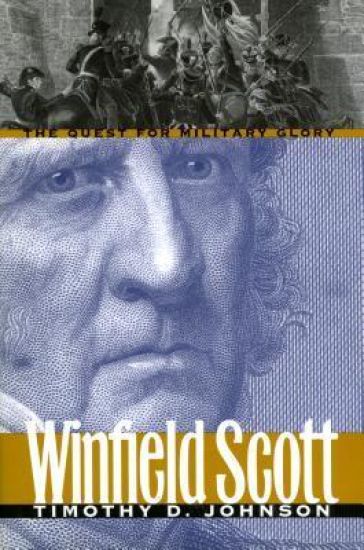
Timothy D. Johnson

University Press of Kansas
2015
nidottu
One of the most important public figures in antebellum America, Winfield Scott is known today more for his swagger than his sword. ""Old Fuss-and-Feathers"" was a brilliant military commander whose tactics and strategy were innovative adaptations from European military theory; yet he was often under appreciated by his contemporaries and until recently overlooked by historians. While John Eisenhower's Agent of Destiny provides a solid summary of Scott's remarkable life, Timothy D. Johnson's much deeper critical exploration of this flawed genius should become the standard work. Thoroughly grounded in an essential understanding of nineteenth-century military professionalism, it draws extensively on unpublished sources in order to reveal neglected aspects of Scott's life, present a more complete view of his career, and accurately balance criticism and praise. Johnson dramatically relates the key features of Scott's career: how he led troops to victory in the War of 1812 and the Mexican War, fought against the Seminoles and Creeks, and was instrumental in professionalizing the U.S. Army, which he commanded for two decades. He also tells how Scott tried to introduce French methods into army tactical manuals, and how he applied his study of the Napoleonic Wars during the Mexico City Campaign but found European strategy of little use against Indians. Johnson further suggests that Scott's creation of an officer corps that boasted Grant, Lee, McClellan and other veterans of the Mexican War raises important questions about his influence on Civil War generalship. More than a military history, this book tells how Scott's aristocratic pretensions placed him at odds with emerging notions of equality in Jacksonian America and made him an unappealing politician in his bid for the presidency. Johnson not only recounts the facets of Scott's personality that alienated nearly everyone who knew him but also reveals the unsavory methods he used to promote his career and the scandalous ways he attempted to relieve his lifelong financial troubles. Although his legendary vanity has tarnished his place among American military leaders, Scott is shown to have possessed great talent and courage. Johnson's biography offers the most balanced portrait available of Scott by never losing sight of the whole man.
Military Industry and Regional Defense Policy
Military Industry and Regional Defense Policy re-examines military industrialization in the developing world, focusing on policy-making in producer states and the impact of security perceptions on such policy-making.Timothy D. Hoyt reassesses the role of regional state sub-systems in international relations, and recent historical studies of international technology and arms transfers. Looking at Israel, Iraq and India, the three most powerful regional powers in the Cold War era, he presesnts an expert analysis of the three-sided phenomena of the regional hegemony, the regional competitor and the small over-achiever.This new book breaks away from existing literature on military industries in the developing world, which has focused on their economic and development costs and benefits. These past studies have used primitive methodologies that focus on the production of complete weapons systems - a misleading gauge in a world of growing international defense cooperation. They have also ignored empirical evidence of the impact of local military industrial production on Cold War regional conflict, and of the defence planning and concerns that drove development of indigenous military industries in key regional powers. This new text delivers an incisive new perspective.
Military Industry and Regional Defense Policy
Military Industry and Regional Defense Policy re-examines military industrialization in the developing world, focusing on policy-making in producer states and the impact of security perceptions on such policy-making.Timothy D. Hoyt reassesses the role of regional state sub-systems in international relations, and recent historical studies of international technology and arms transfers. Looking at Israel, Iraq and India, the three most powerful regional powers in the Cold War era, he presesnts an expert analysis of the three-sided phenomena of the regional hegemony, the regional competitor and the small over-achiever.This new book breaks away from existing literature on military industries in the developing world, which has focused on their economic and development costs and benefits. These past studies have used primitive methodologies that focus on the production of complete weapons systems - a misleading gauge in a world of growing international defense cooperation. They have also ignored empirical evidence of the impact of local military industrial production on Cold War regional conflict, and of the defence planning and concerns that drove development of indigenous military industries in key regional powers. This new text delivers an incisive new perspective.
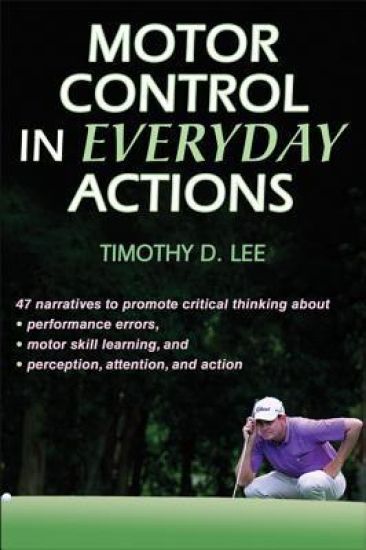
Motor Control in Everyday Actions

Motor Control in Everyday Actions

Timothy D. Lee

Human Kinetics
2011
sidottu
Motor Control in Everyday Actions presents 47 true stories that illustrate the phenomena of motor control, learning, perception, and attention in sport, physical activity, home, and work environments. At times humorous and sometimes sobering, this unique text provides an accessible application-to-research approach to spark critical thinking, class discussion, and new ideas for research. The stories in Motor Control in Everyday Actions illustrate the diversity and complexity of research in perception and action and motor skill acquisition. More than interesting anecdotes, these stories offer concrete examples of how motor behavior, motor control, and perception and action errors affect the lives of both well-known and ordinary individuals in various situations and environments. Readers will be entertained with real-life stories that illustrate how research in motor control is applicable to real life: •Choking Under Pressure examines information processing and how it changes under pressure. •The Gimme Putt shows how Schmidt's law can be used to predict the accuracy of golf putts. •Turn Right at the Next Gorilla examines inattention blindness and its role in traffic accidents. •The Farmers' Market describes reasons why a man drives his car through a crowded open-air market, killing and injuring dozens of shoppers in the process. •Craps and Weighted Bats describes the curious role of myths and superstition in how we play games. •And 42 other examples of motor control in everyday actions will both entertain and inform. Each story is followed by a set of self-directed activities that are progressively more complex. These activities, plus the additional notes and suggested readings and websites at the conclusion of each story, provide a starting point for critical thinking about the reasons why human actions sometimes go awry. A reader-friendly writing style and easy-to-follow analysis and conclusions assist students in gaining mastery of the issues presented, conceptualizing new research projects, and applying the content to current research. The stories are grouped into three parts, beginning with situations involving errors and mistakes in perception, action, or decision making. Next, stories investigating varied techniques for studying perception and action are presented. The remaining scenarios provide readers with a look at research focusing on the motor learning process as well as some of the unexpected discoveries resulting from those investigations. Motor Control in Everyday Actions will engage its readers—not only through the central topic of the story but also in the fundamental concepts involving perception, action, and learning. Used as a springboard for new research or as a catalyst for engaging discussion, Motor Control in Everyday Actions offers perspectives that will enhance understanding of how human beings interact with their world.
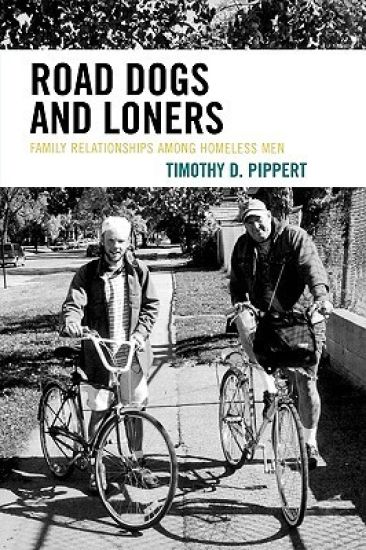
Road Dogs and Loners

Road Dogs and Loners

Timothy D. Pippert

Lexington Books
2007
nidottu
Using ethnographic interviews, an affiliation scale, and observational data from two 'soup kitchens' of homeless men, Road Dogs and Loners investigates the various family types that homeless road dogs and loners rely on for support. Pippert specifically compares homeless men who typically partnered up with homeless men who were self-described loners. The groups are compared here in terms of their contact and support with biological, created, and fictive families. Interdisciplinary in nature, this work tackles themes that are relevant to the study of social class, stratification, economics, social problems, family sociology, social theory and research methods. Road Dogs and Loners provides an updated and in-depth, personal perspective on the lives and relationships of homeless men in America.