Kirjojen hintavertailu. Mukana 11 518 949 kirjaa ja 12 kauppaa.

Kirjahaku

Etsi kirjoja tekijän nimen, kirjan nimen tai ISBN:n perusteella.

1000 tulosta hakusanalla Timothy H. Edgar

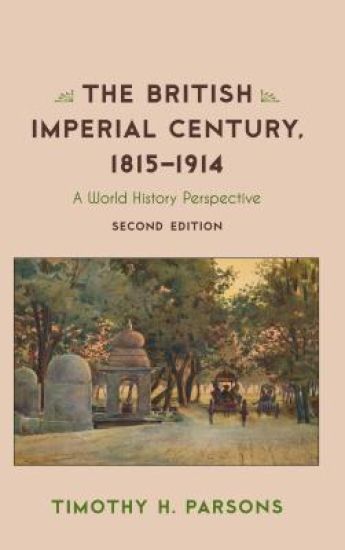
The British Imperial Century, 1815–1914

The British Imperial Century, 1815–1914

Timothy H. Parsons

Rowman Littlefield
2019
sidottu
The British Imperial Century provides a concise but comprehensive overview of the formation and administration of the empire from its origins in the early nineteenth century, to its climax at mid-century, to its denouement on the eve of the First World War. Considering the impact of British imperial rule and influence on subject peoples, Timothy H. Parsons explores the themes of cross-cultural social and environmental interaction from a world history perspective. He traces the transition from informal to formal empire, which broadened and intensified Britain's relations with Asia, Africa, and the western hemisphere. The establishment of extensive colonies and protectorates in Africa, the occupation of Egypt, the declaration of the Raj in India, and increased economic and political intervention in Latin America and in the Chinese and Ottoman empires brought ever-larger numbers of non-European peoples and cultures under either the influence or direct authority of the British Crown. By considering British imperialism through the lens of world history, Parsons moves beyond questions of Britain's motives in acquiring more territory to ask how it was able to acquire such an empire. As a global network of exchanges, the British Empire linked disparate regions in series of distinct but overlapping exchanges. This new “second” British Empire was also extremely fragile. Lacking the ability hold these possessions by force alone, empire builders needed to win the cooperation of at least a segment of the subject population. By co-opting and adapting the values and customs of their subjects imperial rulers strengthened their authority and legitimacy, but in doing so produced a hybrid culture that was largely British in style but not entirely British in substance. An ambitious and thoughtful contribution, The British Imperial Century will be invaluable for courses on world history and European history and as a supplement for courses on African, Asian, British, and Middle Eastern history.
The British Imperial Century, 1815–1914

The British Imperial Century, 1815–1914

Timothy H. Parsons

Rowman Littlefield
2019
nidottu
The British Imperial Century provides a concise but comprehensive overview of the formation and administration of the empire from its origins in the early nineteenth century, to its climax at mid-century, to its denouement on the eve of the First World War. Considering the impact of British imperial rule and influence on subject peoples, Timothy H. Parsons explores the themes of cross-cultural social and environmental interaction from a world history perspective. He traces the transition from informal to formal empire, which broadened and intensified Britain's relations with Asia, Africa, and the western hemisphere. The establishment of extensive colonies and protectorates in Africa, the occupation of Egypt, the declaration of the Raj in India, and increased economic and political intervention in Latin America and in the Chinese and Ottoman empires brought ever-larger numbers of non-European peoples and cultures under either the influence or direct authority of the British Crown. By considering British imperialism through the lens of world history, Parsons moves beyond questions of Britain's motives in acquiring more territory to ask how it was able to acquire such an empire. As a global network of exchanges, the British Empire linked disparate regions in series of distinct but overlapping exchanges. This new “second” British Empire was also extremely fragile. Lacking the ability hold these possessions by force alone, empire builders needed to win the cooperation of at least a segment of the subject population. By co-opting and adapting the values and customs of their subjects imperial rulers strengthened their authority and legitimacy, but in doing so produced a hybrid culture that was largely British in style but not entirely British in substance. An ambitious and thoughtful contribution, The British Imperial Century will be invaluable for courses on world history and European history and as a supplement for courses on African, Asian, British, and Middle Eastern history.
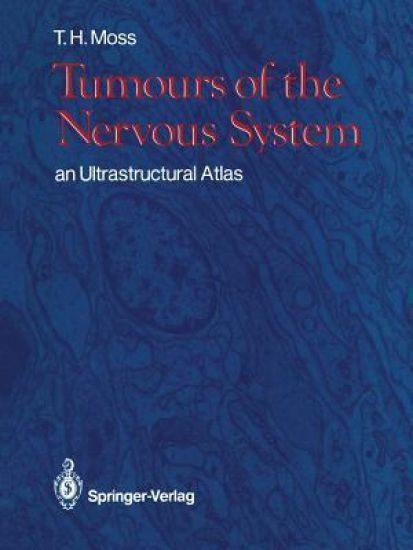
Tumours of the Nervous System

Tumours of the Nervous System

Timothy H. Moss

Springer London Ltd
2011
nidottu
Since the time of the earliest electron microscopic studies on tumours of the human nervous system. undertaken over 20 years ago by Luse and her colleagues. there have been considerable advances in our understanding of these neoplasms. Tissue culture and specific antibodies to tumour antigens are two of the techniques which have greatly aided such advances. enabling much to be learned about the biological properties and underly­ ing nature of all types of nervous system tumour. Electron microscopy. however. has continued to prove of considerable value in the investigation of these tumours. and the technological advances of the last two decades have dramatically improved the resolution and overall quality of the ultrastructural images obtained. In clinical neuropathology. such improvements have encouraged a more widespread use of the electron microscope in the diagnosis of human nervous system tumours. alongside antibody techniques and more conventional histological methods. Although ultrastructural examination is often not strictly necessary to identify well-differentiated tumours such as astrocytomas or choroid plexus papillomas. study of the electron microscopic features in such cases fre­ quently proves useful in the diagnosis of their more malignant counterparts. Thus the recognition of astrocytic filaments in anaplastic gliomas. or of cilia in pleomorphic choroid plexus carcinomas. may enable a diagnosis to be made in cases where there is insufficient differentiation for the tumours to be recognised at light microscopic level.
Words to Be Read

Words to Be Read

Timothy H. Montgomery

Rosedog Books
2015
nidottu
In 2013 the world exploded for the author in a way he never expected. Always one who kept things inside, and having a hard time explaining his feelings to others, he found himself pouring out feelings and words on paper in the form of poetry. At the age of thirteen Montgomery had run away from home and worked on a farm getting fifteen dollars a week, plus room and board. He learned quickly to hold his feelings inside; doing otherwise, he believed, would be a sign of weakness. Now, many years later, being a husband, father, grandfather, and great-grandfather gives Montgomery an abundant database of feelings he is releasing in words arrayed in short rhymatic stories. Translating feelings into words is a pleasure he wishes to share with others, thereby speaking in a manner unknown to him until now. Depending upon your age and station in life, don't be surprised to find yourself relating to his experiences. The author translates feelings, life experiences, and sometimes anger into words in a form easy to read. See and feel through the author's words, and things in his life he has experienced. Nothing can be lost in experiencing Words to Be Read.
The Rise of Pentecostalism in Modern El Salvador

The Rise of Pentecostalism in Modern El Salvador

Timothy H. Wadkins

Baylor University Press
2017
sidottu
El Salvador has experienced a dramatic religious transformation over the past half-century.In what was once an almost exclusively Catholic nation, more than 35 percent of the people are now evangelical Protestants, mostly identified as charismatic or Pentecostal. While having some roots in Protestant missions from North America and Europe, the religious renaissance overtaking El Salvador is both homegrown and closely related to the nation's social, cultural, and economic upheavals. Since the end of the Salvadoran Civil War, the traditional social orderâwhich was established in colonial times, ruled by elites, enforced by the military, and supported by the Churchâhas been overturned. Once a world of haciendas, plantations, and old merchant firms, El Salvador is now home to new factories, shopping malls, fast food restaurants, and call centers. Modernization has brought new ideas tooâabout asserting individual rights and making choices, forming communities, voting in elections, consuming material goods, employing technology, and engaging with global culture. The Rise of Pentecostalism in Modern El Salvador explores how this vast social transformation has opened the gates to runaway religious creativity and competition. In weaving together the lively and complex story, author Timothy Wadkins employs the scholarly tools of historical reconstruction, theological analysis, and ethnographic interviews, as well as the results of a pioneering national religious survey. The outcome is a comprehensive and detailed picture of El Salvador's religious renaissance against the backdrop of El Salvador's fitful path toward modernization and democratization.
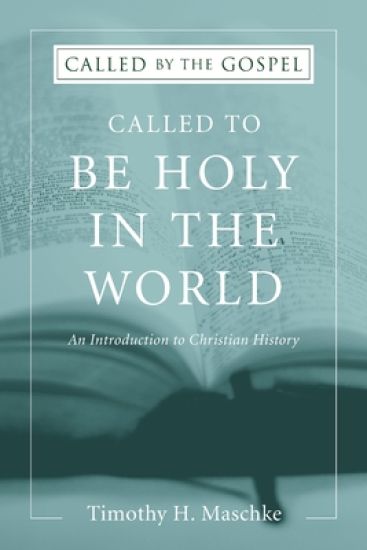
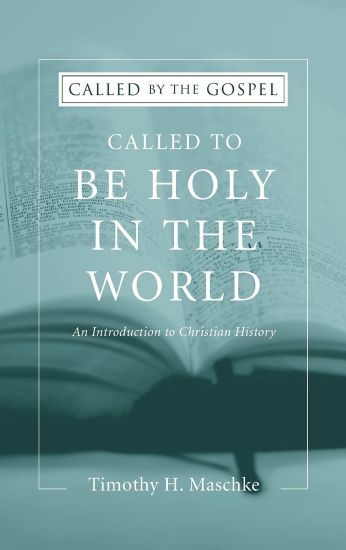
Called to be Holy in the World

Called to be Holy in the World

Timothy H Maschke

Wipf Stock Publishers
2016
pokkari
Called to be Holy in the World presents an overview of the history of Christianity from Pentecost to the present. Written from a Lutheran perspective, this book introduces the reader to key Christian figures and movements as it encompasses a broad view of God's work in the world. The story after all is God's story. As His story it is centered in Christ's cross, but extends around the globe as Christians lived and continue to live out their particular vocations as holy people in the world. As a resource for students of all ages, this book surveys how Christianity confronted the world and how Christians tried to balance the challenges of living wholly and holy in the world. Historical information on various controversies provides background information for the volume on Christian doctrine in this series, Called by the Gospel. Organized in a unique style, each of the twenty-one chapters deals with one century of Christian history. Discussion questions and reading guides along with informative side bars provide additional educational resource and reference material for further study.
Called to be Holy in the World

Called to be Holy in the World

Timothy H Maschke

Wipf Stock Publishers
2016
sidottu
Called to be Holy in the World presents an overview of the history of Christianity from Pentecost to the present. Written from a Lutheran perspective, this book introduces the reader to key Christian figures and movements as it encompasses a broad view of God's work in the world. The story after all is God's story. As His story it is centered in Christ's cross, but extends around the globe as Christians lived and continue to live out their particular vocations as holy people in the world. As a resource for students of all ages, this book surveys how Christianity confronted the world and how Christians tried to balance the challenges of living wholly and holy in the world. Historical information on various controversies provides background information for the volume on Christian doctrine in this series, Called by the Gospel. Organized in a unique style, each of the twenty-one chapters deals with one century of Christian history. Discussion questions and reading guides along with informative side bars provide additional educational resource and reference material for further study.
The Rhetorical Leadership of Fulton J. Sheen, Norman Vincent Peale, and Billy Graham in the Age of Extremes
Fulton J. Sheen, Norman Vincent Peale, and Billy Graham were America’s most popular religious leaders during the mid-twentieth century period known as the golden years of the Age of Extremes. It was part of an era that encompassed polemic contrasts of good and evil on the world stage in political philosophies and international relations. The 1950s and early 1960s, in particular, were years of high anxiety, competing ideologies, and hero/villain mania in America. Sheen was the voice of reason who spoke against those conflicting ideologies which were hostile to religious faith and democracy; Peale preached the gospel of reassurance, self-assurance, and success despite ominous global threats; and Graham was the heroic model of faith whose message of conversion provided Americans an identity and direction opposite to atheistic communism. This study looks at how and why their rhetorical leadership, both separately and together, contributed to the climate of an extreme era and influenced a national religious revival.
Final Warning

Final Warning

Timothy H Cator

Createspace Independent Publishing Platform
2015
pokkari
Many people talk about the mark of the beast (Revelation 14, Verses 9-11) and agree that the mark is in the hand or forehead - the Bible plainly tells us that - but there is considerable debate over what the mark is because most of those same people speculate wildly rather than just allow the Bible to speak for itself.Why would God give us this dire warning about taking the mark and then not tell us what it is This book is written with the intention of setting the record straight. He does tell us. He wants us to know. But do we want to know?In a trial, a verdict is rendered when the evidence is beyond reasonable doubt.The Biblical/historical evidence presented in this book is beyond any doubt.What will you do with the evidence?