Kirjojen hintavertailu. Mukana 11 517 398 kirjaa ja 12 kauppaa.

Kirjahaku

Etsi kirjoja tekijän nimen, kirjan nimen tai ISBN:n perusteella.

1000 tulosta hakusanalla Timothy R. Gaffney

Denazification in Soviet-Occupied Germany

Denazification in Soviet-Occupied Germany

Timothy R. Vogt

Harvard University Press
2001
sidottu
In his study of Brandenburg, Germany, Timothy Vogt directly challenges both the "antifascist" paradigm employed by East German historians and the "sovietization" interpretive model that has dominated western studies. He argues that Soviet denazification was neither an effective purge of society nor part of a methodical "sovietization" of the eastern zone. Instead, in a detailed study, denazification is pictured as a failure, which fell short of its goals and was eventually abandoned by the frustrated Soviet and German leadership.The case example of Brandenburg is an effective means of putting "flesh and blood" into the study and giving the reader insight into both broader developments and the human actors who propelled events. The result is an analysis that is based not simply on policymakers and their policies, but rather on how policy was continuously reformulated in response to developments on the local level.The study encompasses significant aspects of contemporary European history: everyday life in Nazi Germany, Germany's postwar coming to terms with its Nazi past, the Cold War division of Germany, postwar Soviet policy, and the construction of a one-party communist system in Eastern Europe.
Adrian Willaert and the Theory of Interval Affect

Adrian Willaert and the Theory of Interval Affect

Timothy R. McKinney

Ashgate Publishing Limited
2010
sidottu
In the writings of Nicola Vicentino (1555) and Gioseffo Zarlino (1558) is found, for the first time, a systematic means of explaining music's expressive power based upon the specific melodic and harmonic intervals from which it is constructed. This "theory of interval affect" originates not with these theorists, however, but with their teacher, influential Venetian composer Adrian Willaert (1490-1562). Because Willaert left no theoretical writings of his own, Timothy McKinney uses Willaert's music to reconstruct his innovative theories concerning how music might communicate extramusical ideas. For Willaert, the appellations "major" and "minor" no longer signified merely the larger and smaller of a pair of like-numbered intervals; rather, they became categories of sonic character, the members of which are related by a shared sounding property of "majorness" or "minorness" that could be manipulated for expressive purposes. This book engages with the madrigals of Willaert's landmark Musica nova collection and demonstrates that they articulate a theory of musical affect more complex and forward-looking than recognized currently. The book also traces the origins of one of the most widespread musical associations in Western culture: the notion that major intervals, chords and scales are suitable for the expression of happy affections, and minor for sad ones. McKinney concludes by discussing the influence of Willaert's theory on the madrigals of composers such as Vicentino, Zarlino, Cipriano de Rore, Girolamo Parabosco, Perissone Cambio, Francesco dalla Viola, and Baldassare Donato, and describes the eventual transformation of the theory of interval affect from the Renaissance view based upon individual intervals measured from the bass, to the Baroque view based upon invertible triadic entities.
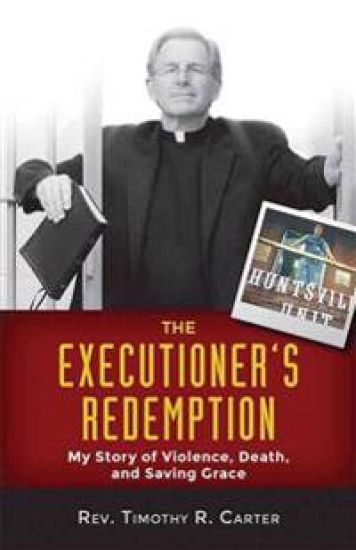
Executioner's Redemption

Executioner's Redemption

Timothy R Carter

Concordia Publishing House
2016
pokkari
The wrenching account of one man's journey from executioner to pastor.When young Tim Carter started working at a prison to make money for college, he didn't realize that he was signing away his life, his heart, and his very self to a career of brutal violence and routine executions. In the midst of the darkness of prison life, the light of God's Word shone in front of him. Condemned inmates were brought to faith and given eternal life. Families of inmates and victims took immense comfort in God's justice and redemption. But inside Carter's heart, a fierce battle raged. Was he carrying out God's will by wielding the sword of the state? Or was he actually doing more harm than good?In these pages, you'll walk with Tim into the violence and through death row. You'll stumble with him through God's crushing judgment and into His tender love. And you'll learn that even in the darkest places, God is still there.
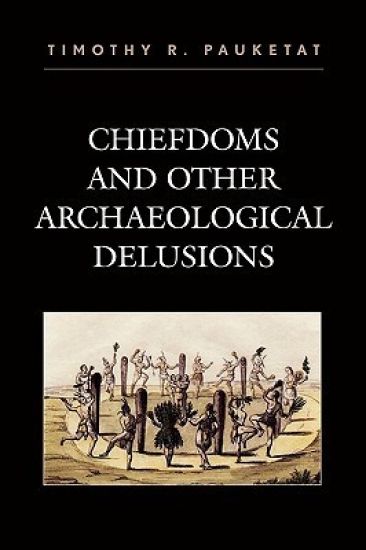
Chiefdoms and Other Archaeological Delusions

Chiefdoms and Other Archaeological Delusions

Timothy R. Pauketat

AltaMira Press,U.S.
2007
nidottu
In recent decades anthropology, especially ethnography, has supplied the prevailing models of how human beings have constructed, and been constructed by, their social arrangements. In turn, archaeologists have all too often relied on these models to reconstruct the lives of ancient peoples. In lively, engaging, and informed prose, Timothy Pauketat debunks much of this social-evolutionary theorizing about human development, as he ponders the evidence of 'chiefdoms' left behind by the Mississippian culture of the American southern heartland. This book challenges all students of history and prehistory to reexamine the actual evidence that archaeology has made available, and to do so with an open mind.
Oral Arguments and Decision Making on the United States Supreme Court

Oral Arguments and Decision Making on the United States Supreme Court

Timothy R. Johnson

State University of New York Press
2011
pokkari
How oral arguments influence the decisions of Supreme Court justices.Timothy R. Johnson focuses on an all-too-often ignored aspect of the Supreme Court's decision-making process by providing a systematic explanation of how justices use oral arguments to make substantive legal and policy decisions. Using the arguments filed to the Court in legal briefs, oral argument transcripts, notes taken by Justice Lewis F. Powell during oral arguments, conference notes and internal memos of justices, and Court opinions, the book analyzes justices' behavior during these proceedings. The result is an impressive account demonstrating that justices use oral arguments to gather information regarding legal and policy options in a case, the preferences of competing political institutions and actors, and institutional rules that might affect the choices they make.
The God–Shaped Heart – How Correctly Understanding God`s Love Transforms Us

The God–Shaped Heart – How Correctly Understanding God`s Love Transforms Us

Timothy R. MD Jennings

Baker Academic, Div of Baker Publishing Group
2017
nidottu
The key to spiritual and emotional health is to grasp the truth of God's transforming love for us and then let that reality influence our own hearts and relationships. It seems simple, but we are experts at complicating simple things. Instead of living lives characterized by love we find ourselves trapped in cycles of shame, violence, and addiction that steal our joy and keep us from loving others--so much so that, by all indications, Christians are living no differently than anyone else when it comes to abuse rates, use of pornography, alcohol and drug addiction, and more.Christian psychiatrist Dr. Timothy Jennings wants to release us from this prison. With powerful illustrations from case studies and from Scripture, Jennings shows believers who are stuck in addiction, violence, fear, and broken relationships how to experience true freedom through God's transforming love to experience greater health, fulfillment, and well-being.
The Aging Brain

The Aging Brain

Timothy R. Jennings

Baker Academic, Div of Baker Publishing Group
2018
pokkari
While growing older is inevitable, many of the troubles we associate with aging--including dementia, disability, and an increased dependence on others--are not. The choices we make now can help us to maintain our vitality, a sharp mind, and our independence as we age.Filled with simple, everyday actions we can take to avoid disease, promote vitality, and prevent dementia and late onset Alzheimer's, The Aging Brain is an easy-to-use guide to maintaining brain and body health throughout our lives. Based on solid, up-to-date scientific research, the interventions explained in this book not only prevent progression toward dementia even in those who have already shown mild cognitive impairment, they also reduce disability and depression and keep people living independently longer than those who do not practice these methods.For anyone hoping to slow the aging process, as well as anyone who acts as a caregiver to someone at risk of or already beginning to suffer from dementia and other age-related diseases, this book offers a hopeful, healthy way forward.
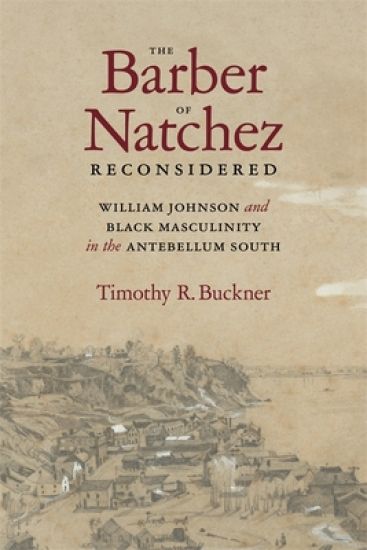
The Barber of Natchez Reconsidered

The Barber of Natchez Reconsidered

Timothy R. Buckner

LOUISIANA STATE UNIVERSITY PRESS
2023
sidottu
Winner of the Jules and Frances Landry AwardHistorians have long considered the diary of William Johnson, a wealthy free Black barber in Natchez, Mississippi, to be among the most significant sources on free African Americans living in the antebellum South. Timothy R. Buckner's The Barber of Natchez Reconsidered reexamines Johnson's life using recent scholarship on Black masculinity as an essential lens, demonstrating a complexity to Johnson previously overlooked in academic studies.While Johnson's profession as a barber helped him gain acceptance and respectability, it also required his subservience to the needs of his all-white clientele. Buckner's research counters earlier assumptions that suggested Johnson held himself apart from Natchez's Black population, revealing instead a man balanced between deep connections to the broader African American community and the necessity to cater to white patrons for economic and social survival.Buckner also highlights Johnson's participation in the southern performance of manliness to a degree rarely seen in recent studies of Black masculinity. Like many other free Black men, Johnson asserted his manhood in ways beyond simply rebelling against slavery; he also competed with other men, white and Black, free and enslaved, in various masculine pursuits, including gambling, hunting, and fishing. Buckner's long-overdue reevaluation of the contents of Johnson's diary serves as a corrective to earlier works and a fascinating new account of a free African American business owner residing in the prewar South.
Blue-Collar Broadway

Blue-Collar Broadway

Timothy R. White

University of Pennsylvania Press
2016
pokkari
Behind the scenes of New York City's Great White Way, virtuosos of stagecraft have built the scenery, costumes, lights, and other components of theatrical productions for more than a hundred years. But like a good magician who refuses to reveal secrets, they have left few clues about their work. Blue-Collar Broadway recovers the history of those people and the neighborhood in which their undersung labor occurred. Timothy R. White begins his history of the theater industry with the dispersed pre-Broadway era, when components such as costumes, lights, and scenery were built and stored nationwide. Subsequently, the majority of backstage operations and storage were consolidated in New York City during what is now known as the golden age of musical theater. Toward the latter half of the twentieth century, decentralization and deindustrialization brought the emergence of nationally distributed regional theaters and performing arts centers. The resulting collapse of New York's theater craft economy rocked the theater district, leaving abandoned buildings and criminal activity in place of studios and workshops. But new technologies ushered in a new age of tourism and business for the area. The Broadway we know today is a global destination and a glittering showroom for vetted products. Featuring case studies of iconic productions such as Oklahoma! (1943) and Evita (1979), and an exploration of the craftwork of radio, television, and film production around Times Square, Blue-Collar Broadway tells a rich story of the history of craft and industry in American theater nationwide. In addition, White examines the role of theater in urban deindustrialization and in the revival of downtowns throughout the Sunbelt.
Vodún

Vodún

Timothy R. Landry

UNIVERSITY OF PENNSYLVANIA PRESS
2022
pokkari
Tourists to Ouidah, a city on the coast of the Republic of BÉnin, in West Africa, typically visit a few well-known sites of significance to the VodÚn religion-the Python Temple, where DangbÉ, the python spirit, is worshipped, and King Kpasse's sacred forest, which is the seat of the VodÚn deity known as LokÒ. However, other, less familiar places, such as the palace of the so-called supreme chief of VodÚn in BÉnin, are also rising in popularity as tourists become increasingly adventurous and as more VodÚn priests and temples make themselves available to foreigners in the hopes of earning extra money. Timothy R. Landry examines the connections between local VodÚn priests and spiritual seekers who travel to BÉnin-some for the snapshot, others for full-fledged initiation into the religion. He argues that the ways in which the VodÚn priests and tourists negotiate the transfer of confidential, sacred knowledge create its value. The more secrecy that surrounds VodÚn ritual practice and material culture, the more authentic, coveted, and, consequently, expensive that knowledge becomes. Landry writes as anthropologist and initiate, having participated in hundreds of VodÚn ceremonies, rituals, and festivals. Examining the role of money, the incarnation of deities, the limits of adaptation for the transnational community, and the belief in spirits, sorcery, and witchcraft, VodÚn ponders the ethical implications of producing and consuming culture by local and international agents. Highlighting the ways in which racialization, power, and the legacy of colonialism affect the procurement and transmission of secret knowledge in West Africa and beyond, Landry demonstrates how, paradoxically, secrecy is critically important to VodÚn's global expansion.
Blue-Collar Broadway

Blue-Collar Broadway

Timothy R. White

University of Pennsylvania Press
2014
sidottu
Behind the scenes of New York City's Great White Way, virtuosos of stagecraft have built the scenery, costumes, lights, and other components of theatrical productions for more than a hundred years. But like a good magician who refuses to reveal secrets, they have left few clues about their work. Blue-Collar Broadway recovers the history of those people and the neighborhood in which their undersung labor occurred. Timothy R. White begins his history of the theater industry with the dispersed pre-Broadway era, when components such as costumes, lights, and scenery were built and stored nationwide. Subsequently, the majority of backstage operations and storage were consolidated in New York City during what is now known as the golden age of musical theater. Toward the latter half of the twentieth century, decentralization and deindustrialization brought the emergence of nationally distributed regional theaters and performing arts centers. The resulting collapse of New York's theater craft economy rocked the theater district, leaving abandoned buildings and criminal activity in place of studios and workshops. But new technologies ushered in a new age of tourism and business for the area. The Broadway we know today is a global destination and a glittering showroom for vetted products. Featuring case studies of iconic productions such as Oklahoma! (1943) and Evita (1979), and an exploration of the craftwork of radio, television, and film production around Times Square, Blue-Collar Broadway tells a rich story of the history of craft and industry in American theater nationwide. In addition, White examines the role of theater in urban deindustrialization and in the revival of downtowns throughout the Sunbelt.
Vodún

Vodún

Timothy R. Landry

University of Pennsylvania Press
2018
sidottu
Tourists to Ouidah, a city on the coast of the Republic of BÉnin, in West Africa, typically visit a few well-known sites of significance to the VodÚn religion-the Python Temple, where DangbÉ, the python spirit, is worshipped, and King Kpasse's sacred forest, which is the seat of the VodÚn deity known as LokÒ. However, other, less familiar places, such as the palace of the so-called supreme chief of VodÚn in BÉnin, are also rising in popularity as tourists become increasingly adventurous and as more VodÚn priests and temples make themselves available to foreigners in the hopes of earning extra money. Timothy R. Landry examines the connections between local VodÚn priests and spiritual seekers who travel to BÉnin-some for the snapshot, others for full-fledged initiation into the religion. He argues that the ways in which the VodÚn priests and tourists negotiate the transfer of confidential, sacred knowledge create its value. The more secrecy that surrounds VodÚn ritual practice and material culture, the more authentic, coveted, and, consequently, expensive that knowledge becomes. Landry writes as anthropologist and initiate, having participated in hundreds of VodÚn ceremonies, rituals, and festivals. Examining the role of money, the incarnation of deities, the limits of adaptation for the transnational community, and the belief in spirits, sorcery, and witchcraft, VodÚn ponders the ethical implications of producing and consuming culture by local and international agents. Highlighting the ways in which racialization, power, and the legacy of colonialism affect the procurement and transmission of secret knowledge in West Africa and beyond, Landry demonstrates how, paradoxically, secrecy is critically important to VodÚn's global expansion.
Real Gangstas

Real Gangstas

Timothy R. Lauger

Rutgers University Press
2012
nidottu
Street gangs are a major concern for residents in many inner-city communities. However, gangs’ secretive and, at times, delinquent tendencies limit most people’s exposure to the realities of gang life. Based on eighteen months of qualitative research on the streets of Indianapolis, Real Gangstas provides a unique and intimate look at the lives of street gang members as they negotiate a dangerous peer environment in a major midwestern city.Timothy R. Lauger interviewed and observed a mix of fifty-five gang members, former gang members, and non-gang street offenders. He spent much of his fieldwork time in the company of a particular gang, the “Down for Whatever Boyz,” who allowed him to watch and record many of their day-to-day activities and conversations. Through this extensive research, Lauger is able to understand and explain the reasons for gang membership, including a chaotic family life, poverty, and the need for violent self-assertion in order to foster the creation of a personal identity.Although the book exposes many troubling aspects of gang life, it is not a simple descriptive or a sensationalistic account of urban despair and violence. Steeped in the tradition of analytical ethnography, the study develops a central theoretical argument: combinations of street gangs within cities shape individual gang member behavior within those urban settings. Within Indianapolis, members of rival gangs interact on a routine basis within an ambiguous and unstable environment. Participants believe that many of their contemporaries claiming gang affiliations are not actually “real” gang members, but instead are imposters who gain access to the advantages of gang membership through fraud and pretense. Consequently, the ability to discern “real” gang members—or to present oneself successfully as a real gang member—is a critical part of gangland Indianapolis.Real Gangstas offers an objective and fair characterization of active gang members, successfully balancing the seemingly conflicting idea that they generally seem like normal teenagers, yet are abnormally concerned with—and too often involved in—violence. Lauger takes readers to the edge of an actual gang conflict, providing a rare and up-close look at the troubling processes that facilitate hostility and violence.
One in Christ

One in Christ

Timothy R. Gabrielli

Liturgical Press
2017
pokkari
What happened to the mystical body?A theology that stoked much theological creativity in the first half of the twentieth century both in Europe and in the United States had receded by the latter half of the century. One in Christ explores the theology of the mystical body of Christ as developed by Virgil Michel, OSB, examines the reasons for its decline, and traces it throughout the work of Louis-Marie Chauvet, a surprising custodian of the mystical body’s “French stream.” By delineating three major streams of mystical body theology, Timothy R. Gabrielli helps readers understand it more clearly and, in so doing, lays the groundwork for harvesting its potential for contemporary theology.
Poetic Voices

Poetic Voices

Timothy R. Austin

The University of Alabama Press
1994
nidottu
Recent developments in linguistic theory offer scholars new tools for understanding poems. This text reviews poetic texts which respond well to analysis from a particular stylistic perspective. Works by Wordsworth, Coleridge, Frost, Shelley and Tennyson are among those analysed.