Kirjahaku
Etsi kirjoja tekijän nimen, kirjan nimen tai ISBN:n perusteella.
1000 tulosta hakusanalla Tom Cooper
On 1 October 1990, hundreds of Banyarawanda militants that served with the Ugandan Army deserted their posts to form the Rwandan Patriotic Front (RPF) and invade Rwanda. Thus began the Rwandan Civil War, which was to culminate in the famous genocide of nearly one million of Tutsi and moderate Hutus, in 1994. Starting with in-depth descriptions of the history of Rwandan political, military and security development, this volume traces the history of the RPA from its emergence as a small-scale insurgent group formed from the ranks of Rwandan refugee diaspora in Uganda; its military operations and related experiences during nearly four years of war against the Rwandan government; and its establishment of control over Kigali, in July 1994. As such, the narrative presented here provides a fascinating and unique insight into the military story behind the emergence of modern-day Rwanda and its military; considered by many to be the‘Israel of Africa’. Providing minute details about RPF’s tactics and doctrine – that strongly influenced developments in a number of other modern-day African wars – this volume is foremost an offering that provides highly interesting backgrounds for and a prequel to, nearly all of the subsequent wars in the neighbouring Democratic Republic of the Congo. Illustrated with over 150 photographs, colour profiles, and maps describing the equipment, colours, and markings, and tactics of the RPF and its opponents, this is a unique study about the emergence of one of the most important US allies on the African continent.
Designed by Sydney Camm as a swept wing, daytime interceptor with excellent manoeuvrability, the Hunter became the first jet aircraft manufactured by Hawker for the Royal Air Force. It set numerous aviation records and saw widespread service with a large number of RAF units in Europe and abroad. When the Royal Air Force received newer aircraft capable of supersonic speeds to perform the interceptor duties, many Hunters were modified and re-equipped for ground-attack and reconnaissance missions instead. Because they were deemed surplus to British requirements, most of these were subsequently refurbished and exported to foreign customers – so also to Iraq and Jordan. Hawker Hunters at War covers every aspect of Hunter’s service in the two countries, from in-depth coverage of negotiations related to their export to Iraq and Jordan, to all-important details of their operational service during 1958-67. It culminates in detailed examination of their role in the June 1967 Arab-Israeli War (also known as the ‘Six Days War’) and extensive tables listing all aircraft delivered and their fates. Almost entirely based on interviews with retired commanding officers and pilots of the former Royal Iraqi Air Force, Iraqi Air Force and Royal Jordanian Air Force - as well as plenty of unpublished official documents from British, Iraqi and Jordanian archives - the narrative is providing an unprecedented insight into a number of contemporary affairs. Profusely illustrated with well over 100 photographs and 15 colour profiles showing all aspects of camouflage, markings and various equipment, Hawker Hunters at War is the ultimate profile of Hunter’s colourful and action-packed service in Iraq and Jordan during a period when this legendary type formed the backbone of local air forces.
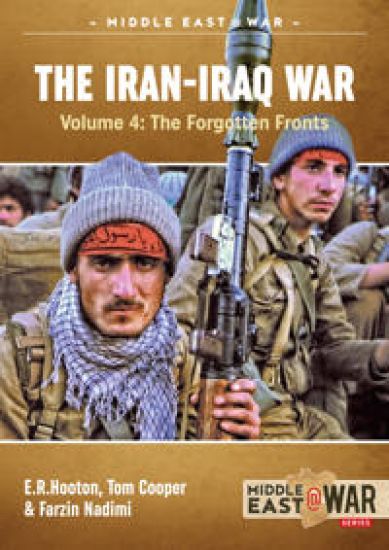
The Iran-Iraq War was one of the bloodiest conflicts of the 20th Century and accidentally created the current nightmare of Islamic fundamentalist terrorism. There have been many books on the conflict but this is the first detailed military history using materials from both sides, as well as materials obtained from US Intelligence circles and British Governmental archives. It provides a unique insight into a war which began through miscalculation and rapidly escalated into the longest conventional conflict in the post-Second World War era. Part 4 in this mini-series coversthe warfare between Iran and Iraq on the Central and Northern Fronts. Difficult terrain made it problematic for either side to assemble overwhelming superiority. Following initial Iraqi attacks that seized some territory, the Iranians began gradually nibbling back until achieving some success in the centre, in 1982. Subsequently, the Central Front saw only minor conventional battles until Iraq launched several major blows in 1988. In the north, fighting primarily revolved around several Kurdish insurgencies in northern Iraq, and culminated in the horror of the Halabcheh gas attack. The final campaign of the war saw Iraq-supported Iranian émigrés launching a spectacular, but also a swiftly-crushed, invasion of their homeland.
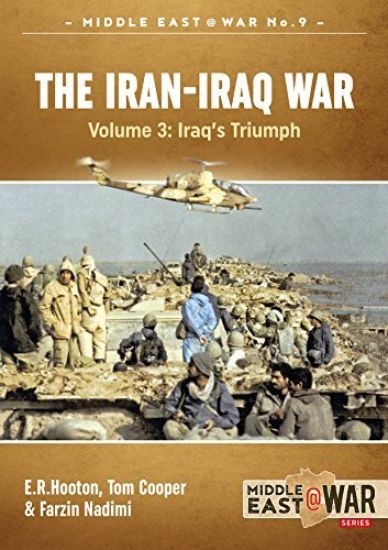
The Iran-Iraq War was one of the bloodiest conflicts of the 20th Century and accidentally created the current nightmare of Islamic fundamentalist terrorism. There have been many books on the conflict but this is the first detailed military history using materials from both sides, as well as materials obtained from US Intelligence circles and British Governmental archives. It provides a unique insight into a war which began through miscalculation and rapidly escalated into the longest conventional conflict in the post-Second World War era. The third volume covers the last two years of the war on the Southern front, where Iranians made their last supreme effort to break through Iraqi lines during the winter of 1986-1987. Iraqi defences just about held. For a year, there was an ominous silence, but then Iraq launched a series of devastating blows that recovered the Faw Peninsula, pulverised weakly-occupied Iranian positions, and drove the frontlines back to the international border. Iran was left with no option but to sue for peace.
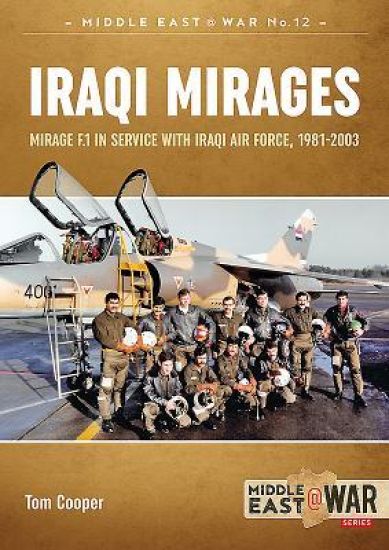
Originally envisaged as a privately funded project for a possible future NATO-fighter, the Dassault Mirage F.1 evolved into one of the most aesthetically attractive and commercially most successful combat aircraft of the 1970s and 1980s. Developed into more than a dozen of different variants and sub-variants – each of them custom-tailored to requirements of air forces that flew it – it also became a type that saw intensive combat service in numerous wars on no less than three different continents. Iraq became the biggest export customer for Mirage F.1. One way or the other, the Iraqi Air Force significantly contributed – and financed – the further development of this type, but also influenced research and development of a number of further systems that followed in its wake – most of which eventually found their way into operational service in France. While the Mirage F.1 has attracted at least some coverage in English language publications, its acquisition and combat deployment by Iraq still remains a topic with not a few controversies. The purpose of this volume is to redress the balance and provide an in-depth insight into the acquisition process, development and equipment of custom-tailored variants made for Iraq, training of Iraqi personnel on the type, and its combat deployment during wars against Iran, 1980-1988, and against the US-led, so-called Gulf Coalition, in 1991 and afterwards. Originally envisaged and acquired as a `pure’ interceptor, before long the Mirage F.1 in Iraqi service proved a highly capable multi-role platform aircraft, and was widely deployed not only for ground attack but also anti-shipping purposes, as an aerial tanker, and for delivering long-range pin-point attacks. Illustrated with over 120 photographs and many colour profiles, this book provides a unique, single point of reference on camouflage, markings, and armament configurations of Mirage F.1s in Iraqi service.
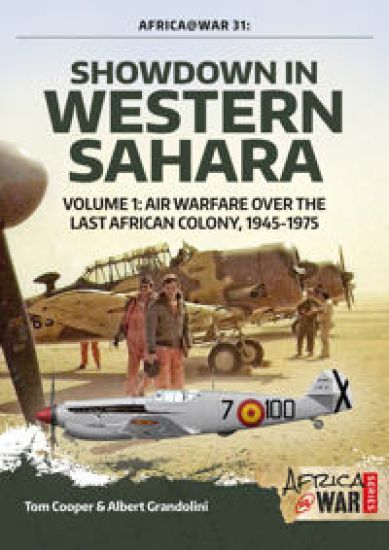
The former colony of Spanish Sahara saw frequent outbursts of tribal and ethnic rebellions already while ruled by colonial authorities, in the late 19th and through early 20th Century. Its vastness and distances de-facto dictated the application of air power in response. While most of these attracted next to no attention in English-language media, at least the large-scale operations of the Spanish colonial authorities of the late 1950s became notable for the final combat deployment of the famous Messerschmitt Bf.109. Narby, their common history as former French colonies resulted in a short war between Algeria and Morocco, which in turn prompted an arms race that lasted well into the 1980s. Following much more action than was ever reported in the media, and amid growing resistance from natives and increasing international pressure, Spain withdrew from Spanish Sahara in 1975, indirectly opening a new chapter of this part of the world, which is going to be covered in Volume 2. Warfare in Western Sahara has in many ways become exemplary for modern-day counter-insurgency efforts in Africa and elsewhere. This is so in regards of this conflict being mis-declared as a part of some larger, external conflict – like the Cold War – in regards of the concept of an insurgency applying motorized forces to deliver often spectacular ‘hit-and-run’ attacks; and in regards of a conventional military reacting with a combination of earth berms and air power. Illustrated by over 100 photographs, dozen of maps and 15 colour profiles, Showdown in Western Sahara, Volume 1 offers a fascinating study of the military aspects of this conflict, warfare strategies, tactics and experiences with different weapons systems.
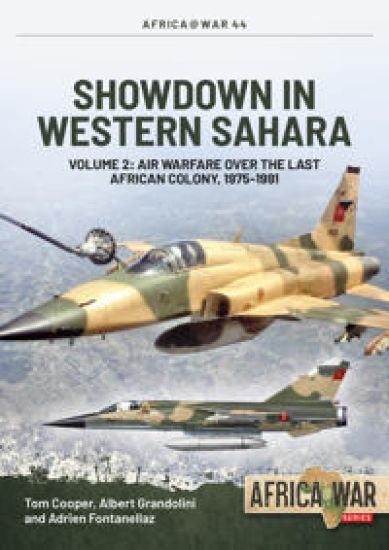
Showdown in the Western Sahara Volume 2
Tom Cooper; Albert Grandolini; Adrien Fontanellaz
Helion Company
2019
nidottu
The former colony of Spanish Sahara saw frequent outbursts of tribal and ethnic rebellions while ruled by the colonial authorities in the late 19th and through the early 20th Century. Its vastness and distances essentially dictated the application of air power in response. While most of these events attracted next to no attention in English-language media, the large-scale operations of the Spanish colonial authorities of the late 1950s became notable at least for the final combat deployment of the famous Messerschmitt Bf.109. Following the Spanish withdrawal from Spanish Sahara in 1975, a major war erupted as Sahrawi nationalists – organized by the POLISARIO front – engaged in guerrilla warfare against Moroccan armed forces deployed to secure the northern part of the country, and Mauritanian forces deployed in the south. Characteristically for this period, POLISARIO’s insurgency was often misinterpreted in the West as ‘Soviet-influenced’, although the rebels never adapted any related frameworks for their operations and tactics, such as those of Mao Zedong. On the contrary, while Algeria at least tolerated their bases on its soil, it was Libya that provided most of the support for the insurgency, eventually enabling it to defeat the Mauritanian military, slightly over a year later. Combined with POLISARIO’s raids deep into Mauritania this prompted France to launch a limited military intervention in support. While tactically successful, this proved insufficient: Mauritania withdrew in 1979 after signing a peace treaty. Morocco continued fighting a series of bitter campaigns through 1979 and 1980, until rising costs and casualties prompted its government into developing an entirely new strategy. Construction of extensive earthen fortifications eventually slowed the war down to one of low intensity, only sporadically interrupted by insurgent attempts to achieve at least local successes. With both sides realizing that no solution through an armed conflict was possible, a cease-fire agreement was signed in 1991. However, this conflict still remains unresolved: it merely shifted to civilian resistance. Warfare in Western Sahara has in many ways become exemplary for modern-day counter-insurgency efforts in Africa and elsewhere. This conflict has been falsely declared as a part of some larger, external conflict – the Cold War; in regards of the concept of an insurgency applying motorized forces to deliver often spectacular ‘hit-and-run’ attacks; and in regards of a conventional military reacting with a combination of earth berms and air power. Illustrated by over 100 photograph as, a dozen maps and 18 colour profiles, Showdown in Western Sahara offers a fascinating study of the military aspects of this conflict, warfare strategies, tactics and experiences with different weapons systems.
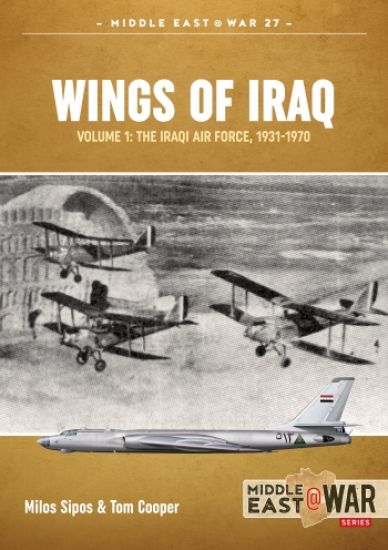
Officially established on 22 April 1931, around a core of 5 pilots and 32 aircraft mechanics, the Royal Iraqi Air Force was the first military flying service in any Arab country. Coming into being with the task of supporting the Iraqi armed forces and the British against revolts by local tribes, it saw extensive combat and gradually grew into a potent force. During the Anglo-Iraqi War of 1941, it became involved in its first conventional campaign in support of an anti-British coup but was destroyed as a fighting force. It was still recovering when deployed in combat again, this time against Israel in the course of the Palestine War of 1948-1949. During the 1950s, the Royal Iraqi Force experienced a phase of unprecedented growth: after acquiring several batches of Hawker Fury piston-engined fighter-bombers, Bristol Freighter transports and its first helicopters, it entered the jet-age through the acquisition of de Havilland Vampires and Venoms, and Hawker Hunters in quick succession. The 14 Tammuz Revolution of 1958 toppled the British-imposed monarchy and cut the ties to London. For the next five years, the Iraqi Air Force (IrAF) maintained close links to the Union of Soviet Socialist Republics and became the first Arab air force to operate types like the MiG-19 and MiG-21, and also the first equipped with Tupolev Tu-16 medium jet bombers. Through the 1960s, the IrAF played a dominant role in Iraq’s inner politics, determining the fate of the nation to an unprecedented degree. It not only became involved in combat against Kurdish insurgents in the north of the country: its officers staged multiple coups d’état in 1963, 1965 and 1966, served as Ministers of Defence and Prime Ministers of the Iraqi government, became involved in the June 1967 War with Israel, and were instrumental in the putsch of 1968 that brought the Ba’ath Party to power. Although subjected to the tight control of the Ba’ath and the Army, the IrAF continued growing through the 1970s and reached its zenith during the Iran-Iraq War of 1980-1988, when it flew some of the most advanced combat aircraft available world-wide, became the air force with most combat- and flying experience on the MiG-25 and the first true multi-role combat aircraft ever – the Mirage F.1 - and played the crucial role in forcing Tehran to accept a cease-fire. In 1990, the IrAF took part in the invasion of Kuwait. Decimated during the 1991 Gulf War against the US-led coalition, it became involved in the suppression of the uprisings in northern and southern Iraq, and subsequently continued fighting a decade-long no-fly zone maintained by the USA and Great Britain. Although virtually ‘born in battle’, collecting precious combat experience and playing an important role in so many internal and external conflicts, the Iraqi Air Force remains one of the least known and most misinterpreted military services in the Middle East. Richly illustrated, ‘Wings over Iraq’ provides a uniquely compact yet comprehensive guide to its operational history, its crucial officers and aircraft, and its major operations.
Once known as the ‘Switzerland of the Middle East’, an island of economic stability and social progress, Lebanon was shattered by a civil war that raged from 1975 until 1990. While Volume 1 of this mini-series concentrated on the conflict pitting the central government against different factions and alliances of Christians, Sunni and Shi’a Moslems, leftists, and the Israeli and Syrian armed forces from its beginning in 1975 until the Israeli Operation Stone of Wisdom (or Operation Litani) in 1978, Volume 2 continues with the period from 1978 until 1981. With its armed forces of a size comparable to that of the strength of the active components of the contemporary US Army and led by politicians pursuing aggressive intentions towards its northern neighbour, Israel gradually established itself in control over much of southern Lebanon and all of Lebanese airspace. In turn, Syria found itself facing not only a growing insurgency and unrest at home, but also strong opposition inside Lebanon. Moreover, a seemingly endless series of air battles with the Israeli air force exposed a growing technological gap with its primary opponent, forcing it to deploy ever larger contingents of its air defences into Lebanon. After almost culminating in a major war in 1981, the situation was defused through international pressure: nominally at least, a relatively quiet period was to follow before the next storm. Focusing on military-related developments, and containing much exclusive detail and specially commissioned illustrations, Volume 2 of Lebanese Civil War dissects the military forces of Israel, Syria and the many Lebanese militias, their equipment, intentions and capabilities, and provides a detailed, blow-by-blow account of combat operations into 1981.
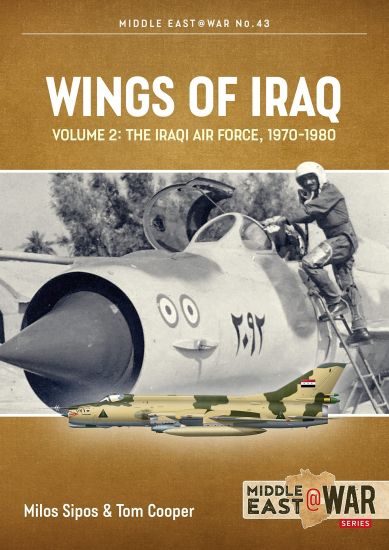
Officially established on 22 April 1931, around a core of 5 pilots and 32 aircraft mechanics, the Royal Iraqi Air Force was the first military flying service in any Arab country. Coming into being with the task of supporting the Iraqi armed forces and the British against revolts by local tribes, it saw extensive combat and gradually grew into a potent force. During the Anglo-Iraqi War of 1941, it became involved in its first conventional campaign in support of an anti-British coup but was destroyed as a fighting force. It was still recovering when deployed in combat again, this time against Israel in the course of the Palestine War of 1948-1949. During the relatively quiet decade of the 1950s, the air force experienced a rapid growth, further intensified once the monarchy was toppled during the 14 Tammuz Revolution in 1958, and once again, after two additional coups in 1963. During all of these affairs, a dozen additional coup attempts in the 1960s, and then during the long and bitter war against a Kurdish insurgency in the north, and the next clash with Israel in 1967, the Iraqi Air Force continued playing a dominant role in the fate of the country. The situation changed only little following the coup of 1968 that brought the Ba'ath Party to power. What did instrument a major change was the air force's involvement in the October 1973 Arab-Israeli War, and then the showdown with the Iranian-supported Kurdish insurgency in northern Iraq in 1974-1975. These two affairs taught the Iraqis that numbers alone did not make an air force. Correspondingly, during the second half of the 1970s, Baghdad embarked on a project based on full technology transfer from France, which was intended to result in preparing the IrAF for the 21st century. This process hardly began when the new ruler in Baghdad, Saddam Hussein at-Tikriti, led his country into an invasion of neighbouring Iran, embroiling it in a ruinous, eight-year-long war. Amazingly enough, for the first few years of that conflict, the IrAF still continued planning and growing as if there was no conflict to fight, although frequently suffering heavy losses while - due to the micromanagement from the government - de-facto fighting with one hand tied to its backs. It was only the experience of facing sustained and massive Iranian offensives of the 1984-1986 period that prompted Baghdad into unleashing the air force into an all-out campaign against the Iranian economy that effected a turn-around in the war. Almost unexpectedly, the IrAF emerged from the eight years of Iran stronger, better equipped and better trained, and more experienced than ever before. However, Saddam Hussein took care to remove all of its top commanders, and replace them with his favourites, thus de-facto castrating the most powerful branch of the Iraqi armed forces shortly before embarking upon his ultimate adventure: the invasion of Kuwait in 1990. The resulting Second Persian Gulf War of 1991 left the IrAF in tatters: mauled by sustained air strikes on its air bases, and cut off from its former sources of equipment and training, it was never to recover again, and rather vegetated for the last years of existence, pending its ultimate destruction during the US-led invasion of 2003. Although virtually 'born in battle', collecting precious combat experience and playing an important role in so many internal and external conflicts, the Iraqi Air Force remains one of the least known and most misinterpreted military services in the Middle East. Richly illustrated, Wings over Iraq provides a uniquely compact yet comprehensive guide to its operational history, its crucial officers and aircraft, and its major operations.
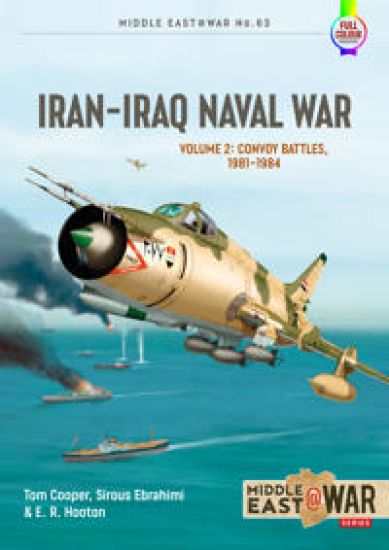
Well away from major land battlefields of the Iran-Iraq War, and curious eyes of the public, the navies of the two involved parties fought a major naval war. Ironically, the mass of their efforts remain entirely unknown until this very day. If anything was ever reported about their naval battles, then only within the frame of what the West mis-declared into the 'Tanker War'.Actually, and although best-known in the West, the portion of the Iran-Iraq War related to the Iraqi effort to prevent foreign tankers from loading the crude at Iranian oil terminals at Khark and elsewhere, was only one aspect of this naval war: indeed, 'just one brick' in an entire 'wall' that can only be described as the 'oil war' between Iran and Iraq. While the 'most spectacular', or at least attracting most of public attention, attacks by fighter-bombers of the Iraqi Air Force on tankers exporting the Iranian oil were 'barely scratching the surface': at least as often the Iraqi Navy trying exactly the same, but with help of its helicopters, fast missile craft and mines. In turn, the Islamic Republic of Iran Navy deployed its warships and helicopters - supported by interceptors and fighter-bombers of the Islamic Republic of Iran Air Force - to run a massive and convoy-protecting operation: the largest of its kind since 1945. The result were the most intensive air-sea battles of the last 75 years - all characterized by their high speed and exchanges of massive blows.The Iran-Iraq Naval War describes and illustrates the key combatants and the most intense operations of both sides. Destroyers, frigates, corvettes, and fast missile crafts are all covered in thoroughly researched text, photographs and custom-drawn color profiles, as are aircraft and helicopters supporting them. This book is thus taking the taking the reader in the middle of the action at sea and in the skies above it.
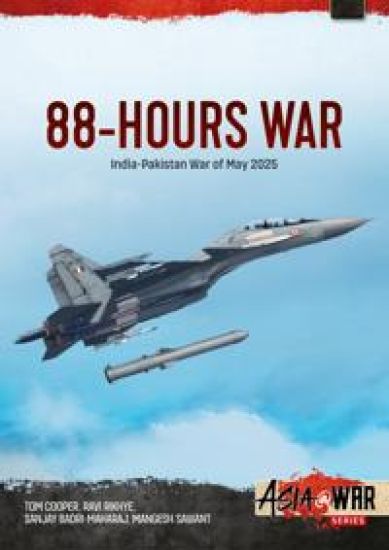
88-Hours War
Tom Cooper; Ravi Rikhye; Sanjay Badri-Maharaj; Mangesh Sawant
HELION COMPANY
2026
nidottu
“The king of poisons and the poison of kings. It’s useful for so many things” A new musical inspired by a sensational murder trial in 19th century Glasgow. Madeleine Smith, a Glasgow socialite living in Blythswood Square, was accused of a secret affair and poisoning her lover to death. The trial ended with a rare ‘Not Proven’ verdict, but now Plume, an aspiring pamphleteer, is working out which version of the story to tell. Was Madeleine innocent or guilty? Inspired by the scandalous real-life story, The Glasgow Poisoner is a new musical by Tom Cooper and Jen McGregor that explores our obsession with true crime and female killers, then and now. CAST: 3 Actors DURATION: 60 minutes
Different versions of the jet have provided the backbone of the frontline strength of the Iranian air force since the 1970s, and whole generations of Iranian pilots and ground personnel have been trained to fly and maintain them. Indeed, the type bore the brunt of active combat operations during the long war with Iraq. Iranian F-4 Phantom IIs were also some of best equipped examples ever exported by the USA. Some Iranian Phantom II pilots gathered immense experience on the type, flying it in combat for more than ten years. This book removes the veil of secrecy surrounding Iranian Phantom II operations since the war with Iraq.
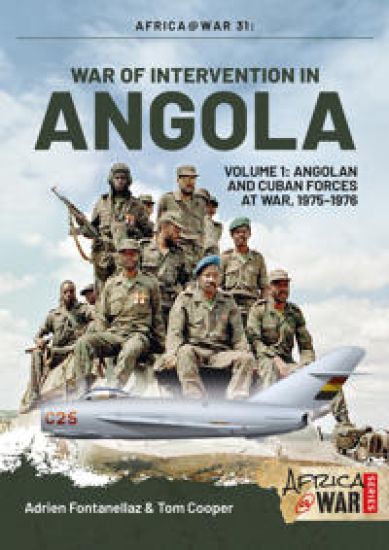
As of 1975, the decades long insurgency in Angola appeared to be short of its conclusion. However, with no less than three major insurgent movements fighting for supremacy, the war went on and then South Africa, USA, the Soviet Union, Zaire and Cuba became involved. Affairs like the CIA’s efforts to destabilise Angola for little else but to recoup its prestige after the catastrophic defeat in South Vietnam, or the South African military intervention in Angola – Operation Savannah – have attracted lots of public attention and are relatively well covered in related publications. On the contrary, the final stages of the Portuguese withdrawal, the military build-up of three native insurgent forces, and then the onset of the Cuban military intervention in Angola – Operation Carlotta run in 1975 and 1976 – remain largely unknown. Based on extensive research with help of Angolan and Cuban sources, the War of Intervention in Angola is providing a unique insight precisely into the latter topic. It traces the failures of the US-supported FNLA, the growth and reorganization of the MPLA into a conventional army; deployment of Cuban military contingents, their capabilities and intentions; and the performance and experiences of the MPLA and Cuban forces at war with South Africans and the third Angolan insurgent group – UNITA. The volume is illustrated with over 100 rare photographs, a dozen of maps and 15 colour profiles.
Formerly known as the ‘Switzerland of the Middle East’, an island of economic stability and social progress, Lebanon was shattered by a civil war that raged from 1975 until 1990. Pitting the central government against different factions and alliances of Christians, Sunni and Shi’a Moslems, leftists, and Syrian armed forces, this multifaceted conflict experienced a major escalation when Israel launched an invasion with the aim of destroying the Palestine Liberation Organisation (PLO), in 1982. Also known as the First Lebanon War, or Operation Peace for Galilee, the Israeli enterprise was run in cooperation with Christian allies and the self-proclaimed Free Lebanon State. Except for attacking the PLO and surrounding its leadership in West Beirut, it provoked a major showdown with Syrian armed forces deployed inside Lebanon, and resulted in a series of bitter battles. Ever since, fighting on the ground and in the sky of the Beka’a Valley is a synonym for modern-day conventional air-land battle in the age of high-technology warfare. Focusing on military-related developments, and rich in exclusive details and illustrations, ‘Lebanese Civil War: Israeli Invasion, 1982’ is dissecting military forces, their equipment, intention and capabilities, and their combat operations.
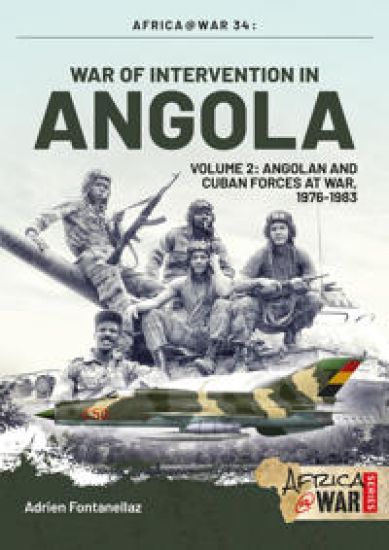
As of mid-1976, the civil war in Angola was seemingly decided: supported by a large contingent of Cuban forces, the MPLA established itself in power in Luanda. Its native competitors, the US-French-Zaire-supported FNLA, and UNITA, supported by China and South Africa, were in tatters. The French and Zaire-supported FLEC – an armed movement for the independence of the oil-rich Cabinda enclave – was in disarray. The last few of their surviving units were either driven out of the country, or forced into hiding in isolated corners of northern and south-eastern Angola. Nevertheless, the war went on. The MPLA’s government failed to decisively defeat UNITA, in southern Angola, and then found itself facing a coup attempt from within in May 1977. Crushed in blood, this resulted in thousands being jailed and tortured: many more escaped abroad, where they reinforced the ranks of the battered opposition. The coup prompted the Soviets to attempt increasing their influence with the aim of establishing permanent military bases in the country. While all such overtures were turned down, Angolan operations along the border to what was then the South-West Africa (subsequently Namibia) in October 1980, combined with the increased activity of SWAPO – an insurgency against the South African control of that territory - subsequently Namibia – prompted South Africa to launch another military intervention and resume supporting UNITA. In turn, this prompted not only the Cubans to further increase their military presence, but also the Soviet Union into delivering massive amounts of military aid to the government in Luanda. Angola not only assumed the role of one of the major hot battlefields in the Cold War: its ‘civil war’ saw a number of major showdowns between diverse belligerents, culminating in the Battle of Cangamba in 1983. Based on extensive research, with help of Angolan and Cuban sources, the ‘War of Intervention in Angola, Volume 2’, traces the military build-up of the Cuban and Soviet-supported Angolan military, the FAPLA and its combat operations, and those of the Cuban military in Angola, in the period 1976-1983, their capabilities and intentions, and their battlefield performances. The volume is illustrated with over 100 rare photographs, half a dozen maps and 18 colour profiles.
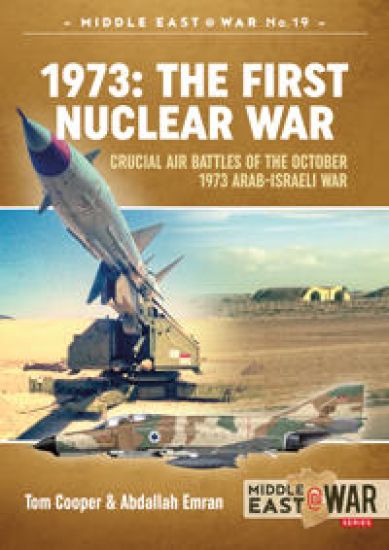
The majority of narratives about the October 1973 Arab-Israeli War stress that air power did not play a dominant role. The deployment of strong, well-integrated air defences by Egypt and Syria, that caused heavy losses to the Israeli air force early during that conflict, not only spoiled Israel’s pre-war planning, but prevented it from providing support for Israeli ground forces too. A cross-examination of interviews with dozens of Egyptian participants in that conflict, contemporary reporting in the media, and also intelligence reports, offers an entirely different picture. Accordingly, for much of that war, the Israelis flew heavy air strikes on Port Said, on the northern entry to the Suez Canal. Furthermore, they repeatedly attacked two major Egyptian air bases in the Nile Delta – el-Mansourah and Tanta – in turn causing some of the biggest air battles of this war. Indeed, in Egypt, the response to these attacks reached the level of legend: the supposed repelling of an Israeli air strike on el-Mansourah, on 14 October 1973, prompted Cairo to declare not only a massive victory, but also that date for the day of its air force. However, the actual reasons for Israeli air strikes on Port Said, el-Mansourah and Tanta remain unclear to this day: there are no Israeli publications offering a sensible explanation, and there are no Egyptian publications explaining the reasoning. Only a cross-examination of additional reporting provides a possible solution: el-Mansourah was also the base of the only Egyptian unit equipped with R-17E ballistic missiles, known as the SS-1 Scud in the West. As of October 1973, these missiles were the only weapon in Egyptian hands capable of reaching central Israel – and that only if fired from the area around Port Said. While apparently unimportant in the overall context, this fact gains immensely in importance considering reports from the US intelligence services about the possible deployment of Soviet nuclear warheads to Egypt in October 1973. Discussing all the available information, strategy, tactics, equipment and related combat operations of both sides, ‘1973: the First Nuclear War’ provides an in-depth insight into the Israeli efforts to prevent the deployment of Egyptian Scud missiles – whether armed with Soviet nuclear warheads or not – in the Port Said area: an effort that dictated a lengthy segment of the application of air power during the October 1973 Arab-Israeli war, and resulted in some of the most spectacular air-to-air and air-to-ground battles of that conflict. Illustrated by over 100 photographs, a dozen maps and 18 colour profiles, this book thus offers an entirely new thesis about crucial, but previously unknown factors that determined the flow of the aerial warfare in October 1973.
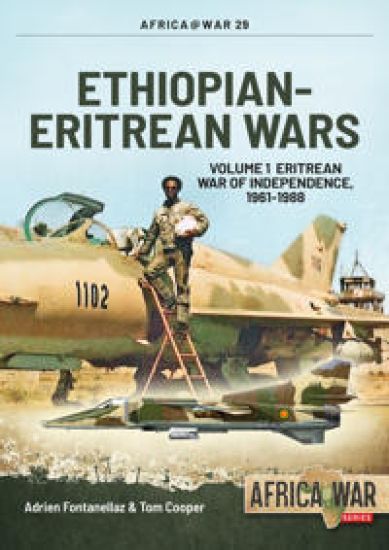
Ethiopia, a country of ancient origins in eastern Africa, has remained a military powerhouse of that continent until the present day. Currently involved in the war in neighbouring Somalia, Ethiopia was also involved in half a dozen of other armed conflicts during the last 60 years. One of the most significant was the Eritrean War of Independence. Fought 1961-1991, this was one of the biggest armed conflicts on the African continent, especially if measured by numbers of combatants involved. It included a wide spectrum of operations, from ‘classic’ counter-insurgency (COIN) to conventional warfare in mountains – with the latter being one of the most complex and demanding undertakings possible to conduct by a military force. Campaigns run during the Eritrean War of Independence often included large formations of relatively well-equipped forces, led by well-trained commanders, utilising complex plans based on home-grown doctrine. Airpower played a crucial – although not necessarily decisive – role in many of battles. Nevertheless, most of details about this conflict remain unknown to the wider public. Similarly, relatively few Western observers are aware of relations between the Eritrean liberation movements, and various dissident and insurgent movements inside Ethiopia – although the synergy of these eventually led the downfall of the so-called Derg government, in 1991. Reaching back to extensive studies of Ethiopian and Eritrean military history, this volume provides a detailed account of the first 25 years of this conflict: from the outbreak of armed insurgency in 1961 until the crucial battle of Afabet, in 1988. It is illustrated by over 100 contemporary photographs, maps and colour profiles.
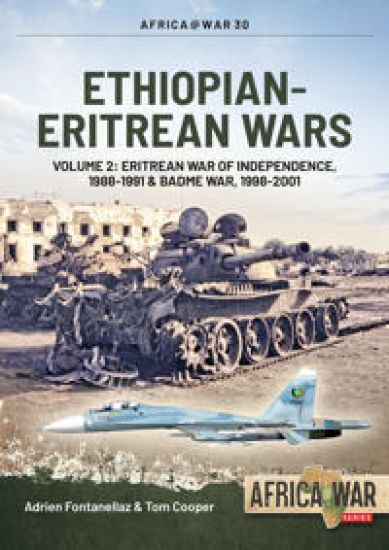
Ethiopia, a country of ancient origins in eastern Africa, remains a military powerhouse of that continent until our days. Nowadays involved in the war in neighbouring Somalia, Ethiopia was also involved in half a dozen of other armed conflicts over the last 60 years. Crucial between these was the Eritrean War of Independence. Fought 1961-1991, this was one of biggest armed conflicts on the African continent, especially if measured by numbers of involved combatants. It included a wide spectrum of operations, from ‘classic’ counter-insurgency (COIN) to conventional warfare in mountains – with the latter being one of the most complex and most demanding undertakings possible to conduct by a military force. Campaigns run during the Eritrean War of Independence often included large formations of relatively well-equipped forces, led by well-trained commanders, along well-thought-out plans, based on home-grown doctrine. The air power played a crucial – although not necessarily decisive – role in many of battles. Nevertheless, most of details about this conflict remain unknown in the wider public. Similarly, relatively few Western observers are aware of relations between the Eritrean liberation movements, and various dissident and insurgent movements inside Ethiopia – although the synergy of these eventually led the downfall of the so-called Derg government, in 1991. While the first volume in this mini-series spanned the history of wars between Ethiopia and Eritrea between 1961 and 1988, the second covers the period since. Correspondingly, it is providing coverage of military operations that led to the fall of the Derg government in Ethiopia of 1991, the period of Eritrean military build-up and a complete re-organization of the Ethiopian military in the 1990s, and concludes with the first detailed account of the so-called Badme War, fought between Ethiopia and Eritrea in period 1998-2001. It is illustrated by many contemporary photographs, maps and colour profiles.